Automatic translation
This article has been translated automatically using computer technology. While we strive for accuracy, some wording or details may differ from those in the original article.
This translation was not manually reviewed. For important facts, quotations or legally sensitive information, please consult the German original. Individual selections, images, embedded media or technical terms may have been translated differently or incompletely.

2024 Metal and Electrical Industry Collective Bargaining Round Negotiation Results: Higher Wages, 140 euros more for apprentices, more days off

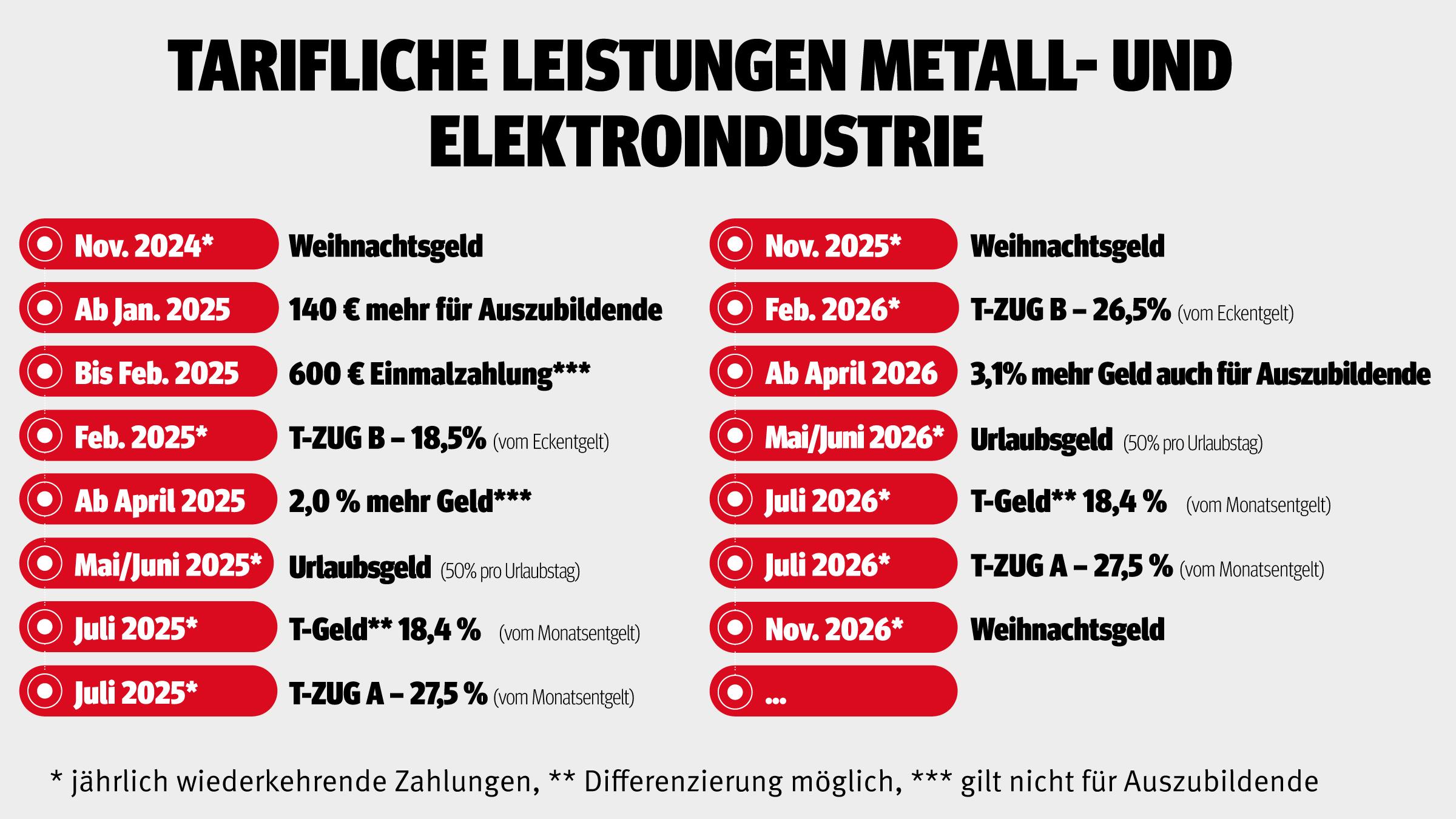
A one-time payment of 600 euros. An additional 140 euros per month for apprentices starting in January 2025. A 2 percent pay increase starting in April 2025, followed by an additional 3.1 percent increase starting in April 2026. The T-ZUG B will rise to 26.5 percent in 2026. And there will be significantly more T-ZUG days off—finally including part-time employees.

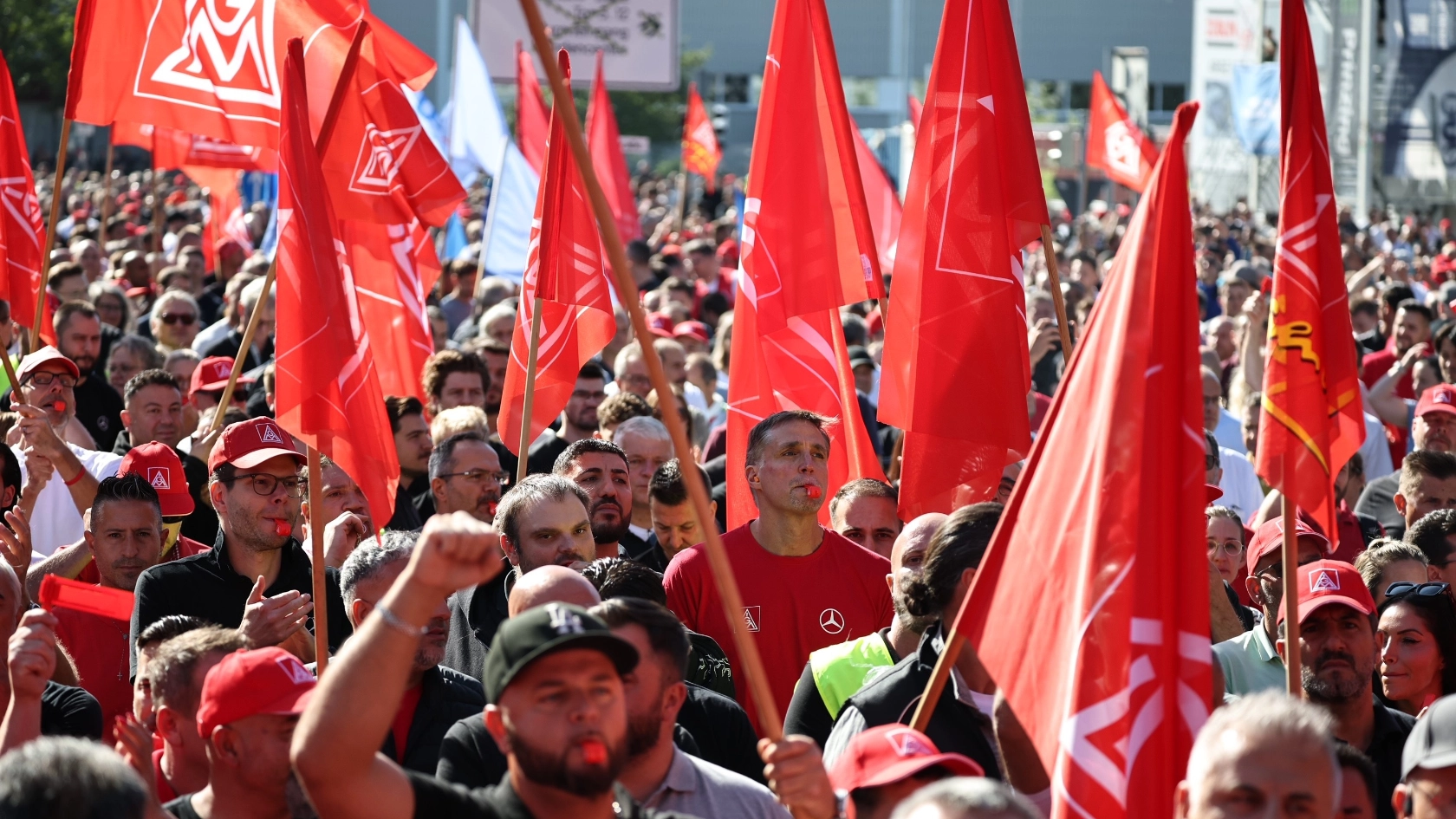
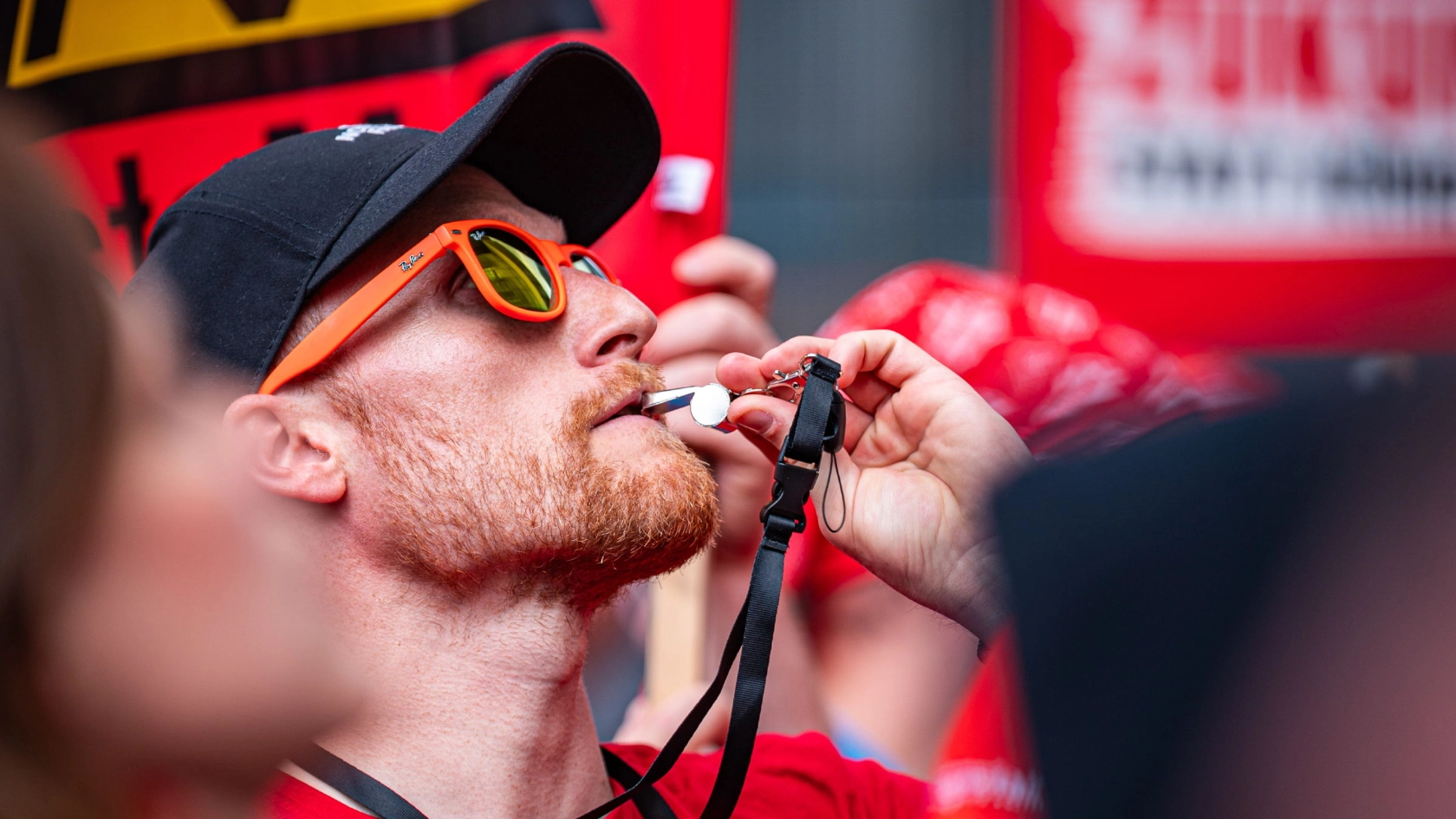
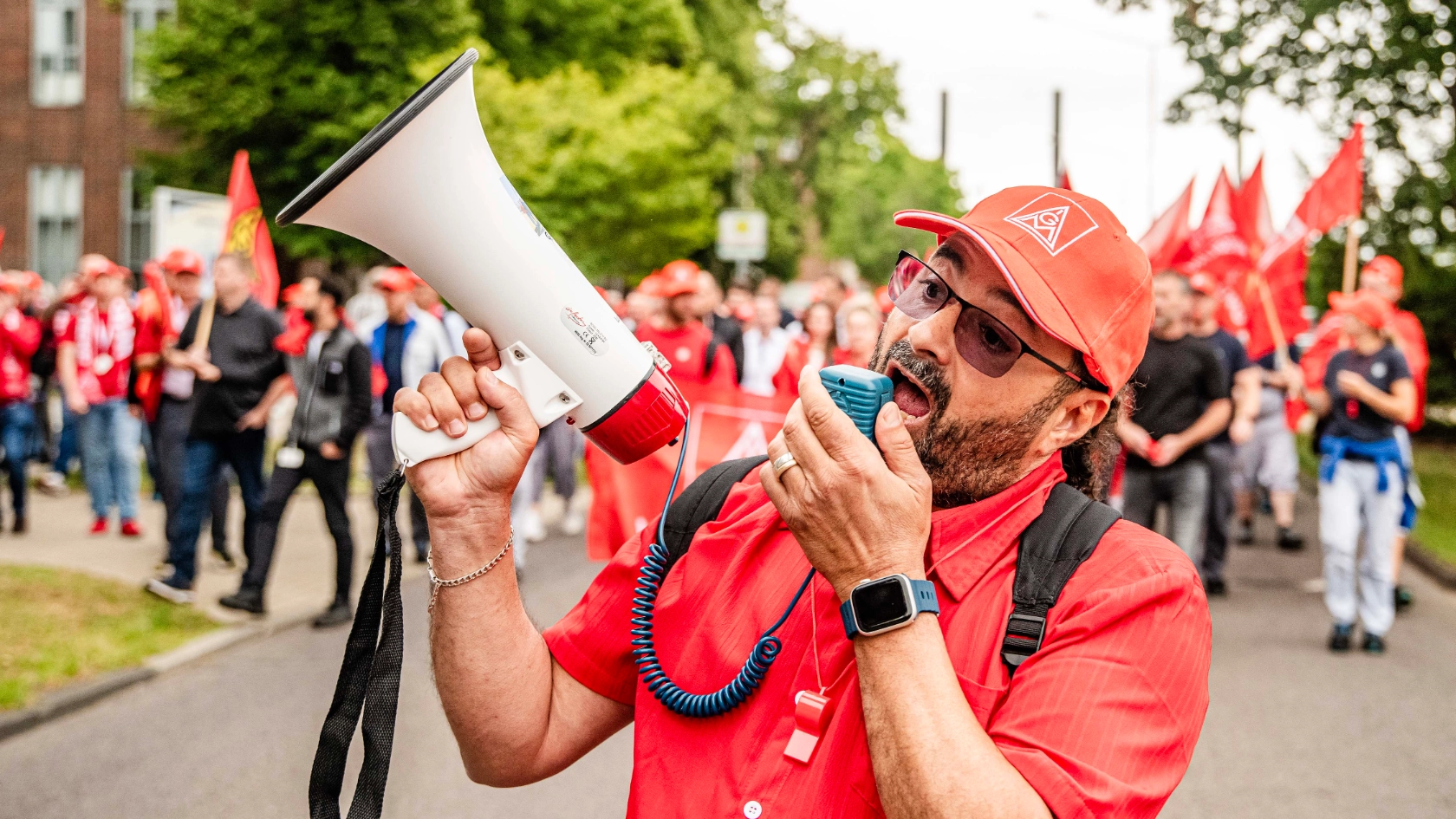
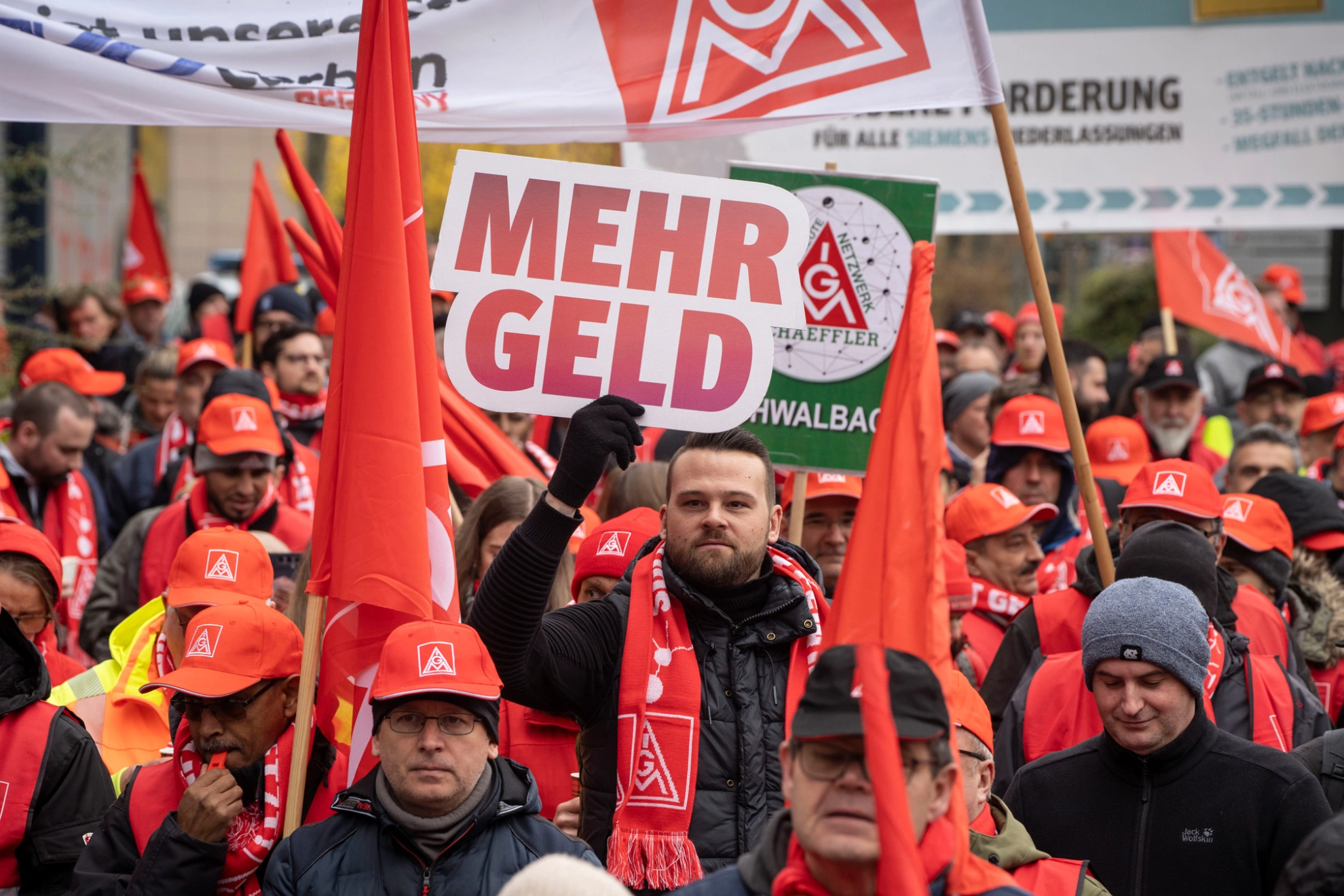
Beschäftigte bei einer Warnstreik-Kundgebung in der Metall-Tarifrunde

12 November 2024 12 November 2024 |
Updated on 2 December 2024 2 December 2024


IG Metall has reached a pilot collective bargaining agreement for workers in the metal and electrical industries: Following a one-time special payment of 600 euros, which must be paid out no later than with the February paycheck, monthly wages will increase by 2.0 percent starting in April 2025 and by an additional 3.1 percent starting April 1, 2026.

In addition, IG Metall secured a “social component” by increasing the annual “Collective Bargaining Supplement” (T-ZUG B, ZUB) from the current 18.5 percent of the base wage in the respective collective bargaining area by 8 percentage points to 26.5 percent, effective February 2026: Employees in lower pay grades will benefit more from this. 

IG Metall also secured more days off for more employees when choosing between time off and cash for the collective bargaining supplement (T-ZUG). 
 

140 euros more for apprentices starting in January, plus an additional 3.1 percent starting in April 2026

For the 230,000 apprentices in the metal and electrical industries, IG Metall secured a 140-euro increase in compensation effective January 1, 2025. Starting in April 2026, apprenticeship wages will rise by an additional 3.1 percent. Furthermore, the social partners agreed in a joint statement to promote democracy among young people.


Grafik zu den tariflichen Leistungen in der Metall- und Elektroindustrie 2025 / 2026

The collective bargaining agreement on wages negotiated by the IG Metall districts of Bavaria and the Coast runs through October 31, 2026.

The collective bargaining agreement was preceded by a major wave of warning strikes. Since October 29, IG Metall has mobilized a total of over 620,000 warning strikers, who gathered at factory gates at various times. 
 

Extension to All Collective Bargaining Areas

The IG Metall districts of Bavaria and the Coast reached the negotiation outcome on November 12 during the fourth round of negotiations in Hamburg. IG Metall and regional employers’ associations have since negotiated the adoption of the collective bargaining agreement in all bargaining areas:

Acceptance of the collective bargaining agreement in all bargaining regions is subject to approval by the respective committees. Votes in the bargaining committees are still underway.
 

Here’s exactly how much the collective bargaining agreement adds to pay

What does the collective bargaining agreement mean for employees in concrete terms? An engineer in Stuttgart (pay grade 12) will earn an additional 97.50 euros per month starting in April 2025. The following year, in 2026, thanks to the 3.1 percent increase, she will earn as much as 154.50 euros more. When all special payments and the performance bonus are added together, this results in an additional annual income of 1,950 euros for her in 2025 compared to 2024, and a full 2,540 euros more gross in 2026 compared to 2025.

For example, an apprentice in her second year of training in Emden will earn 1,366 euros starting in January, thanks to the monthly increase of 140 euros. Starting in April 2026, she’ll also receive a 3.1 percent raise—bringing her monthly gross pay to 1,443 euros. Including all special payments, such as Christmas and vacation bonuses, Marlene will have over 2,500 euros extra in her account in 2025. In 2026, during her third year of training, she’ll earn over 2,800 euros more in gross pay.

T-ZUG: More Days Off—Even for Part-Time Employees


Since 2018, employees with children, dependents requiring care, or those working shifts have been able to choose between a collective bargaining-based bonus (T-ZUG A) and up to 8 additional days off per year. The pilot negotiation results from the IG Metall districts of Bavaria and the Coast now provide for a significant improvement.

In the future, more overburdened employees will have the opportunity to convert pay into time off (“collectively bargained time off”) more frequently.

And in the future, part-time employees will finally be able to request additional days off without restriction.

Children: Until now, parents of children under 8 years of age could choose days off. In the future, this will be possible for children under 12 years of age. In addition, there will be significantly more days off: Previously, parents could only choose days off twice per child. In the future, two periods of 8 days plus three periods of 6 days will be possible—for a total of five years of additional days off.

Caregiving: Employees who care for family members can now also choose five more years of time off—two periods of 8 days plus three periods of 6 days.

Shift work: Employees working rotating shifts can now—just like those already working three-shift or night shifts—choose 8 days off per year after just 5 years of service and 3 years of shift work—with no limit.

Part-time work: And brand new: In the future, all part-time employees will be able to choose these days off, including those working rotating shifts—where full-time employment was previously required—as well as employees who were already working part-time before 2019.

The deadline for applying for T-ZUG days off for 2025 has been extended for all employees newly eligible to January 31, 2025.

Please note: Days off cannot be combined for multiple reasons (such as for multiple children or caregiving plus shift work). A maximum of 8 days per year is allowed. 


Tabelle T-ZUG-Wahloption Tarifabschluss Metall und Elektro 2024

The works council and the employer can adapt a number of provisions to their specific workplace. For example, if too many requests for days off are submitted and cannot be accommodated within the company, an agreement can be reached to distribute the days off across the workforce—for instance, four days for all applicants. Additionally, the employer and the works council can agree that everyone in the company takes days off, thereby safeguarding jobs.


T-ZUG B will increase to 26.5 percent of the base pay starting in 2026

Starting in 2026, the collective bargaining supplementary payment B (T-ZUG B or supplementary amount) will increase from 18.5 percent of the base pay in the respective collective bargaining region—currently around 630 euros in the Coastal and Bavaria regions—to a flat rate of 26.5 percent of the base pay, or around 900 euros (slightly more or less in the other collective bargaining regions). As a result, the lower pay grades will receive a significantly higher percentage of their individual monthly pay than the higher pay grades.

IG Metall has thus achieved its goal of a “social component” that particularly benefits employees with lower incomes.

However, the T-ZUG B will no longer be paid out in July along with the T-ZUG A, as was previously the case, but rather in February—in exchange for the transformation allowance (T-Geld), which is now paid out in July.  

The reason for this is that, going forward, the T-Geld—and no longer the T-ZUG B—can be “differentiated.”
 

“Differentiation” Remains—T-ZUG B Is Retained 

Operators in financial difficulty were already able to “differentiate” the T-ZUG B in 2023 and 2024—meaning they could defer or suspend it entirely if their net return fell below 2.3 percent.  

Differentiation will still be possible in 2025 and 2026. However, it will no longer be the T-ZUG B that is differentiated, but rather the transformation allowance (T-Geld)—previously paid out in February—amounting to 18.4 percent of the individual’s monthly salary. 

As a result, the T-ZUG B—which will increase from 18.5 percent to 26.5 percent of the base pay in 2026—will remain in place as a “social component” for employees in the lower pay grades.  

However, since companies cannot yet sufficiently predict how the economic situation will develop over the course of the year when the T-Geld is paid out in February, IG Metall and employers have postponed the payment of the T-Geld to July—in exchange for the T-ZUG B, which was previously paid out in July and will now be paid out in February.  


Preserving Our Industrial Nation—Politicians Must Also Step Up

In a joint statement, IG Metall and the employers’ association Gesamtmetall are calling on policymakers to set the right course as quickly as possible to improve Germany’s competitiveness on the international stage. Structural problems have heightened the challenge of securing locations and jobs, as well as developing new employment prospects within companies, the industry, and the region.

  • Bringing electricity costs down to an internationally competitive level. This includes introducing a transitional electricity price for energy-intensive companies that face international competition—regardless of their size. There is an urgent need to reduce grid fees for all companies, as well as the electricity tax.
  • Accelerated expansion of all renewable energy sources, transmission and distribution grids, as well as storage facilities and backup power plants.
  • Ensuring necessary government investment in sustainable infrastructure (transportation, digital networks, energy, etc.) and innovation (research funding, startups, technology transfer) and transformation, as well as increased incentives for private investment
  • Digitizing and modernizing public administration to accelerate planning and permitting processes
  • Stepping up efforts to scale up e-mobility—including through the rapid expansion of a Europe-wide charging infrastructure and ensuring affordable charging electricity Both the economic situation and structural problems heighten the challenge of securing business locations and jobs, as well as developing new employment opportunities within one’s own company, the industry, and the region. To the extent possible and appropriate, local labor market and education policy initiatives will be supported and, if necessary, accompanied by collective bargaining measures.

“Collective bargaining can achieve a great deal—we’ve demonstrated that. Social partnership is the most important stabilizing factor for companies and employees in uncertain times. We find common solutions,” explained IG Metall Chairwoman Christiane Benner, calling on policymakers to now also demonstrate their ability to act and not to waste any time. “Politicians must solve the structural problems we currently face. We need lower energy prices now, especially for energy-intensive companies. We need measures now to ramp up electric mobility, investments in infrastructure, and thus in our future.”

You can find IG Metall’s 11-point plan for preserving our industrial nation here: IG Metall’s 11-Point Plan
    Beschäftigte stehen zu einem großen Herz zusammen
    Become a member
    Become part of a strong community

    From legal protection in labor and social law matters to fair wages and salaries—we take personal and reliable care of our members.

    Don’t miss any collective bargaining news with push notifications

    IG Metall app for Android and iOS

    With our IG Metall app, we keep you informed about collective bargaining negotiations and agreements, pay raises, and special payments. Also in the app: a shift scheduler, advice on all aspects of working life, services, and more. Important: Enable push notifications!

    More
    New on igmetall.de
    Aktionstag bei Mercedes Benz, Daimler, in Sindelfingen gegen die Angriffe auf Beschäftigten in der Automobilindustrie.
    Resistance to Attempts at Drastic Cuts Auto industry workers issue a warning
    Sie wollen doch nur dein Bestes
    Redistribution Making Germany more equitable: We need this tax reform now
    Der Streik bei Kelvion in Nobitz-Wilchwitz begann am 4. August 2026. Die Geschäftsleitung will nach Sarstedt/Niedersachsen verlagern - obwohl die Produktion in Wilchwitz profitabel und bis ins nächste Jahr ausgelastet ist.
    "It’s worth fighting for!" Kelvion workers strike for a social collective bargaining agreement
    Ruhrpott Rebellion am 07.07.2026
    Welfare State September 26: Nationwide Day of Action for Social Policy
    Beschäftigter arbeitet an einem Getriebe in einer Fabrik
    Working Hours Why working longer doesn’t help—and actually does more harm than good
    Ein männlicher Land- & Baumaschinenmechatroniker prüft einen Traktor mit einem Tablet
    2026 Collective Bargaining Agreement for the Metalworking and Agricultural Engineering Sectors Greater Flexibility in the Metalworking and Agricultural Engineering Sectors in Lower Saxony and Bremen
    Elektronikerin prüft die Spannung an einem Schaltschrank.
    2026 Collective Bargaining Round for the Electrical Trades Wage Increase in the Electrical Trades in Berlin-Brandenburg
    Benjamin Heine ist Mitarbeiter der BMA in Braunschweig
    2026 Collective Bargaining Round for Metal Fabrication and Precision Engineering Higher Wages in the Metal Fabrication and Precision Engineering Sectors in Southwest Germany
    Metall-Arbeiter beim Schleifen
    2026 Collective Bargaining Round for the Metalworking Trade Employees in the Berlin-Brandenburg metalworking sector will receive higher pay
    Beschäftigte von Thyssenkrupp demonstrieren in Essen am 23. Mai 2024 gegen das Vorgehen der Geschäftsführung beim geplanten Teilverkauf des Unternehmens.
    Defend the welfare state All dates for nationwide actions against cuts to social services
    IGM Aktion VW Wolfsburg
    On September 21, things will get loud Nationwide Day of Action: Auto Industry Workers Fight Back Against Mass Layoffs
    Auszubildender in einer Schreinerei
    Apprenticeship Wages Questions and Answers About Apprenticeship Wages

    Subscribe to the newsletter