Automatic translation
This article has been translated automatically using computer technology. While we strive for accuracy, some wording or details may differ from those in the original article.
This translation was not manually reviewed. For important facts, quotations or legally sensitive information, please consult the German original. Individual selections, images, embedded media or technical terms may have been translated differently or incompletely.
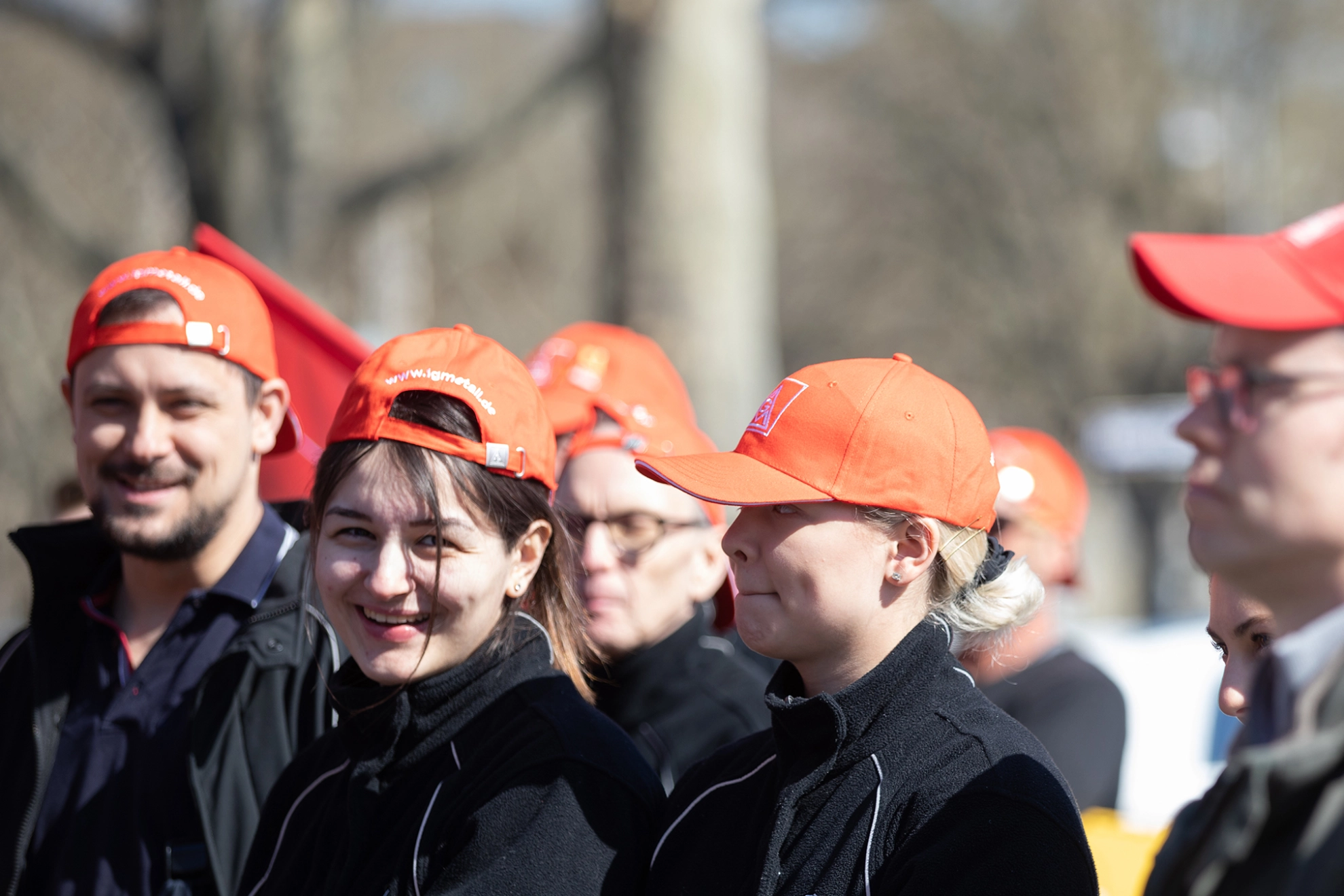
Warnstreik Kfz-Tarifrunde 2023 Mercedes-Benz Mannheim

The History of IG Metall
For Democracy, Co-determination, and Justice

For over 125 years, we have stood by employees and shaped the world of work today and tomorrow.


The History of IG Metall
The History of the Labor Movement
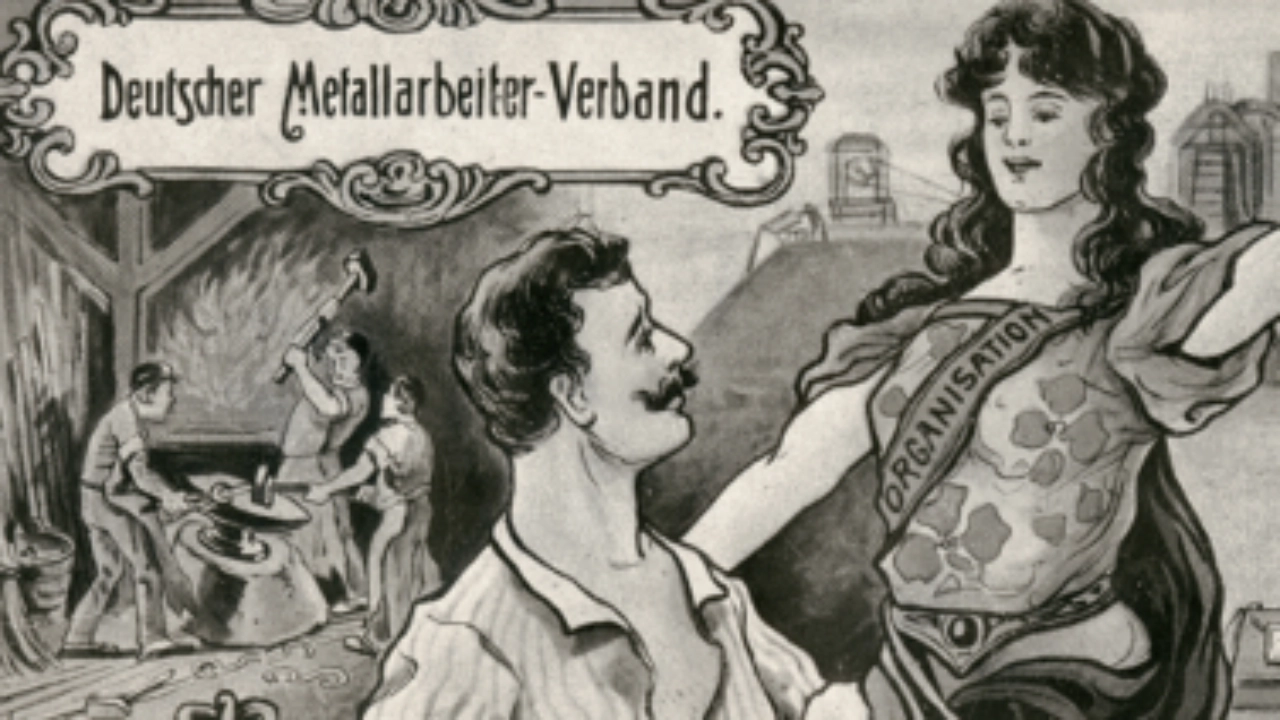
Ausschnitt einer Publikation des Deutschen Metallarbeiterverbandes.

19th Century

Starting in the 1830s, industrialization transformed the world of work: mass production replaced artisanal craftsmanship, and machines set the pace. The working class had no protections or rights. For a pittance, adults and children toiled 14 hours a day or more in the factories. Resistance was suppressed by a police state. Yet the workers organized themselves. (Photo: IG Metall)
100 Jahre Novemberrevolution

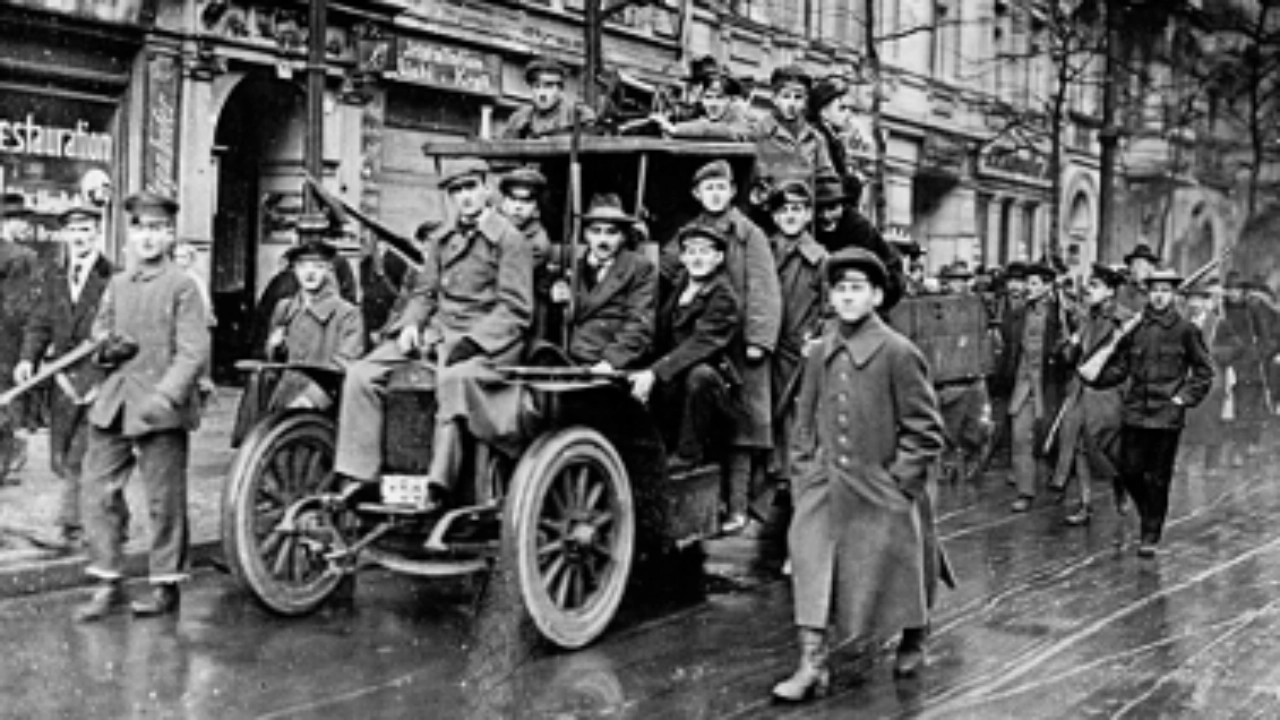
Turn of the Century

As industrialization progressed, the plight of the working class worsened. But the unions fought back, demanding shorter workdays and free time for physical recovery. From 1910 to 1913 alone, there were around 9,000 strikes involving more than one million participants. It was not until the November Revolution that the eight-hour workday for all—six days a week—was achieved. (Photo: Berliner Verlag/Archive/pa)
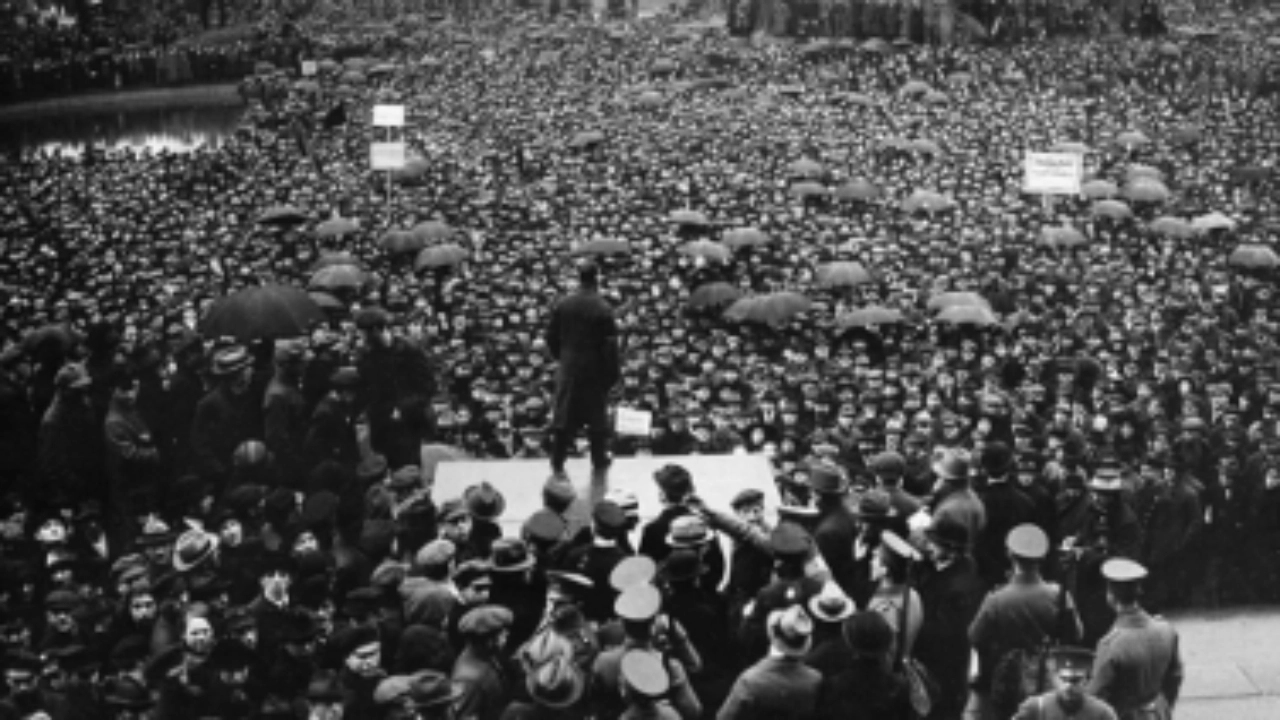
Kundgebung anlässlich des Betriebsrätegesetz 1920.

The 1920s

The Works Council Act of 1920 guaranteed the rights of employees in the workplace. Employers repeatedly sought to undermine the eight-hour workday. The unions fought back in fierce labor struggles. Yet internal conflicts arose within the working class. The Great Depression, inflation, and unemployment strengthened nationalist forces. (Photo: picture-alliance/akg-images)
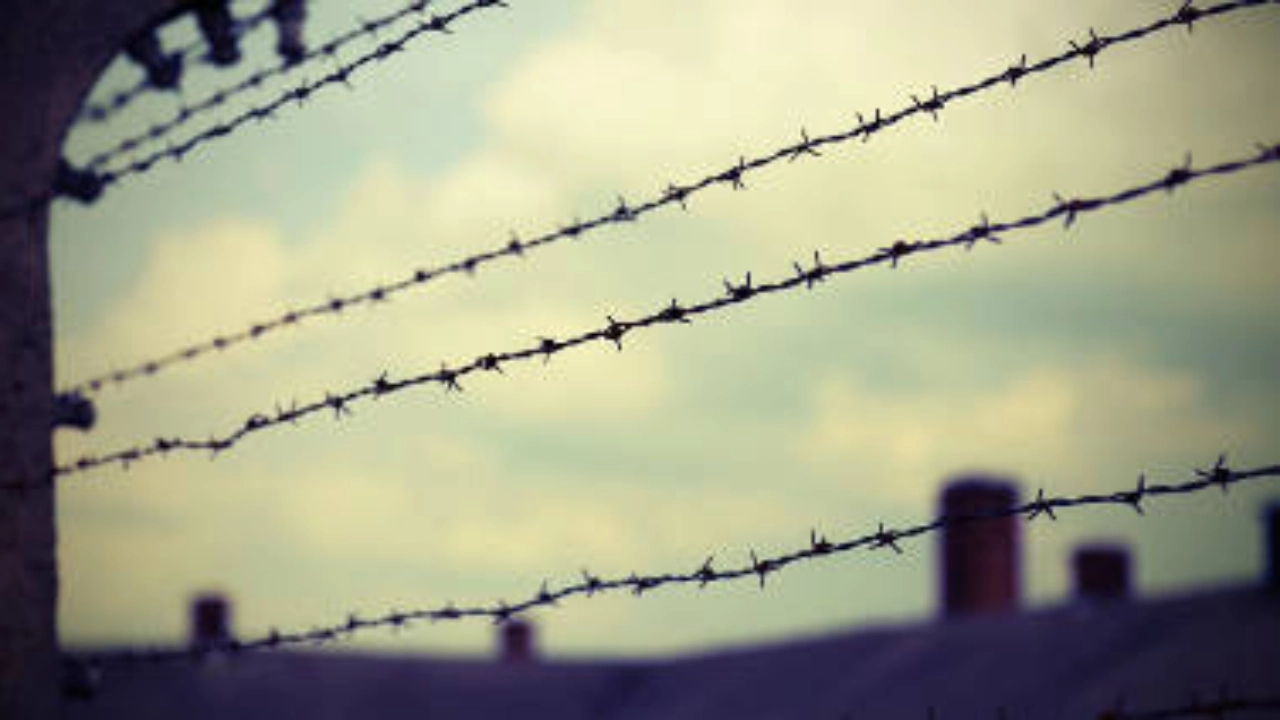
Ein Stacheldrahtzaun.

1933–1945

The National Socialists’ seizure of power marks the provisional end of free trade unions. On May 2, 1933, the fascists stormed the union headquarters—those who could not flee were arrested, tortured, and murdered. Many union members managed to go underground. From there, and even while in captivity, they continued to resist. (Photo: iStock/ChiccoDodiFC)
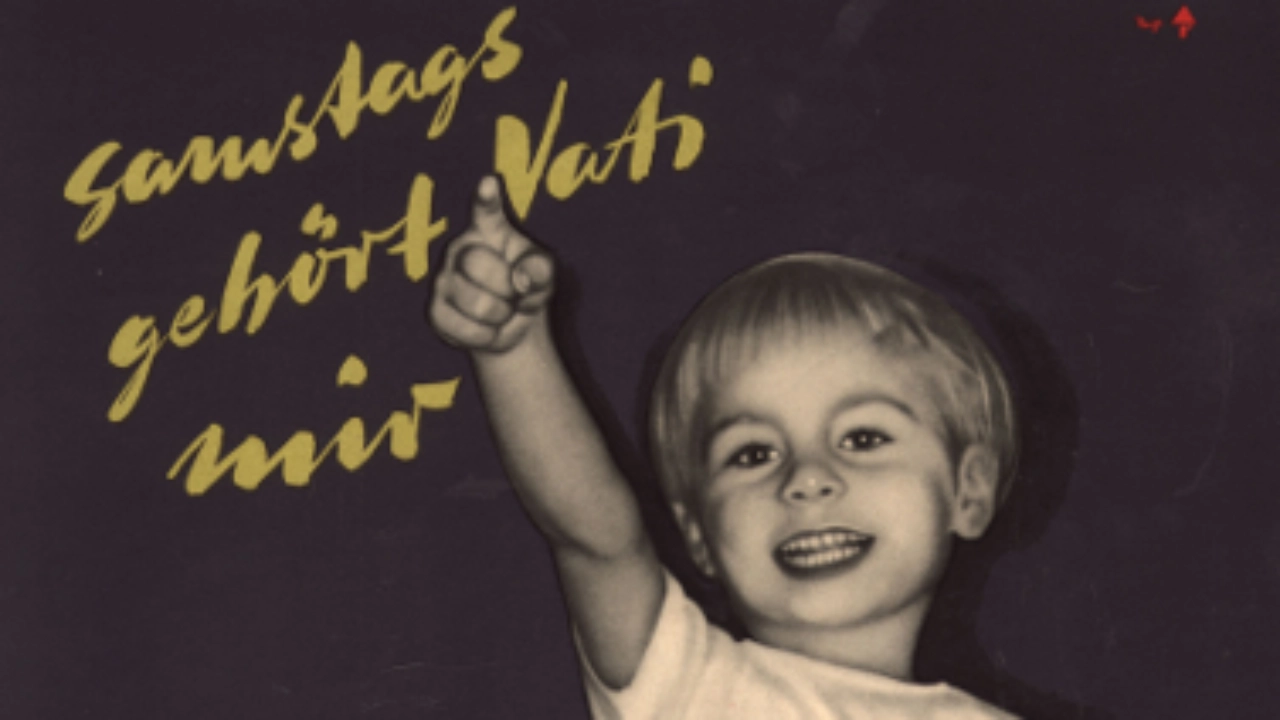
Plakat von 1956 zur Fünftagewoche.

Postwar period and the 1950s

Workers and their works councils rebuilt the companies. In 1949, IG Metall was founded on the principle of a unified trade union—thus ending the division of the working class into Social Democrats, Communists, and Christians. In 1956, IG Metall secured the five-day workweek and fought for continued pay during sick leave for blue-collar workers as well. (Photo: DGB)
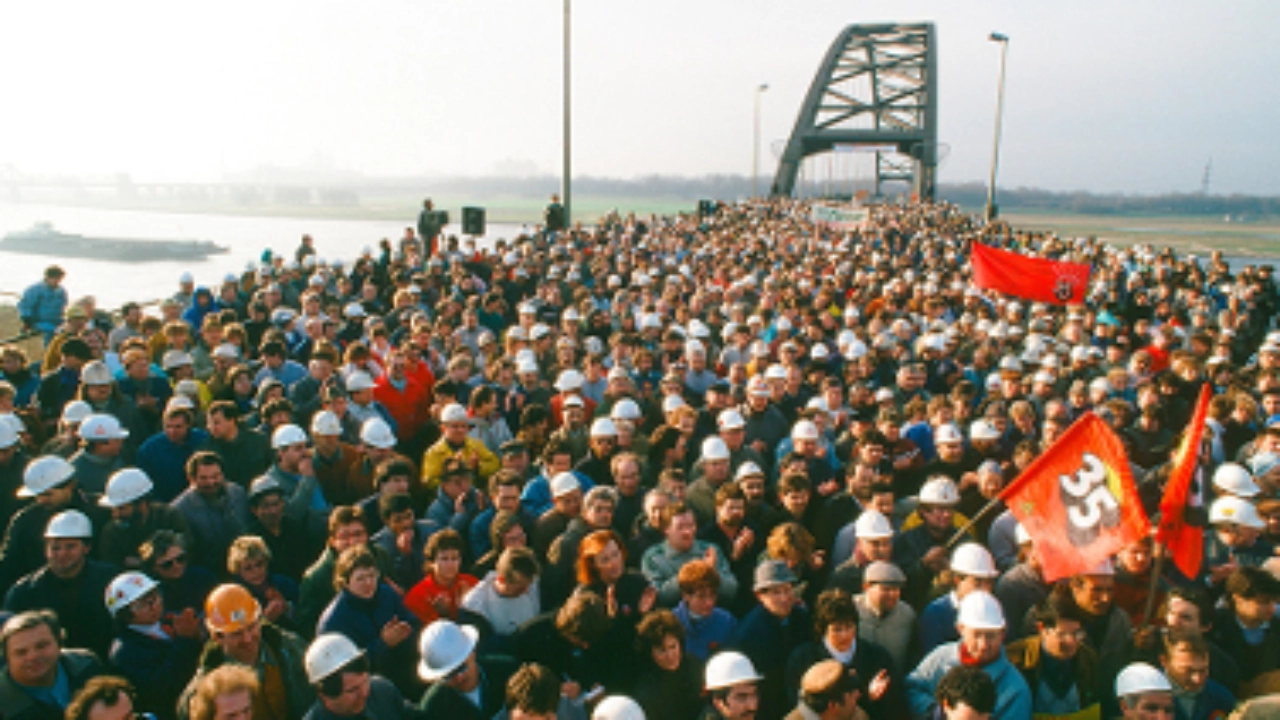
Stahlarbeiter demonstrieren 1988 auf der Brücke der Solidarität gegen die Schließung des Stahlwerks Duisburg-Rheinhausen

The 1960s through the 1980s

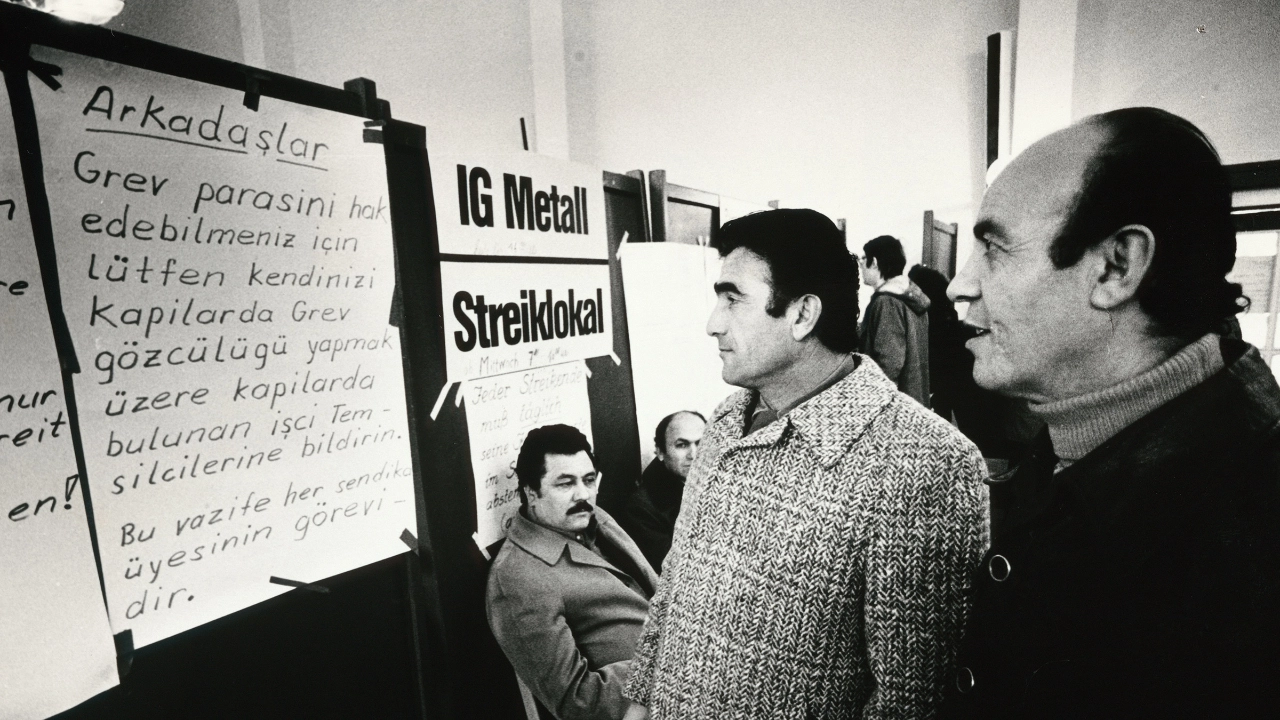
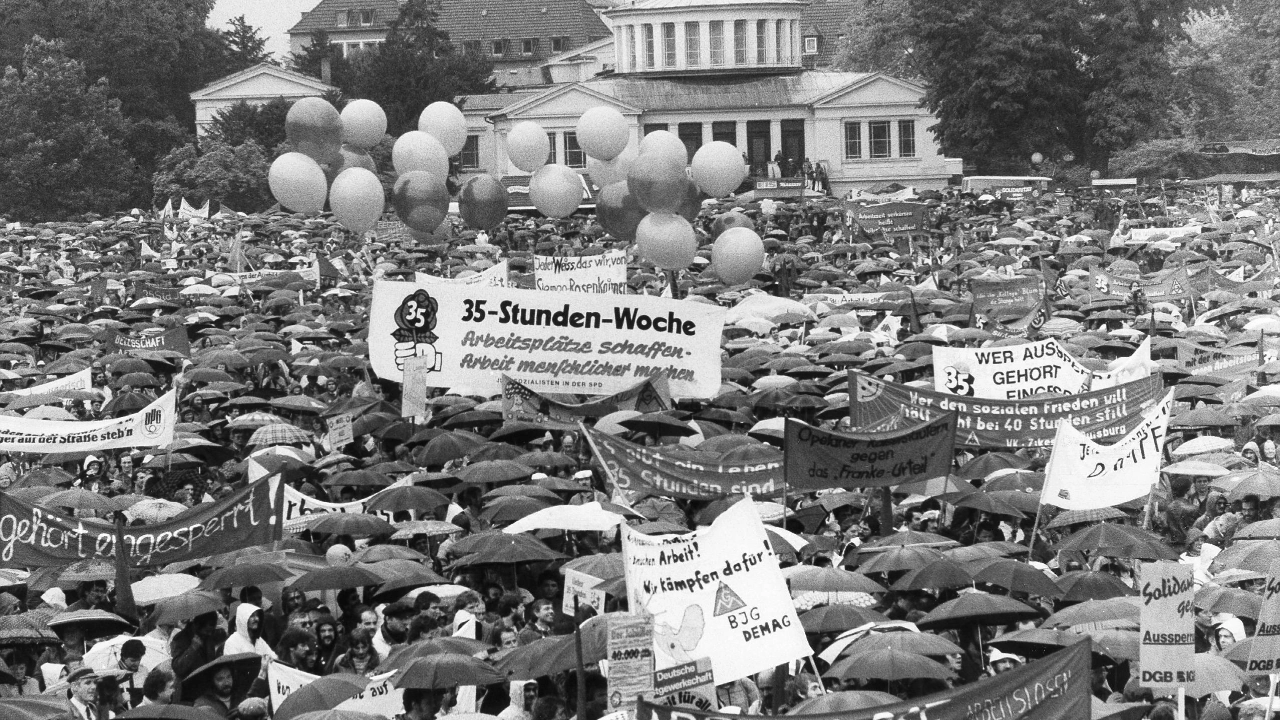
These years were marked by struggles for higher pay, more free time, and democracy in the workplace. IG Metall secured double-digit wage and salary increases and pushed through shorter work hours, more vacation time, and vacation pay. Union representatives were empowered and protected by collective bargaining agreements. In 1984, the transition to the 35-hour workweek was successfully implemented. (Photo: IG Metall)
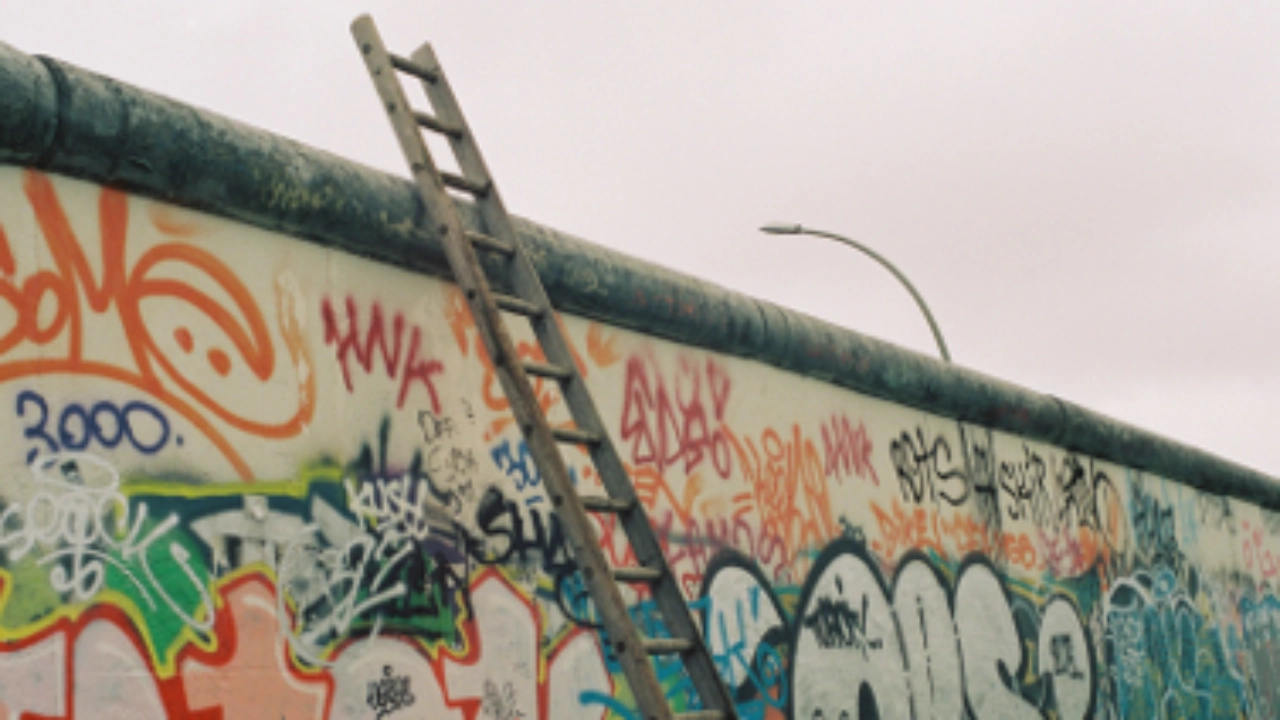
Eine Leiter lehnt an der Berliner Mauer.

The 1990s

After reunification, East German industry collapses. Millions of jobs are lost. The ensuing crisis and rising unemployment define the decade. Joining forces becomes necessary: IG Metall merges with the Textile and Apparel and Wood and Plastics unions. (Photo: iStock/NatalyaLucia)
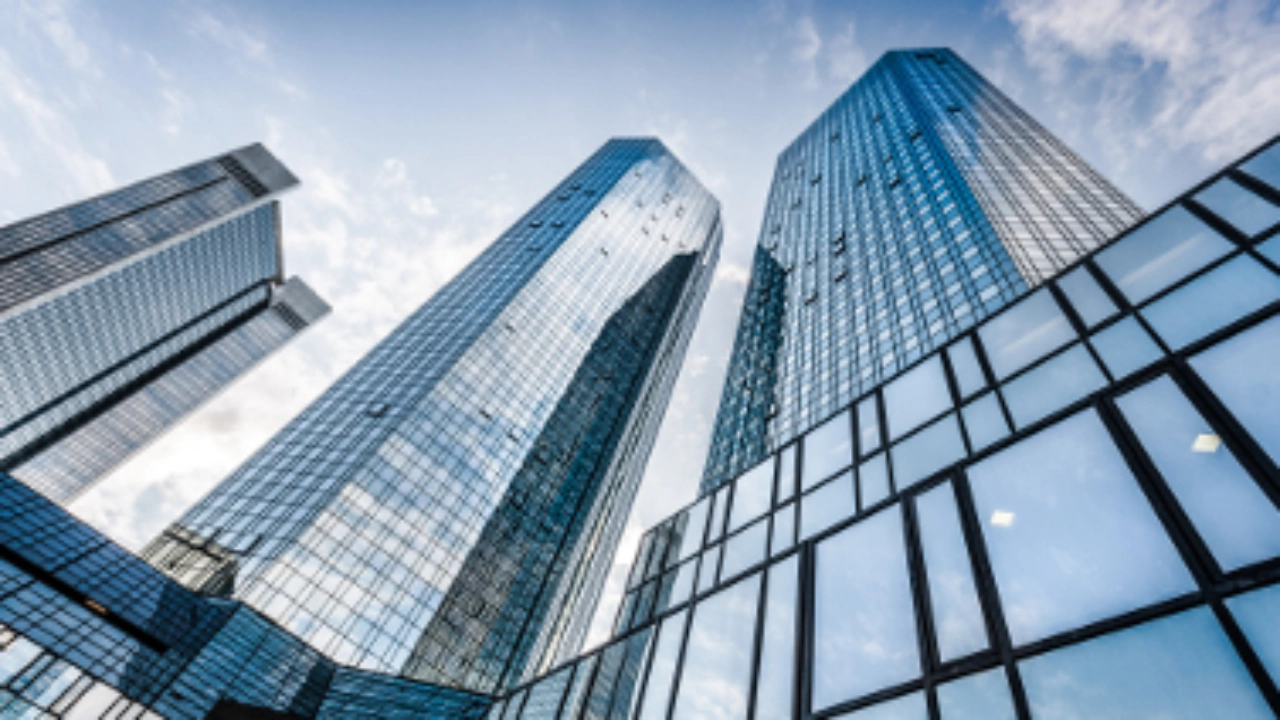
Ein Hochhaus in Frankfurt am Main.

The Turn of the Millennium

Job security, partial retirement, the hiring of trainees, and the fight against the abuse of temporary agency work are key priorities in the new millennium. During the 2009 financial and banking crisis, collectively bargained short-time work and reduced working hours with partial wage compensation prevent the worst effects on workers in Germany. (Photo: iStock/bluejayphoto)
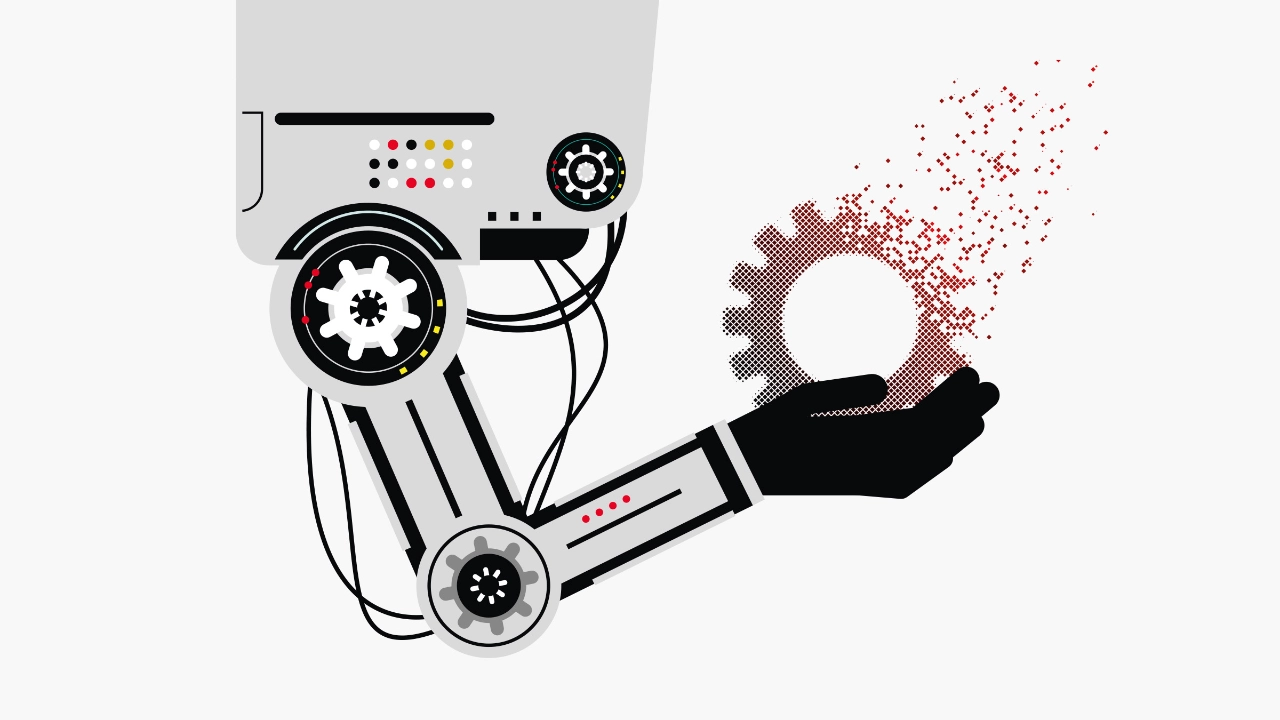
Digitalisierung und Industrie 4.0

Today and Tomorrow

Now more than ever, it is essential to embed employee participation in the workplace. Collective bargaining coverage, greater equity in the workplace and society, the right to training, greater control over one’s own time, and shaping the digital world of work and the ongoing transformation are major challenges. We are rising to them. (Photo: IG Metall)
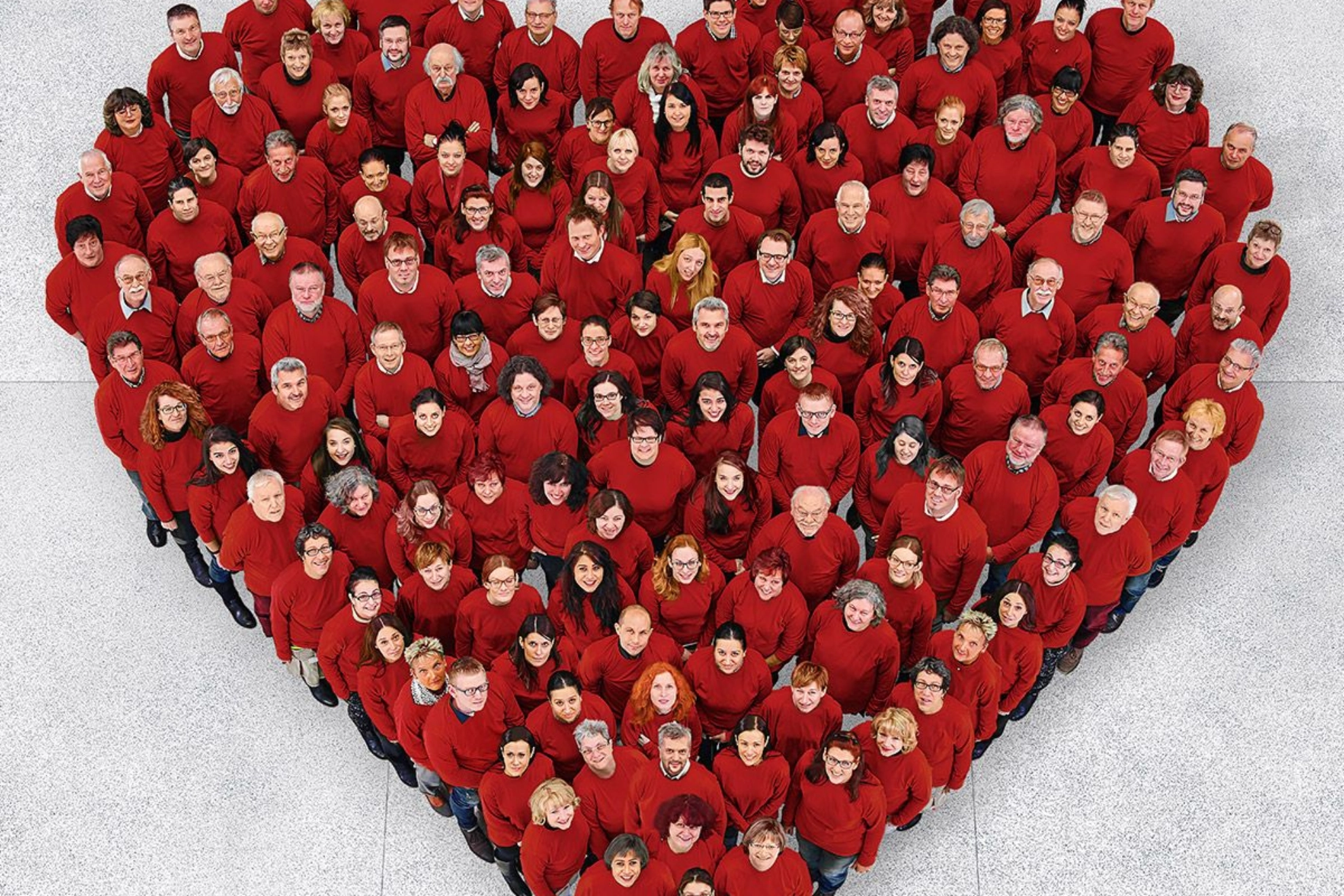
Beschäftigte stehen zu einem großen Herz zusammen
Become a member
Become part of a strong community

From legal protection in labor and social law matters to fair wages and salaries—we take personal and reliable care of our members.

new on igmetall.de
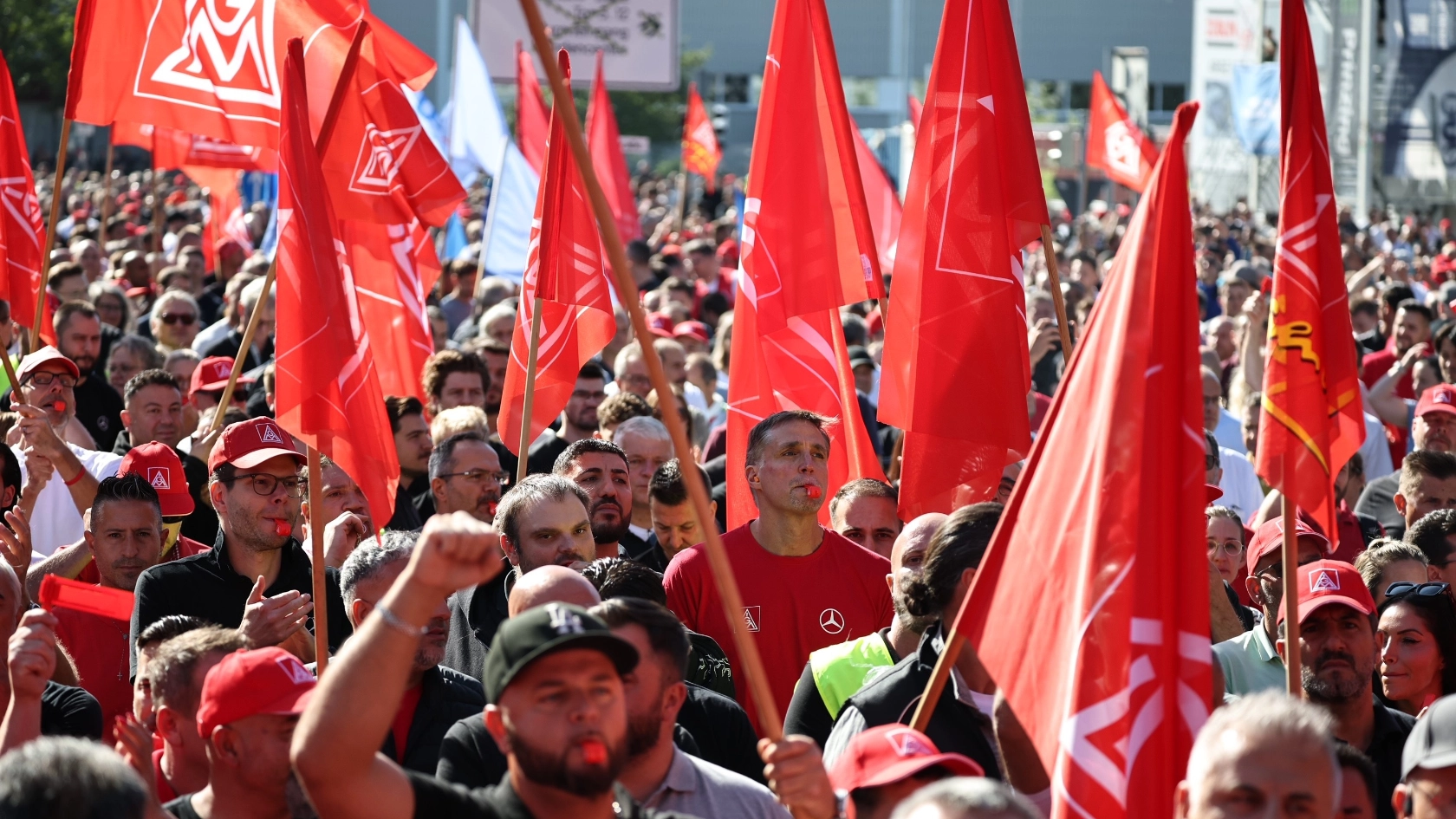
Aktionstag bei Mercedes Benz, Daimler, in Sindelfingen gegen die Angriffe auf Beschäftigten in der Automobilindustrie.
Resistance to Attempts at Drastic Cuts Auto industry workers issue a warning

Employees at VW, Mercedes-Benz, and other automakers and suppliers are giving their corporate bosses a rough fall. They will no longer allow themselves to be made scapegoats when management mistakes are the cause of the crisis. A nationwide day of action is scheduled for September 21.

Sie wollen doch nur dein Bestes
Redistribution Making Germany more equitable: We need this tax reform now

Is Germany a fair country? Many people say: no! Tax policy is the key lever for greater social justice. We should use this lever—and we should do so quickly and in several areas.

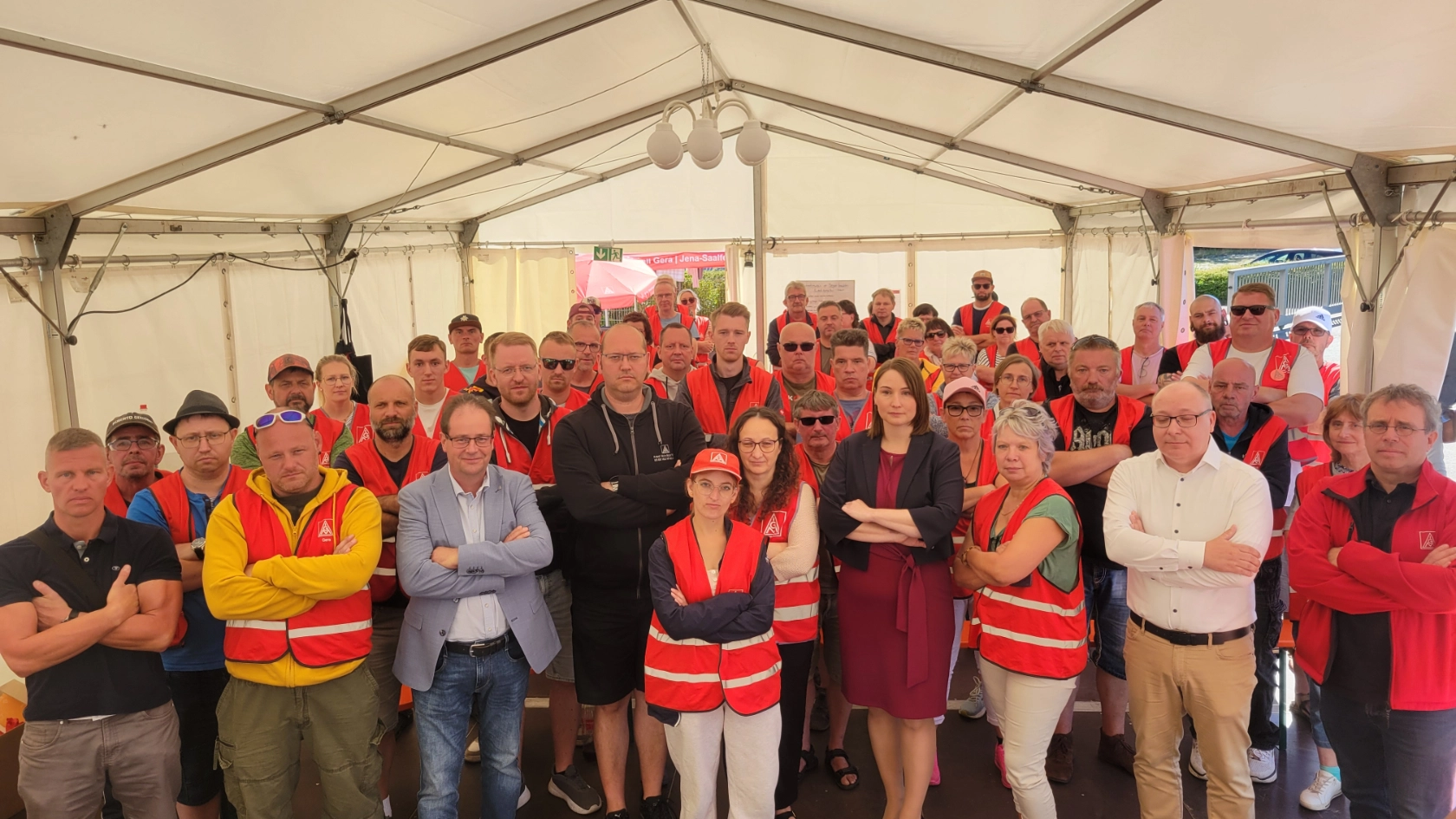
Der Streik bei Kelvion in Nobitz-Wilchwitz begann am 4. August 2026. Die Geschäftsleitung will nach Sarstedt/Niedersachsen verlagern - obwohl die Produktion in Wilchwitz profitabel und bis ins nächste Jahr ausgelastet ist.
"It’s worth fighting for!" Kelvion workers strike for a social collective bargaining agreement

Kelvion plans to relocate its profitable heat exchanger production in Wilchwitz (Thuringia) to the west. After nearly four weeks on strike, employees and IG Metall have reached a collective bargaining agreement that includes generous severance packages. A new investor intends to take over at least part of the operation.

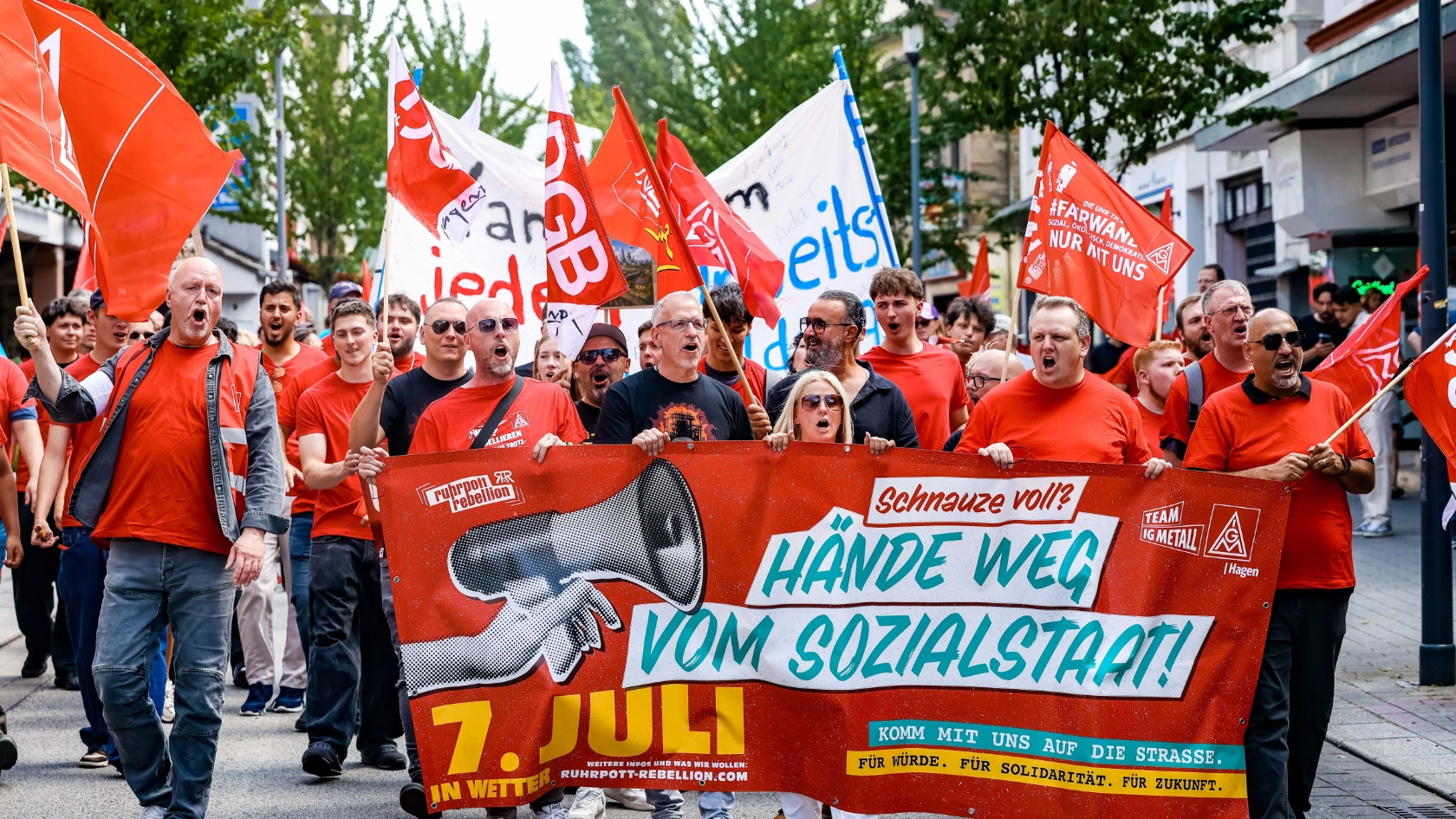
Ruhrpott Rebellion am 07.07.2026
Welfare State September 26: Nationwide Day of Action for Social Policy

Working longer, smaller pensions, cuts to long-term care: The attack on the welfare state is growing ever more intense. On September 26, metalworkers will stand up against it. As part of the “Hart verdient” day of action, they will take to the streets in 15 German cities.
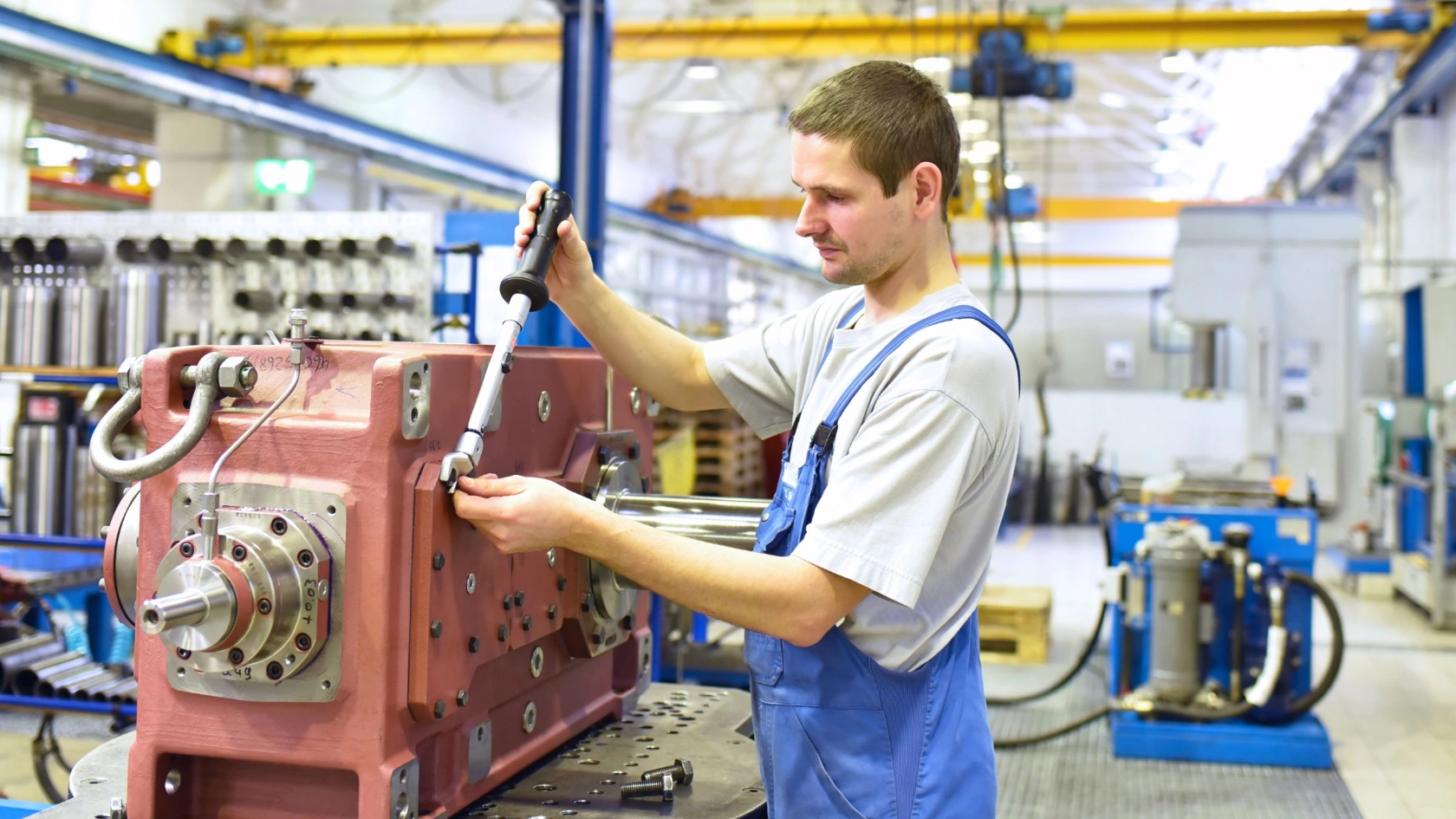
Beschäftigter arbeitet an einem Getriebe in einer Fabrik
Working Hours Why working longer doesn’t help—and actually does more harm than good

The German metal and electrical industry is in crisis and cutting jobs. Employers are demanding that we work longer hours again—preferably without pay—and that the 35-hour workweek be abolished, claiming that this would solve everything. But will that really make a difference?

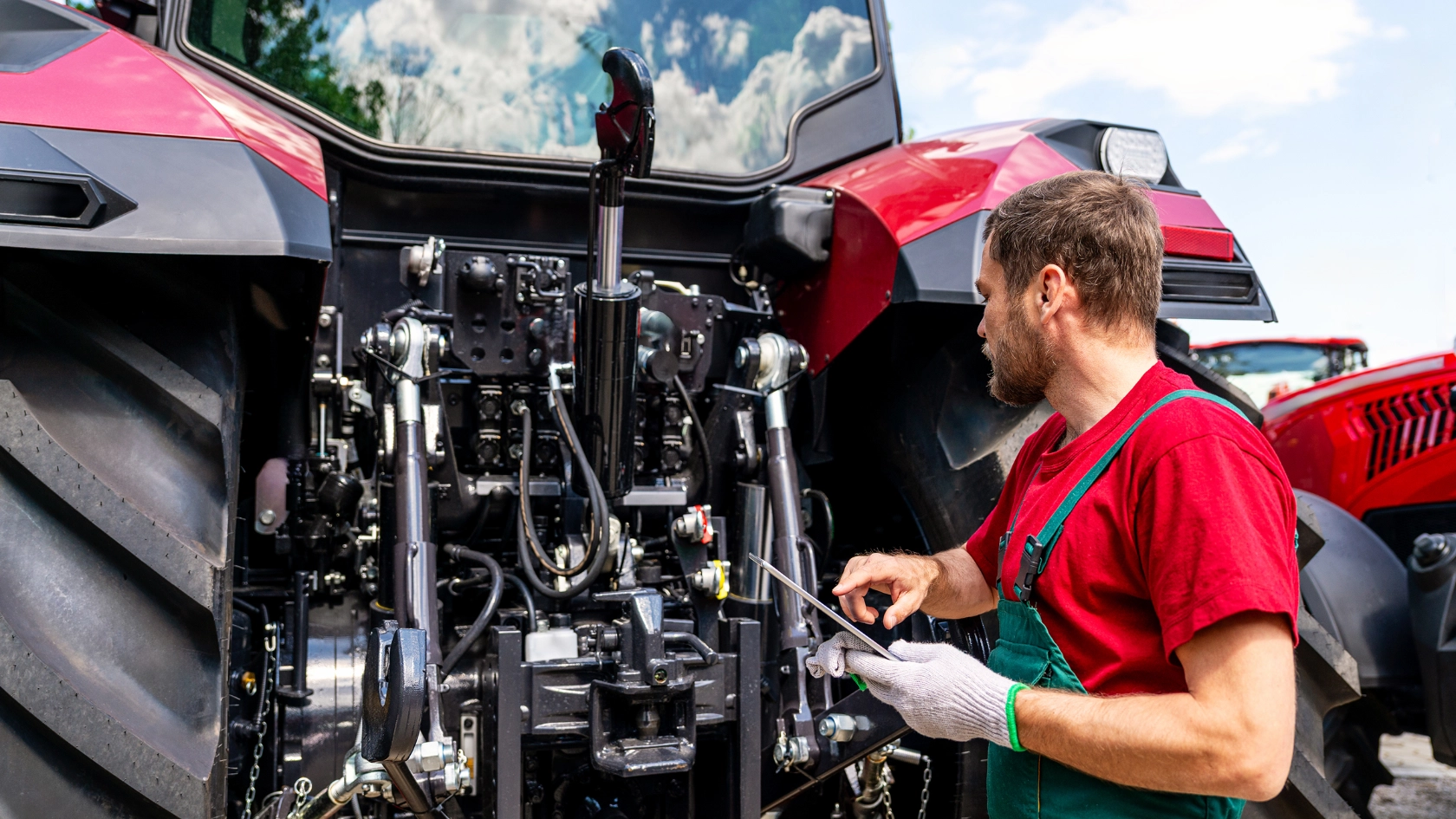
Ein männlicher Land- & Baumaschinenmechatroniker prüft einen Traktor mit einem Tablet
2026 Collective Bargaining Agreement for the Metalworking and Agricultural Engineering Sectors Greater Flexibility in the Metalworking and Agricultural Engineering Sectors in Lower Saxony and Bremen

Workers in the metalworking and agricultural machinery sectors in Lower Saxony and Bremen can look forward to a 2.5 percent pay raise and the option to convert pay into time off.

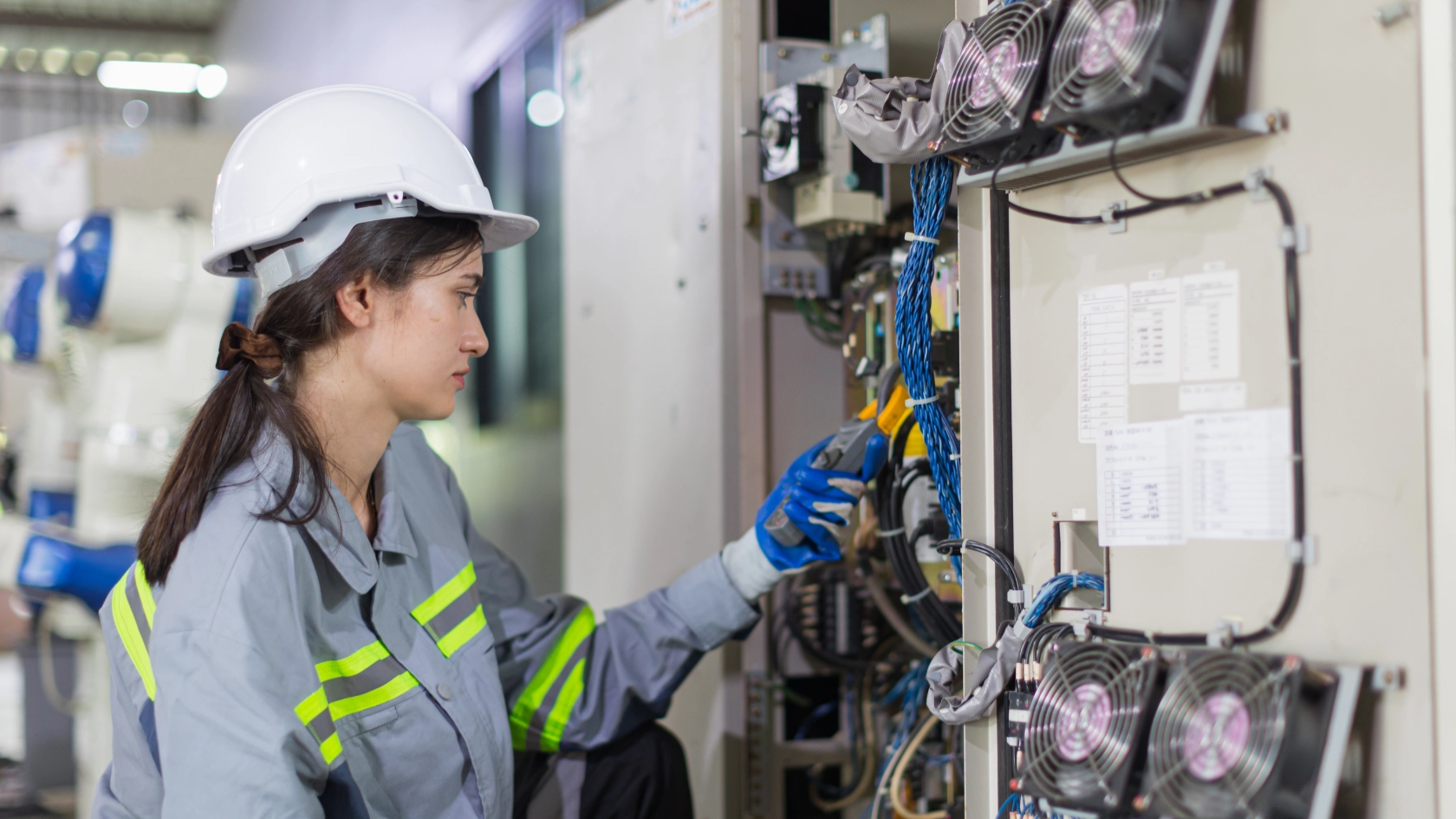
Elektronikerin prüft die Spannung an einem Schaltschrank.
2026 Collective Bargaining Round for the Electrical Trades Wage Increase in the Electrical Trades in Berlin-Brandenburg

Collective Bargaining Agreement for the Electrical Trades in Berlin-Brandenburg: Wages will increase in two stages starting January 1, 2027. Apprentice wages will also be raised in two stages.

Benjamin Heine ist Mitarbeiter der BMA in Braunschweig
2026 Collective Bargaining Round for Metal Fabrication and Precision Engineering Higher Wages in the Metal Fabrication and Precision Engineering Sectors in Southwest Germany

The collective bargaining agreement provides the approximately 30,000 employees in Baden-Württemberg with a compensation bonus and a pay increase reflected in the pay scale, effective February 2027.

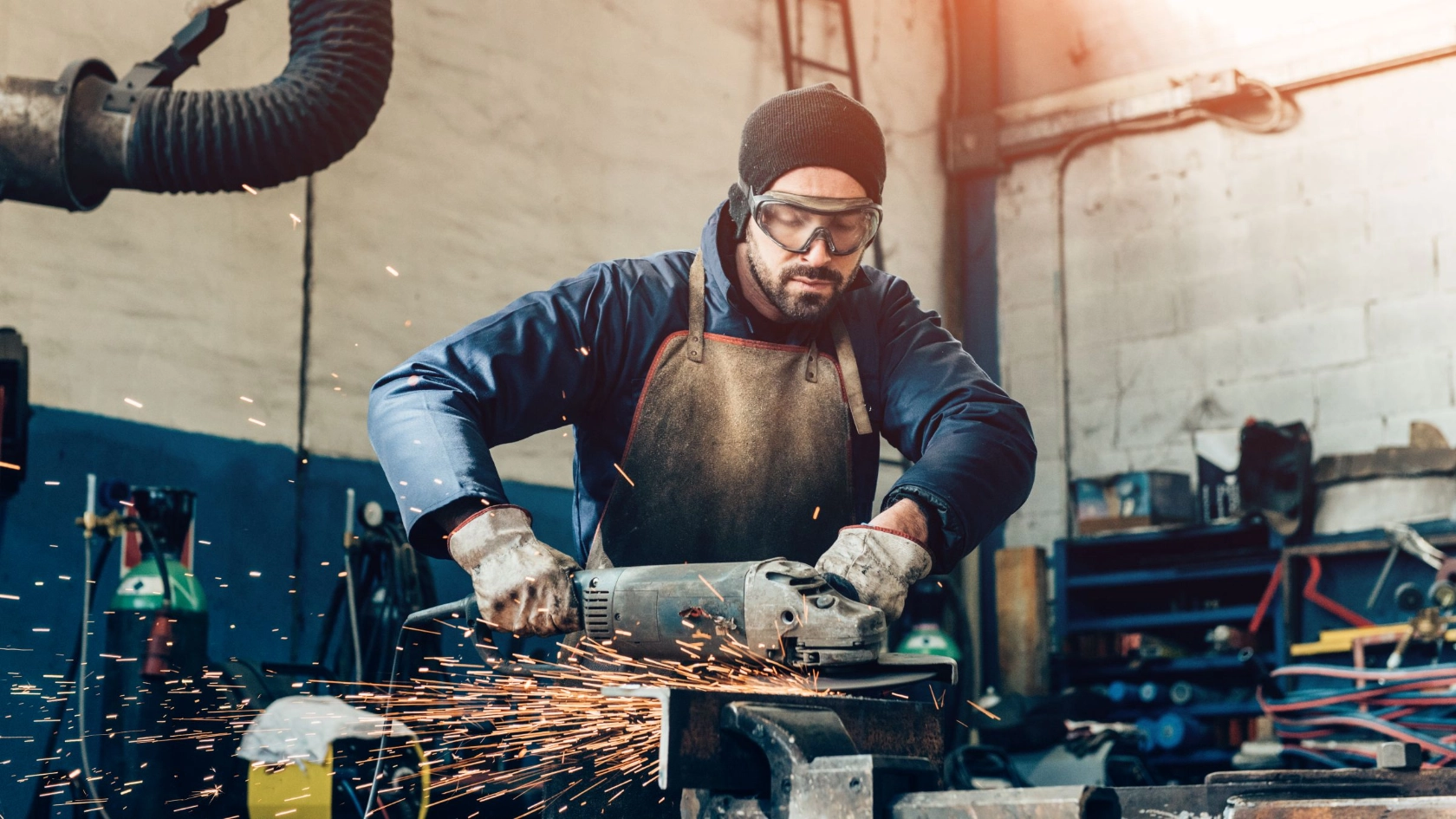
Metall-Arbeiter beim Schleifen
2026 Collective Bargaining Round for the Metalworking Trade Employees in the Berlin-Brandenburg metalworking sector will receive higher pay

Collective bargaining agreement in the Berlin-Brandenburg metalworking sector: Wages and apprenticeship stipends will increase starting in July. In addition, employees will receive a one-time payment and a new annual recreation allowance.

Beschäftigte von Thyssenkrupp demonstrieren in Essen am 23. Mai 2024 gegen das Vorgehen der Geschäftsführung beim geplanten Teilverkauf des Unternehmens.
Defend the welfare state All dates for nationwide actions against cuts to social services

The federal government’s reform plans will mean cuts for many workers. It’s time to actively defend the welfare state.

IGM Aktion VW Wolfsburg
On September 21, things will get loud Nationwide Day of Action: Auto Industry Workers Fight Back Against Mass Layoffs

Automotive industry workers are resisting their corporate bosses’ fantasies of cost-cutting and offshoring. During the nationwide day of action, they will send a clear message: Competitiveness is not achieved through cost-cutting, but through investment.

Auszubildender in einer Schreinerei
Apprenticeship Wages Questions and Answers About Apprenticeship Wages

How much money are apprentices entitled to? Apprenticeship pay can vary depending on the industry, region, and whether a collective bargaining agreement applies. One thing is certain: you’re better off with a collective bargaining agreement. Our FAQ on pay.

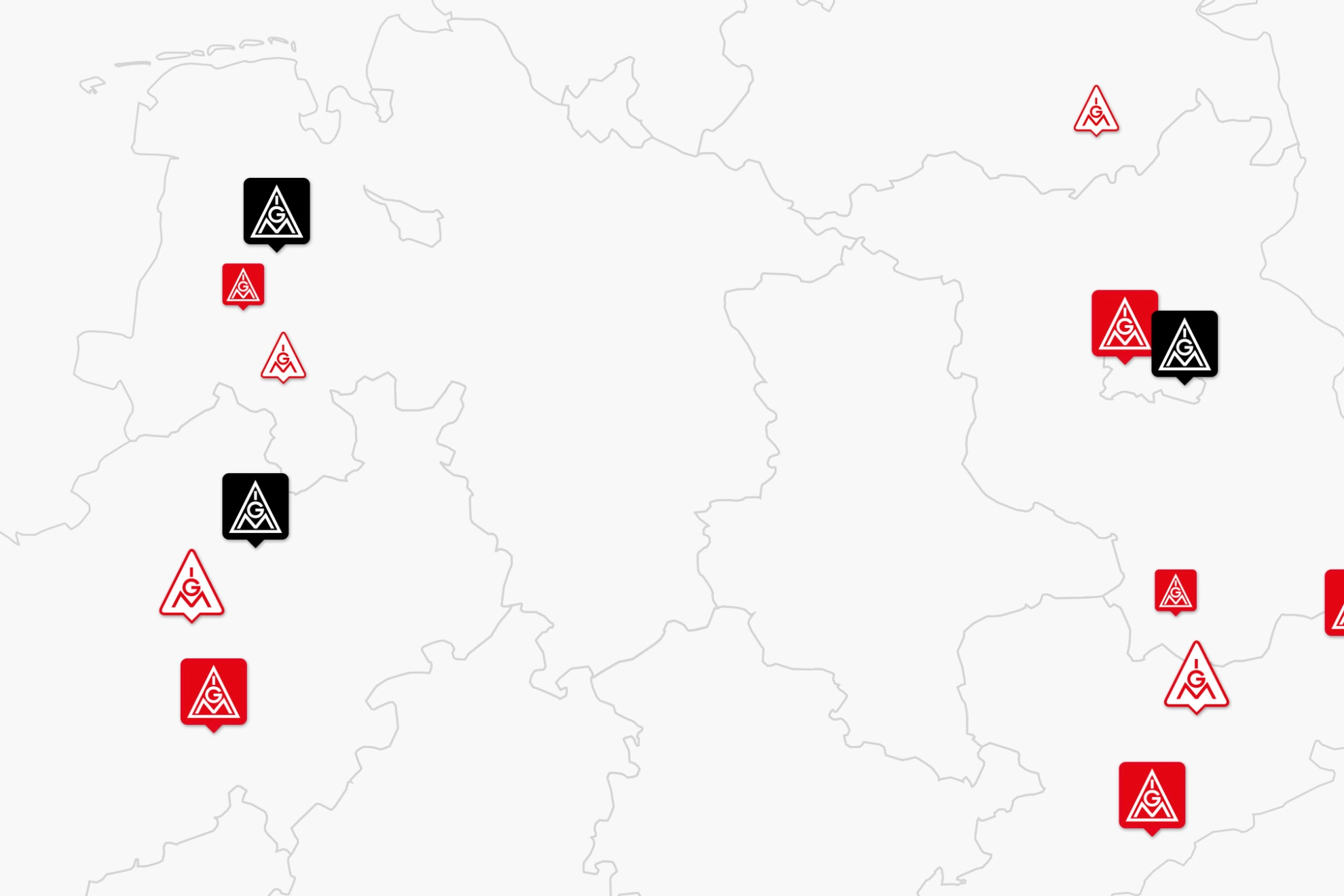
Landkarte mitmarkern für Geschäftsstellen
Interaktive-Landkarte.png IG Metall in Your Area
Advice, Service, Help

Any questions? Contact your local IG Metall office for more information.

Subscribe to the newsletter