The third round of collective bargaining for the metal and electrical industry in 2026is underway. The negotiations held so far—on Thursday in Baden-Württemberg and on Friday in Lower Saxony, Berlin-Brandenburg, Central Germany, and the Coastal Region—did not yield any decisive progress.
During the negotiations, IG Metall presented a proposal to secure the industry’s future: temporary collective bargaining provisions combined with investments in future-oriented products and binding commitments regarding locations, jobs, and training. Deviations from collective bargaining standards should only be permitted in clearly defined cases and must be tied to verifiable commitments from the companies. A blanket waiver by employees solely for the purpose of cost reduction is not a solution for IG Metall.
Employers, however, insisted on their reduced offer from the second round of negotiations: only a 1.3 percent increase, but not until July 2028—and, in addition, further concessions from employees. They were unwilling to commit to securing the future or jobs.
IG Metall expects answers from the employers no later than Monday’s negotiations (Bavaria, Saxony, Osnabrück-Emsland-Grafschaft Bentheim, Saxony-Anhalt, and North Rhine-Westphalia).
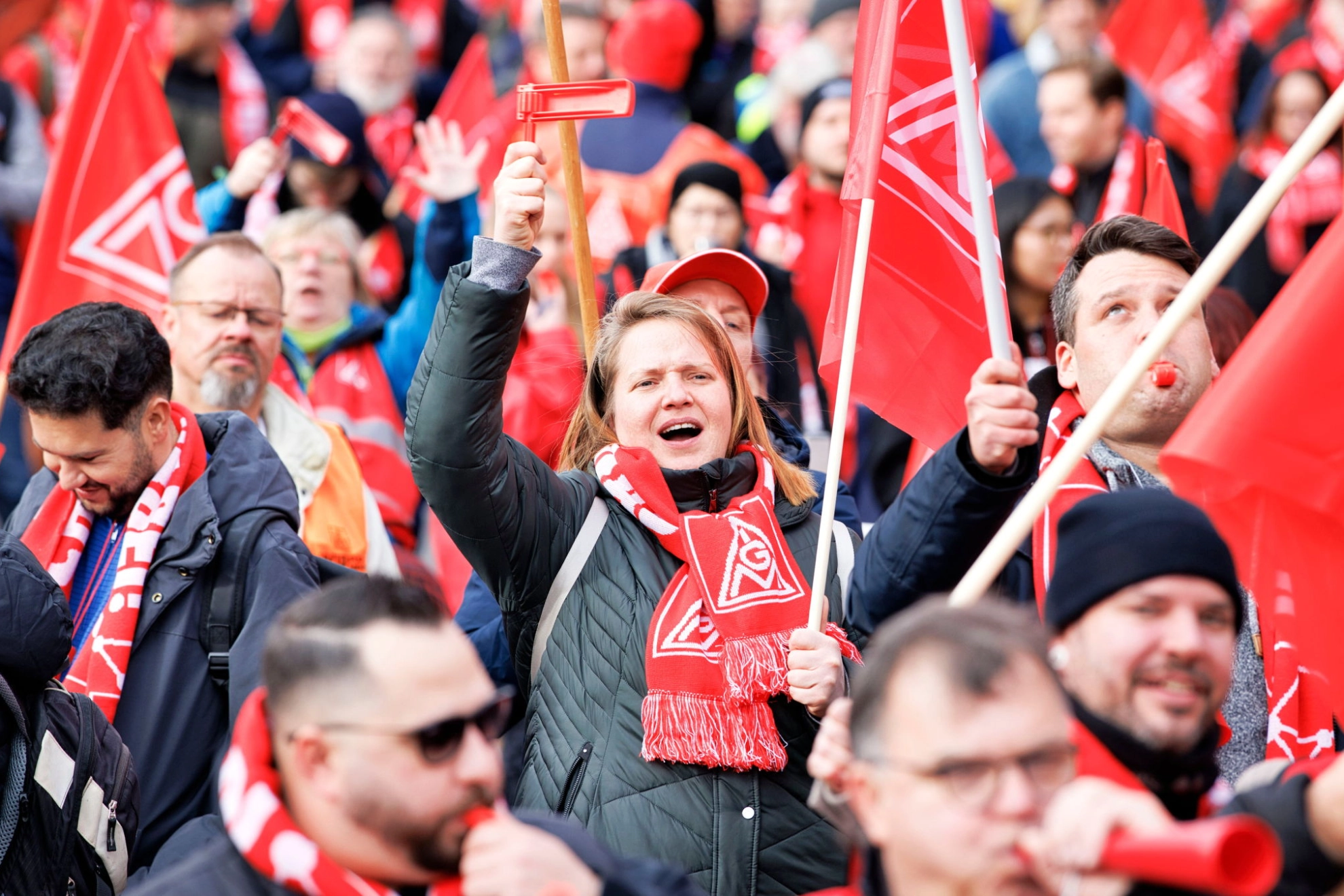
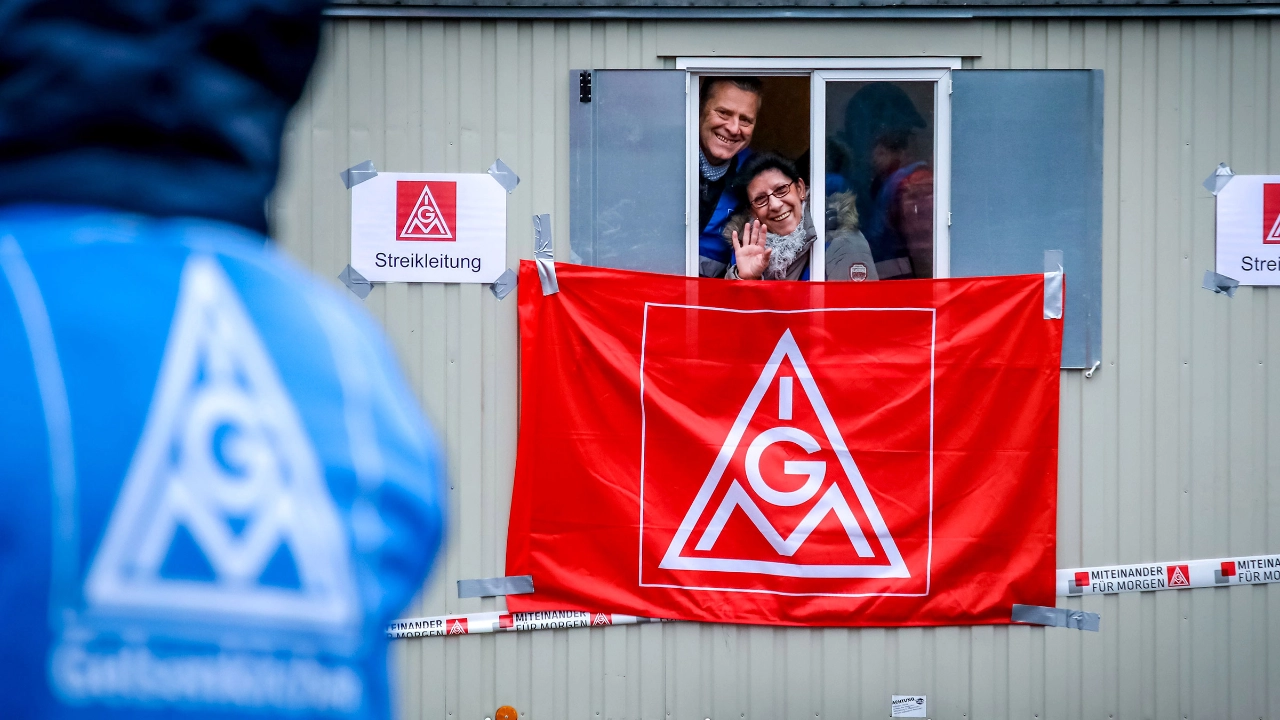
Meanwhile, IG Metall continues to apply pressure with warning strikes. Since the expiration of the peace obligation at midnight on November 1, 400,000 workers have already participated in 3,800 warning strike actions. You can find the latest news, photos, and videos in our collective bargaining ticker.
Employers Are Offering Only a 1.3 Percent Increase—Starting in July 2028
Employers are offering only a 1.3 percent pay increase—and not until July 2028, after a 20-month wait for employees. Over a 26-month period, this amounts to just 0.6 percent more per year—while inflation is as high as 3 percent.
Only in companies that are doing well do employers intend to grant employees a one-time payment in the three-digit euro range in July 2027
Employers are even going so far as to seriously portray their offer as “fair”—and are also threatening further job cuts. At the same time, however, they are complaining about IG Metall’s warning strikes.
“Our colleagues are highly committed; they are fighting for the future of their families and jobs,” explains IG Metall collective bargaining director Nadine Boguslawski. “They expect tangible purchasing power as well as concrete commitments and plans from employers to secure industrial value creation and investments at the local level. Threats of further job cuts are not helpful. Our proposal for fair and flexible collective bargaining agreements is on the table—now it’s the employers’ turn.”
The employers’ offer in detail
What the employers are offering:
- Lump-sum payment: 1 percent of the average annual gross pay, automatically “adjustable” based on the company’s economic situation—meaning it is not guaranteed for everyone—in July 2027.
- Increase in monthly wages: plus 1.3 percent starting in July 2028.
- Term: 26 months through the end of December 2028.
What the employers are demanding:
- Greater differentiation: The automatic “differentiation” is to be expanded and made permanent. “Differentiation” means, for example, that a company can postpone or suspend payments in the event of problems, as is already the case with the transformation allowance.
- Sick Leave: A collective bargaining obligation to hold discussions on sick leave and measures to reduce sick leave costs.
- Artificial Intelligence: A collective bargaining obligation to hold discussions on the use of AI.
IG Metall is demanding a 5 percent pay increase for a 12-month term. It also wants to secure jobs and business locations. Companies performing well should offer a profit-sharing plan under the collective bargaining agreement. Low-income employees and apprentices should receive a social component.
Mixed Economic Outlook – Positive Trend
In negotiations to date, employers have painted a bleak picture of the situation in the metal and electrical industries. In fact, however, economic research institutes have recently revised their forecasts significantly upward. Surveys conducted by IG Metall among works councils also show an upward trend: 62 percent of companies are once again operating at good to very good capacity utilization.
However, the situation varies greatly. While the automotive and supplier industries are struggling, other sectors such as aerospace, medical technology, electrical engineering, and defense technology are booming. And the majority of works council members rate the outlook for the next six months as good or even very good—even in the automotive industry.
At the same time, high prices are placing a significant burden on workers. IG Metall aims to safeguard purchasing power—and thereby stabilize the economy as well: Private consumption accounts for more than half of the gross domestic product.
















To load this video, you must enable YouTube cookies and thereby agree to the YouTube privacy policy.