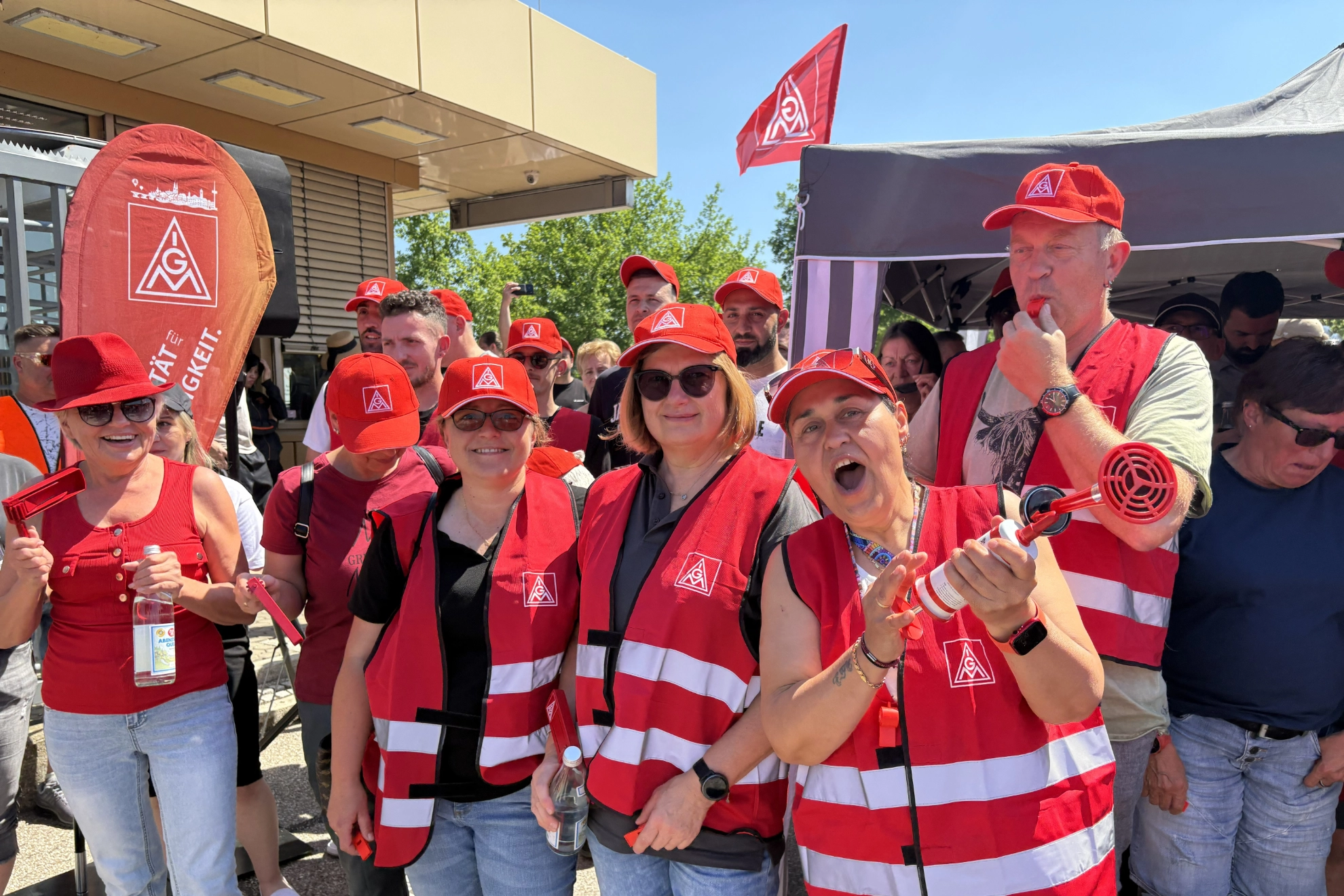
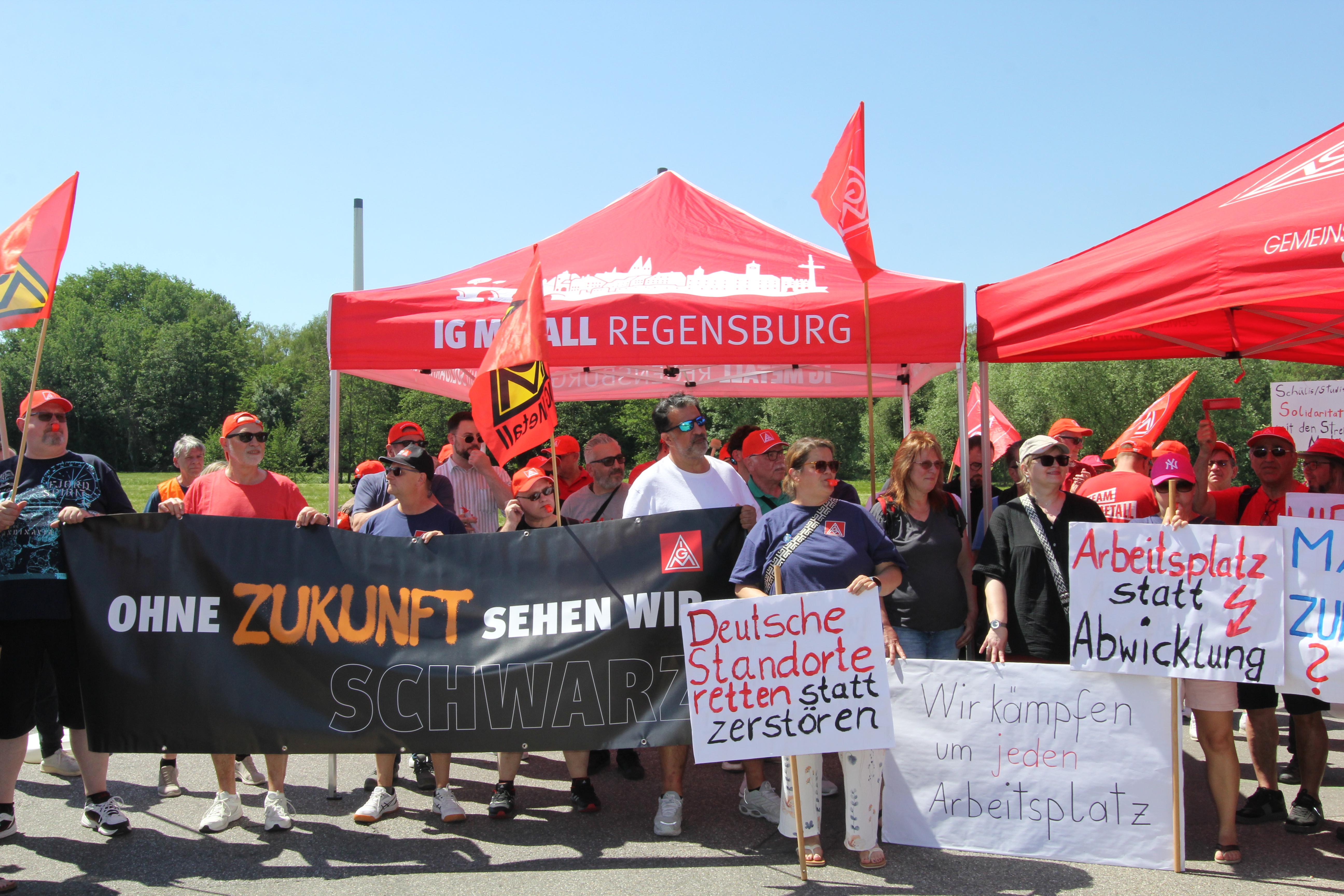
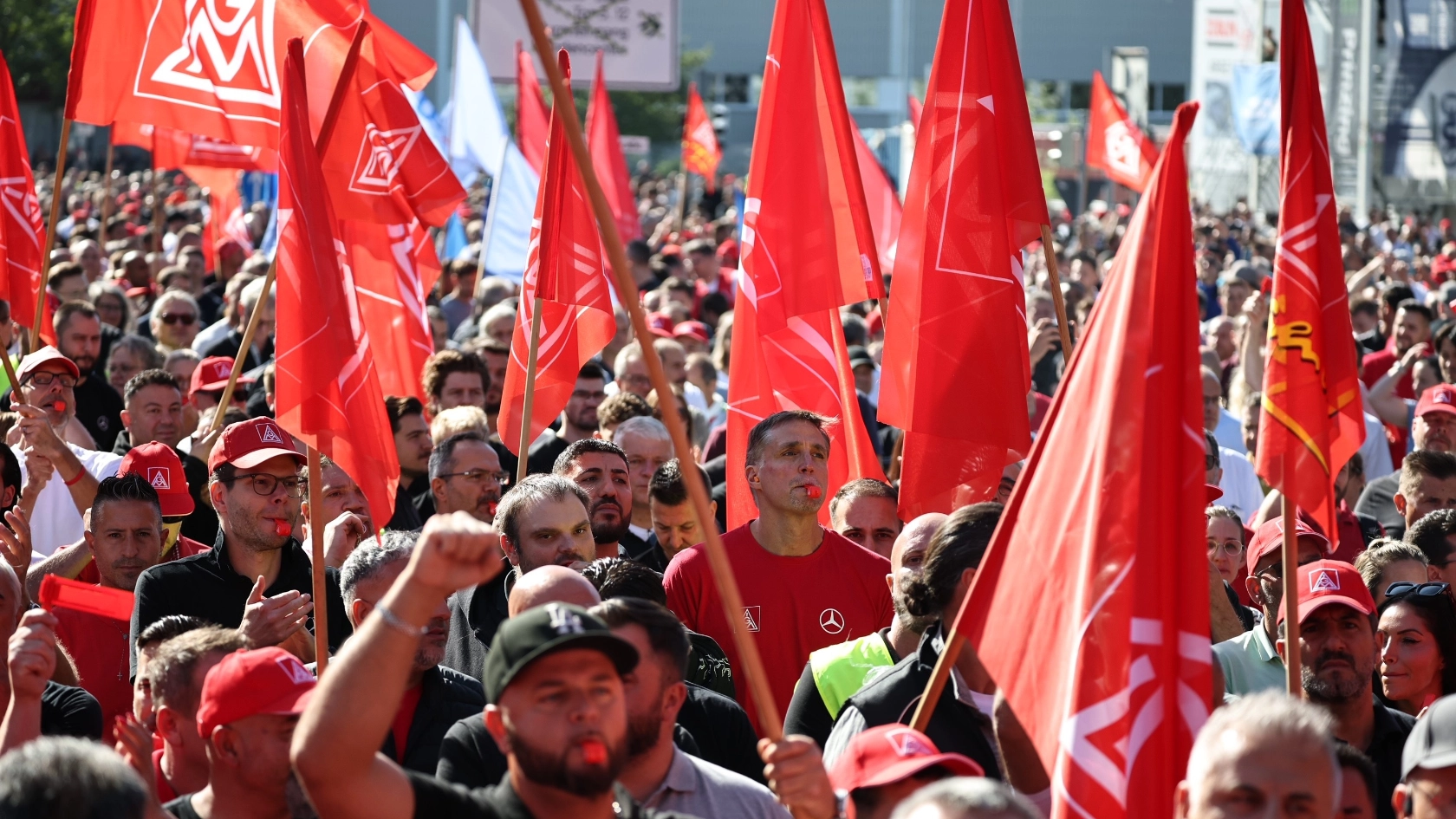
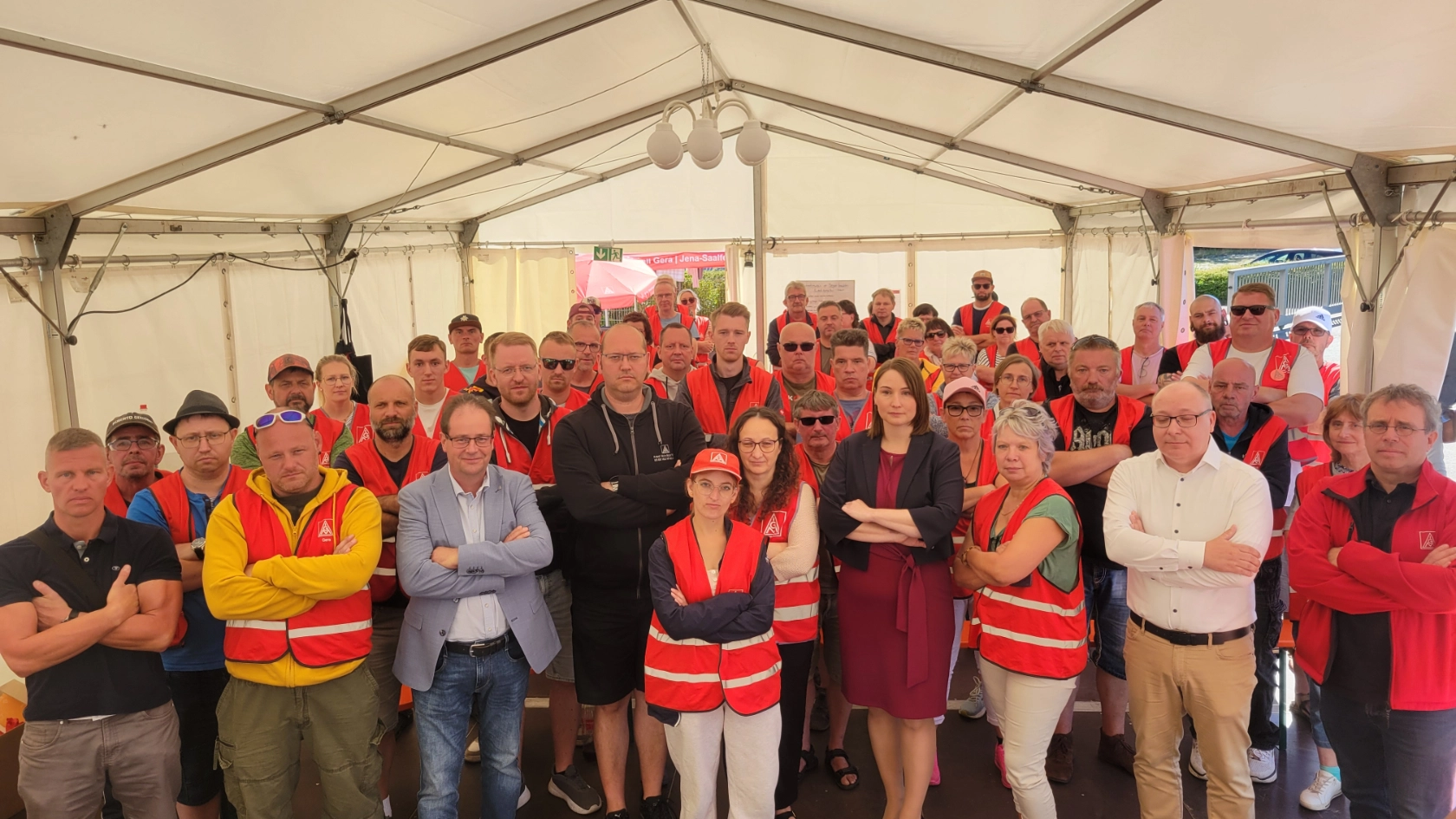
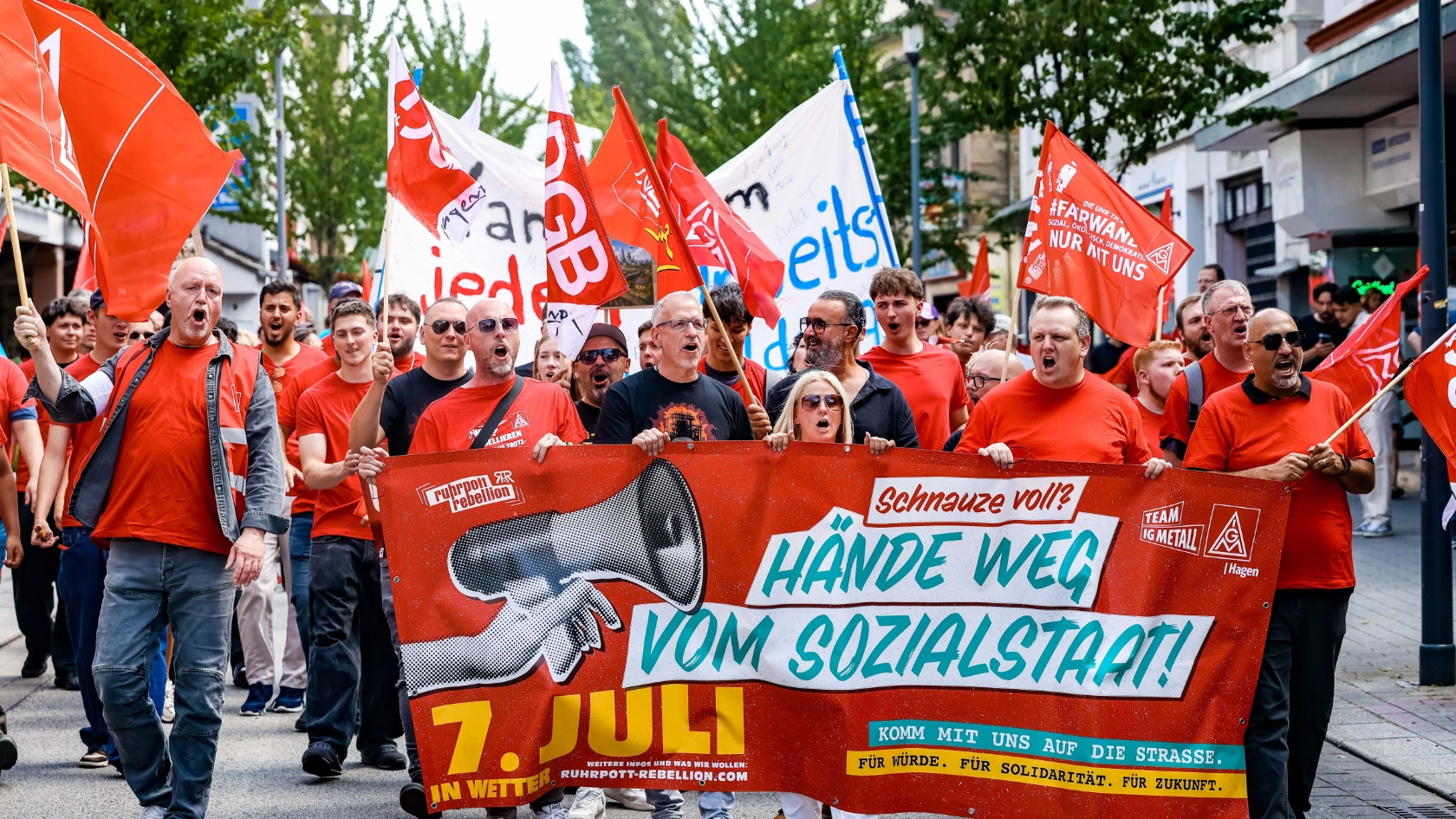
For eight days, the approximately 400 employees of automotive supplier Mahle in Neustadt an der Donau (Bavaria) went on strike. They were unable to prevent the closure announced by the company for early 2027. Under German law, decisions regarding locations and closures fall under the employer’s “freedom of enterprise.” But they put up a strong fight—and, through their strike in collaboration with IG Metall, secured a collective bargaining agreement:
Compared to the company’s original plans, IG Metall was able to secure a much higher level of financial protection: significantly improved severance pay provisions that include age-based factors, minimum amounts, and a high cap of 250,000 euros. Additional payments are provided for employees with dependent children, as well as for severely disabled employees and those deemed equivalent.
In addition, there is a very substantial membership bonus totaling 3.25 million euros for IG Metall members. The amount of the payment is based on the length of membership and results in significantly higher severance pay, particularly for unionized employees with long-standing memberships.
“Those who destroy jobs must not get off lightly”
“The closure of this economically successful site is and remains a mistake. But we’ve made it costly for Mahle—and that’s exactly how it should be,” says strike leader Rico Irmischer, chief representative of IG Metall Regensburg. “Those who destroy jobs must not get off lightly. With this hard-won negotiation result, we were able to secure tangible financial protection for the workers. Without the strike and the workers’ tremendous commitment, this would not have been possible.”
In addition to severance pay and the membership bonus, a hardship fund and a transfer company with a legal entitlement were agreed upon. The transfer short-time work allowance will be increased to 80 percent of the last net pay. As an alternative to severance pay, the collective bargaining agreement allows for a phased transition to retirement starting at age 60—with financial compensation.
“Our tremendous unity was our greatest asset. Our colleagues at the plant stood together and were able to rely on broad solidarity far beyond the site,” explains Peter Meier, deputy works council chair and member of the negotiating committee. “This makes it all the more bitter that the closure could not be prevented. At the same time, this joint struggle has shown the power that arises when employees stand united—that’s how we were able to secure the best possible outcome for ourselves.”
IG Metall members at Mahle in Neustadt an der Donau approved the outcome of the negotiations on a social collective bargaining agreement by a clear majority in a shop-floor vote and, at the same time, decided to end their strike.
Mahle Abandons Its “Future Process”—and Pursues a Confusing Relocation
The strike at Mahle in Neustadt began last Tuesday. Metalworkers from numerous plants rallied behind the striking workers in Neustadt, visited the site, and sent messages of solidarity—including from client companies such as BMW in Regensburg.
The approximately 400 employees manufacture air conditioning systems for BMW, Porsche, Volvo, Jaguar, and Land Rover—including for electric cars—and the plant is profitable. Nevertheless, on May 12, management announced that the site would be closed in the first half of 2027 and relocated to Slovakia.
At the time, a joint process to plan for the future was still underway with the works council and IG Metall, during which IG Metall had presented detailed proposals to ensure the plant’s long-term competitiveness. After management continued to refuse to negotiate future prospects following four rounds of talks and several warning strikes (including a full-day strike), 98.4 percent of IG Metall members at Mahle in Neustadt an der Donau voted in a strike ballot to launch an indefinite strike for a social collective bargaining agreement.
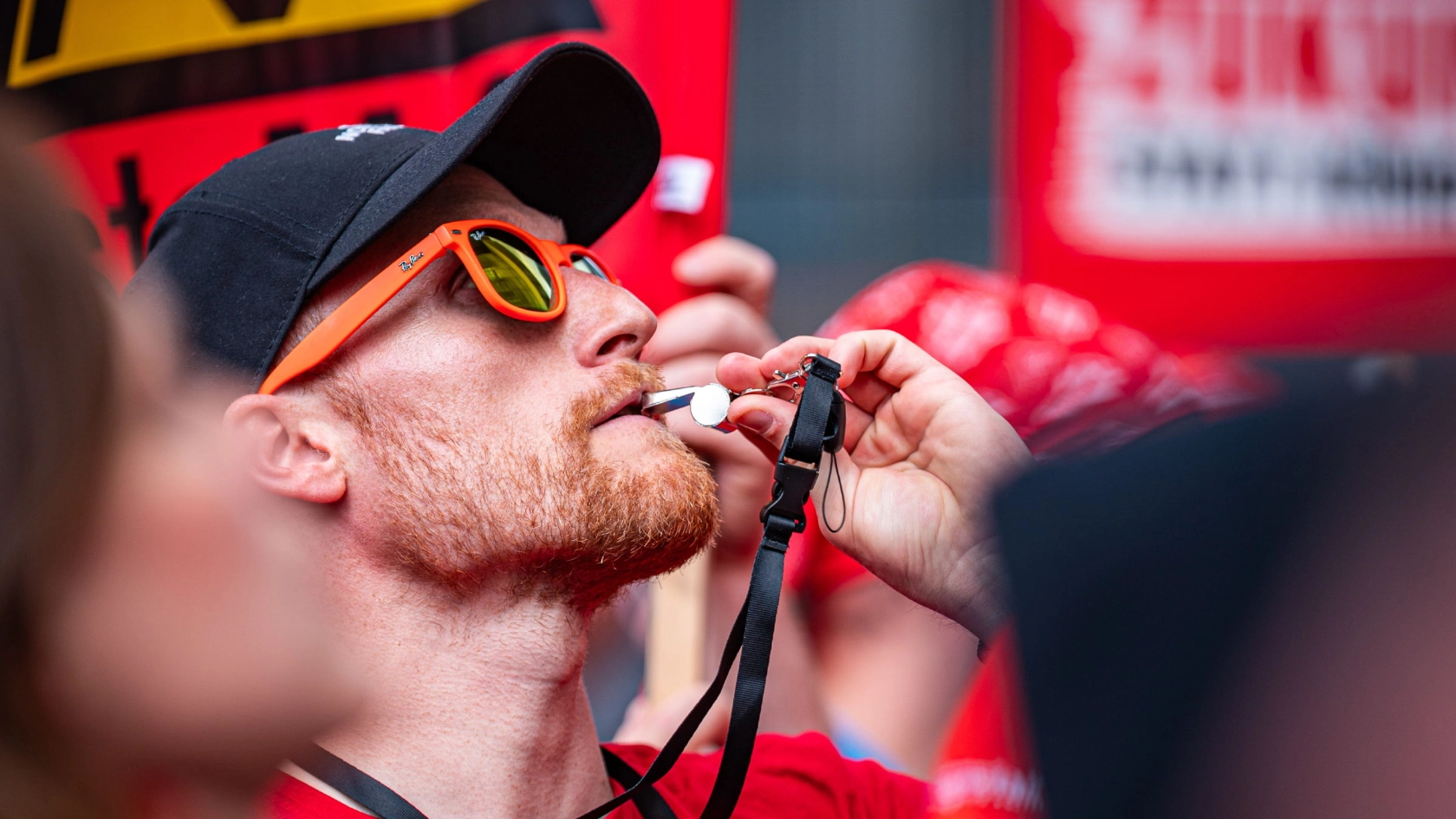
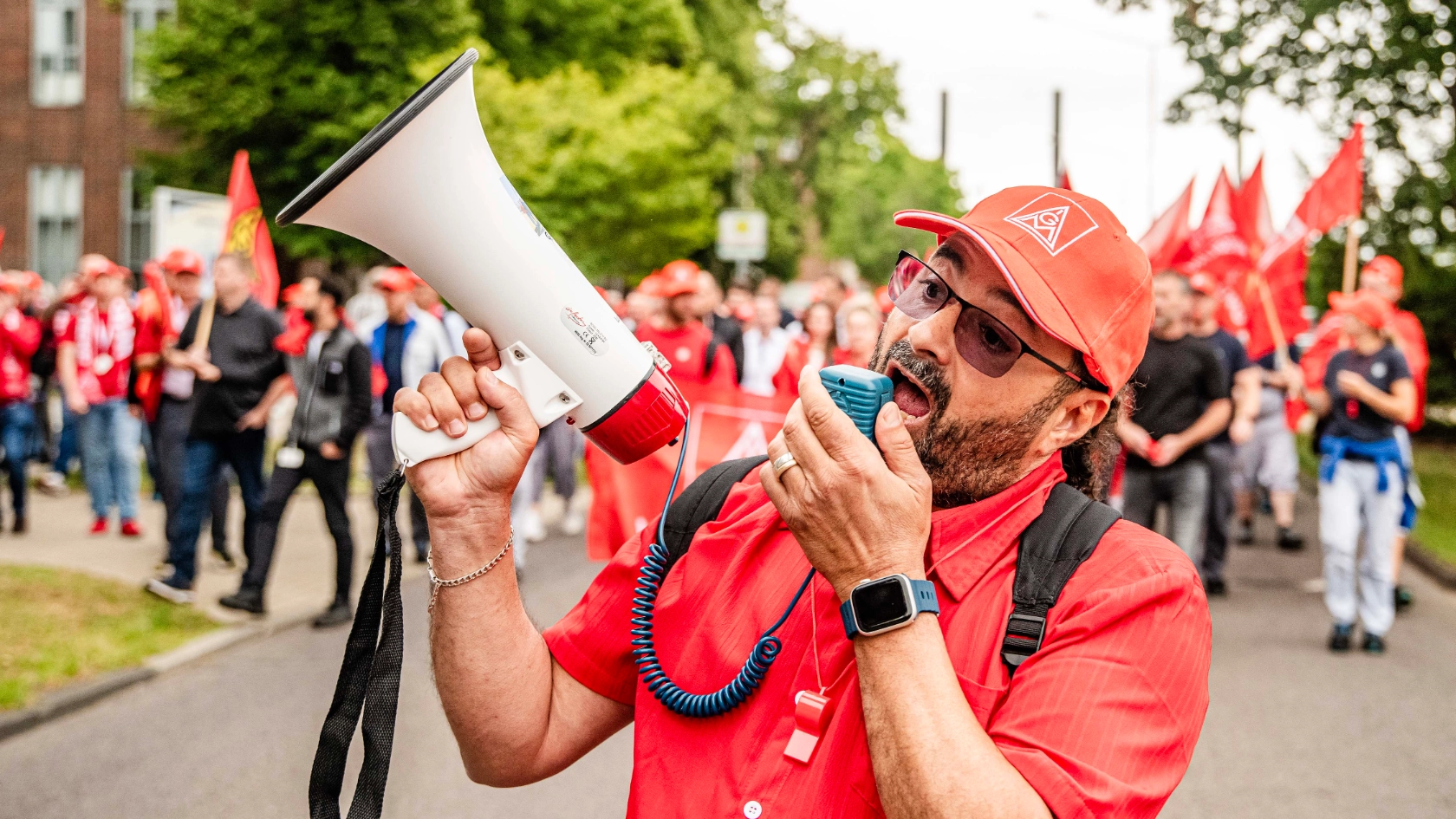
Mahle employees in Neustadt on strike for their future.
As early as February, Mahle had broken off the joint process to secure the site’s future with IG Metall and the works council. At that time, it came to light that management was unilaterally attempting to sell the company grounds and factory buildings.
Yet production in Slovakia has not even been set up yet. Mahle therefore plans to temporarily relocate parts of production to China, from where the air conditioning units are then to be shipped halfway around the globe back to Germany and to the Volvo plants in Sweden and Belgium. In the long term, all production is to be moved to Slovakia.
Horst Ott, the Bavarian district director of IG Metall, sharply criticizes the actions of Mahle’s top management: “It is irresponsible for Mahle to push through the closure of a functioning site against all arguments. The people here have delivered for years—with dedication, flexibility, and sacrifice. And yet their future prospects are being taken away. Such decisions destroy trust and jeopardize Germany as an industrial location. One thing is clear: We will not accept such decisions without a fight. We will continue to apply pressure.”