What is the government planning?
Pensions are still calculated differently in eastern and western Germany: In the east, pension insurance contributions are“adjusted upward”because wage levels there are generally lower. In return, a pension point—a key factor in pension calculations—is worth less in the east than in the west. The government wants to eliminate these differences.
Are there only winners in this reform?
No. The reform is positive for current pensioners in the East and for workers in eastern Germany who are nearing retirement. They will benefit from the fact that their accumulated pension points will be worth more in the future, meaning they will receive a higher euro amount for each pension point than before.
“Most workers, on the other hand, must expect a lower pension. This applies especially to younger people,” warns Hans Jürgen Urban, executive board member of IG Metall.
The reason: Wages in eastern Germany are, on average, still significantly lower than in the west. As a result, pension contributions are also lower on average. Until now, this imbalance has been offset by “adjusting upward” eastern wages when calculating pensions. If this provision is eliminated, workers will accrue lower pension entitlements than before. “We must cushion this with targeted measures to prevent poverty in old age,” Urban demands.
How will the reform be financed?
The reform costs money. And that money is supposed to come primarily from the statutory pension insurance system—even though contributions were never paid toward these costs. The federal government does not plan to provide additional funds until 2022, up to a maximum of two billion euros per year by 2025. Until then, however, the pension insurance system will face additional expenses of up to 15 billion euros.
What does IG Metall say?
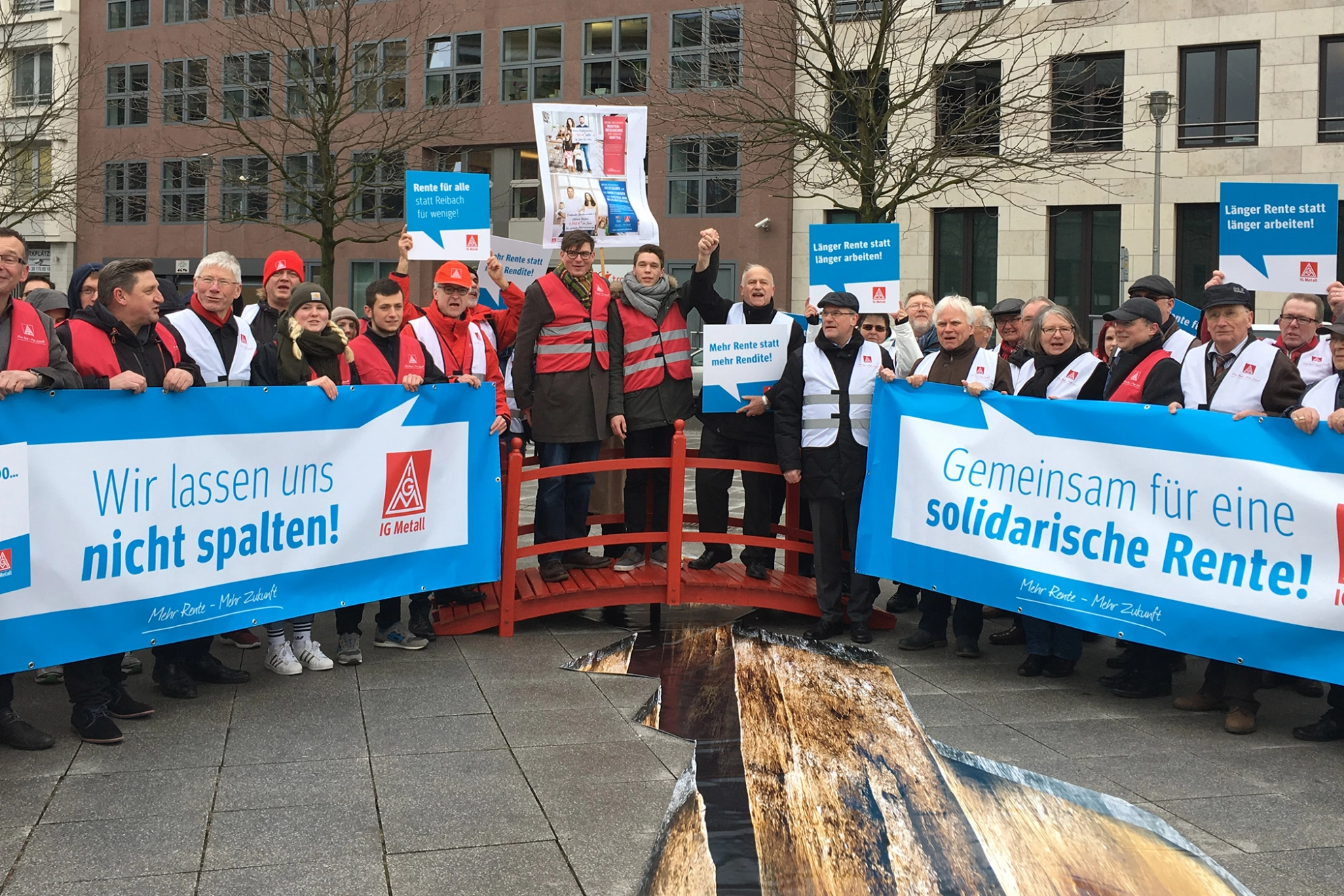
One thing is certain: It is high time to overcome the pension divide between East and West. However, the government’s plans will also create losers. IG Metall wants to avoid that—and here’s how:
Income: Those who earn less also receive a lower pension. Therefore, we must not lose sight of the goal of equalizing incomes between East and West. Within IG Metall’s organizational sphere, collective bargaining terms have already been largely harmonized. On average, however, incomes in the new federal states are still below those in the West.
This is where lawmakers must step in: They should curb employers’ tendency to circumvent collective bargaining agreements. It should be easier to declare collective bargaining agreements generally binding. Below-average pay and wage discrimination must be combated.
Pension Policy: The east-west alignment of pensions must be accompanied by measures to prevent poverty: on the one hand, to offset impending losses in future pensions in the east; on the other hand, because the risk of poverty in old age exists in the old federal states just as much as in the new ones.
The most important measures against poverty in old age:
- Low incomes must be adjusted upward in pension calculations
- Protection for the long-term unemployed through effective contributions to the pension fund and better recognition under pension law of periods of absence from work (such as for raising children or providing family care)
- Increase basic income support for the elderly and for those with reduced earning capacity.
The following applies to all measures: They are tasks for society as a whole and consequences of reunification. Therefore, they must be financed entirely from (additional) tax revenues—and not largely from contributions to the statutory pension insurance system, as currently planned by the federal government.
The central goal of pension policy remains: to stabilize and subsequently raise the statutory pension level.
Recommended reading: Click here for IG Metall’s pension plan