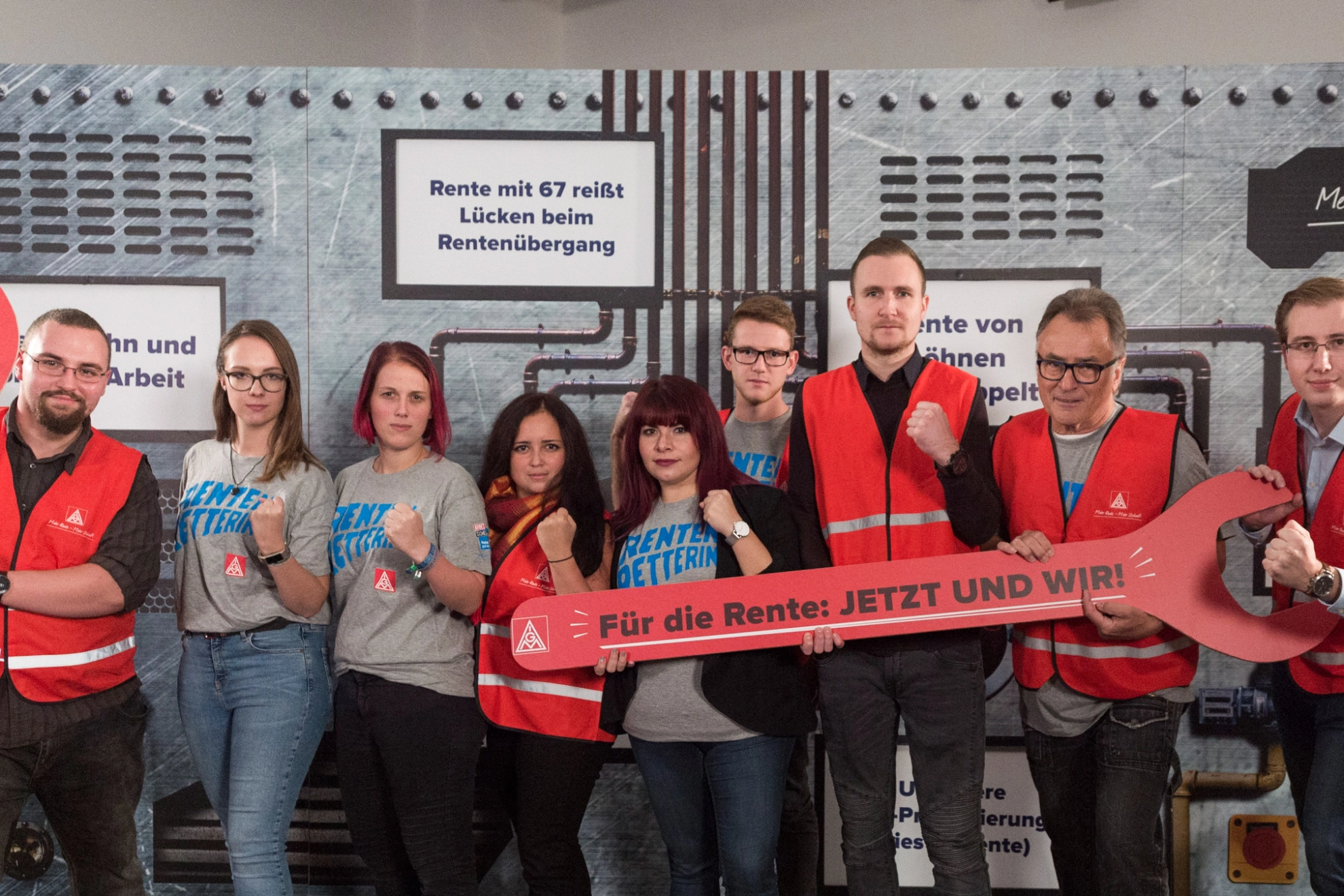
When politicians cut the public pension system, they often justify it with the following argument: It is unfair for the working young generation to pay ever-higher contributions for the growing group of retirees.
But it is precisely the younger generations who will suffer from pension cuts. And young people know this, too. A representative survey conducted by the TNS Infratest Institute for IG Metall shows that no other age group is as concerned about the future of their pensions. Even among the general population, 64 percent do not believe they will be able to live comfortably on their statutory pension later in life. Among 18- to 34-year-olds, that figure rises to 73 percent.
In line with this level of pessimism, 60 percent of citizens under the age of 35 have little or no confidence in the statutory pension system. Confidence is also waning among older generations. Overall, more than one-third of all respondents (38 percent) say their confidence in the statutory pension system has declined in recent years.
Willing to Invest
How can confidence in retirement security be strengthened? Certainly not by expanding private, funded retirement plans.
“The study shows that younger people, in particular, would already be willing to invest more in the solidarity-based statutory pension system—if it were to come close to securing their standard of living in old age. That is an important message,” says Hans-Jürgen Urban, executive board member of IG Metall.
Insurance for Everyone
Another finding: Nearly 80 percent of respondents support the proposal to expand the statutory pension system into an insurance scheme for all working people—a demand made by IG Metall. This would mean that all working people would contribute to the statutory pension system. Currently, many occupational groups—often those with high incomes—are exempt, such as the self-employed, civil servants, and politicians.
Public opinion is even clearer on the issue of the retirement age. Only 14 percent of those surveyed think it makes sense to raise the retirement age even further, that is, beyond age 67. 84 percent are against it.