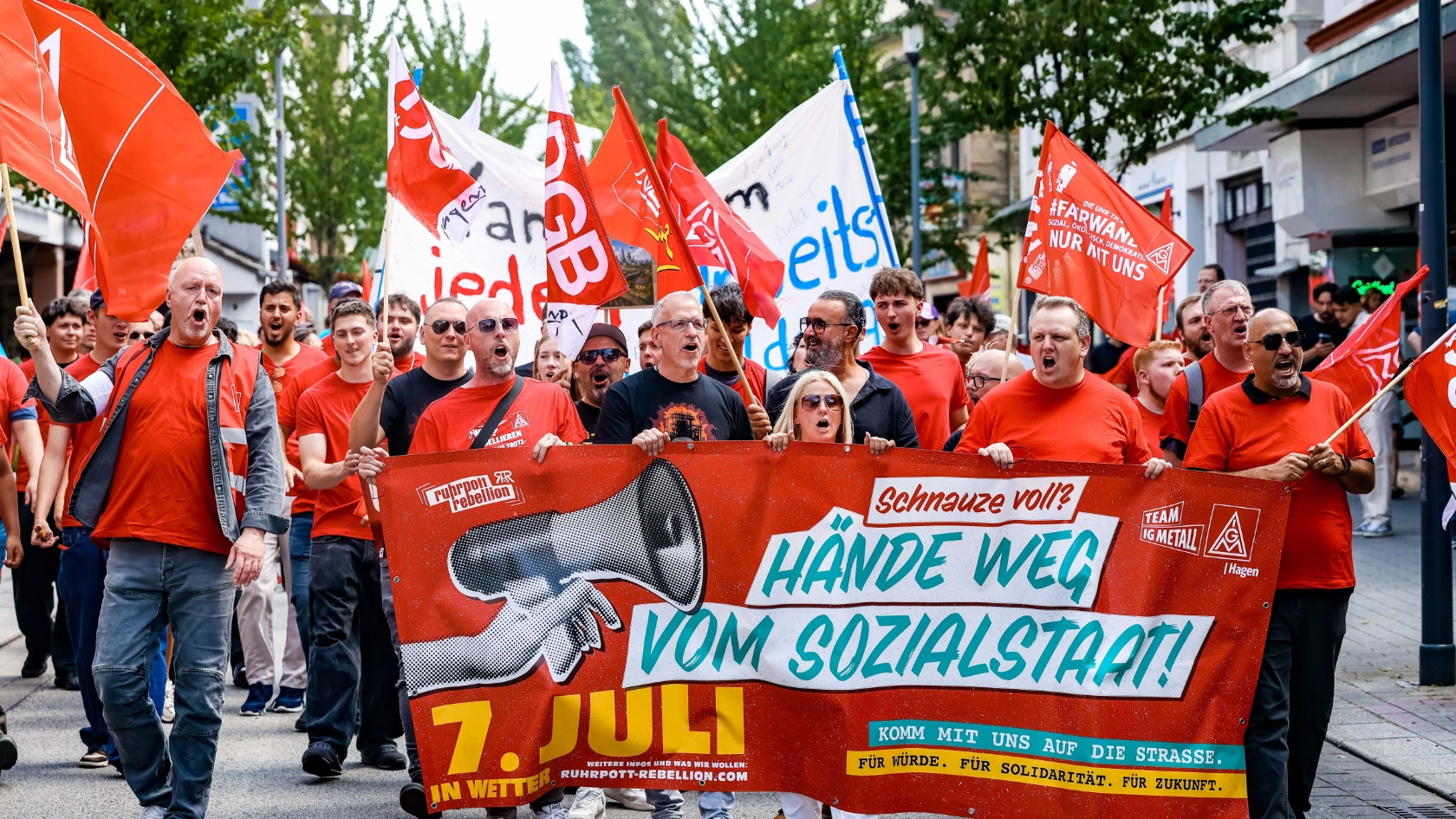
Tax relief on the one hand, more pressure in the event of illness and fixed-term contracts on the other: On July 1, the coalition committee agreed on a comprehensive reform package that affects workers in several ways.
The planned financial relief is a positive development. Workers with low and moderate incomes are set to receive tax relief starting in 2027. According to the federal government, the net income of many workers will increase by up to 600 euros, depending on their individual income. The total volume is expected to amount to around ten billion euros annually.
On the negative side are changes to protection against dismissal and many proposals from the Pension Security Commission, all of which are set to be implemented. The massive expansion offixed-term contracts without objective grounds, as well as stricter rules regarding sick leave, are bad news for workers.
IG Metall takes a critical view of the following points:
- The use of fixed-term employment contracts without objective grounds is set to be massively expanded by the end of 2030—up to four years, with the possibility of six extensions during that period, even with the same employer.
- The coalition plans to abolish sick leave certificates issued over the phone.
- Starting on the very first day of illness, a medical certificate of incapacity for work is to become mandatory again. Employees will then have to wait for their sick note in overcrowded doctors’ offices or drag themselves to work while sick, instead of recovering or preventing a more serious illness.
- For those with very high incomes, it will in the future be possible to terminate the employment relationship more easily in exchange for a severance payment.
- The proposals of the Pension Security Commission are to be fully implemented. They include highly problematic measures such as raising the standard retirement age, abolishing pensions for those with particularly long insurance histories (45 years of contributions) and partial retirement, as well as the risky and expensive introduction of a capital market component into the statutory pension insurance system.
The announcement to keep the unemployment insurancecontribution rate stableis not a solution to the growing funding problems; rather, it prematurely relieves employers of their shared responsibility.
The reform of statutory health insurance is set to be adopted without changes, despite numerous criticisms from unions, the medical community, and social welfare organizations.
On the issue of pensions , too, there are only vague announcements about implementing the Pension Commission’s recommendations by the end of the year.
The DGB’s Pension Commission has presented its own plan for a fair pension system. When it comes to pension reform, one thing is clear: We will fight to preserve the right to a pension after 45 years of contributions and to retain the partial retirement program.
“A Bag of Trick-or-Treat Candies”
“A result like a colorful bag of candy and sour candies,” said IG Metall Chairwoman Christiane Benner, commenting on the federal government’s reform package. “We welcome the clear commitment to co-determination; it is in the DNA of our country. It’s good that the tax reform will leave employees with more take-home pay.”
The increase in child benefits and the basic tax exemption also helps exactly the right people, and the funding through the wealth tax ensures a bit more fairness in the country.
“Now it’s time to set our sights on the super-rich and heirs! When it comes to pension reform, one thing is clear: We will fight tooth and nail to preserve pensions after 45 years of contributions and partial retirement—and the fight for the 8-hour workday continues as well. Reforms must drive growth!”
Benner went on to explain that the labor market policy measures adopted—aimed at providing training, particularly for young people, and at promoting continued employment—are very welcome. With nearly three million young people lacking a high school diploma, these measures are long overdue.
The expansion of options for fixed-term contracts without just cause and the weakening of protection against dismissal, on the other hand, constitute an attack on workers’ rights.
“The abolition of sick leave notifications by phone and the requirement for a medical certificate of incapacity for work (AU) starting on the first day also fulfilled an anti-social wish list for employers—one that will leave more people in a state of uncertainty and overwhelm family doctors’ offices. I can only appeal to employers: Your wishes have been granted; now stop complaining and finally take steps to secure jobs in this country!”