There are stories that are repeated so often that eventually everyone believes them to be true. One of these stories goes like this: The public pension system is no longer viable; people must make private provisions, or else they’ll face poverty in old age. Politicians and insurance lobbyists have been preaching this for years. They’ve achieved a great deal with it.
They’ve turned Norbert Blüm into a laughingstock with his legendary line, “Pensions are secure.” They’ve managed to make the supposed decline of the public pension system a commonplace notion. They’ve planted the idea in the minds of many citizens that pension benefits must be cut because society is aging.
The problem: All these statements about pensions are not only widespread, they are also misleading or simply false.
In fact, the German pension system is extremely robust. This is evident, for example, in the fact that the pension insurance fund currently has substantial reserves and that pensions have recently been raised significantly.
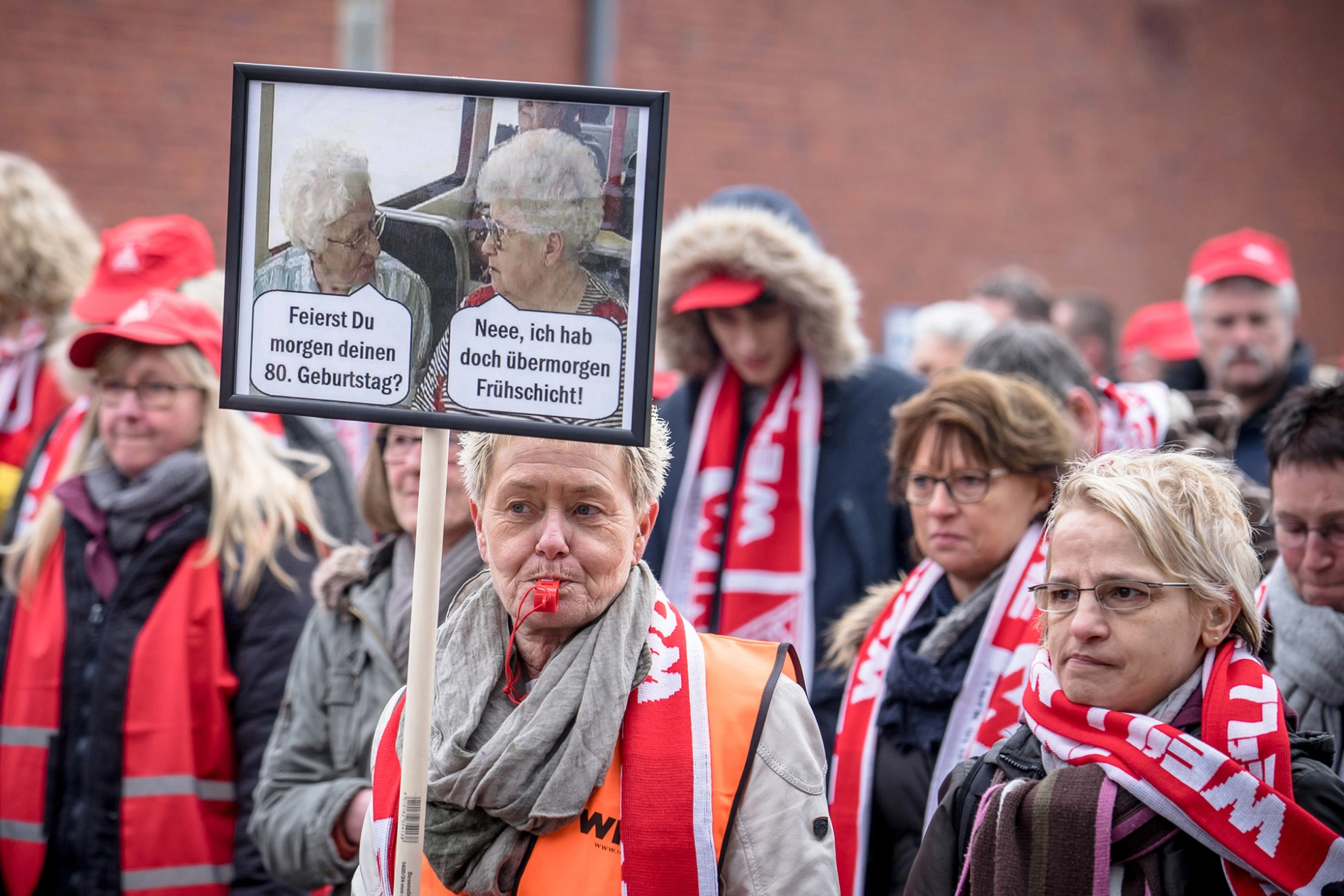
But one thing is also clear: The pension reforms of recent years have significantly worsened retirement security. In effect, these were pension cuts. To strengthen retirement security overall and protect people from social decline or even poverty, fundamental changes are needed.
Systematic Overburdening
Critics of the statutory pension system often point out that pension subsidies already account for the largest item in the federal budget. However, these subsidies are necessary primarily because the pension system also pays out benefits that go beyond traditional pensions. Such “non-insurance-related benefits” are now also increasingly to be paid for out of the contributions of the insured. The most recent and particularly costly example: the mothers’ pension. It costs over six billion euros a year—about three-quarters of the total cost of the 2014 pension package.
People who have children—that is, future contributors—should not be disadvantaged as a result when it comes to their pensions. Counting child-rearing periods toward pension eligibility is fair. However, this is a responsibility for society as a whole and must therefore be funded by everyone.
The same applies to urgently needed benefits to combat poverty in old age—such as the revaluation of periods of low income or contributions for long-term unemployment. Additional tax revenue is needed for these as well. However, this does not mean that the pension insurance system is no longer viable or that contributions are insufficient. Nevertheless, critics of the pension system speak of an overburdening of the system and advocate for more private retirement planning.
The Problem with Private Retirement Savings
Yet private pension planning has dashed many hopes. The administrative costs of many Riester products are high, which reduces returns. On top of that, interest rates on the capital market have been virtually nonexistent for some time now. The yield on ten-year German government bonds was even negative most recently. Anyone who buys these bonds is effectively giving money to the Federal Minister of Finance.
Even life insurance, which is widespread in Germany, now offers only meager returns due to low interest rates. The so-called guaranteed interest rate stands at 1.25 percent. In 2017, it is set to drop to 0.9 percent. Life insurance companies will then no longer be required to guarantee higher returns to their customers.
The pension insurance system is largely unaffected by the vagaries of the capital market. It is a pay-as-you-go system: what employees pay in today is paid out directly to retirees. And the contributions are shared between employers and employees. Employees are expected to finance their private retirement savings on their own—even if many cannot afford to do so.
Another advantage of pay-as-you-go financing: there’s no need for highly paid financial managers who simply shift money from A to B. The administrative costs of the pension insurance system are unbeatably low: about 1.5 percent of contributions. For private retirement products, costs can run as high as 20 percent. These costs then eat up the entire government subsidy.
“Old versus young” is too simplistic
That leaves the issue of “demographics.” It’s true: Germany’s population is aging. The number of retirees is rising. But the number of people in the workforce is also currently rising—and with it, the number of contributors. Societal prosperity is growing.
The problem is that this prosperity is increasingly unevenly distributed. The primary issue, therefore, is fair distribution within each individual generation—not between generations. What’s missing is a social consensus on necessary pension benefits, on the one hand, and the acceptable costs for them, on the other.
The overwhelming majority of people under 35 accept higher contributions, as a study by IG Metall shows . In return, however, they want a pension that ensures their standard of living in old age.
Currently, young people have little confidence in the statutory pension system. Only 22 percent believe they’ll be able to live “well” or “very well” on it later in life. Years of negative rhetoric have left their mark on this generation as well. It’s high time to overhaul the pension system. It deserves it.
Web tip: How to Save the Pension System – IG Metall’s Pension Plan