As early as 1891, the German Metalworkers’ Union (DMV) was founded as one of the most important precursor organizations to today’s IG Metall. The union quickly grew to become the largest single trade union in Germany during the German Empire and the Weimar Republic.
Supporters of the Young Democracy
After the emperor was overthrown during the 1918 Revolution, Germany became a parliamentary democracy. The unions worked to preserve and expand this young democracy. However, the Great Depression, which also hit Germany starting in the late 1920s, weakened the unions’ power. The social policy gains of the early years were gradually rolled back.
The fragmentation of the labor unions into various political factions at that time prevented workers from presenting a united front against National Socialism. Nevertheless, the working class paid a high price for its resistance to the National Socialist dictatorship.
A Home for All Workers: The Unified Trade Union
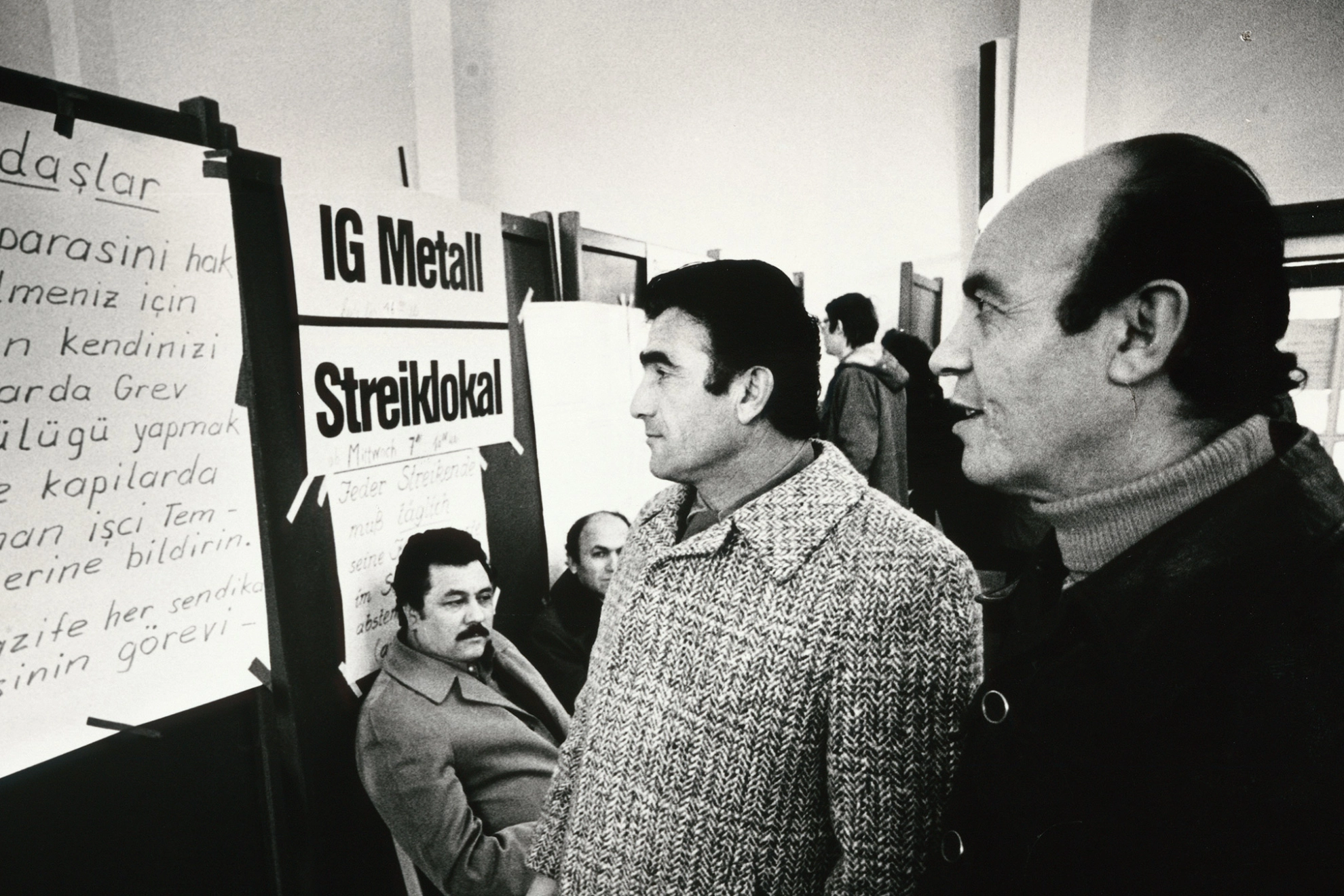
After the end of World War II, new union activity emerged from within the workplaces. At the same time, unions began to be organized according to the principle of the single-union system. They were open to all workers—regardless of political affiliation or religious denomination. Thus, blue-collar workers, white-collar employees, and civil servants alike found a common home in the new German unions.
The German Trade Union Federation (DGB), an umbrella organization to which IG Metall also belongs, was founded in Munich in 1949. IG Metall was founded in the same year and began its work in Frankfurt am Main in 1950.
Historical Achievements: The Five-Day Workweek, Continued Pay During Sick Leave, and the 35-Hour Workweek
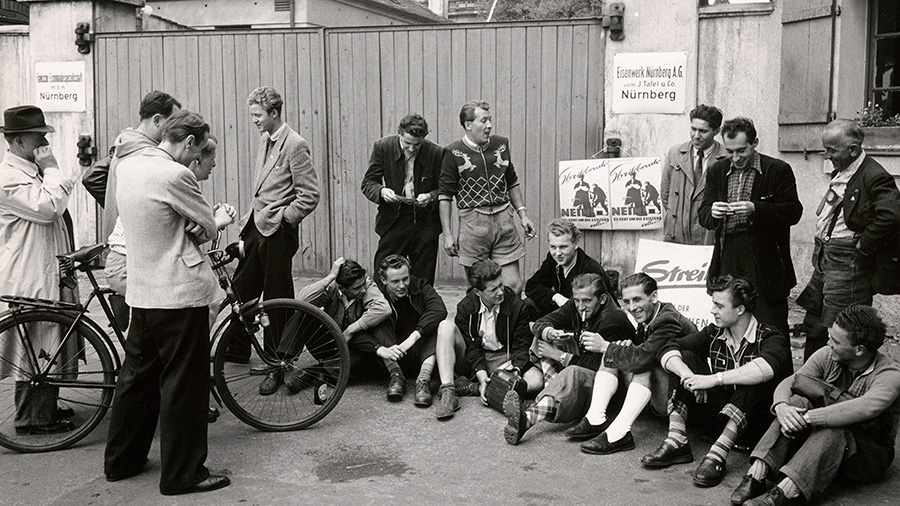
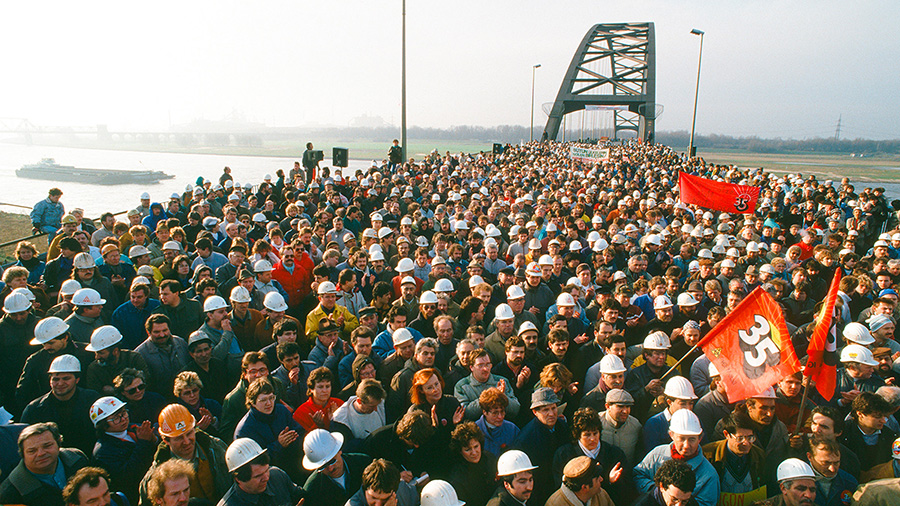
In 1956, IG Metall secured the five-day workweek and, after a 16-week strike, won continued pay during sick leave for blue-collar workers as well. In 1984, following a six-week labor dispute, the union succeeded in introducing the 35-hour workweek.
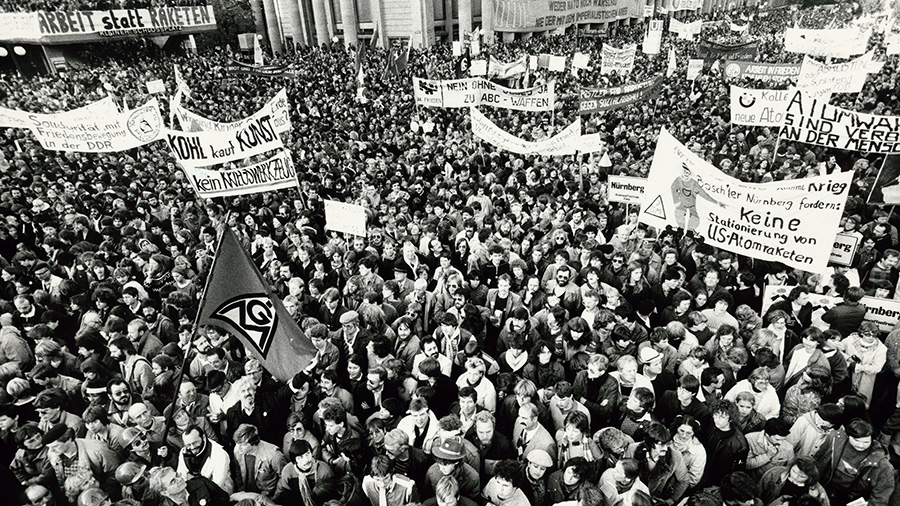
After the fall of the Berlin Wall in 1989, the unions supported the process of reunification. Through their policies, they played a key role in bringing working and living conditions in East Germany in line with those in West Germany.
In the late 1990s, IG Metall merged with the Textile and Apparel Union (GTB) and the Wood and Plastics Union (GHK). The name IG Metall was retained.
Present: Security in a Time of Change
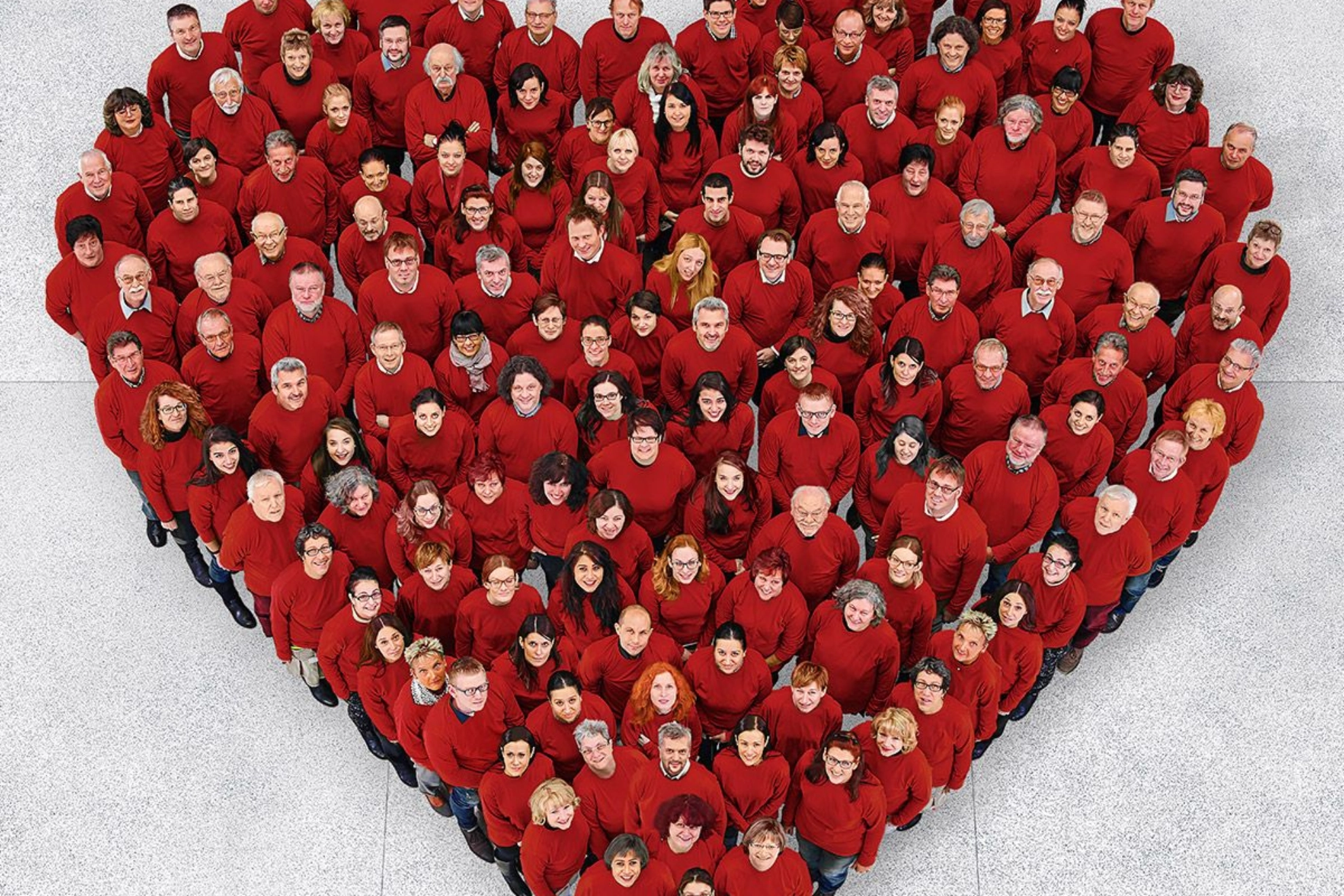
Today, with approximately 2.2 million members, IG Metall is Germany’s largest single trade union. It organizes workers in the iron and steel, wood and plastics, metal and electrical, textile services, and various skilled trades sectors.
Our core tasks include strengthening collective bargaining coverage and advocating for greater fairness in the workplace and society. We are also increasingly focused on the right to training and greater control over one’s time, as well as shaping the digital world of work. Added to this is the transformation of industry, which we aim to shape in a socially responsible, environmentally sustainable, and democratic manner.