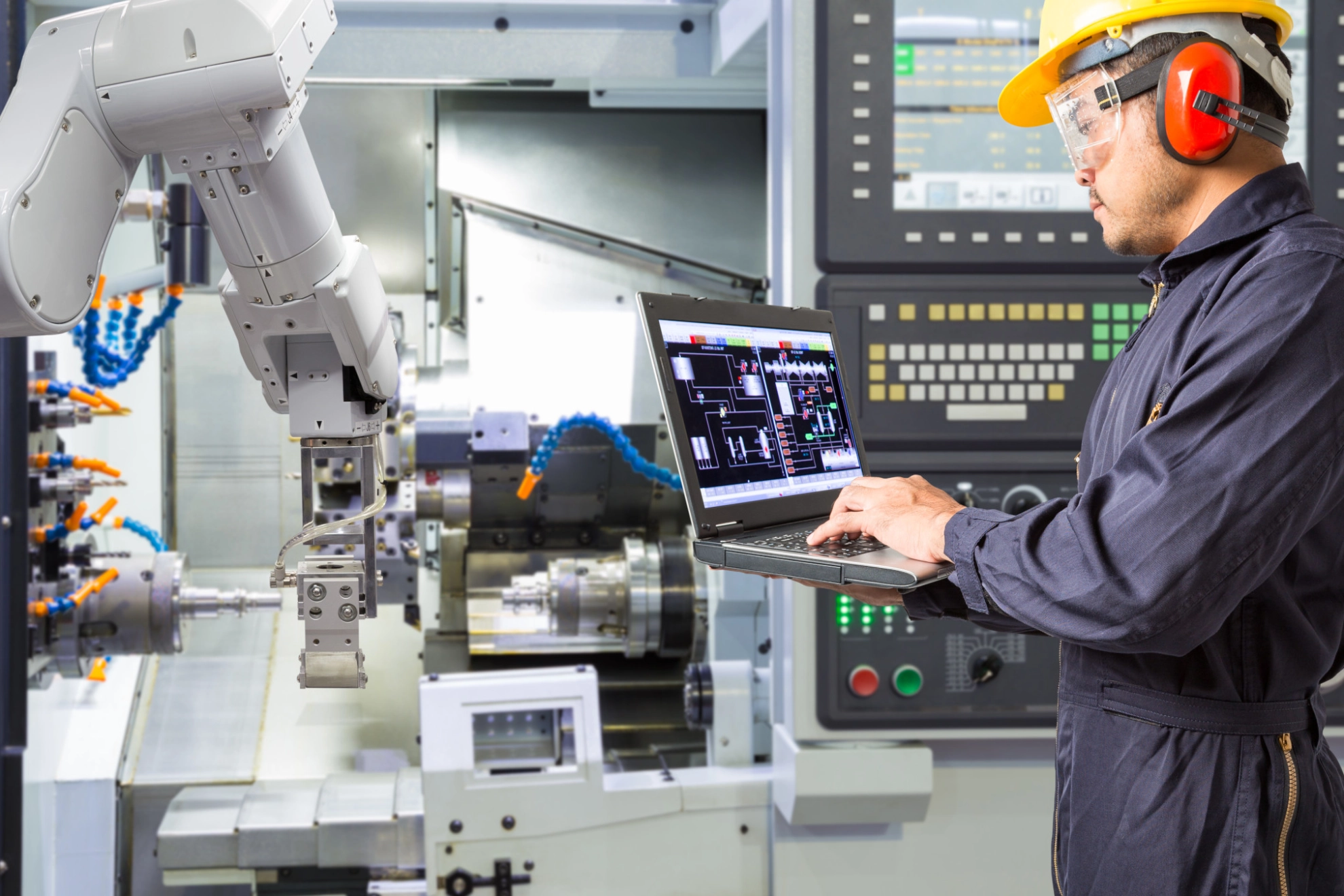
Work, the economy, and society will look very different in a few years. Machine maintenance will increasingly be carried out via the internet; software programs and artificial intelligence will automatically respond to emails and requests for quotes and select eligible applicants for job postings. And then there are new products that require new skills: high-voltage specialists are in demand, while experts in diesel injection technologies will likely be able to apply their expertise in other areas, such as the production and processing of hydrogen. Jobs will change significantly—not only in the factory and on the shop floor, but also in assembly and in the office.
A comprehensive process of change is already underway. The reason: Germany is set to become climate-neutral by 2045, and the entire EU by 2050 at the latest. Climate change, as well as digitalization and globalization, are making a transformation of industry necessary if Germany is to remain a strong industrial nation in the future. Only in this way can prosperity and good jobs be maintained even in a climate-neutral economy. IG Metall is committed to this goal.
Change Affects the Entire Economy
Transformation—what does that actually mean? A look in the dictionary provides some clarity. “Transformation” is derived from the Latin word “transformare,” which means “to reshape.” According to the definition, the term refers to a fundamental change. In practice, this very “fundamental change” is already taking place in the economy. Digitalization and automation have been transforming the world of work for years. Machines and workflows are becoming increasingly interconnected—a phenomenon known as Industry 4.0—and now artificial intelligence is also making its way into workplaces. From the automotive industry to mechanical engineering, the steel industry, and the aviation sector, all the way to the many supplier and service companies in the metal and electrical industries as well as the skilled trades, all these sectors are in the midst of transformation—but not just digital transformation.
There is another reason why their products and production processes must undergo fundamental change: the entire economy is to become climate-neutral. Climate neutrality means not only that companies must develop new products such as electric cars, but also that production processes must take place without emitting CO2. To achieve this, for example, the German steel industry must replace all its blast furnaces with direct reduction plants by 2045 and produce steel using hydrogen instead of coking coal. The example of the steel industry shows that climate neutrality is technically possible—but policymakers and companies must play their part.
That is why we must shape the transformation
The transformation must not be left to free market forces—it must be shaped in a socially, environmentally, and democratically responsible manner, in collaboration with workers. Otherwise, there is a risk of massive social upheaval and a decline in prosperity. The restructuring of the economy requires far-sighted planning and guiding intervention—something the free market alone cannot provide. For example, major investments in new production processes, products, and infrastructure are necessary for a climate-neutral economy. This ranges from developing new products—for example, for electric mobility—to building direct reduction plants for the steel industry and hydrogen pipelines—hydrogen is seen as the key to climate neutrality for many industrial applications—to expanding renewable energy, without which the energy transition necessary for climate neutrality cannot succeed. This is where companies and policymakers must step up. If they fail to act, they jeopardize the future of the industry and, with it, many jobs. That is why IG Metall is calling on companies to make these investments in the future. The union expects policymakers to support these efforts with active industrial and structural policies.
IG Metall Secures Political Support
IG Metall has already achieved some successes in Berlin. For example, it persuaded policymakers to establish a“Future Fundforthe Automotive Industry”to support companies in the automotive sector during their transformation. Another example: The union has persuaded policymakers to adopt significantly more ambitious plans for expanding electrolysis capacity—electrolysis plants are used to produce hydrogen. And: Policymakers are currently helping to build the first direct reduction plants, something metalworkers have long fought for.
But there is still much to be done: We must build the climate-neutral industry of the future here in Germany and Europe and ensure it is future-proof. It is also important to IG Metall that social and environmental standards are not sacrificed in the process.
This is how industrial policy must be shaped
An active industrial policy requires planning certainty as well as smart and reliable regulation. It needs support mechanisms that secure locations, employment, and decent work, and develop them in a future-proof manner; mechanisms that are guided by criteria of socially responsible and sustainable corporate governance, promote the ecological transition, and aim to maintain complete industrial value chains in Germany and Europe. It needs a fair competition policy framework that does not strip policymakers of all their instruments for steering and mitigating impacts.
IG Metall calls for this form of active industrial policy—with the participation of unions and works councils—not only from the federal government but also from the EU.
Transformation Requires Co-determination
The transformation will only be a fair transition if the future is shaped together with employees and they are provided with social security and prospects for the future. Works councils are trying to address this in their companies. Together with employees, they develop ideas and concepts. But their options are limited. Existing co-determination rights are not sufficient to allow for meaningful participation in decision-making. The Works Constitution Act therefore needs a complete overhaul. Specifically, works councils simply need more rights to co-determination when it comes to securing jobs and company locations, as well as employee training. IG Metall is advocating for this.
A Skills Development Initiative Is Needed
The transformation is affecting industries and companies at different times and to varying degrees. Some jobs will disappear entirely, while in other areas new business models with new products and production processes will emerge—and with them, new jobs requiring new skill sets. One thing is clear: the requirements for professions and jobs are changing. Employers and the government bear responsibility here. After all, without qualified workers, there can be no innovation. Employee training must begin while they are still employed, not only when unemployment looms. However, continuing vocational training has so far been too selective and often merely reactive. IG Metall wants to change that. The union is calling for a training initiative during the transformation for all employees.
What can I do myself?
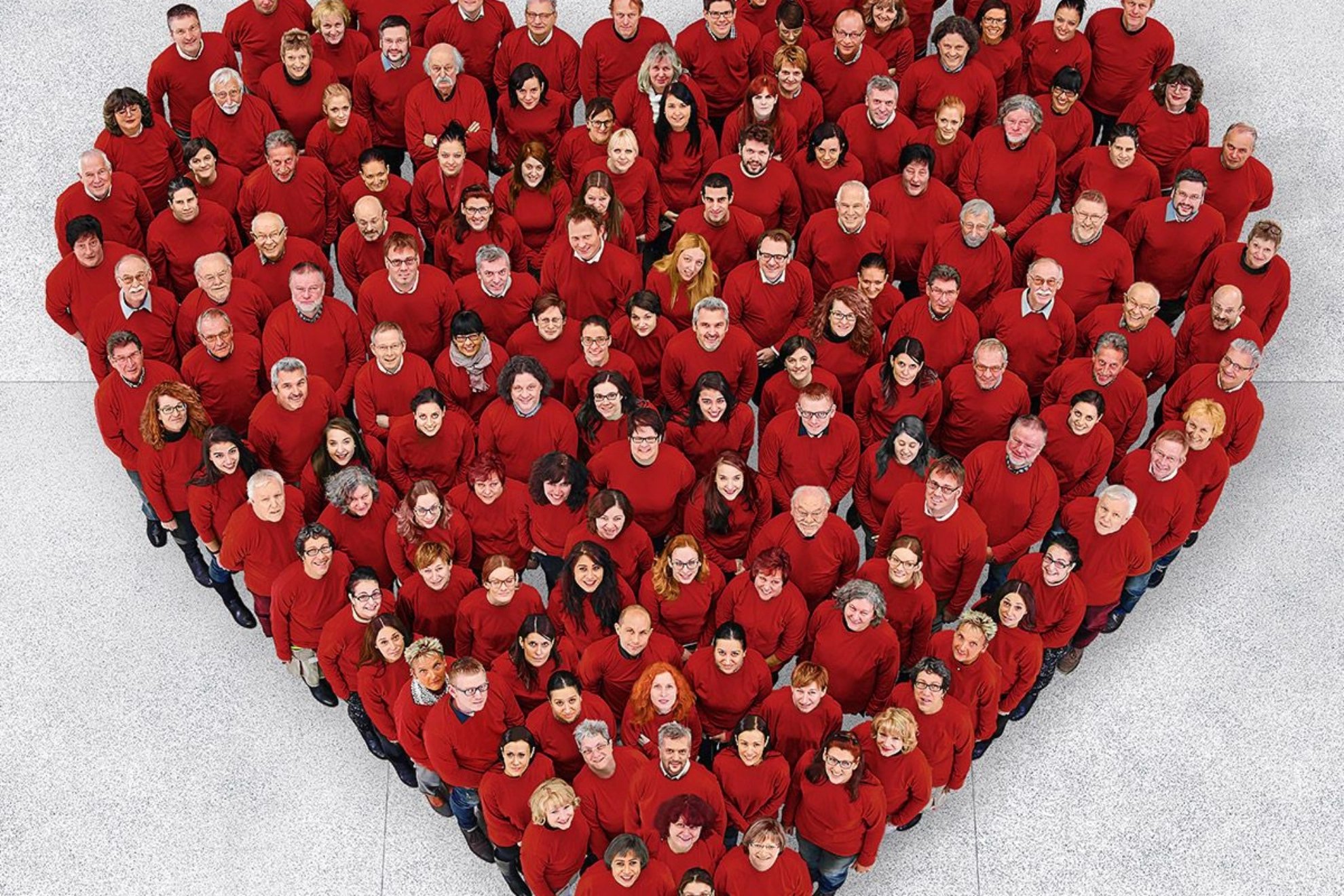
The course is being set for our industry right now. There are two possible directions. Either we achieve the digital and ecological transition and build the products of the future, or we hit a wall and lose jobs. We want these changes to happen fairly. Technological progress and ecological transformation must lead to social progress for everyone. This is about job security and the future of the next generations. Works council members, shop stewards, and union representatives have long been active in the workplaces. Now employers and politicians must finally deliver. To achieve this, we need to build pressure. But we can only do this together. Together we are strong and can ensure secure and good jobs. So become part of our community. Join Germany’s largest union. Join IG Metall.