When it comes to retirement, everyone basically wants the same thing: to be well provided for in old age. To have no financial worries. To be able to enjoy retirement.
But the path to this goal is hotly contested. A major reform has yet to materialize. As a result, the future of the statutory pension system remains uncertain.
The business lobby wants to cut pension benefits and keep raising the retirement age. For millions of workers, this would mean less security in old age or reduced pensions because they would have to accept reductions.
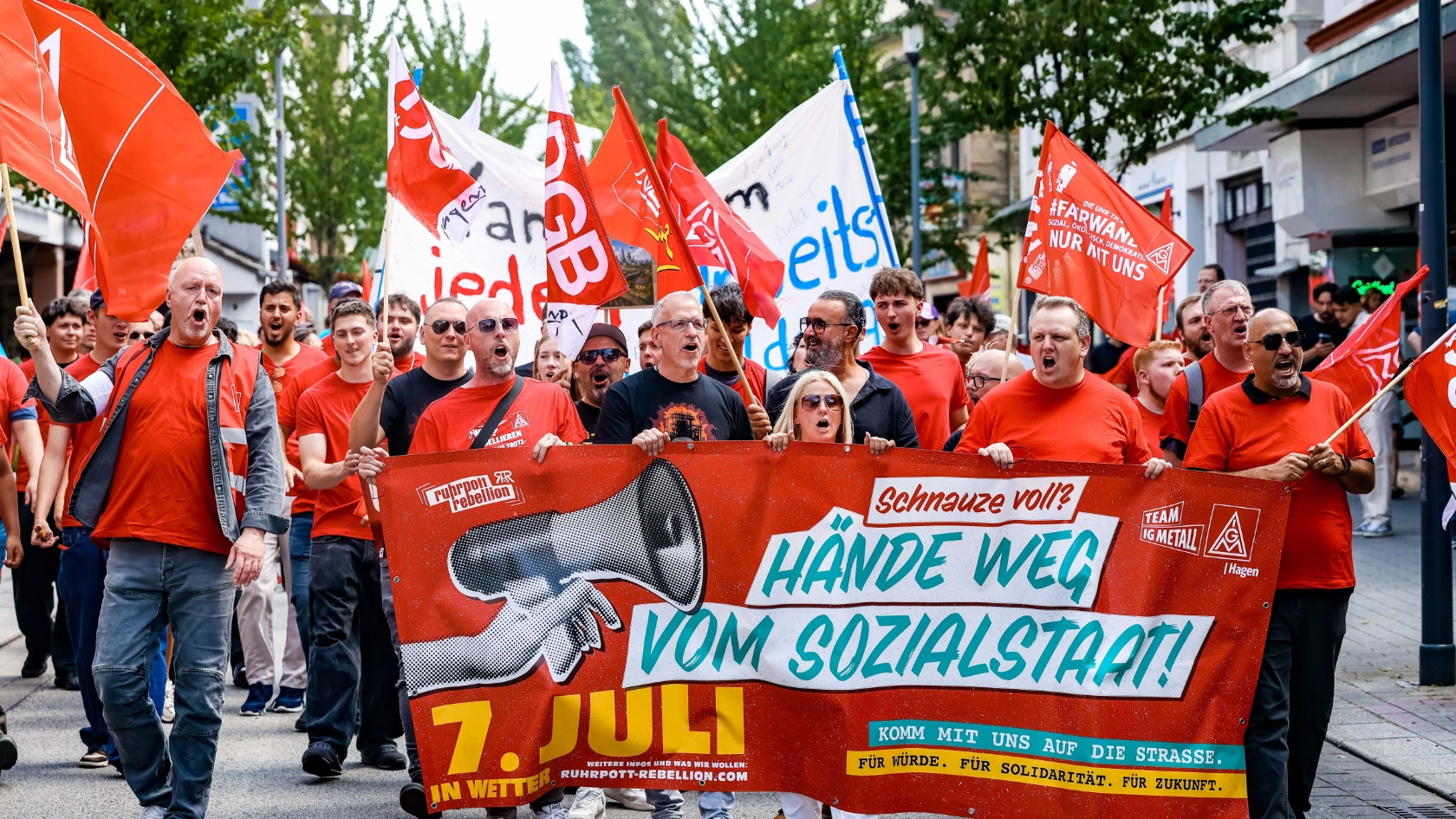
IG Metall has other proposals to save the pension system: These include restructuring the statutory pension system into an “employment insurance” program.
This would make the pension system future-proof.
What is an “employment-based insurance” system?
Workers’ insurance is a concept for retirement planning. The basic idea is that all people who work and earn an income contribute collectively to the statutory pension system.
This would strengthen the pension system in the long term and place its financing on a basis of solidarity.
Until now, certain professional groups have had their own pension systems—such as doctors, lawyers, the self-employed, members of parliament, or civil servants. The employment-based pension system would bring all working people under one umbrella.
What are the benefits of an employment-based pension system?
Greater equity: Today, there are different systems for employees, civil servants, and the self-employed. This leads to inequality. Under the employment-based pension system, everyone follows the same rules. This creates fairness.
Stable financing: When all working people contribute, the base becomes broader. This means more contributors and less pressure on the system. This ensures that pensions remain secure in the future.
Simple structures: A unified system means less bureaucracy and fewer complicated special rules. This makes retirement planning more transparent and easier to understand.
Greater security for the self-employed: About two-thirds of the self-employed and freelancers have no mandatory coverage for old age, disability, or death. This particularly affects solo self-employed individuals who make a living solely by selling their own labor and have no employees. With employment-based insurance, they receive a solid retirement plan.
Solidarity: If everyone contributes to the same pension insurance system, everyone will stand behind the common system. The pension system would finally have the broad support it deserves as a central pillar of the welfare state. Decisions about our pension system would no longer be made by ministry officials and members of parliament whose own retirement coverage has nothing to do with the statutory pension.
What do people think about employment-based insurance?
Employee-based pension insurance enjoys broad support among the public. Around 70 percent of salaried employees are in favor of such a system, according to a survey by the Böckler Foundation.
There is also a clear majority among the self-employed. Support is particularly high among solo self-employed individuals, 79 percent of whom favor employment-based insurance.
The opinion of IG Metall members is even more clear-cut: In a survey, 98 percent of them expressed support for including all occupational groups in social insurance.
How can the employment insurance system be implemented?
The transition to a unified employment-based social insurance system is challenging but feasible. The transition will be gradual, taking place over an extended period. Initially, the employment-based social insurance system would apply only to people entering the workforce for the first time. This would create a financial buffer for the period during which the large cohorts of “baby boomers” are in retirement.
For older individuals, there would be transitional rules or grandfather clauses—for example, for civil servants who have worked for the government for decades and have planned their retirement accordingly.
The example of Austria shows that this transition can be successful. There, self-employed individuals have been covered by the state pension system since the late 1990s, and the majority of civil servants have been covered since the mid-2000s.