No childcare, concerns about retirement, months-long waits for a doctor’s appointment: The problems facing our welfare state have long since reached the working middle class. This is shown by a representative survey of IG Metall members.
According to the survey, 89 percent see major problems with the German welfare state. Only one in two people is satisfied with their personal social security coverage.
Just over a quarter believe that their own pension and retirement savings will be sufficient for a good life in retirement. A mere nine percent expect to be able to cover the out-of-pocket costs for a spot in a nursing home themselves if the need arises.
And only 17 percent say they could work beyond the age of 67 under current working conditions.
A Skewed Debate
The metalworkers surveyed expect the government to ensure social harmony and create equal opportunities (96 percent in each case), reward performance (95 percent), and support the vulnerable and those in need of protection (93 percent). They are calling for more and better social security, not less.
Examples: Over 90 percent (somewhat) agree that the pension replacement rate should be raised from 48 to 53 percent. Similarly, over 90 percent (somewhat) believe that statutory long-term care insurance should be expanded to provide full coverage. Improvements to parental leave benefits and public child care also meet with broad approval (nearly 86 percent).
These results do not align with the public debates surrounding the benefits and financing of the welfare state. The business lobby and business-friendly politicians regularly call for cutting social benefits and dismantling social achievements:
And business associations bring up the demand for an even higher retirement age almost every week—without mentioning that many companies do not want to hire older workers. Nor do they acknowledge that many people are simply unable to work any longer.
Swimming Against the Current
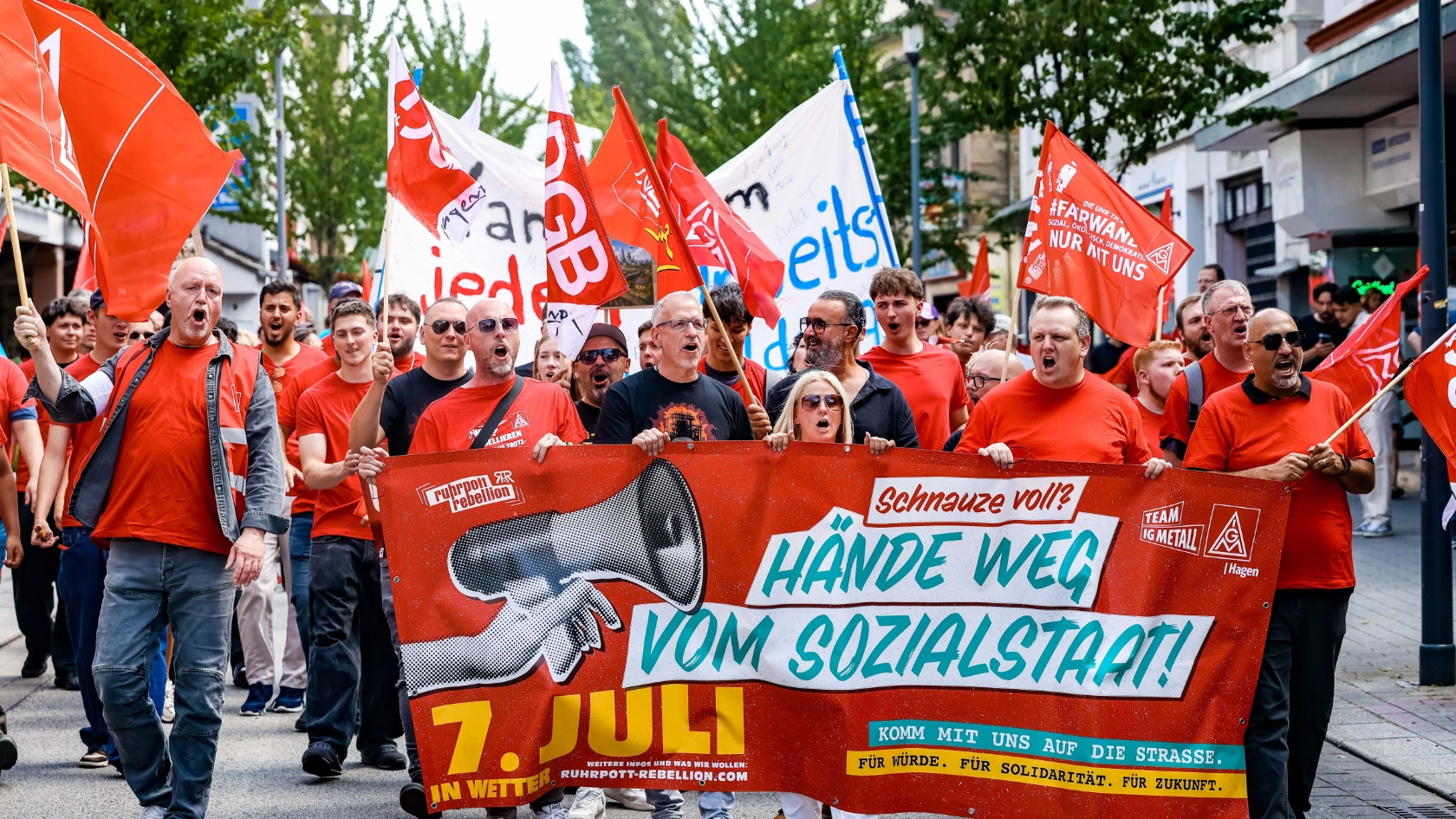
IG Metall opposes plans for cuts and social rollbacks. Instead, it calls for a proactive social policy that guarantees security, participation, and justice.
“The welfare state is not a burden, but an anchor of stability in times of change—economically, socially, and democratically,” says IG Metall’s Social Affairs Director Hans-Jürgen Urban. “Anyone who weakens the welfare state jeopardizes social cohesion.”
The issue of justice, in particular, is a major concern for many IG Metall members. In the survey, 98 percent supported including all occupational groups in the social security system—for example, by incorporating civil servants and the self-employed into the statutory pension insurance system, or by introducing a universal health insurance system .
A large majority wants high incomes and wealth to contribute more to the financing of the welfare state (87 percent).
Nearly two-thirds (62%) would also accept higher social security contributions or taxes if this led to better benefits.
And last but not least, it is clear that employers, too, must contribute appropriately to the financing of the welfare state—through reliable and equally shared social security contributions.
Background: The survey is part of IG Metall’s current campaign in support of the welfare state.