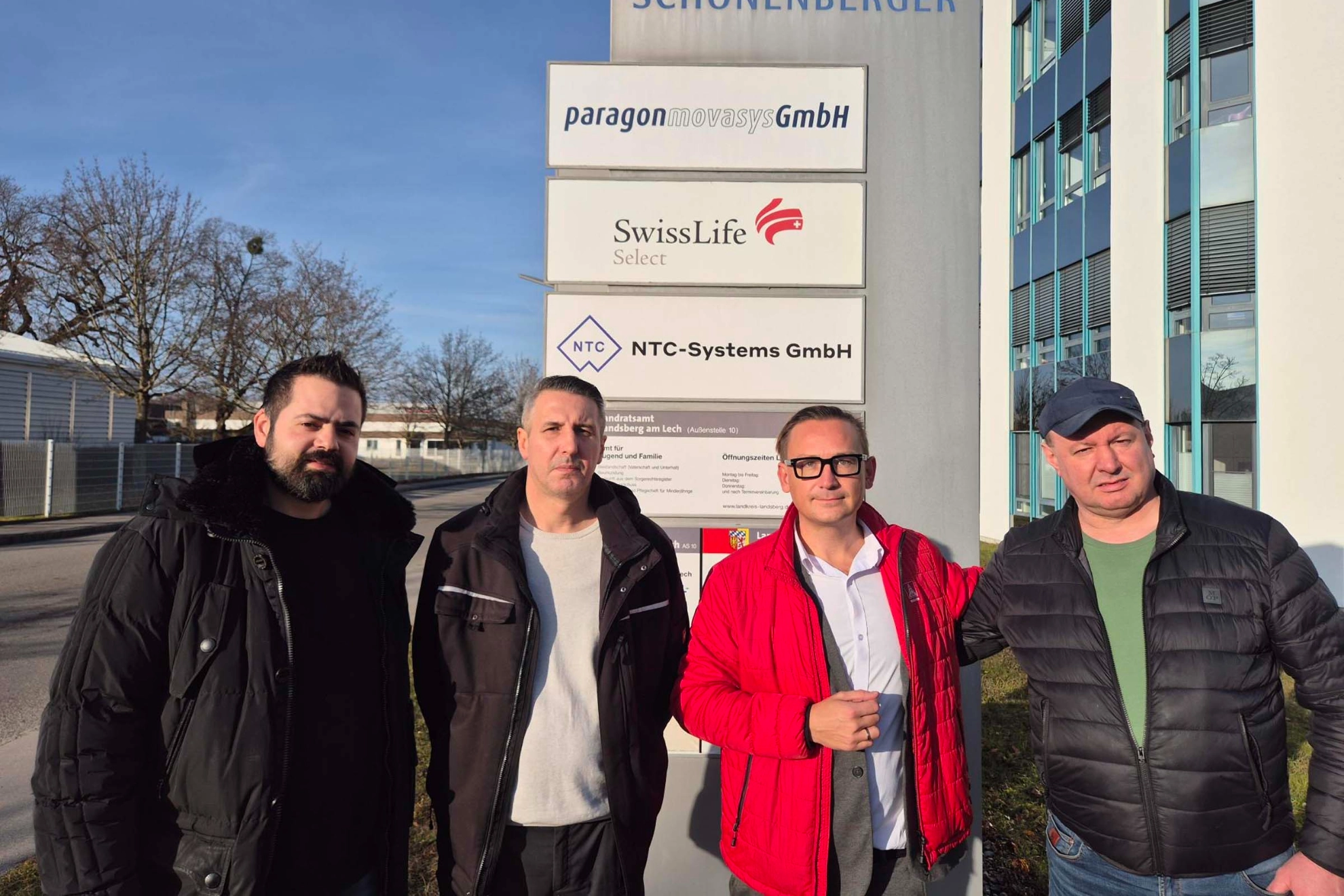
It was only with a bailiff and IG Metall by his side that Samir A. was able to re-enter his workplace—to elect an election committee for the works council election at the automotive supplier Paragon in Landsberg am Lech. Together with two colleagues, Samir had initiated the election. Five termination notices could not deter him.
Even before the election, Samir, accompanied by the bailiff, spent two hours a day for three days walking through the plant to talk to employees about the election preparations. The 56-year-old shift supervisor had secured this right in court with the help of IG Metall. The employer was ordered to pay a fine of 8,000 euros.
Samir’s colleagues have now elected him to the top spot on the election committee. Although management had fielded its own candidates and tried to sway employees in one-on-one meetings, all three seats—as well as those of the two alternates—went to the IG Metall candidates by an absolute majority.
Wages at or just above the minimum wage, cronyism, chaos
With their vote, the 165 employees have clearly shown that they stand behind their election committees and IG Metall. They’ve had enough. They manufacture spoilers and specialty accessories for cars here, including the mechanism for “Emily”—the Rolls-Royce hood ornament. But the working conditions are anything but luxurious. Wages in production start at less than 2,500 euros a month—gross, for a 40-hour week—which is the minimum wage. There is no transparent, comprehensible pay system; instead, pay is based on personal favoritism. And since a new management team took over about two years ago, there have been repeated problems in production.
“I’ve been here for 24 years, but the last two years have been a disaster,” Samir criticizes. “The assembly line keeps coming to a standstill because they don’t reorder parts in time. And then we’re supposed to use vacation time or make up the lost hours. Except for the management’s cronies. They get special treatment. But our people, who stand behind us and IG Metall, are getting laid off. Twenty-six people have already left.”
Insufficient Protection for Organizers of a Works Council Election
The election of the election committee was a tough, three-month-long battle: On December 4, Samir, his brother, and a colleague who was a friend posted the invitation to the election meeting at the plant. The next day, Samir received a termination without notice—the first of a total of five. They took away his keys and access cards.
Although the Works Council Modernization Act of 2021 has protected organizers of works council elections from dismissal since it took effect—and Samir had already registered with a notary in November 2025 with the help of IG Metall— However, unlike the protection afforded to works council members, election committees, and candidates, the protection for initiators is not comprehensive: While they cannot be terminated for cause related to the election, they can be terminated without notice for another “important reason.”
“The legal protection for organizers is too weak,” criticizes Karl Musiol, chief representative of IG Metall Oberland and shop steward for Paragon, who supported Samir around the clock and also chaired the election meeting. “As in Samir’s case, the employer can simply pull a new termination notice out of thin air every time and thereby delay the works council election—unless there is a strong union like IG Metall behind them to protect the initiators and pre-finance the legal proceedings.”
Termination without notice under a flimsy pretext
In Samir’s case, management claimed as the reason for the termination that, as a shift supervisor, he had incited an employee to commit working-time fraud about a week before the election invitation was posted.
“She came to me and asked if she could go home because there was no more work,” Samir reports. “I told her I could only let her go if she was sick. Then she came back and said she had a migraine—and I let her go. But if that was supposed to be working-time fraud: Why am I being fired as the ‘instigator’—while the alleged ‘fraudster’ is actually being promoted?”
With the help of IG Metall, Samir filed a wrongful termination suit with the Munich Labor Court. And the Labor Court issued a preliminary injunction, which the Munich Regional Labor Court later upheld: Samir must be granted access to the workplace.
But despite the court’s order, his employer denied him access on Election Day, December 12—issuing a second termination without notice. After another preliminary injunction was issued, Samir finally returned to the workplace a few days later, with the bailiff by his side—and he did not let further terminations deter him.
Court Orders Continued Employment – Samir Is Back
On February 11, the Munich Labor Court finally ruled that the employer must continue to employ Samir—and emphasized in its ruling that workplace co-determination is an integral part of a democratic state.
“This is a major success, contrary to previous case law,” emphasizes Isaf Gün, an employment law expert on the IG Metall executive board. “With the order to continue employment, the court makes it clear that the terminations without notice are obviously unlawful because they serve solely to prevent employees from exercising their democratic right to vote. But to prevent such attacks in the future, we absolutely need better legal protection against dismissal for election officials.”
The employer delayed implementing the court order until the very last day of the deadline. But Samir has been back at work since March 11. The election committee can now begin its work and organize the works council election. On April 22, employees at Paragon in Landsberg am Lech will elect a works council for the first time.