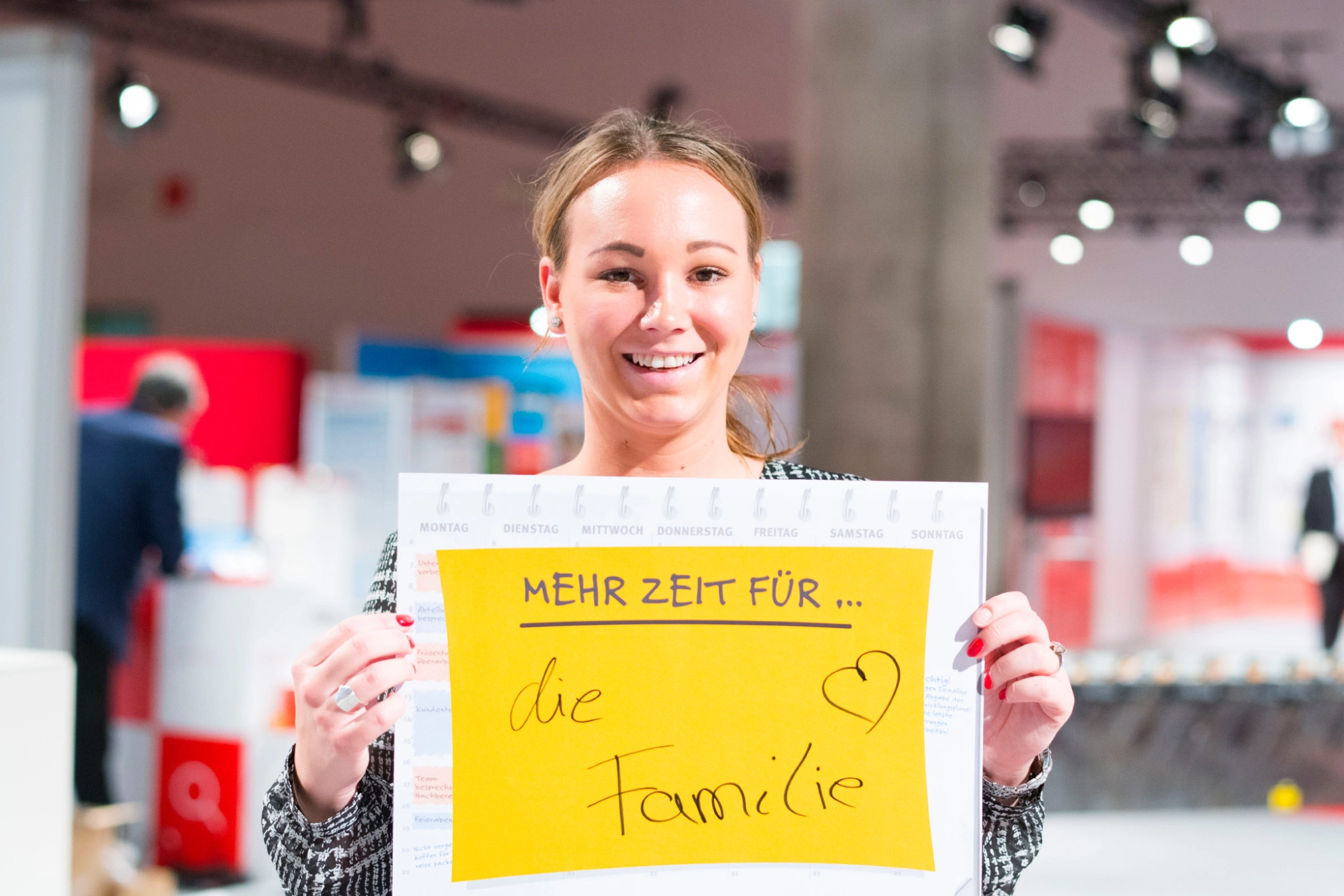
“My job is consuming me.” Many people know this feeling. Anyone who has a family, personal commitments, or hobbies alongside their job quickly reaches their limits. Their personal life is at risk of falling by the wayside. So it sounds like a mockery to many people when Ingo Kramer, president of the employers’ association, says that the “rigid eight-hour day” no longer fits “into the digital age.”
A “rigid” eight-hour day, as Kramer describes it, is already completely out of touch with the reality of many employees today. They’ve long been working with a high degree of flexibility and are willing to do so—but they also want to do so according to their own needs. Companies want to align working hours as closely as possible with market fluctuations.
When business is good, employees work longer hours without receiving overtime pay or requiring the company to hire additional staff. It’s not uncommon for shifts to be moved to the weekend without sufficient notice. When the order situation is poor, employees use up their accumulated overtime hours. In this way, the company shifts part of the business risk onto its employees while at the same time making better use of its expensive production facilities.
Flexibility Must Not Be a One-Way Street
Flexible hours, flex-time accounts, remote work, trust-based working hours, and an increasing amount of “on-call work”: Flexible work schedules are on their way to becoming the norm. As a result, work-life balance is being disrupted for many.
In principle, most employees accept the flexibility requirements set by their employers. However, they do not want flexibility at work to interfere too much with their personal lives. People want good jobs and work schedules that are predictable and over which they have greater control. This was clearly demonstrated by the IG Metall employee survey in 2013.
Goals of the campaign:
Greater fairness
- Hours worked must be recorded and compensated.
- Excessive working hours must be curbed.
- Working hours must be harmonized across industries and regions.
More security
- Employment relationships must be secure. Flexibility must not come at the expense of employees.
- Time for continuing education ensures professional development and job security.
- Working time regulations are also important tools for securing employment.
More self-determination
- Work hours must become more predictable and flexible for employees.
- The work-life balance should be supported through work schedules tailored to different life stages.
- Even in shift work, employees should be given more personal flexibility regarding their schedules.
Better health
-
Working hours and performance requirements must not compromise health.
-
Health risks must be avoided through adequate staffing, regulations on breaks and rest periods, and compensatory time off.
-
Remote work and shift work must be regulated in a way that protects employees’ health so that work does not become a source of stress.
Employees’ time needs and life plans must once again play a central role. That is the core objective of the working hours campaign. The first important steps in this regard are to implement age- and education-based part-time work in companies. In addition, IG Metall will focus on the erosion of working hours as well as on the health-conscious organization of shift work and mobile work. Working hours and performance policies, working time accounts, life-stage-oriented working hours, and the harmonization of working hours across regions and industries are further topics addressed by the campaign.
At the political level, IG Metall is calling, among other things, for the right to return from part-time to an equivalent full-time position, as well as legal improvements regarding caregiving and parental leave. IG Metall will bring its proposals for working time policy reforms into the debate ahead of the 2017 federal election. This also includes government support for new working time models such as reduced full-time work or family-friendly working hours.