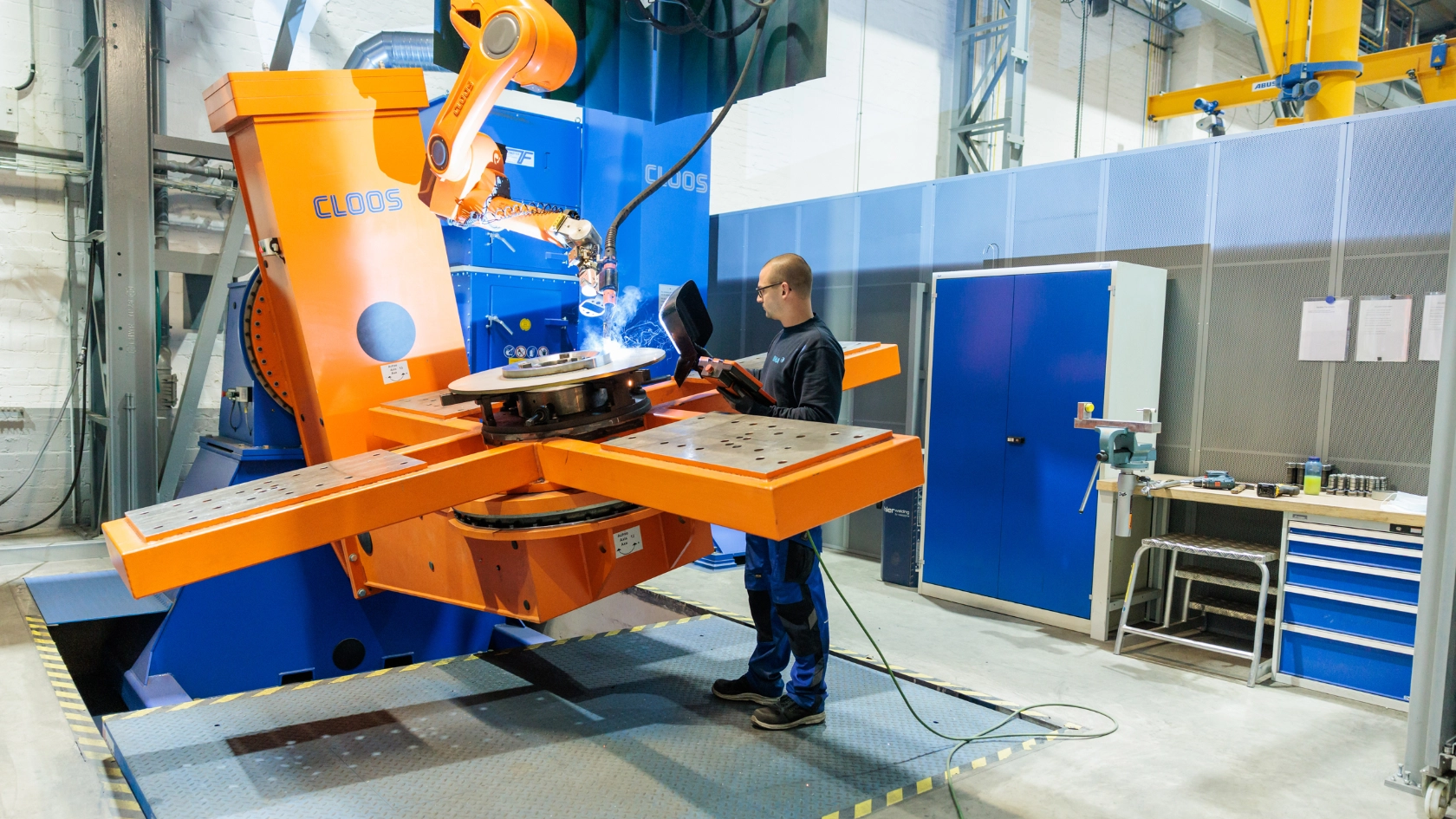
At the MWS aluminum foundry in Friedrichshafen, nearly 80 percent of the workforce works shifts. The shift schedule dictates the daily, weekly, and monthly rhythm—a large part of life. For a long time, there has been a desire for extended weekends and, more generally, to have a full weekend off more often.
The works council found a way to make this happen, of all times, during tough economic times. When orders declined, the works council and its chair, Gabriele Süss-Köstler, set out to do the following: “We want to structure the shifts so that all employees can stay on board.” At MWS, instead of laying off people, they are cutting hours—more precisely, one hour per employee per week.
In a supplementary collective bargaining agreement, IG Metall negotiated the 34-hour workweek with the employer. This makes it easier to implement a two-shift system. It’s set to begin in the foundry in September. The goal: more days off and more long weekends.
Parents Value “Short Full-Time”
Shift work and family? They don’t usually go together. Not so at the Andernach-based tinplate manufacturer Rasselstein. Here, the works council introduced a family-friendly shift model 15 years ago: two days of early shifts, two days of late shifts, and two days of night shifts. Then four days off. The weekly workweek is just 32 hours instead of 35—with nearly full wage compensation.
Originally, it was intended only as a temporary pilot project—anyone who wasn’t convinced after a year could switch back to the old system. But no one wanted to go back. “On the contrary,” says Wilfried Stenz, chairman of the general works council. “After that, our colleagues were lining up at our door because they wanted to switch over too.” For power electronics technician Carmen Dehren, it’s a perfect model: “I work almost full-time and still have plenty of time for my family.”
2018 Metal Industry Collective Bargaining Agreement Brings More Autonomy
What shift workers at Rasselstein have long enjoyed, IG Metall has now secured company-wide in the latest 2018 collective bargaining agreement for the metal and electrical industries: Shift workers have the option to choose to receive a portion of the newly introduced annual collective bargaining bonus (T-ZUG)—equivalent to 27.5 percent of a month’s pay—in the form of time off. This allows them to take an additional eight days or shifts off per year.
This option applies to employees who have been working night shifts and three or more shifts for at least three years and have been with the company for five years. It also applies to employees who have been working rotating shifts for ten years (five years starting in 2020) and have been with the company for 15 years (seven years starting in 2020). The eight days off can be taken each year.
The option for eight additional days off also applies to employees with children up to eight years of age or with dependents requiring care, though only for two years per child or care recipient.
Alternatively, shift workers—like all other employees in companies covered by the metal industry collective bargaining agreement—can also apply for the new reduced full-time schedule. This means they can temporarily reduce their working hours to up to 28 hours per week for a period of 6 to 24 months. Afterward, they automatically return to normal full-time work—or can reapply for reduced full-time work.
Three Golden Rules for Shift Schedules
Shift schedules are never perfect. But there are criteria that should definitely be taken into account. Here are the three most important ones:
Short shifts
A sleepless night is easier to cope with if you can sleep in afterward. This allows the body to reset its internal clock. The more night shifts that follow one another, the more the day-night rhythm is disrupted and the greater the sleep deficit. That’s why you shouldn’t work more than three (preferably two) night shifts in a row. This also applies to early and late shifts: quick changes are better than long sequences of shifts.
Always Moving Forward
The body copes better with a forward-rotating shift system (early-late-night) because it more closely matches the natural 24-hour rhythm. In addition, the recovery breaks between early and late shifts are longer than those between late and early shifts.
Shift Sequences
There are shift sequences that are detrimental to the body and should therefore be avoided. For example, after a night shift, one day off is not enough to make up for the sleep deficit if an early shift is scheduled immediately afterward. Two days off are better. Some shift sequences are also prohibited, such as switching in reverse from a late shift to an early shift or from a night shift to a late shift. This is because these sequences do not provide the minimum of eleven hours of rest required by Section 5 of the Working Hours Act after the end of the work shift.