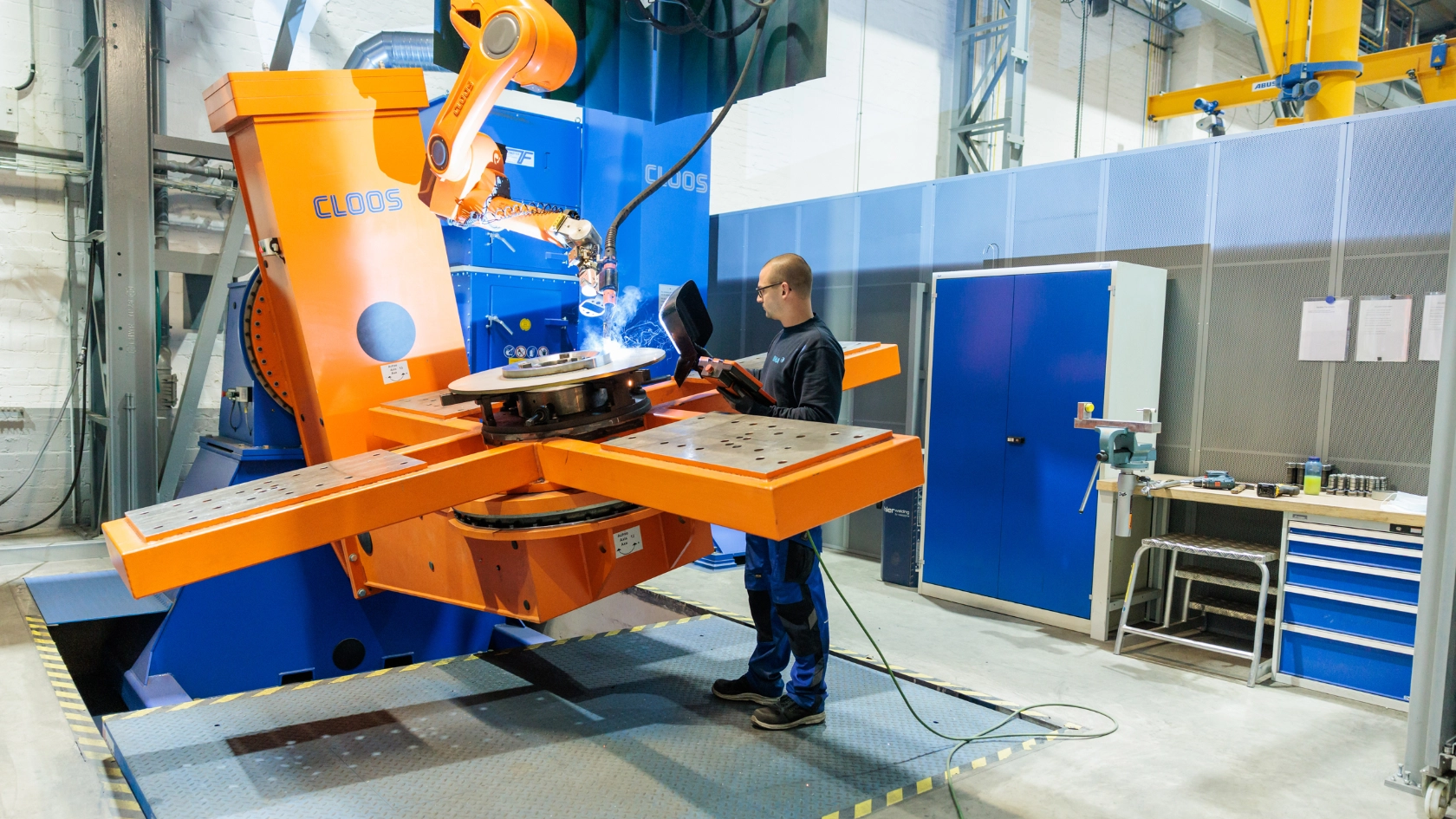
For Patrick Maurer, part-time education means he can earn his technician’s certification and then return to his company. The 26-year-old industrial mechanic plans to take advantage of this opportunity. He works at Marquardt in Rietheim-Weilheim. Management had planned to cut up to 800 of the 2,500 jobs, but the works council and IG Metall were able to prevent this.
At the same time, they agreed that the employer would invest a double-digit million amount in a new development center and support employee continuing education. Employees can now opt for part-time education for up to five years, as provided for in the company collective bargaining agreement, and Marquardt covers the costs. In exchange, the employees gave up three hours of working time. It was worth it to them. 83 percent of IG Metall members voted in favor. Without the option of part-time educational leave, most would have neither the time nor the money to pursue further training.
The agreement also convinced Patrick Maurer and 140 other colleagues to join IG Metall. And it earned the works council a nomination for the German Works Council Award.
Part-time education—what is it?
With the conclusion of the collective bargaining agreement on training and education during the 2015 metal industry bargaining round, IG Metall was able to secure the right to part-time leave for education. Under this agreement, employees who wish to pursue personal professional development can take a leave of absence from work. They have the option of reducing their weekly working hours—that is, working part-time—or taking part-time leave in blocks. Employees can agree with their employer to take a leave of absence for a certain period. In both cases, they have the right to return to their previous position or to a full-time position of at least equal value.
What is personal professional development?
Personal professional development refers to qualifications that employees seek on their own initiative to advance their careers or improve their prospects in the job market. This distinguishes it from qualifications required by the employer, for which the employer must cover the costs and grant employees time off from work.
Personal continuing education is intended, for example, for young people who wish to pursue a degree after completing their vocational training. Or for skilled workers who have been working for some time and want to earn an additional qualification, such as a master craftsman or technician certification. Or for unskilled and semi-skilled workers who want to obtain a vocational qualification.
Previously, employees were not entitled to time off for such training and had to resign. The works council is required to assess employees’ continuing education needs at least once a year and agree on a training plan with the employer. Special support programs must be established for unskilled and semi-skilled workers.
How long can I participate in part-time education?
Both part-time training and a complete leave of absence with a guarantee of reinstatement are possible for up to seven years. During part-time training, employees continue to receive at least 50 percent of their previous full-time earnings for the entire duration.
How is the continuing education funded?
To a certain extent, employees can also use accumulated overtime hours (up to 152 hours) and additional vacation and Christmas bonuses to supplement their pay during part-time training. For this purpose, the employee maintains an individual training account. The goal is to reach at least 70 percent of their previous pay through this supplement. The saved funds are then used during the leave of absence. Up to 10 percent may also be paid after the leave of absence ends. In this case, the employer advances the funds.
Subsidized Part-Time Education
The employee can agree with the employer and the works council to support their personal continuing education. Subsidies may be available, for example, if the quota for partial retirement is not fully utilized. In this case, a portion of the collective bargaining agreement’s partial retirement quota is used in accordance with the collective bargaining agreements on flexible transition to retirement (TV FlexÜ). The supplementary payments are then calculated in the same way as for partial retirement and increase the compensation to approximately 74 to 80 percent of the previous net pay.
What happens if the employer refuses to grant part-time training?
If the employer rejects a request for continuing education, the employee may contact the works council. The employer and the works council must address the matter and attempt to find a solution. If this is unsuccessful, the works council in companies with more than 200 employees may refer the matter to a joint commission for a decision. The affected employee must have been employed at the company for at least five years. If the commission is also unable to reach a resolution, the matter can be referred to the collective bargaining arbitration board. Only members of IG Metall are entitled to a decision by the collective bargaining arbitration board.
Continuing Education Pays Off
Through the collective bargaining-based part-time education program, IG Metall has been able to remove two of the barriers to continuing education that previously existed: lack of time and lack of money. But even the best hard-won rights are of no use if they are not utilized. That is why IG Metall says: Continuing education pays off! Whether it’s to earn a high school or vocational diploma, to improve career prospects, to pursue a college degree immediately after completing an apprenticeship, or to get a fresh start with professional experience.
There are many good reasons for continuing education: Six out of ten continuing education graduates see immediate professional and financial improvements. Three to five years after completing their program, 70 percent of graduates hold a better position, have a broader scope of responsibility, or earn a higher salary. But continuing education brings more than just material benefits. The skills you learn can also be put to use in your free time, such as in volunteer work.