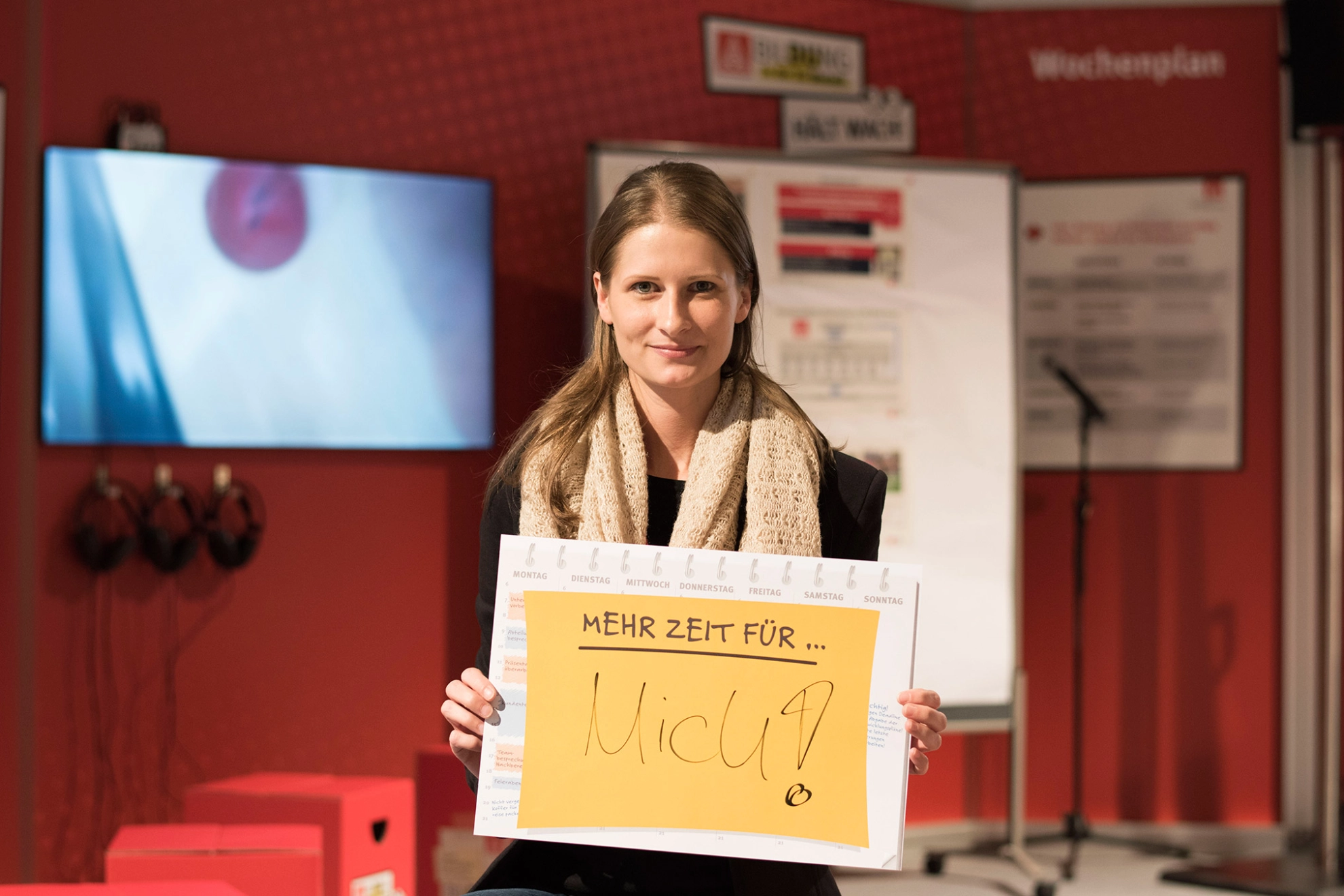
For several years now, the number of hours worked in companies has been on the rise again: Overtime, extra shifts, weekend and Sunday work, as well as daily work hours exceeding eight hours, have often become part of everyday work life once more.
Many employees identify strongly with their work. They want to perform their tasks well, even if that is not realistically possible within regular working hours. New forms of corporate management are fueling this trend: Anyone who works on projects or with performance agreements knows that a task must be completed by Friday evening, even if they’ve already worked 40 hours or more during the week. The same is true for trust-based working hours: Where this system is in place, employees typically work longer than average, and overtime isn’t tracked. It usually goes uncompensated.
Endless work threatens to become the new norm
And quite a few people sit down on the weekend to quickly crunch numbers in an Excel spreadsheet, create a PowerPoint presentation, or fine-tune a 3D CAD animation. In the age of cloud computing, this can be done at home or anywhere else at any time. However, recording these working hours is still the exception. Thus, constant availability and mobile work are contributing to the further blurring of spatial and temporal boundaries around work. Endless work around the clock and even on weekends, as well as the blurring of the lines between work and private life, are threatening to become the new standard.
However, this does not mean that the affected workers are satisfied with the situation. On the contrary: there is a wide gap between employees’ wishes and their actual working hours. The 2013 IG Metall employee survey clearly demonstrated this. People want good jobs and working hours that are predictable and over which they themselves have greater control.
The facts:
35-hour workweek
Following a seven-week strike in the metal and electrical industries, the 35-hour workweek was introduced in 1984. It was then gradually implemented across the board in the western federal states by 1995.
The “gaps”: The 35-hour workweek is not yet enshrined in collective bargaining agreements ineither the skilled trades or the East German metal and electrical industries.
Characteristics: Each company implements the 35-hour workweek differently. Since its introduction, working hours have continued to evolve—primarily shaped by corporate interests, rarely by the wishes and needs of employees.
“On-Demand Practice” in Flexibility
Over several decades, employers have expanded the collectively bargained 35-hour workweek in every direction to meet operational requirements. For employees, “operational requirements” mean being as flexible as possible with their time.
An example: An “on-demand practice” exists across all employee groups and age brackets, as well as in companies of all sizes. This means that employees must adjust their working hours at short notice to meet the company’s demands. One in three employees must do this frequently or even constantly, as revealed by the 2013 IG Metall employee survey .
Excessive working hours
64 percent of all people with an “official 35-hour workweek” regularly work overtime. One in ten even regularly works more than 40 hours. Incidentally, this also applies to everyone else: No matter how many hours are specified in their contracts,
most employees work more.
To put it another way: If the employer consistently makes employees work significantly longer hours than agreed upon in the collective bargaining agreement, it means the company does not have enough workers—and that takes a toll on those who have to do the extra work.
Erosion of Working Hours
One billion hours of overtime go unused every year. (Source: IAB)
For many years now, there have been more unpaid overtime hours than paid ones. We’re seeing a reversal here: from the principled stance that work has its price to an exploitative practice where work is also done for free. It’s safe to assume there’s an “underreported figure” here. This is because many employees identify strongly with their work—with the result that they don’t always check closely to see if every hour of overtime is actually compensated. It can therefore be assumed that the actual number of overtime hours per year in Germany is well over one billion.
New forms of corporate management are fueling this trend: Those who work on projects or under performance agreements must complete a task by Friday evening, even if they have already worked 40 hours that week. The same is true for trust-based working hours: Where this system is in place, employees typically work longer than average, overtime is not tracked, and it usually goes uncompensated.
Digitalization
Mobile devices such as smartphones and tablets are further blurring the lines and eroding the boundaries of (regulated) weekly working hours. Machines and equipment can also be controlled via mobile devices due to their connectivity with computers. This means that the blurring of work boundaries is not just an issue for traditional desk-bound employees.
According to a study,93 percent of employees reported that their workload had increased—or even increased significantly—as a result of digital mobile work. One in five of those surveyed—and these are not managers, but rather regular employees without leadership responsibilities—checks their work emails before going to bed (!). And that’s not all: One in five also checks their emails on the weekend and, moreover, feels they must respond within two hours. (Source: Empirical study by Pforzheim University, Human Resources Competence Center, Prof. Dr. Markus-Oliver Schwaab, 449 participants, published in *personalmagazin* 06/2014)
What Do Employees Want?
The 2013 employee survey was the largest survey of its kind.
The 514,134 responses represent a clear call to action for IG Metall. Respondents made extensive use of the opportunity to provide their own comments on the topic of working hours. And the quantitative results also speak for themselves. All employees are under significant pressure due to these issues. The problems and wishes clearly show: Employees are willing to work flexibly for their company. In return, however, they want compensation—namely: job security, compensation through pay premiums, predictability through timely notice, and time off in lieu.
Important to note here: Time off in lieu—even on short notice as needed—is more important to people than financial compensation.
Below are examples of the qualitative statements...
In the 2015 metal industry collective bargaining round, IG Metall succeeded in securing the introduction of part-time work for educational purposes as well as improved regulations for partial retirement. At the 2015 union convention, there were 36 motions on the topic of working hours, as well as a key motion from the IG Metall Executive Board.
Conclusion: For years, there has been a growing need for action on working hours. This is the core focus of IG Metall’s campaign.