Automatic translation
This article has been translated automatically using computer technology. While we strive for accuracy, some wording or details may differ from those in the original article.
This translation was not manually reviewed. For important facts, quotations or legally sensitive information, please consult the German original. Individual selections, images, embedded media or technical terms may have been translated differently or incompletely.

2019 Textile Collective Bargaining Round for Eastern Germany More Pay for East German Textile Workers—37-Hour Workweek Coming

Working hours in the East German textile industry will be gradually reduced to 37 hours by 2027. We achieved this in collective bargaining negotiations with employers. Currently, textile workers in the east still work 40 hours—three hours more than in the west. Wages will increase by 6.2 percent over three years.
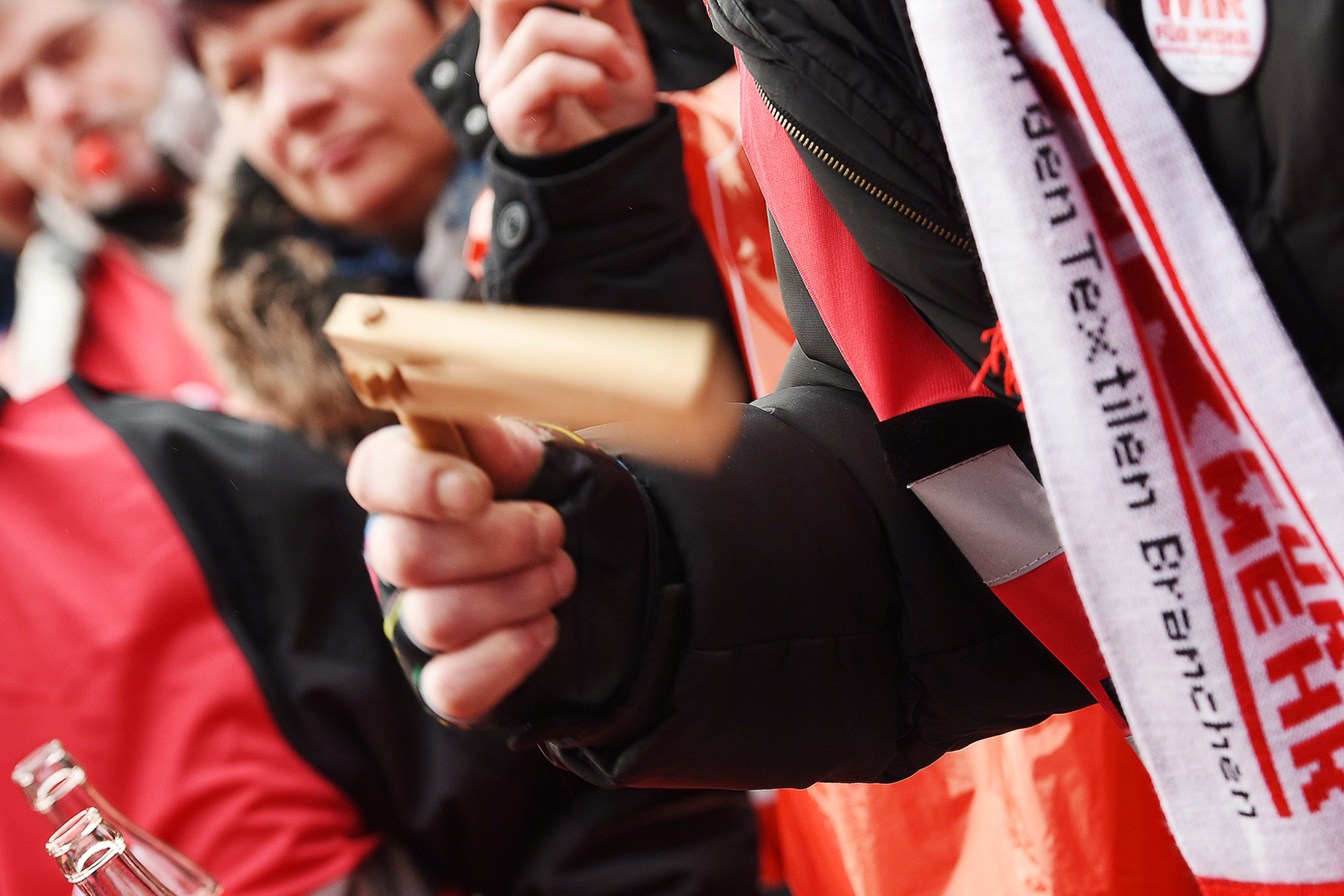
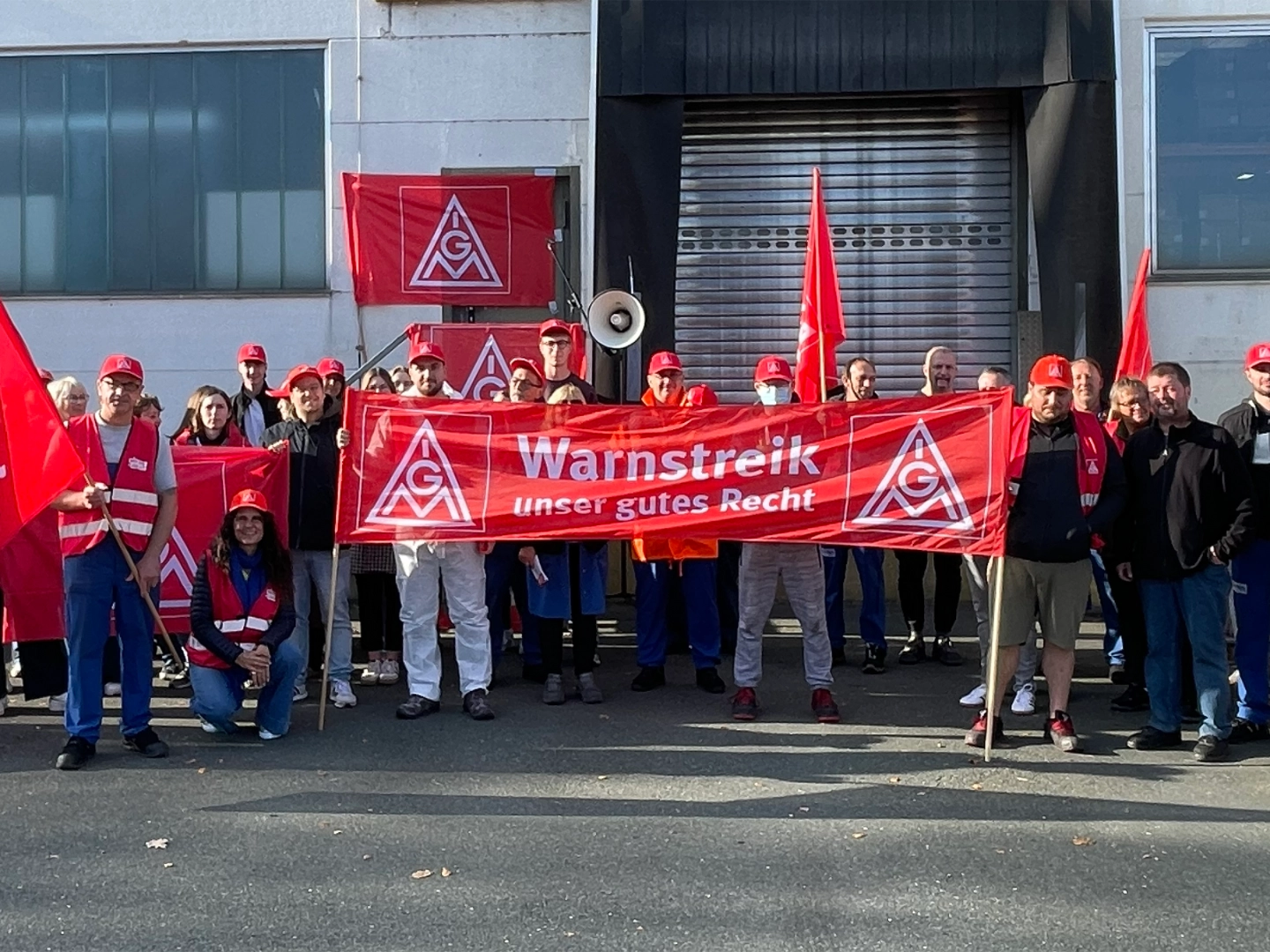
Gruppe junger Beschäftigter während eines Warnstreiks in der Textilindustrie 2017

30 April 2019 30 April 2019


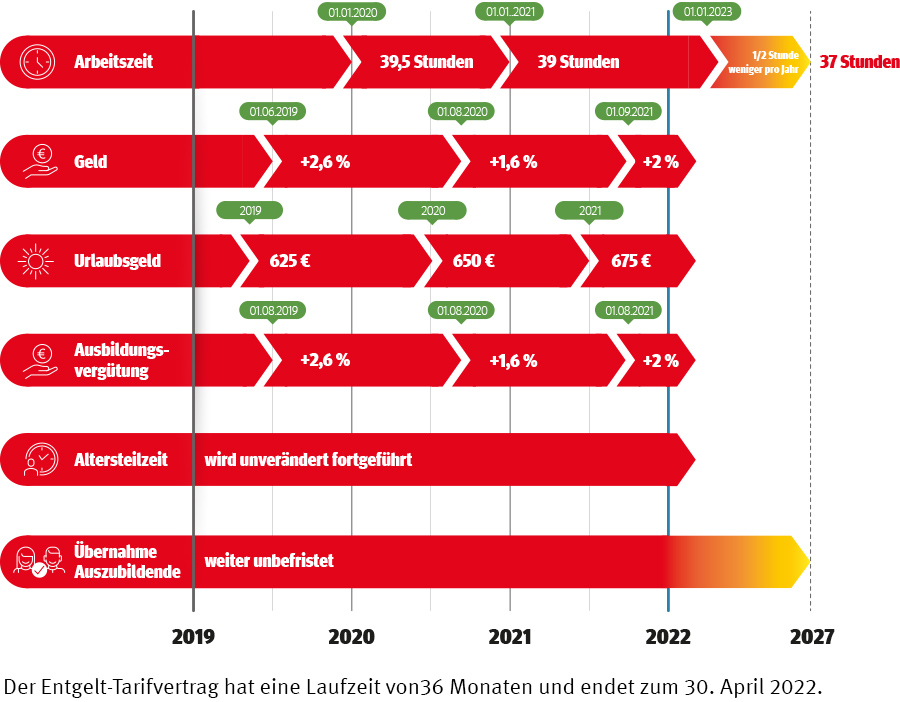
It’s a done deal: In the East German textile industry, the workweek will be reduced in six steps by 2027 from the current 40 hours to 37 hours—just like in the West. Our elected bargaining committee achieved this in negotiations with the Association of the German Northeast German Textile and Apparel Industry. In the first phase, starting in January 2020, the workweek will be reduced by half an hour to 39.5 hours. This schedule can be terminated for the first time in 2025.


20190430_Tarifabschluss_Textil_Ost_001.jpg

In terms of pay, there will be a 6.2 percent increase over the next 36 months, implemented in three stages. The first pay increase will take effect on June 1, 2019. At that time, wages and apprenticeship stipends will rise by 2.6 percent. At the same time, the additional vacation pay will also increase in three stages to 675 euros, starting at 625 euros for 2019.

The collective bargaining agreement on wages has a term of 36 months, ending on April 30, 2022. At that point, we can negotiate wages again.


Permanent Employment for Trainees

We have also achieved our goal regarding the hiring of trainees. Trainees will receive a permanent position upon successful completion of their training.


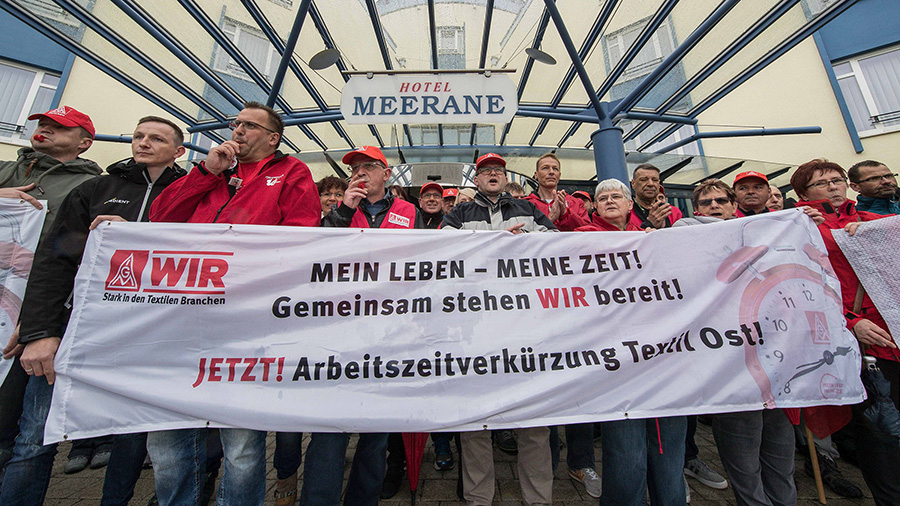
Tarifrunde Textil Ost 2019: Beschäftigte demonstrieren vor dem Verhandlungsort.

Employees demonstrate in front of the negotiation venue (Photo: Igor Pastierovic)

Prior to the collective bargaining round, employers had terminated the collective bargaining agreement regarding the permanent hiring of trainees, despite a shortage of skilled workers and young talent. The collective bargaining agreement will now continue unchanged after all.


Partial retirement program to continue

The collective bargaining agreement on partial retirement, which allows employees to retire earlier, will also continue unchanged.

“We were able to successfully fend off the attack on the partial retirement quota,” explains IG Metall negotiator Manfred Menningen. “It was high time to agree not only on a pay raise for employees who do good work day in and day out, but also on the harmonization of working conditions in the East German textile industry. The agreed-upon hiring provision gives young people secure prospects after completing their training.”

The collective bargaining agreements apply to 16,000 employees in the East German textile industry.

Rate

New on igmetall.de

Subscribe to the newsletter