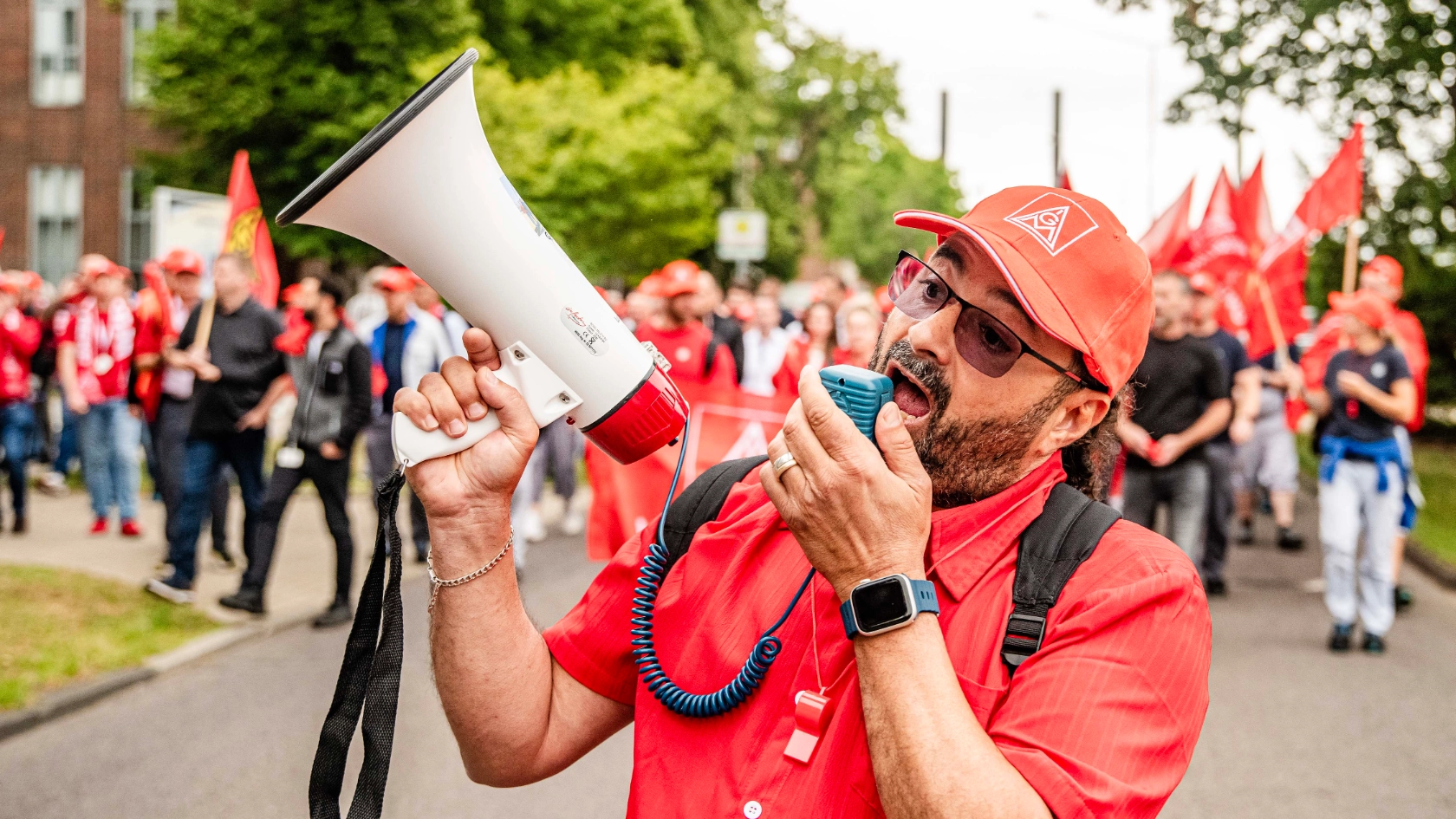
In the end, they reached a good agreement. After six months of collective bargaining , IG Metall and Airbus have agreed on a fundamental expansion of measures to promote flexibility and job security across all German sites. This perfectly complements the 2022 collective bargaining agreement on Airbus’s future industrial strategy, which includes provisions for job and site security. The new regulations will remain in effect until the end of 2030.
Better Provisions for Temporary Workers
The use of temporary workers at Airbus will be more strictly limited and regulated than before. The temporary worker quota will be gradually reduced from the current 13 percent—down to 10 percent starting in 2028.
At the same time, the maximum assignment period for individual workers is set at 36 months. After that, the temporary worker must either be hired on a permanent basis or the assignment must be terminated. This gives workers clear prospects for the future.
IG Metall members working as temporary agency workers will now also receive equal pay starting in their third month of assignment. Non-members will continue to receive equal pay only starting in their sixth month of assignment.
And another provision applies to temporary agency workers: If they are hired into a permanent position at Airbus, their temporary agency work periods will be recognized for collective bargaining benefits such as company-specific bonuses (Christmas bonus), transformation allowance, or collective bargaining supplementary pay.
Secure Prospects for Employees
Not only periods of temporary agency work but also fixed-term contracts will be limited to a maximum of three years in the future. The three-year limit also applies when combined with prior temporary agency work. For example, if an employee worked as a temporary agency worker for two years and is then hired directly, her fixed-term contract may last no more than one year. If a temporary agency worker was on assignment for three years prior to being hired directly, there may be no fixed-term contract at all thereafter. The previous practice of chained fixed-term contracts lasting up to seven years is therefore no longer permitted.
Additional flexibility measures have been agreed upon for the eight civilian aircraft production plants. The principle that job-creating measures take precedence over measures that extend working hours continues to apply. The proven working time account system will be retained and made more attractive. This will allow employees to use their long-term working time accounts more flexibly and independently in the future.
Guarantees for Training
There is also greater security for apprentices and dual-track students at these plants: They will generally be hired on a permanent basis after completing their apprenticeship or studies. And all locations will continue to offer apprenticeships; the apprenticeship quota has been set at a minimum of five percent. In addition, all sites will offer the Airbus Graduate Support Program in the future, which will also be supplemented by advanced training for technicians and master craftsmen.
“With this agreement, we are well-prepared for the ramp-up of production. We can and must now use the time until 2030 to focus on the aircraft programs of the future and ensure the sites’ participation in them,” said Holger Junge, Chairman of the Airbus Group Works Council.
More autonomy, more fairness, more safety: You can take off.