Automatic translation
This article has been translated automatically using computer technology. While we strive for accuracy, some wording or details may differ from those in the original article.
This translation was not manually reviewed. For important facts, quotations or legally sensitive information, please consult the German original. Individual selections, images, embedded media or technical terms may have been translated differently or incompletely.

FAQ: T-ZUG and Reduced Full-Time Work FAQ: How to Get T-ZUG Days Off and Reduced Full-Time Work

Need more time for yourself? If you have children, are providing care, or work shifts, you can choose up to 8 additional days off per year in the metal and electrical industry. In addition, all employees can reduce their workweek to 28 hours. We explain the T-ZUG option and the reduced full-time schedule.

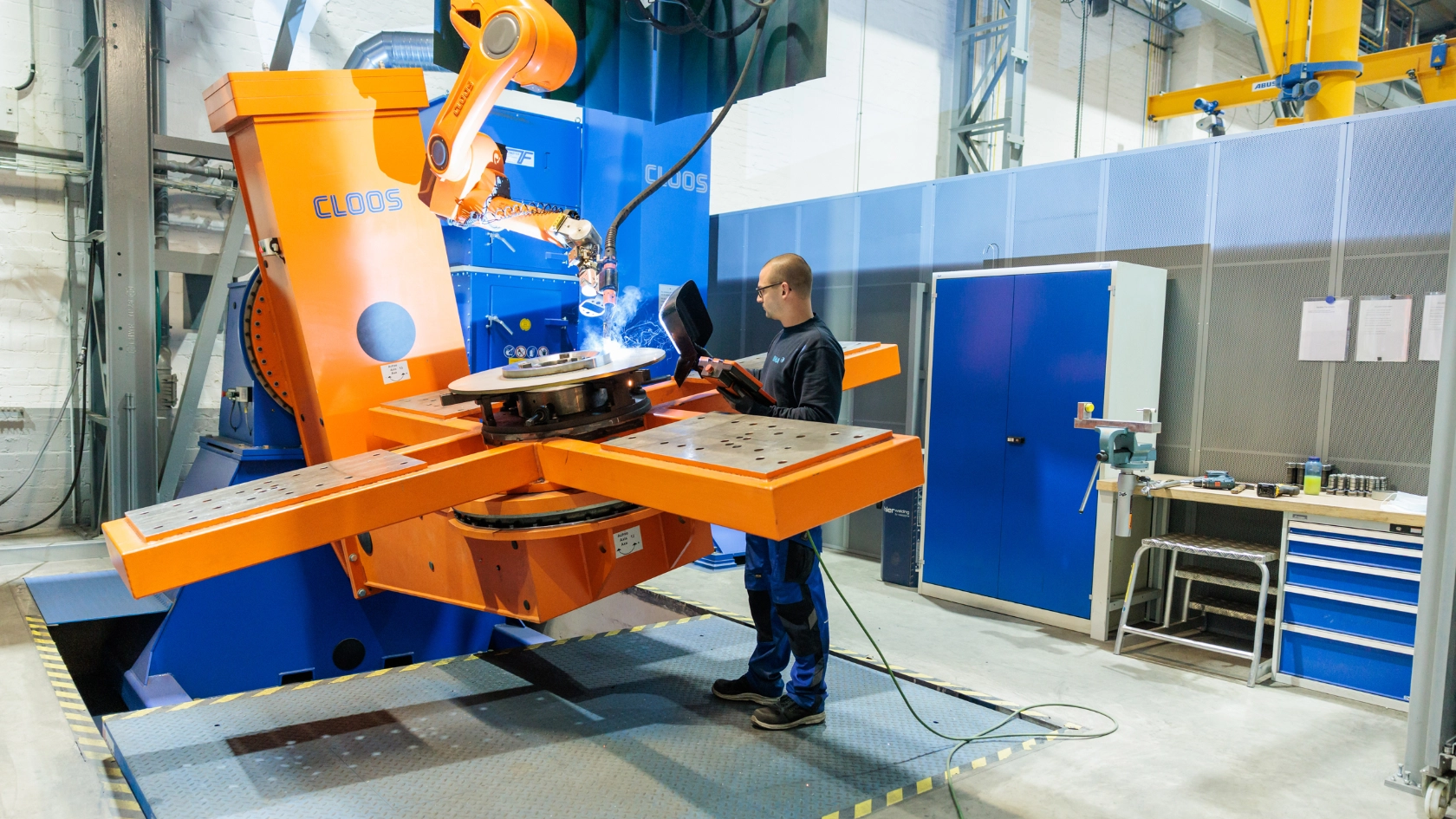
Metallarbeiter an einer Fräse

17 September 2025 17 September 2025 |
Updated on 19 November 2025 19 November 2025


Work schedules aren’t a matter of personal preference. Many employees at companies that have currently reduced working hours due to the crisis would like to work longer hours. Others, on the other hand, have to work overtime at companies operating at full capacity.

But with a collective bargaining agreement, things can sometimes be tailored to employees’ needs: In companies in the metal and electrical industries bound by collective bargaining agreements, employees have more say in their work schedules and can thus adapt their work hours to their personal lives—rather than always the other way around. They have two options for this:

The T-ZUG option: Employees who are raising children, caring for relatives, or working shifts can choose to take “collectively bargained time off” instead of the “Collectively Bargained Supplementary Payment” (T-ZUG) paid out in July—this amounts to up to 8 additional days off per year.
Requests for these days off must be submitted by October 31 for the following year.

Reduced Full-Time Work: All full-time employees can temporarily reduce their working hours to “reduced full-time” for a period of 4 to 24 months, down to a maximum of 28 hours per week. Reduced full-time work can begin at the start of any quarter and must be requested from the employer no later than 6 months before it begins. 

IG Metall secured these two work schedule options during the 2018 metal industry collective bargaining round. At the time, 1.5 million employees took part in a warning strike in support of these changes.

Do you want to better align your work hours with your personal life? We explain how to do this in our FAQ.
 

Option for the Collective Bargaining Supplement (T-ZUG)


What is the collective bargaining supplementary allowance (T-ZUG)?

The Collective Bargaining Supplement (T-ZUG) is an annual special payment under collective bargaining agreements in companies in the metal and electrical industries that are bound by such agreements—similar to the collective bargaining vacation and Christmas bonuses.

The T-ZUG is paid to employees, apprentices, and students who are in an employment or apprenticeship relationship as of the payment date and have been with the company for six consecutive months at that time. Part-time employees or those in a partial retirement program receive the collective bargaining supplementary allowance on a pro-rata basis according to their working hours.

However, only members of IG Metall have a legal entitlement to it. Employers generally pay the T-ZUG voluntarily to all employees to prevent them from joining IG Metall. However, only members have a legal entitlement that can be asserted and enforced in court.

The collective bargaining supplement consists of two parts:

  • T-ZUG A
  • T-ZUG B or supplementary payment (ZUB).

T-ZUG A amounts to 27.5 percent of your individual monthly pay. It is paid out with the July paycheck—and employees with special responsibilities (children, caregiving, shift work) can also claim it in the form of days off (see below: What is the T-ZUG option?).

T-ZUG B is paid out with the February paycheck and cannot be taken in the form of days off. Starting in 2026, it will amount to 26.5 percent (instead of the previous 18.5 percent) of the base wage for skilled workers in the respective collective bargaining area—that is approximately 900 euros.


What is the T-ZUG option and “collective bargaining-based time off”?

Employees facing special burdens—such as caring for children or relatives, or working shifts—can take advantage of the so-called collective bargaining leave in lieu of the Collective Bargaining Supplement (T-ZUG A). This allows for up to 8 additional days off per year.

Who can apply for up to 8 additional days off?

The following employees may apply for T-ZUG days off:

  • Employees who have been with the company for at least two consecutive years and have children under 12 in their household. Parental leave taken counts toward length of service.
    You are entitled to two periods of 8 days each per child, as well as three additional periods of 6 days each per child—for a total of five years of time off.
  • Employees who care for family members. This applies to first-degree relatives (spouse, parents) with at least Care Level 1, which must be verified by a certificate from the health insurance or long-term care insurance provider. In cases of acute care, a doctor’s note also allows for a short-term request for the 8 days following the 10 days of statutory acute care.
    For caregiving, employees are also entitled to two periods of 8 days, as well as three periods of 6 days per care recipient.
  • Employees who work shifts—including rotating shifts, night shifts, or three-shift rotations—for at least 3 years and who have been with the company for 5 years in the year they wish to take their days off.
    Shift workers can choose when to take their days off as often as they like and are entitled to 8 days off each year.

A maximum of 8 days per calendar year is allowed. Entitlements to days off cannot be combined, such as 16 days per year for two children or for caregiving and shift work.

These entitlements also apply to part-time and reduced-hour full-time employees. The restrictions that previously applied here have been abolished since 2025.

The entitlement to days off in lieu of T-ZUG A can be extended to the entire company, specific employee groups, or departments and divisions through a voluntary company agreement between the employer and the works council. Trainees and employees in partial retirement are excluded from the T-ZUG option to take time off under the collective bargaining agreement. They are subject to a special employment relationship. Trainees, for example, are at the company to learn and have a fixed training schedule. Employees in a partial retirement program have a contractual working time that is fixed for the entire duration of their partial retirement.

How do I apply for the days off?

You must submit your application for the T-ZUG days off (“time off under the collective bargaining agreement”) to your employer by October 31 for the following year (2026). You may need to include supporting documents such as birth certificates or care certificates.

The application does not need to follow a specific format. It can be submitted informally, by letter or email. State the reason for your request—children, caregiving, or shift work—and attach supporting documents. Your works council or local IG Metall chapter can assist you with sample templates. Many companies provide ready-made application forms.

What happens if I can’t take the days off?

The days of leave expire if they cannot be taken within the respective calendar year (i.e., by December 31). However, for the unused days, you will then receive the collective bargaining-based additional pay again, amounting to one-eighth (1/8) of your T-ZUG A per day.

Can the employer deny the days off?

If the employer cannot compensate for the loss of work volume resulting from the T-ZUG days off with appropriately qualified staff, they must enter into discussions with the works council to find solutions.

What options do employers and the works council have?

A new provision effective in 2025 is that the days off may be allocated if it is determined that the entitlement cannot be granted to all applicants. The employer and employee representatives may then establish, through a voluntary works agreement, that the time off will be granted on a pro-rata basis to the applicants—for example, four days for all employees who applied within a company or a division of the company. To the extent that the days off are not granted, employees are then entitled to T-ZUG A on a pro-rata basis.

In addition, in companies facing employment difficulties, employers and the works council may also agree that all employees take days off instead of T-ZUG A, thereby reducing working hours at the company. In this case, eligible employees receive eight days off, and all other employees receive six days off.


Reduced Full-Time Work


What is reduced full-time work?

“Reduced full-time” means that you can temporarily reduce your weekly working hours to up to 28 hours for a period of 6 to 24 months, with a corresponding reduction in pay, and then automatically return to the normal full-time schedule under the collective bargaining agreement—or submit a follow-up request to continue the reduced full-time arrangement.

The designation “reduced full-time” has no legal implications for any entitlements linked to full-time employment. Unlike part-time employees, however, employees on “reduced full-time” automatically return to their previous working hours once the arrangement ends.

Who is eligible for reduced full-time work?

All employees who work standard full-time hours under a collective bargaining agreement (35 hours per week, or 38 hours in some companies in eastern Germany) — and who have been with the company for at least two years — can apply for reduced full-time work.

How do I apply for reduced full-time work?

A written request for reduced full-time work must be submitted at the start of each quarter, no later than six months in advance. For example, if you want to switch to reduced full-time work on July 1 of next year, you must apply by December 31 of the current year at the latest.

The works council and employer may also agree on different effective dates. Check with your works council about this.

You must submit the request in writing. It must include: the start date of the reduced full-time schedule, the extent of the reduction—for example, to 28 hours—the distribution of the reduced working hours in full hours or half-days, and the duration. The duration can range from 6 to 24 months.

At the end of the agreed-upon period, working hours automatically revert to normal full-time hours. However, the employee may also submit repeated requests and continue working reduced full-time hours.

Can an employer also deny a request for reduced full-time work?

The employer may also reject the request, for example, if many employees are already working reduced hours (part-time or reduced full-time); depending on the collective bargaining area, certain limits apply in such cases.

If the employer determines that the reduction in workload resulting from the employee’s reduced full-time hours is unlikely to be offset by staff with the appropriate qualifications, the employer must notify the employee of this in a timely manner. At the employee’s request, and with the involvement of a works council member, the employer must assess whether the desired reduction in working hours is possible at a later date or in another comparable position.

If no agreement is reached, the request may be denied.

The employee must be notified of the rejection in writing no later than 6 weeks before the start of the reduced full-time schedule.

How often can I apply for reduced full-time work?

You can also reapply for reduced full-time work. It is not necessary to return to full-time work first. You can submit a new application while still in your reduced full-time position, but you must again observe the minimum duration and deadlines.

Can I combine T-ZUG with reduced full-time work?

Yes.


New on igmetall.de
Aktionstag bei Mercedes Benz, Daimler, in Sindelfingen gegen die Angriffe auf Beschäftigten in der Automobilindustrie.
Resistance to Attempts at Drastic Cuts Auto industry workers issue a warning
Sie wollen doch nur dein Bestes
Redistribution Making Germany more equitable: We need this tax reform now
Der Streik bei Kelvion in Nobitz-Wilchwitz begann am 4. August 2026. Die Geschäftsleitung will nach Sarstedt/Niedersachsen verlagern - obwohl die Produktion in Wilchwitz profitabel und bis ins nächste Jahr ausgelastet ist.
"It’s worth fighting for!" Kelvion workers strike for a social collective bargaining agreement
Ruhrpott Rebellion am 07.07.2026
Welfare State September 26: Nationwide Day of Action for Social Policy
Beschäftigter arbeitet an einem Getriebe in einer Fabrik
Working Hours Why working longer doesn’t help—and actually does more harm than good
Ein männlicher Land- & Baumaschinenmechatroniker prüft einen Traktor mit einem Tablet
2026 Collective Bargaining Agreement for the Metalworking and Agricultural Engineering Sectors Greater Flexibility in the Metalworking and Agricultural Engineering Sectors in Lower Saxony and Bremen
Elektronikerin prüft die Spannung an einem Schaltschrank.
2026 Collective Bargaining Round for the Electrical Trades Wage Increase in the Electrical Trades in Berlin-Brandenburg
Benjamin Heine ist Mitarbeiter der BMA in Braunschweig
2026 Collective Bargaining Round for Metal Fabrication and Precision Engineering Higher Wages in the Metal Fabrication and Precision Engineering Sectors in Southwest Germany
Metall-Arbeiter beim Schleifen
2026 Collective Bargaining Round for the Metalworking Trade Employees in the Berlin-Brandenburg metalworking sector will receive higher pay
Beschäftigte von Thyssenkrupp demonstrieren in Essen am 23. Mai 2024 gegen das Vorgehen der Geschäftsführung beim geplanten Teilverkauf des Unternehmens.
Defend the welfare state All dates for nationwide actions against cuts to social services
IGM Aktion VW Wolfsburg
On September 21, things will get loud Nationwide Day of Action: Auto Industry Workers Fight Back Against Mass Layoffs
Auszubildender in einer Schreinerei
Apprenticeship Wages Questions and Answers About Apprenticeship Wages
Landkarte mitmarkern für Geschäftsstellen
IG Metall on Site
Advice, Service, Assistance

Any questions? Contact your local IG Metall office for more information.

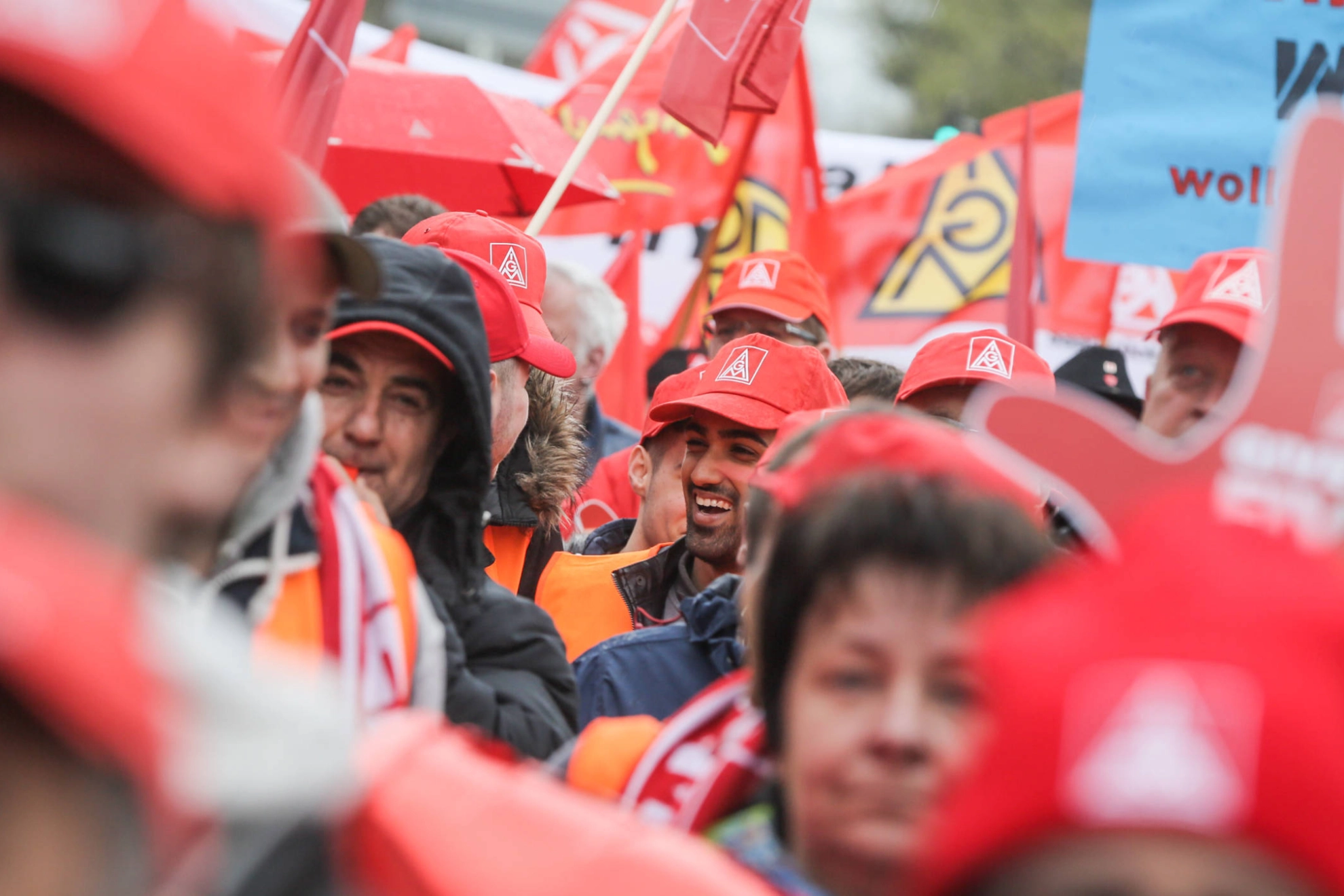
Ein lachender Mann mit IG Metall-Kappe in einer Menschenmenge.
IG Metall App
News straight to your smartphone

News on current topics, guides, pay scale tables, and more—download the IG Metall app for Android or iOS!

Subscribe to the newsletter