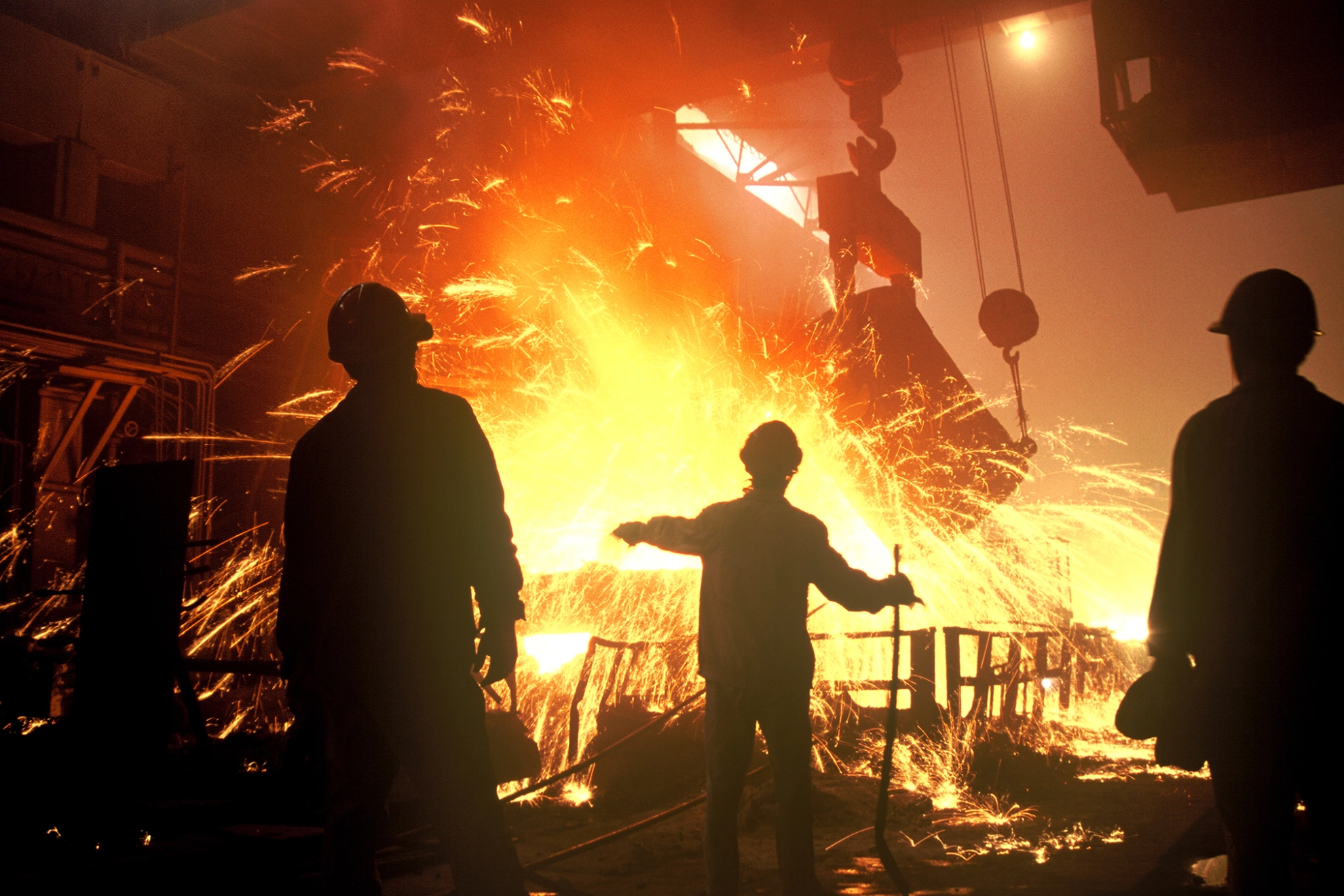
Steelmakers such as Thyssenkrupp Steel, Salzgitter Flachstahl, Saarstahl, and ArcelorMittal are under immense pressure. High energy costs, cheap imports from Asia, and the high costs of transitioning to climate-friendly steel production have been weighing on domestic producers’ businesses for years and threaten the very existence of the entire German steel industry. The question now is: Let it die—or provide political support?
Provide political support, say IG Metall and the scientific community. A recent study by the University of Mannheim highlights the industry’s importance: “The steel industry is a central pillar of industrial value creation and economic stability in Germany,” write the study’s authors, Prof. Dr. Tom Krebs and Dr. Patrick Kaczmarczyk. They emphasize: “Economic resilience for Germany and Europe requires a strong German steel industry that makes a timely and broad transition to climate-friendly production.” Therefore, they argue, political support for the transformation of the steel industry makes economic sense.
But what if that political support fails to materialize and Germany loses its steel industry? Then the country would also lose its resilience—that is, its ability to withstand and cope with disruptions in global supply chains. According to the study’s authors, this could have dramatic consequences: a breakdown in global supply chains could cost 50 billion euros in value added per year. This is a scenario that IG Metall aims to prevent. The union is waging a long and tenacious battle for the industry and its workers—a battle that is slowly bearing fruit, as demonstrated by the recent steel summit in Berlin.
German Industry Needs Steel
The steel industry is a central pillar of industrial value creation in Germany and Europe. There are over 2,500 different types of steel, each characterized by distinct properties such as exceptionally high strength, good formability, or resistance to heat and corrosion—properties that make them irreplaceable in many sectors, according to the study “Green Steel as a Central Pillar of a Resilient Economy” by the University of Mannheim. That is why the material is in high demand in industry: One-third of the demand comes from the construction industry, 28 percent from the automotive industry, and 13 percent from mechanical engineering. These sectors could not survive without high-quality steel. And many jobs depend on these sectors: Approximately 4 million people are employed in steel-intensive industries, which accounts for about two-thirds of all industrial jobs in Germany.
Moreover, there is a lot of money at stake: National steel production most recently generated about 7 billion euros in direct value added and indirectly enables 12.7 billion euros in value added in downstream industries, as documented by the industry association Wirtschaftsvereinigung Stahl.
Imports Cannot Replace Production
“Just because German industry needs steel doesn’t mean Germany has to produce it itself; instead, it should buy it more cheaply from abroad,” say neoliberal voices. Economists at the University of Mannheim criticize this idea, arguing that it is based “on the unrealistic assumption that global supply chains always function smoothly and that near-perfect competition prevails in global markets.”
Christina Schildmann, head of research funding at the Hans Böckler Foundation, which funded the University of Mannheim study, lists examples where relying on the global market ultimately proved costly for German industry and consumers: “Antibiotics, certain chemicals, or chips for mass production: for years, the prevailing view was that we no longer needed to manufacture such supposedly simple products ourselves—we could buy them more cheaply overseas. In many cases, it is now becoming clear that this was a huge mistake.” Schildmann is alluding to the fact that there are repeated supply bottlenecks for these products on the global market, causing their prices to skyrocket. “We should not repeat this mistake when it comes to steel, an indispensable material,” Schildmann concludes.
Dependence on Steel Could Become a Problem
The U.S. is imposing tariffs; China is limiting its exports of computer chips and rare earth elements; a pandemic and Russia’s war of aggression against Ukraine are disrupting supply chains—all of this triggers economic shocks. And the likelihood of these shocks will increase. This is the assumption made by researchers at the University of Mannheim when analyzing the current geopolitical landscape.
What would a steel shock mean for industry? A thought experiment: In the future, German companies no longer purchase their steel from domestic manufacturers, but only from subsidized, low-cost Chinese producers. However, due to trade policy disagreements, these producers limit the amount they export. The result would be a steel shock that could cost the German economy up to 50 billion euros in value added annually, the researchers have calculated: “These losses consist of two components: First, there is a negative supply effect, as steel would be lacking as an input in downstream sectors—particularly in construction, mechanical engineering, electrical engineering, and the automotive industry—or would only be available at significantly higher costs. Second, this results in a negative demand effect, because income losses among private households would reduce demand for goods.”
Job Losses Strengthen the Far Right
Without the steel industry, many jobs would be lost in Germany, particularly in Bremen, Duisburg, Eisenhüttenstadt, the Saarland, and Salzgitter. “Given historical experiences with industrial restructuring in the U.S. and the U.K., as well as the age structure of workers in the steel industry, it can be assumed that a large proportion of those affected would not be able to re-enter the labor market in equivalent positions after losing their jobs,” according to researchers at the University of Mannheim. In addition, workers in downstream sectors and in other regions would also be affected. This would have significant social and political consequences: “Historical experience from the U.S. and the U.K. shows that economic decline in industrial regions is often accompanied by a rise in right-wing populist movements. This also applies to Germany: A policy that abandons key industries weakens not only the economy but also democratic stability,” explain the study’s authors.
Policymakers Must Protect the Steel Industry
Jürgen Kerner, Second Chairman of IG Metall, reaches the same conclusion as the researchers when looking at the steel industry: “An end to steel production in Germany would pose a massive threat to the country’s industrial base as a whole—with serious consequences for the economy, society, and political stability in the country.” Kerner therefore advises: “The federal and state governments must do everything in their power to secure the steel industry in Germany and Europe and make it fit for the future.” Kerner believes that, in addition to policymakers, companies also bear responsibility.
IG Metall Secured Subsidies
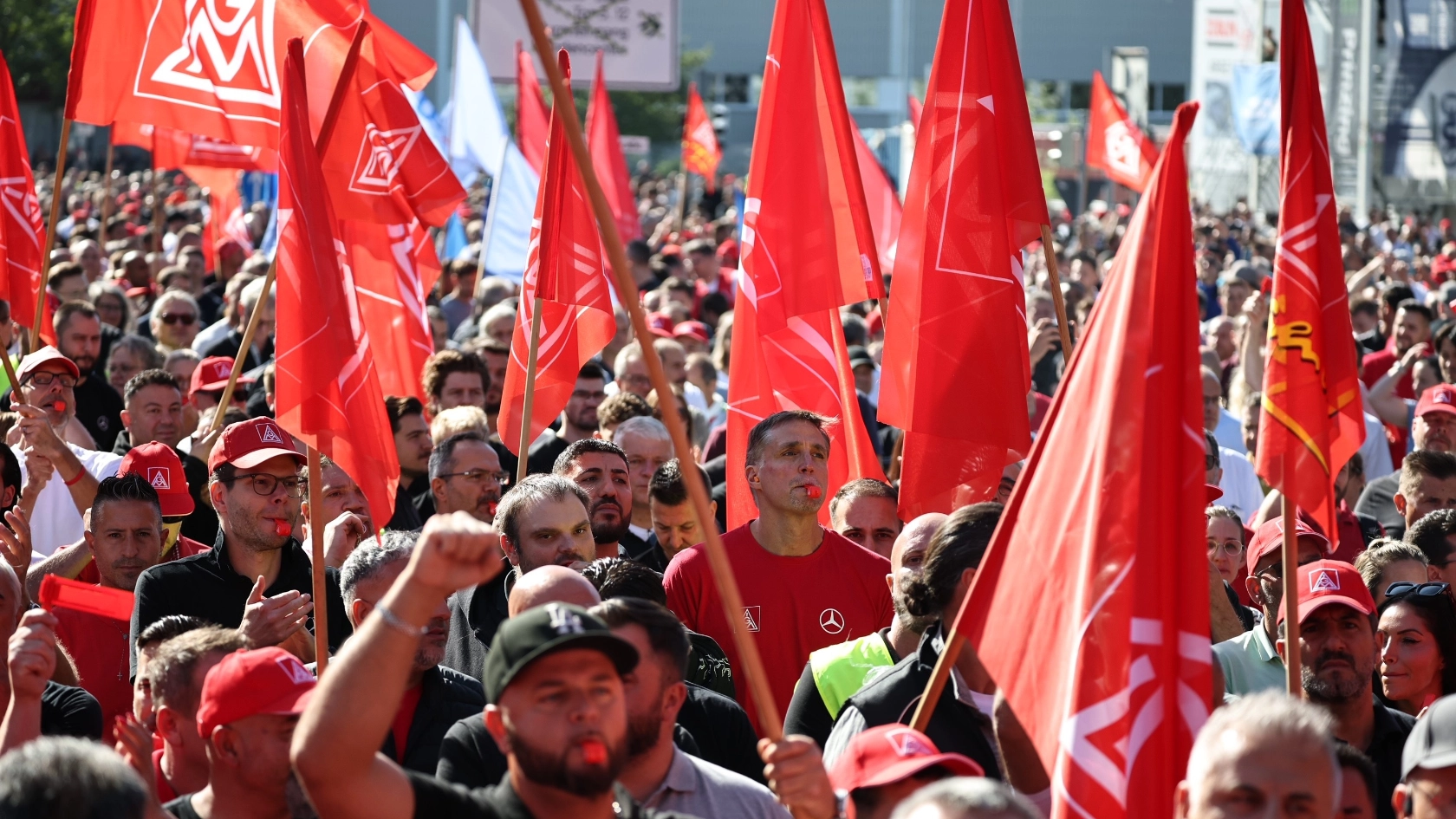
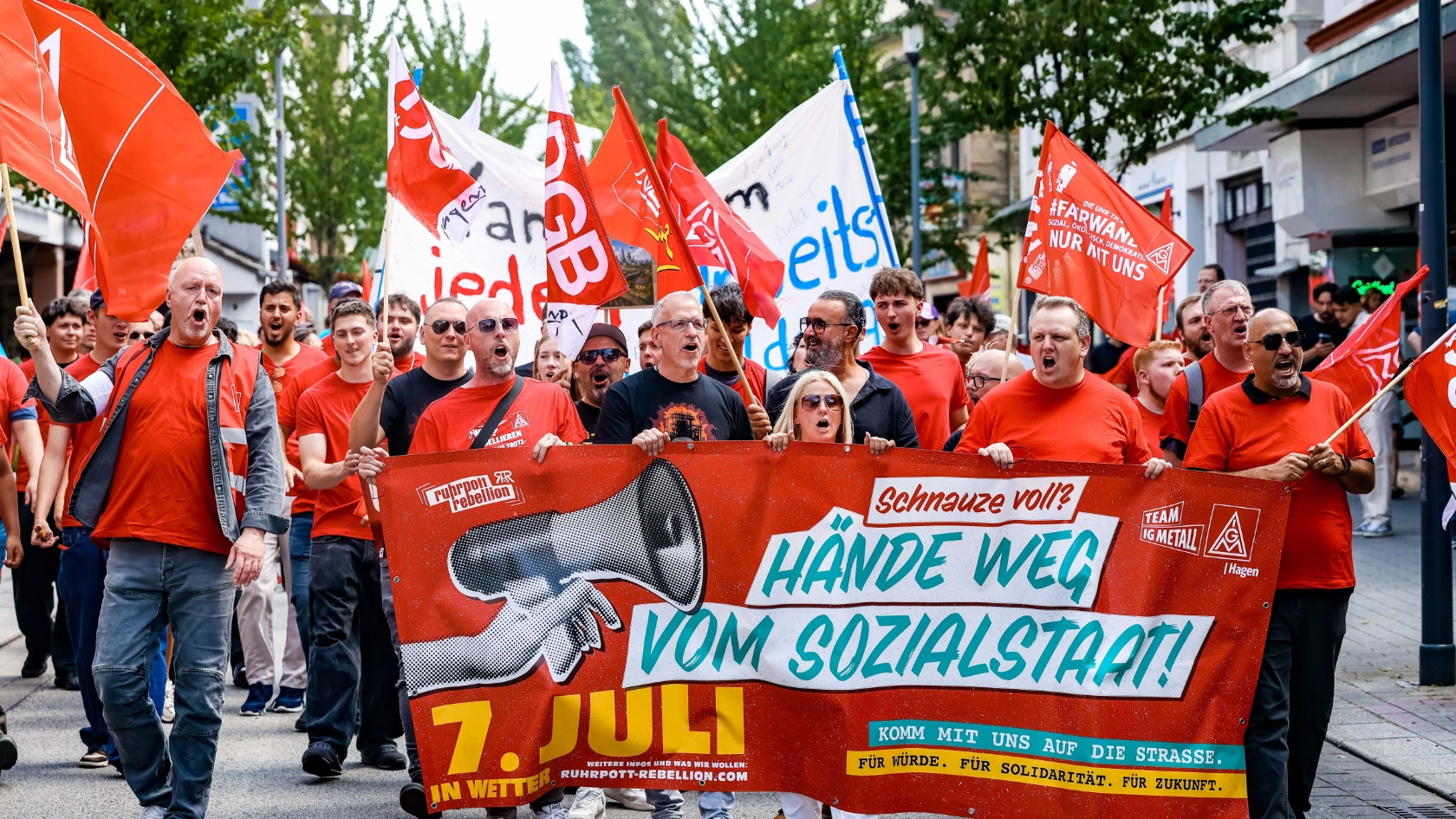
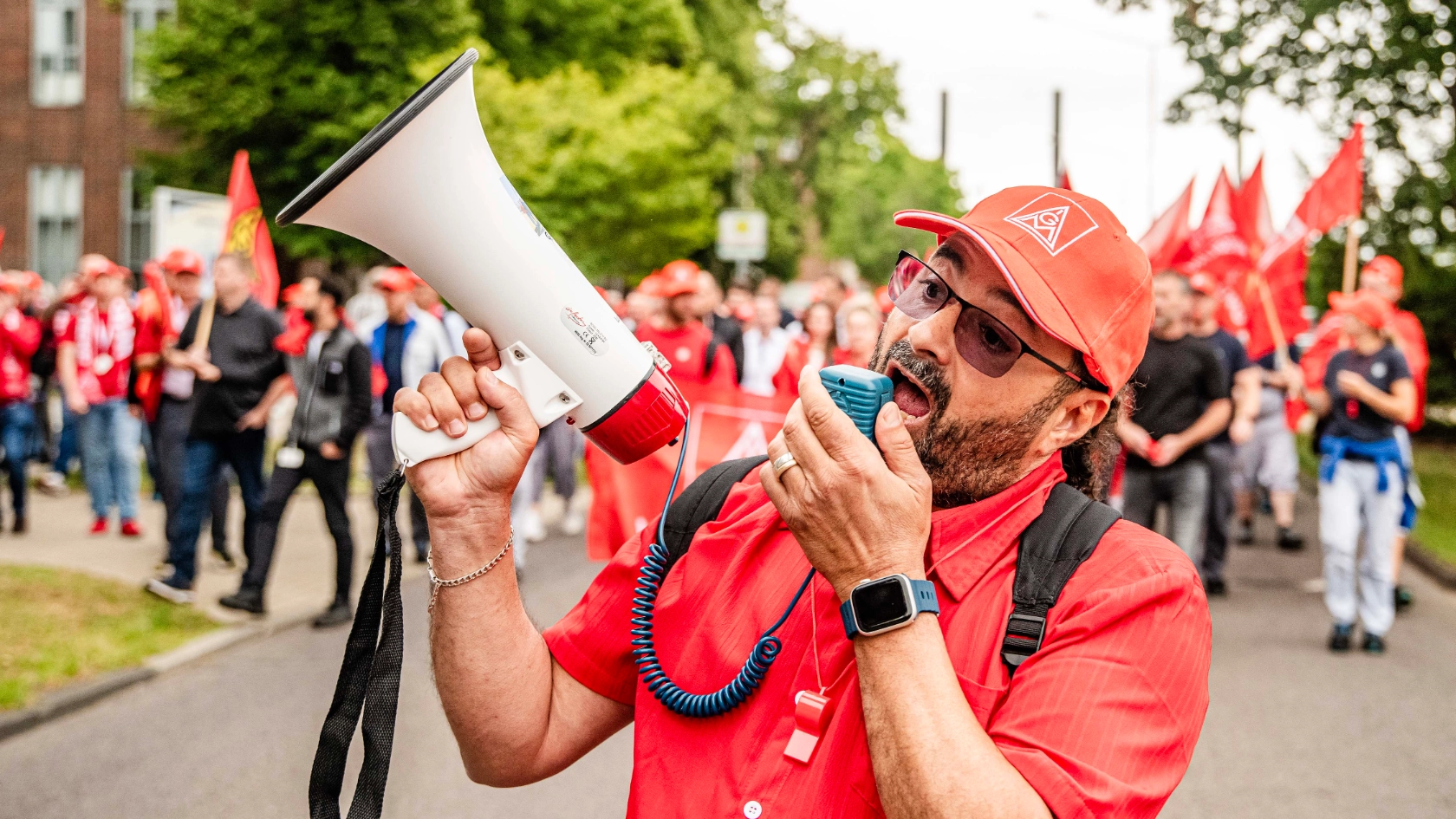
IG Metall is fighting for the future of the steel industry and has achieved some successes in this regard: The transformation of the steel industry toward climate-neutral production is receiving financial support from the federal government and the states. Thousands of metalworkers took to the streets for this cause. The result: The Saarland steel industry is set to receive around 2.6 billion euros, Thyssenkrupp Steel around 2 billion euros, and Salzgitter Flachstahl about 1 billion euros for green steel production. That’s a good start, but it’s also clear that more needs to be done. This is confirmed by the study from the University of Mannheim. According to the researchers’ calculations, there is currently a glaring gap in the scope of green steel production planned to date. The study’s authors therefore recommend: “Germany must significantly accelerate the expansion of production capacities in the green steel sector and initiate additional investments.”
IG Metall is making its voice heard in Berlin and Brussels
ArcelorMittal had also been promised 1.3 billion euros in funding for the transformation of its Bremen and Eisenhüttenstadt sites, but company executives turned it down. According to a statement from Arcelor’s top management, the current framework conditions in Germany do not allow for a robust and viable business model.
IG Metall has long been fighting in Berlin and Brussels to improve these conditions. Now, those efforts seem to be bearing fruit. The EU intends to better protect the domestic steel industry from subsidized cheap imports through tariffs. The German federal government will also advocate for this in Brussels. “The German and European steel industries need effective trade protection,” said Chancellor Friedrich Merz in early November at the Steel Dialogue in Berlin, where IG Metall once again emphasized these and other demands.
Industrial electricity price to be introduced
At the Steel Dialogue—unofficially known as the Steel Summit—IG Metall once again reiterated its demand for a competitive industrial electricity price of approximately 5 cents per kilowatt-hour, including taxes and fees. Its introduction would mean that energy-intensive companies would then only have to pay about 5 cents per kilowatt-hour, thereby regaining their international competitiveness. At the Steel Dialogue, Chancellor Merz pledged that his federal government would make every effort to lower energy prices. Merz also stated that he considered the prospects good for the EU to approve an industrial electricity price in Germany. Federal Minister of Economics Katherina Reiche had already announced shortly before the Steel Dialogue that she intended to introduce an industrial electricity price for energy-intensive companies starting in January 2026 and that negotiations with the European Commission were in their final stages. Jürgen Kerner, Second Chairman of IG Metall, welcomes this. In particular, he welcomes the fact that the federal government has promised that the industrial electricity price can also be combined with electricity price compensation—an issue that is very important to IG Metall. Kerner refers to this as “an important signal.” However, to ensure that it doesn’t remain merely a signal, Reiche must now make sure that the final industrial electricity price is truly competitive.
IG Metall Fights for Local Content Regulations
For IG Metall, one thing is clear: Germany and Europe need effective local content requirements for public contracts and beyond. This means that policymakers must stipulate a minimum share of local value creation. This would ensure, for example, that when the Federal Republic invests billions in public infrastructure through the special fund, those funds also benefit domestic steel manufacturers. Jürgen Kerner summed it up even before the Steel Dialogue: “If we’re using German taxpayer money, then at least part of the production must take place in Germany.” The federal government also supports this point. Federal Minister of Finance and Vice Chancellor Lars Klingbeil explained at the Steel Dialogue: “For our infrastructure and defense, in the automotive industry, and in other key sectors, we want to prioritize the use of domestic and European steel.” He added: “We are fighting to ensure that the steel industry in Germany has a future.”
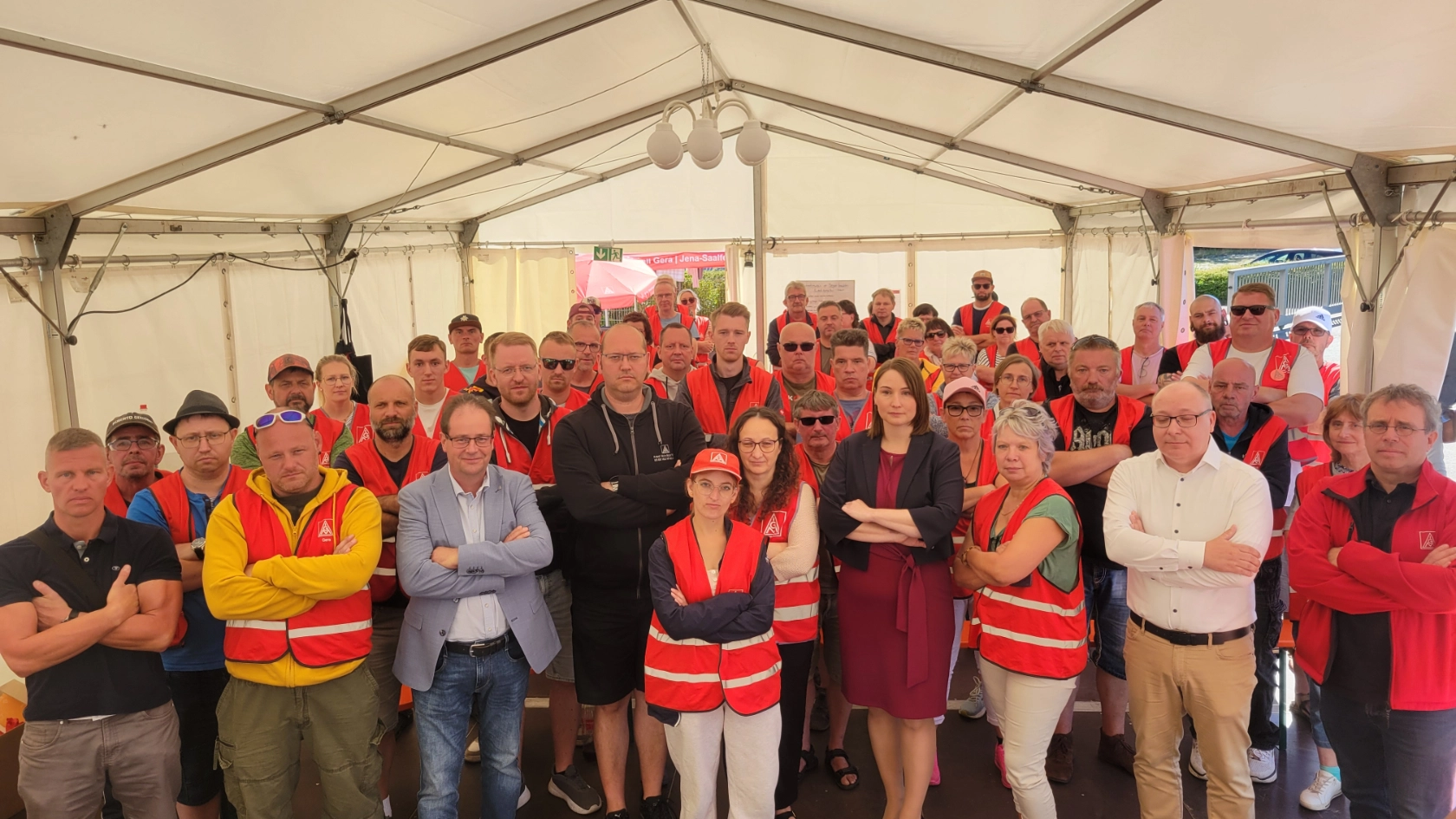
Words that steel industry workers—metalworkers—love to hear. But words that must be followed by action. Yet one feeling remains, which Jürgen Kerner described at the Steel Dialogue press conference as follows: “The steel industry is currently in the emergency room’s trauma unit. But after the meeting with the federal government, I now have the feeling that the patient—the steel industry—will come out of this alive.” However, Kerner also makes it clear: “If companies are now given new leeway and support, then they must also take responsibility for the location and the jobs here. We expect investments in domestic locations. Plant closures must be off the table.”