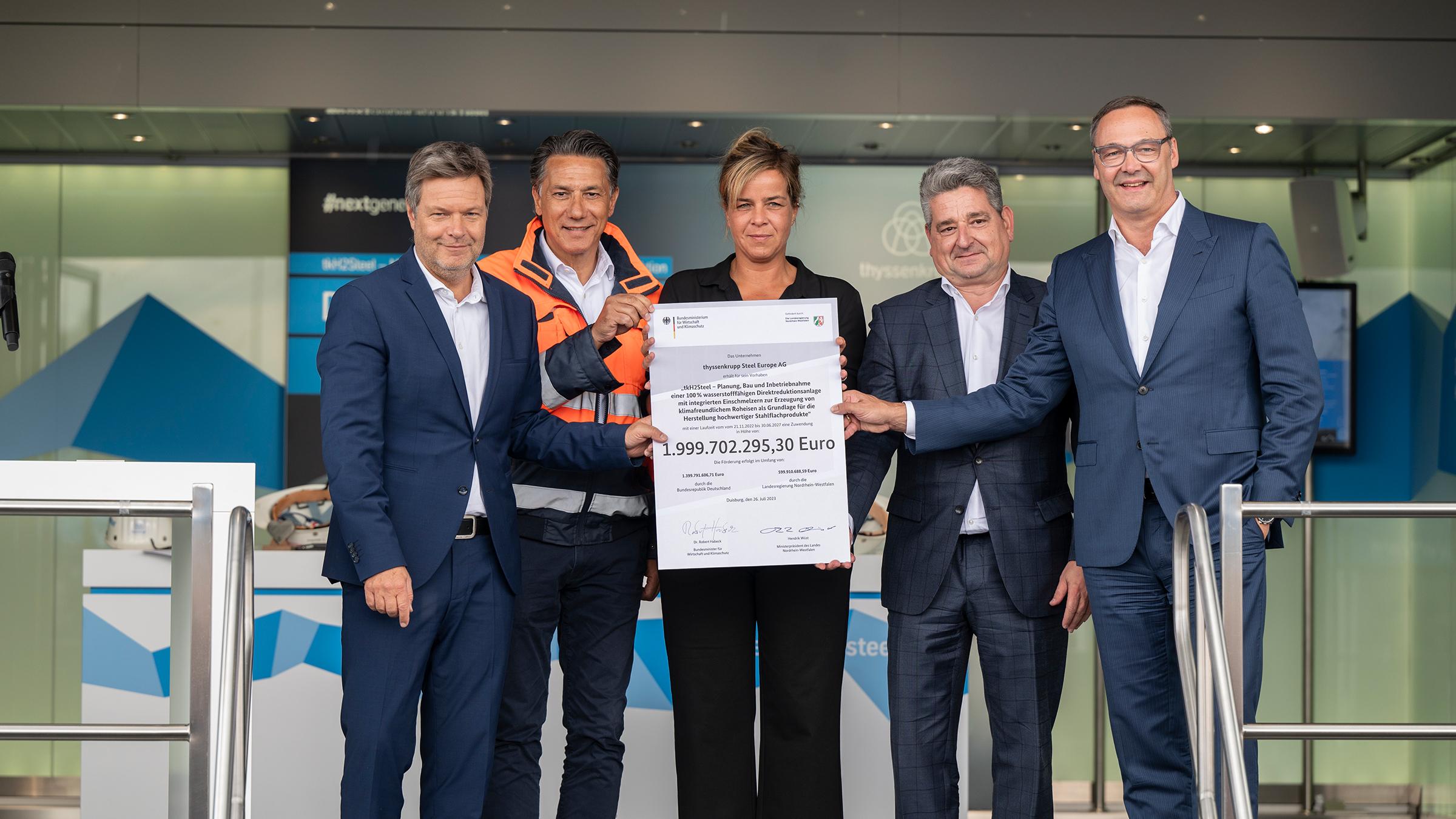
Now the green steel project in Duisburg can get underway. Today, Federal Minister of Economics Robert Habeck kept his promise and came to Thyssenkrupp Steel in Duisburg with an official grant notification that employees have long awaited. Approximately two billion euros in funding has now been approved to establish climate-neutral steel production in Duisburg. This is an important step, not only for Duisburg but for the entire steel industry and economy in Germany. As the Federal Minister for Economic Affairs emphasized: “Today is a good day for the climate, for green industry in Germany, for Duisburg as a business location, and for the employees.”
Tekin Nasikkol, Chairman of the General Works Council at thyssenkrupp Steel Europe AG (second from the left in the photo below), is also pleased: “This funding sends a strong and forward-looking signal to our more than 26,000 colleagues and to Duisburg as a steel production hub. It also underscores the commitment to the necessity of a sustainable green steel industry as the heart of North Rhine-Westphalia’s economy. After all, steel is and will remain the region’s engine for the future and provides important jobs and training opportunities. “Through the construction of our facilities, we are creating over 400 high-quality industrial jobs in a sustainable technology sector, accompanied by the development of forward-looking training programs. Together, we are now on the path to a greener, more sustainable future for coming generations,” said Nasikkol.
Federal Minister of Economics Robert Habeck at the presentation of the grant notification
Day of Action Brought About the Turnaround
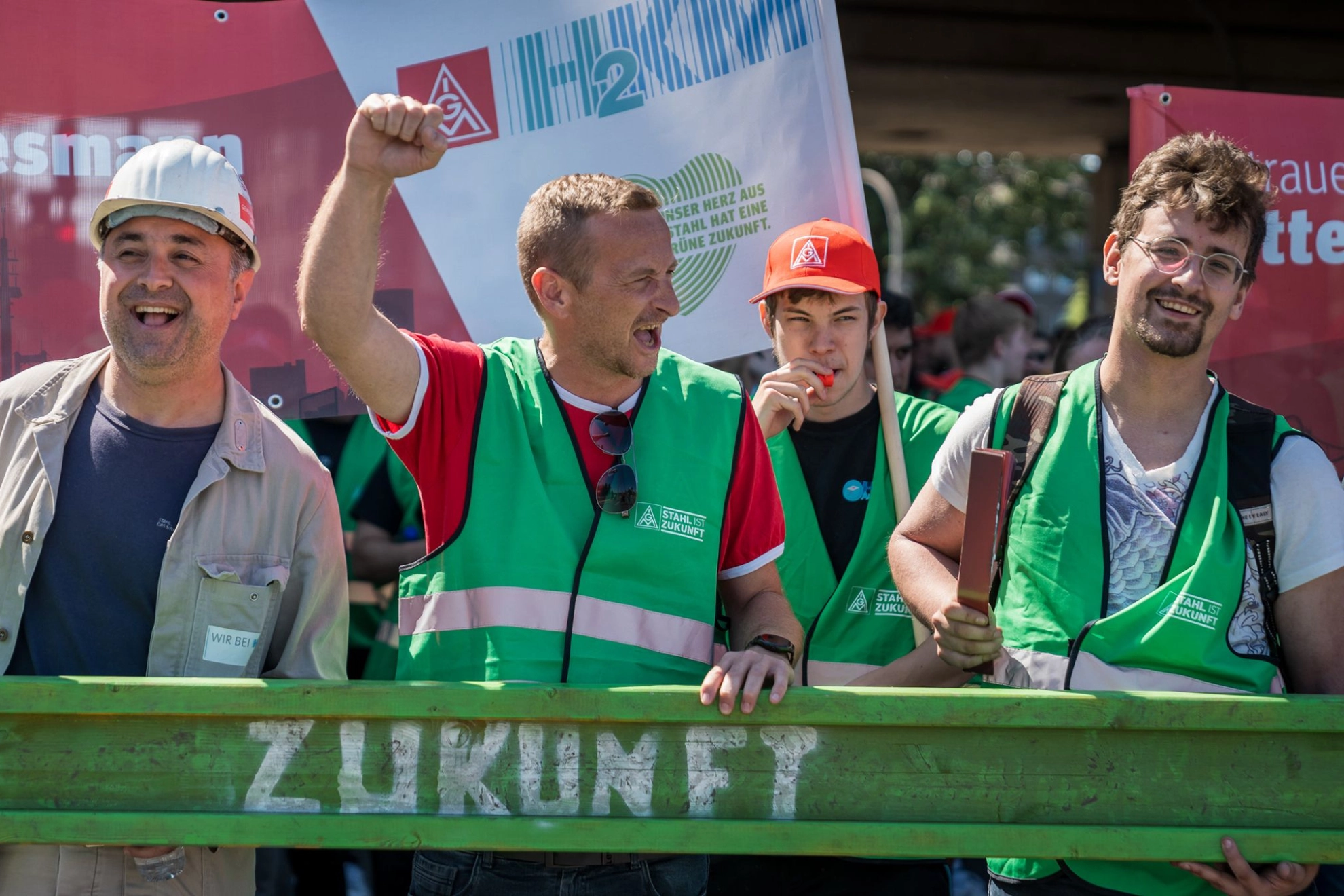
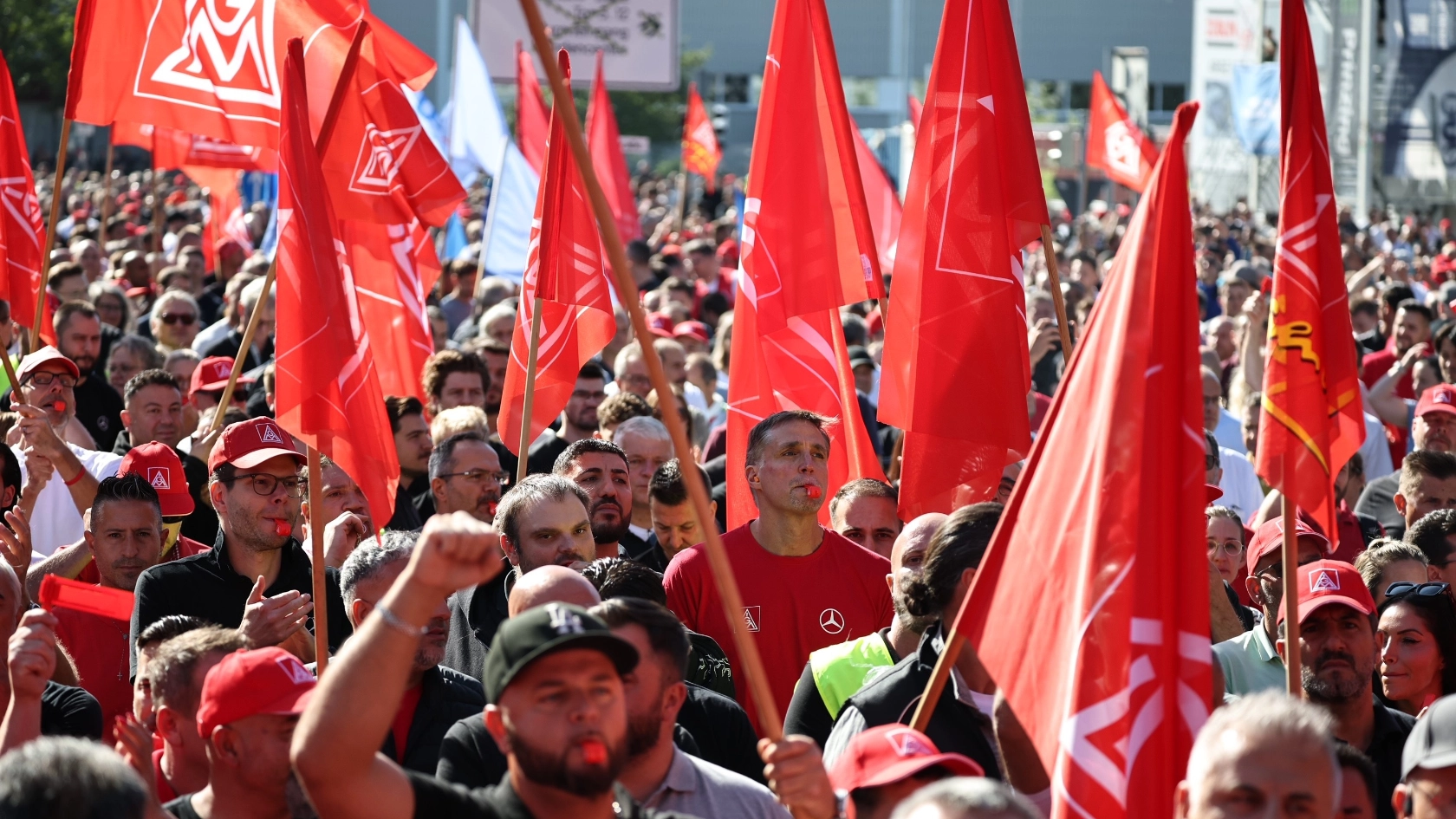
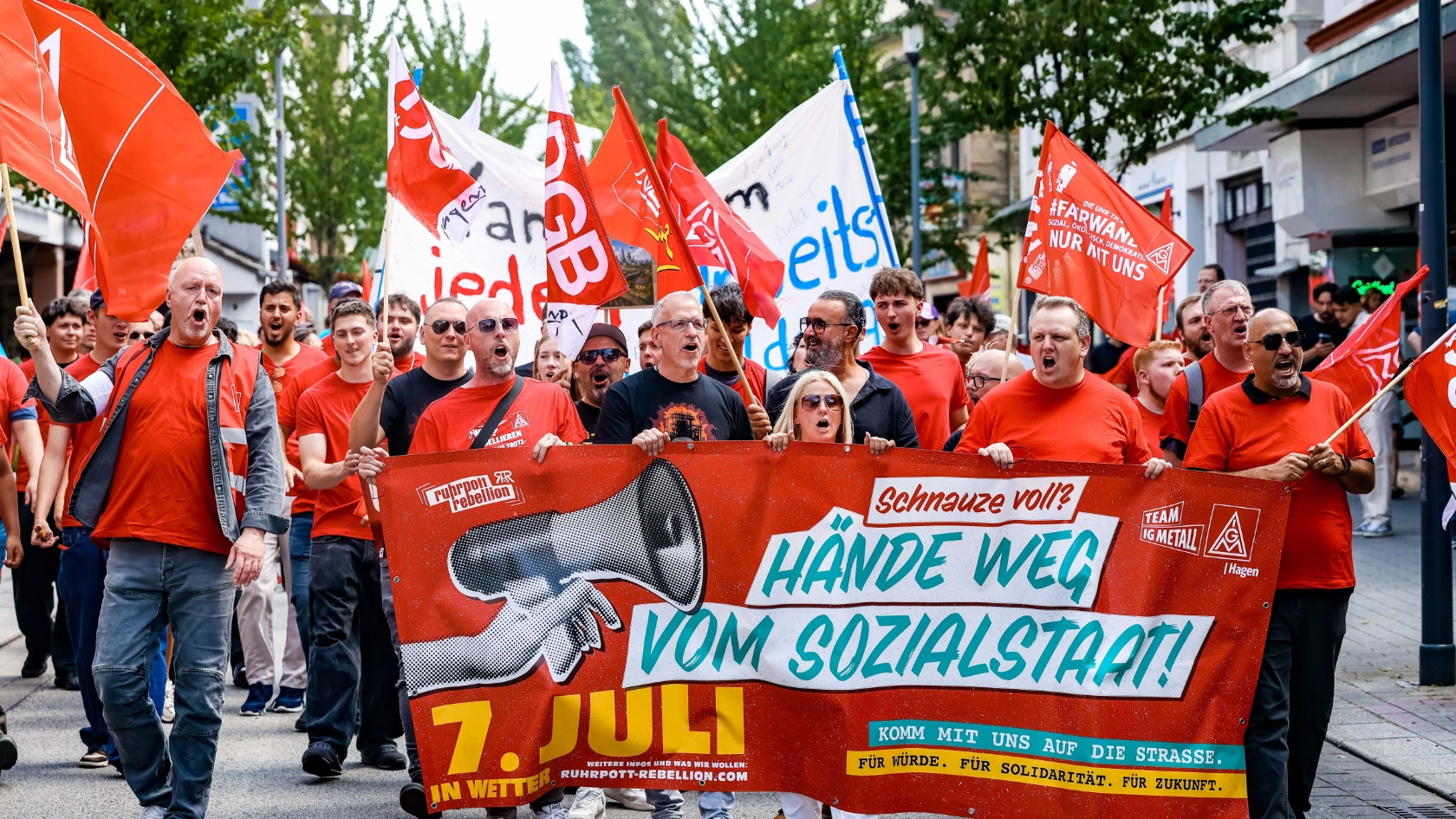
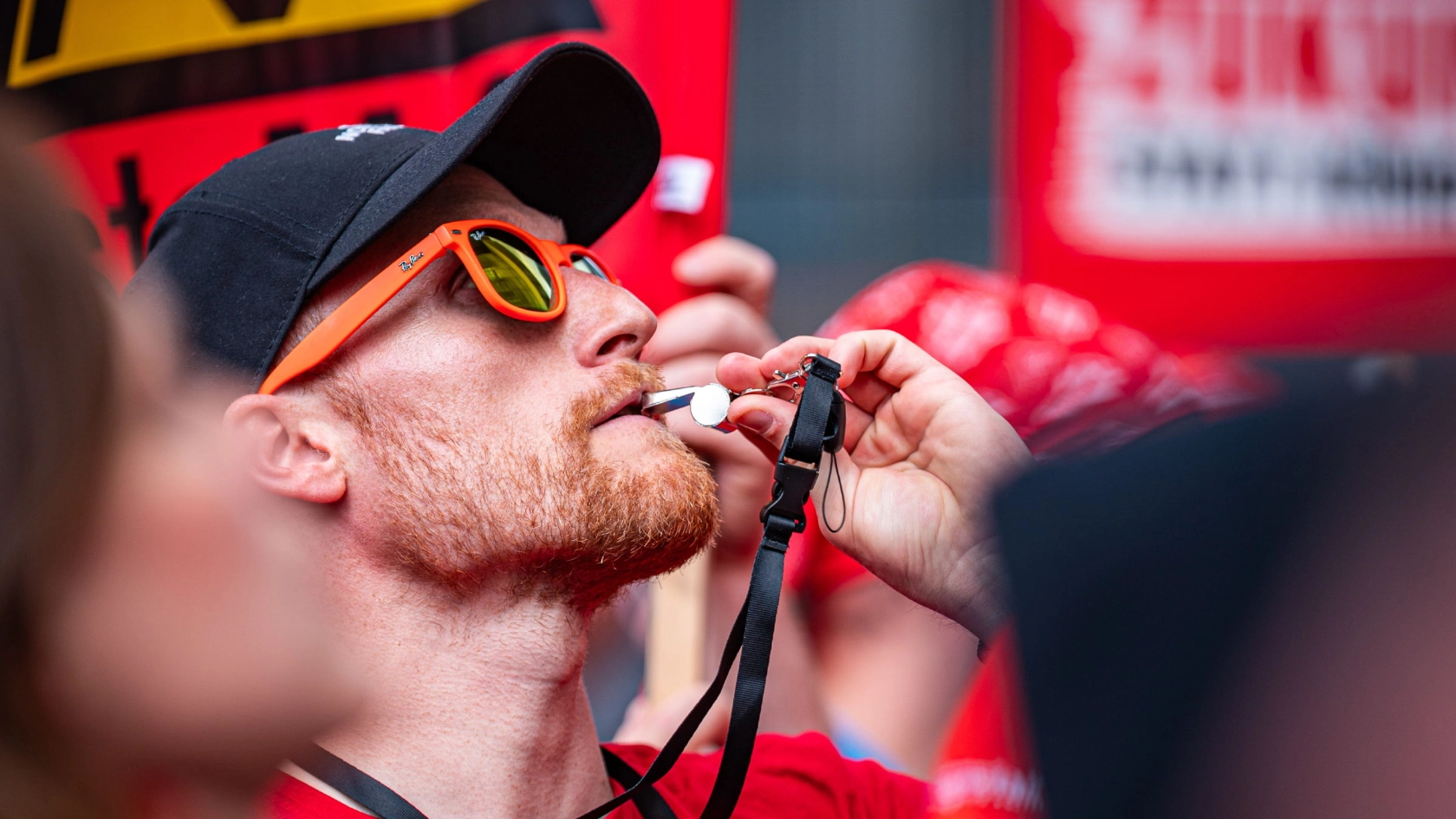
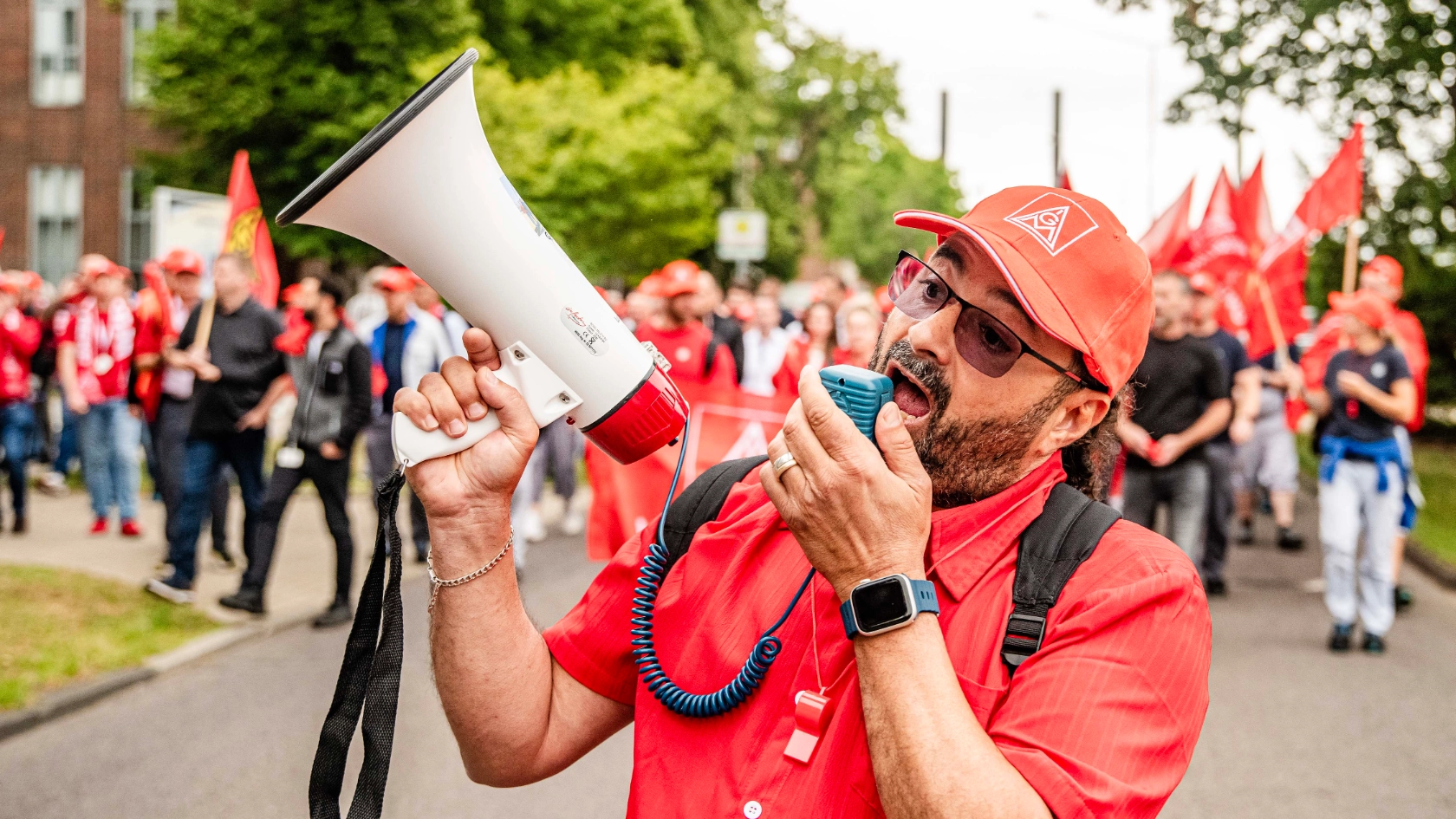
But it didn’t happen without a push. In mid-June, 12,000 metalworkers reminded the Federal Minister of Economic Affairs of what was at stake during a major day of action organized by IG Metall in Duisburg. “We can and want to produce green steel—we just need to be allowed to do so,” explained Nasikkol, chairman of the general works council, at the time. But without the long-promised funding, their future is at risk, Nasikkol emphasized on the main stage, where Habeck also faced the angry metalworkers.
Habeck remembers the day of action well: “At the union’s steel action day, the union members rightly pointed out on their T-shirts that ‘standing still has never gotten anything done.’ And that’s exactly right,” the minister explained, adding: “The company, the state of North Rhine-Westphalia, and the federal government have jointly made progress and set things in motion over the past few weeks. With its highly ambitious project, the company is demonstrating that, through the consistent use of hydrogen, it is possible to decarbonize the steel sector—Germany’s largest industrial CO2 emitter. With this pivotal shift in direction, the steel industry in Germany has a future. This also secures numerous jobs in the long term.”
Funding for Facilities and Higher Operating Costs
A total of two billion euros will be invested by the federal government and the state of North Rhine-Westphalia in green steel production at Thyssenkrupp Steel in Duisburg: 1.3 billion euros from the federal government and 700 million euros from the state—a goal for which IG Metall has long fought. Part of the funding will go toward building a direct reduction plant where iron ore can be reduced in a climate-neutral manner using hydrogen instead of coking coal. The second portion of the funding is intended to offset the initially higher operating costs. While producing steel with hydrogen is climate-neutral, it is significantly more expensive. This will make 25 percent of steel production in Duisburg climate-neutral. However, the rest of production must also be converted by 2045—by which time Germany aims to be climate-neutral. Thus, not only Thyssenkrupp but all steel mills in Germany still have a long way to go.
Only two companies have received funding commitments so far
There is still much to be done before the entire steel industry is climate-neutral. Following Salzgitter Flachstahl, Thyssenkrupp Steel has now also received a funding commitment. Saarstahl, Dillinger Hütte, and ArcelorMittal, on the other hand, are still waiting for their applications to be approved. And Hüttenwerke Krupp Mannesmann (HKM) is also still in limbo. Marco Gasse, works council chairman at HKM Duisburg, can only shake his head: “If Robert Habeck is serious about the ecological transition, then he must act now. Steel is a major source of CO2 emissions. Every euro invested in our industry has a two- or threefold positive impact on our carbon footprint,” the steelworker explains.
Habeck Aims to Transform the Entire Steel Industry
The fact that the first plants are now being built is a good sign, but there are 13 blast furnaces in Germany, all of which must be replaced by direct reduction plants. In addition, hydrogen production and corresponding supply networks are needed. And then there’s the issue of industrial electricity prices. While steel production via the blast furnace route requires a lot of hydrogen to become climate-neutral, the electric furnace route requires a lot of green electricity to achieve the same goal. For climate-neutral steel to be competitive, a competitive industrial electricity price is needed for energy-intensive industries—which is what IG Metall is calling for. So there are still some challenges ahead. On a positive note, however, the 12,000 metalworkers at the Habeck action day were not only able to remind the minister of his long-standing promise of funding, which he has now fulfilled. They were also able to extract a new commitment from the politician: “I want the entire steel industry in Germany to be transformed,” the minister announced at the time. So it is now up to him to continue making his contribution toward this goal. If necessary, the metalworkers will be happy to remind him of this again.