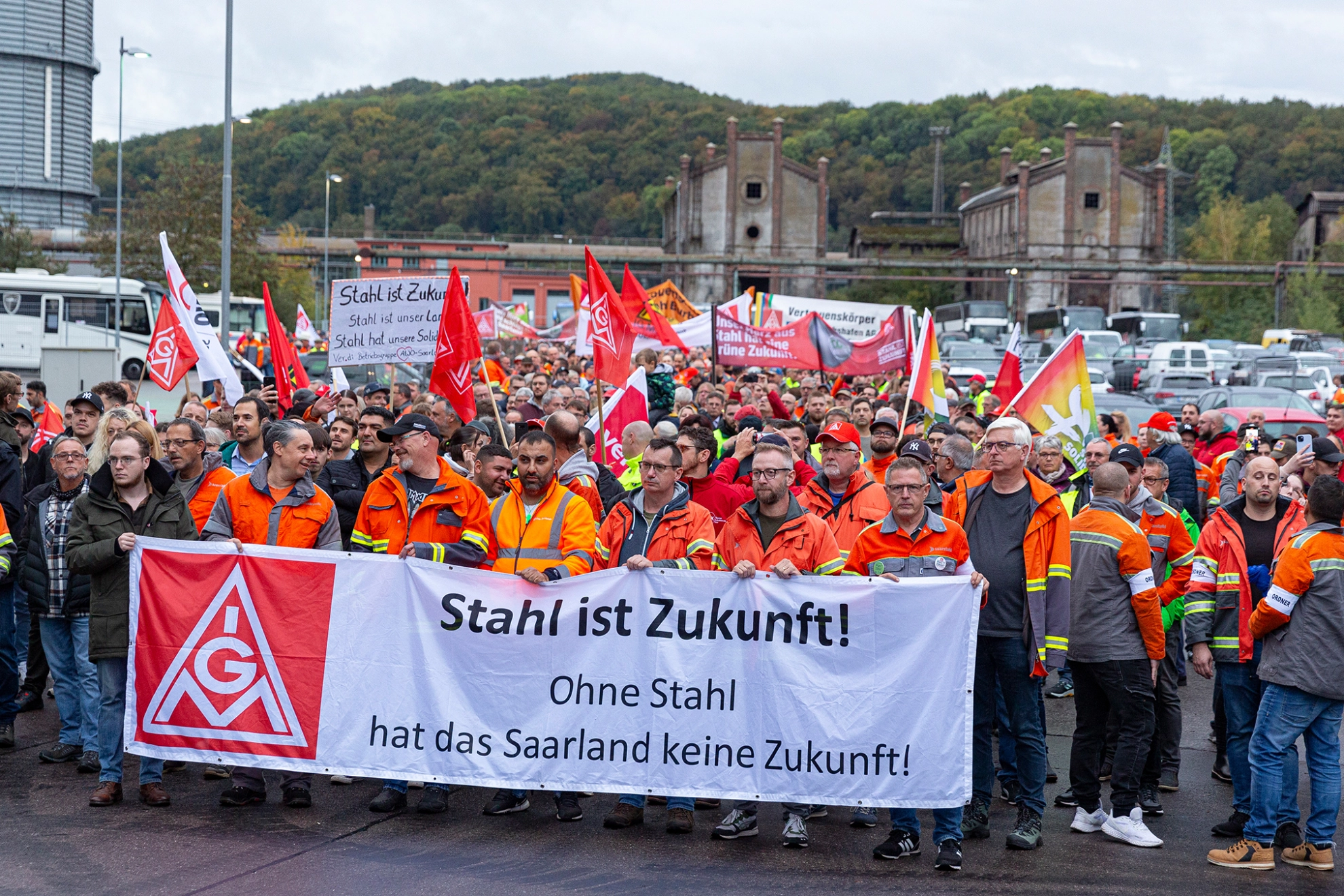
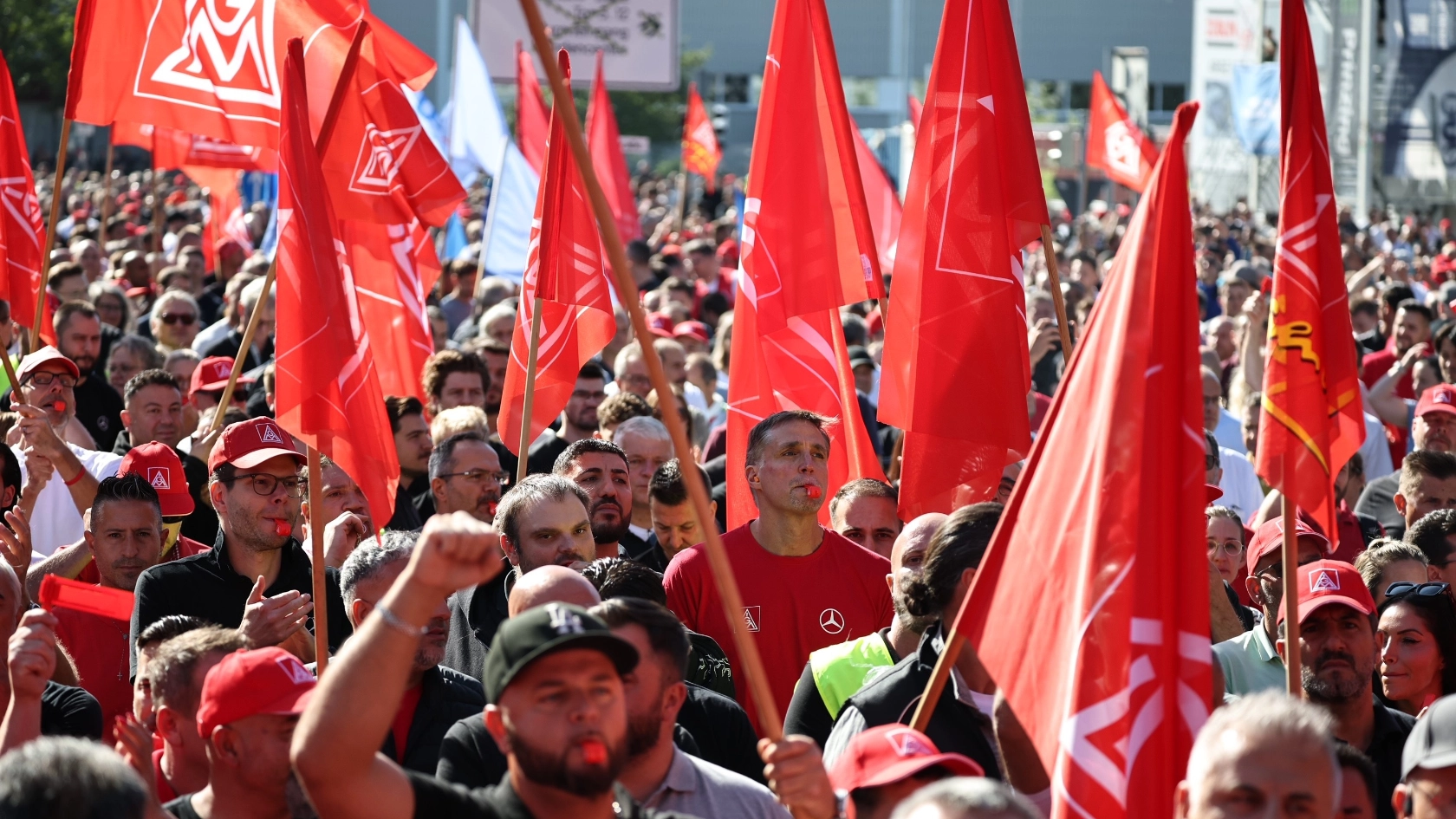
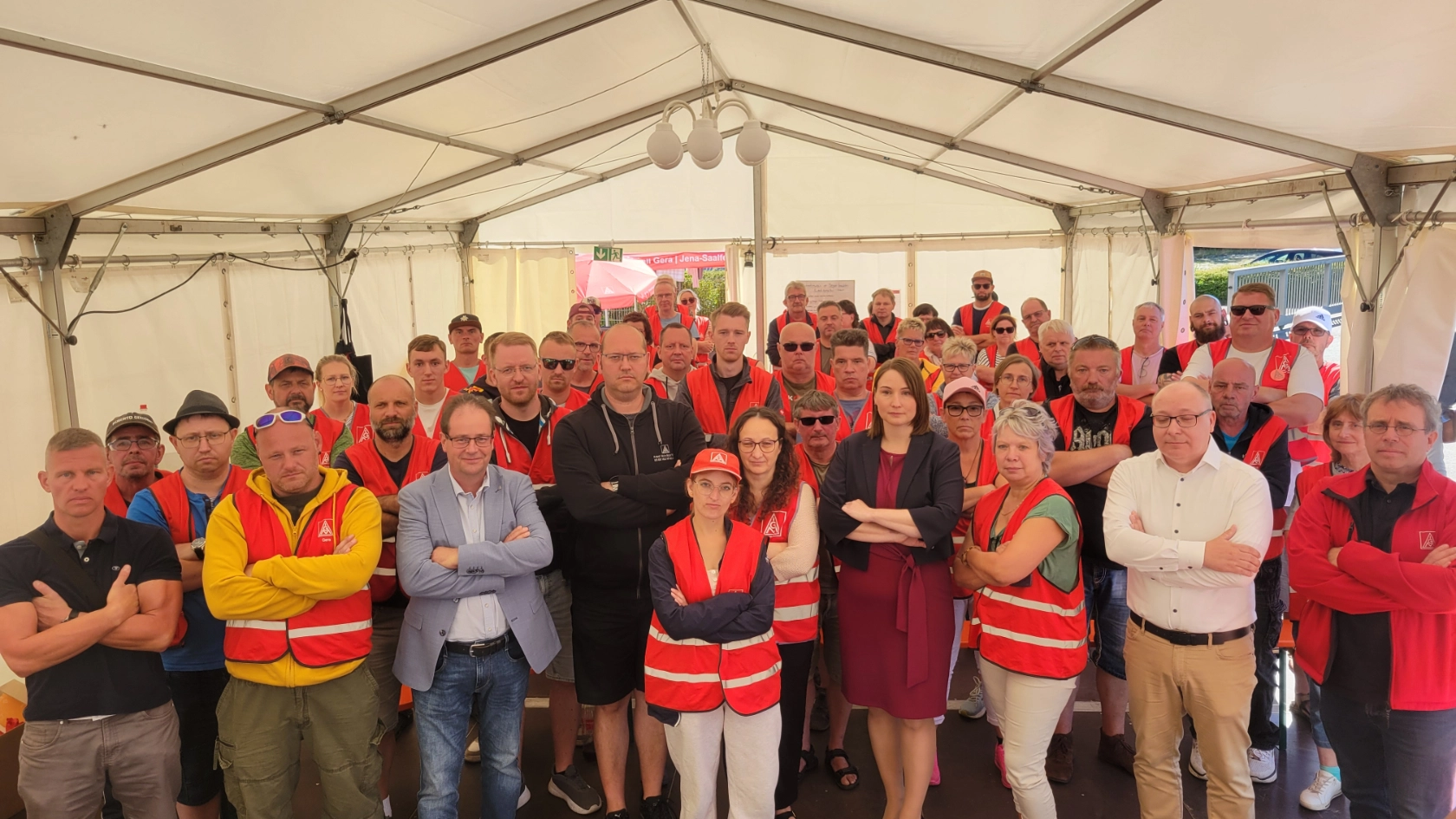
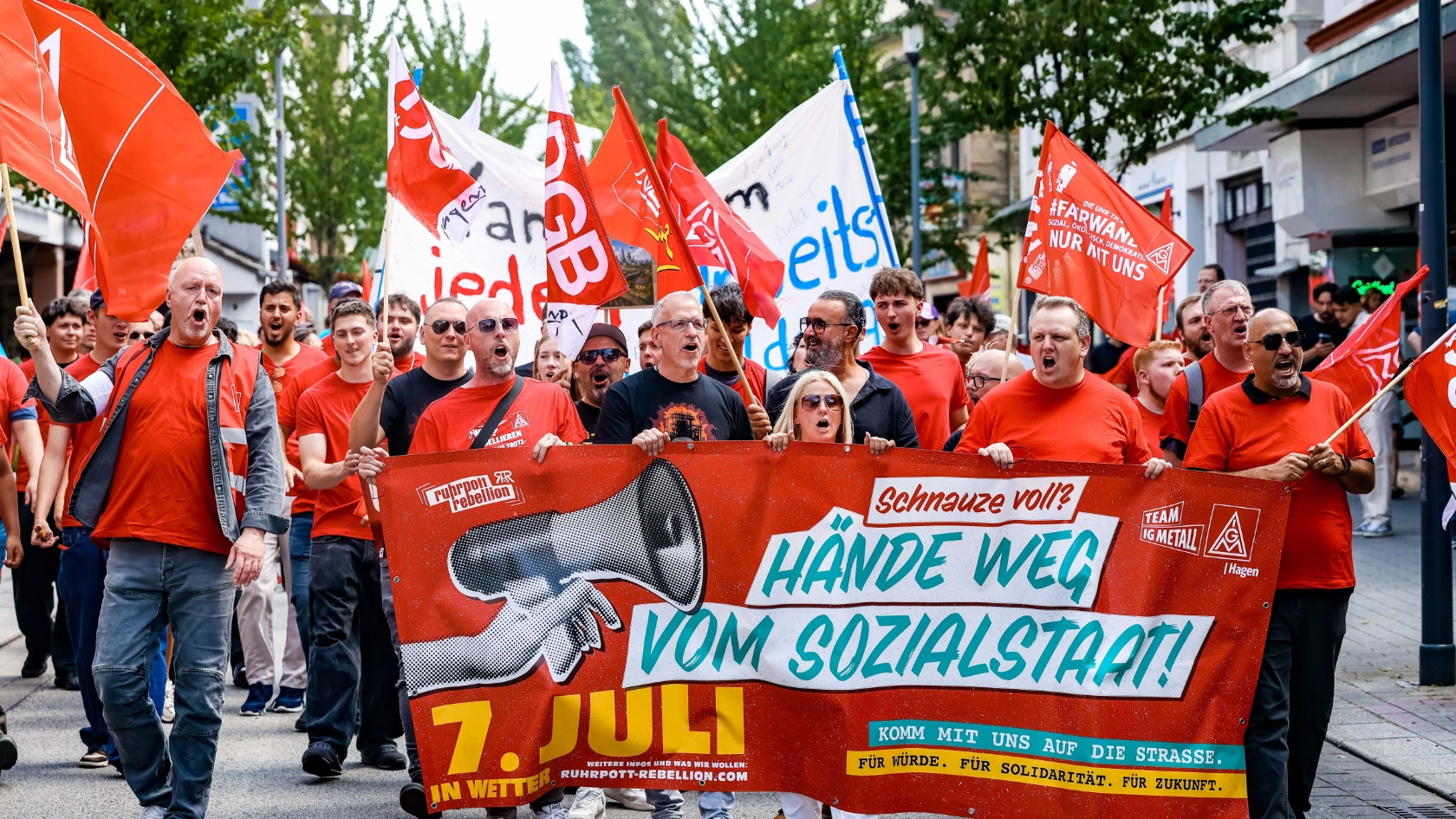
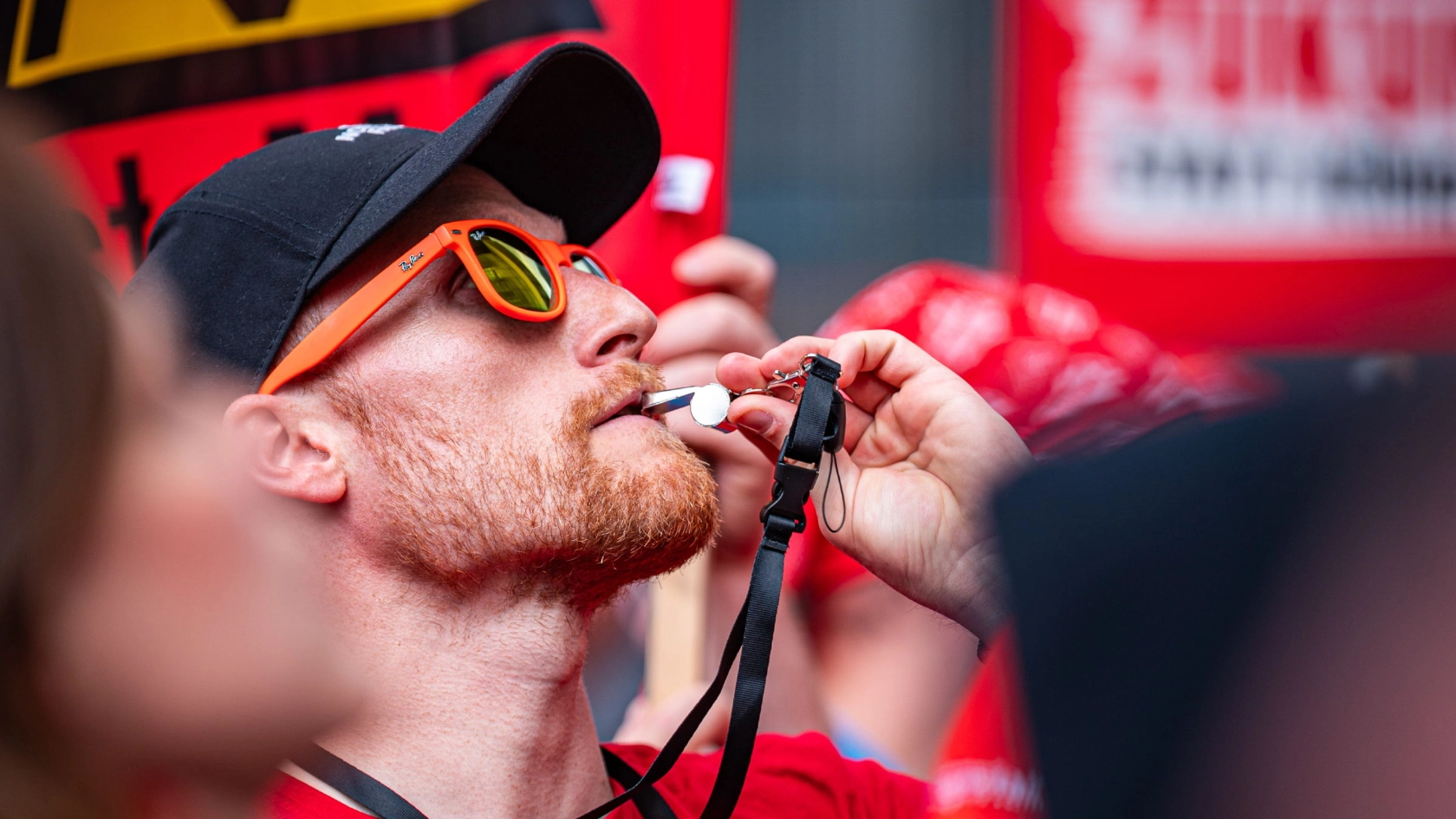
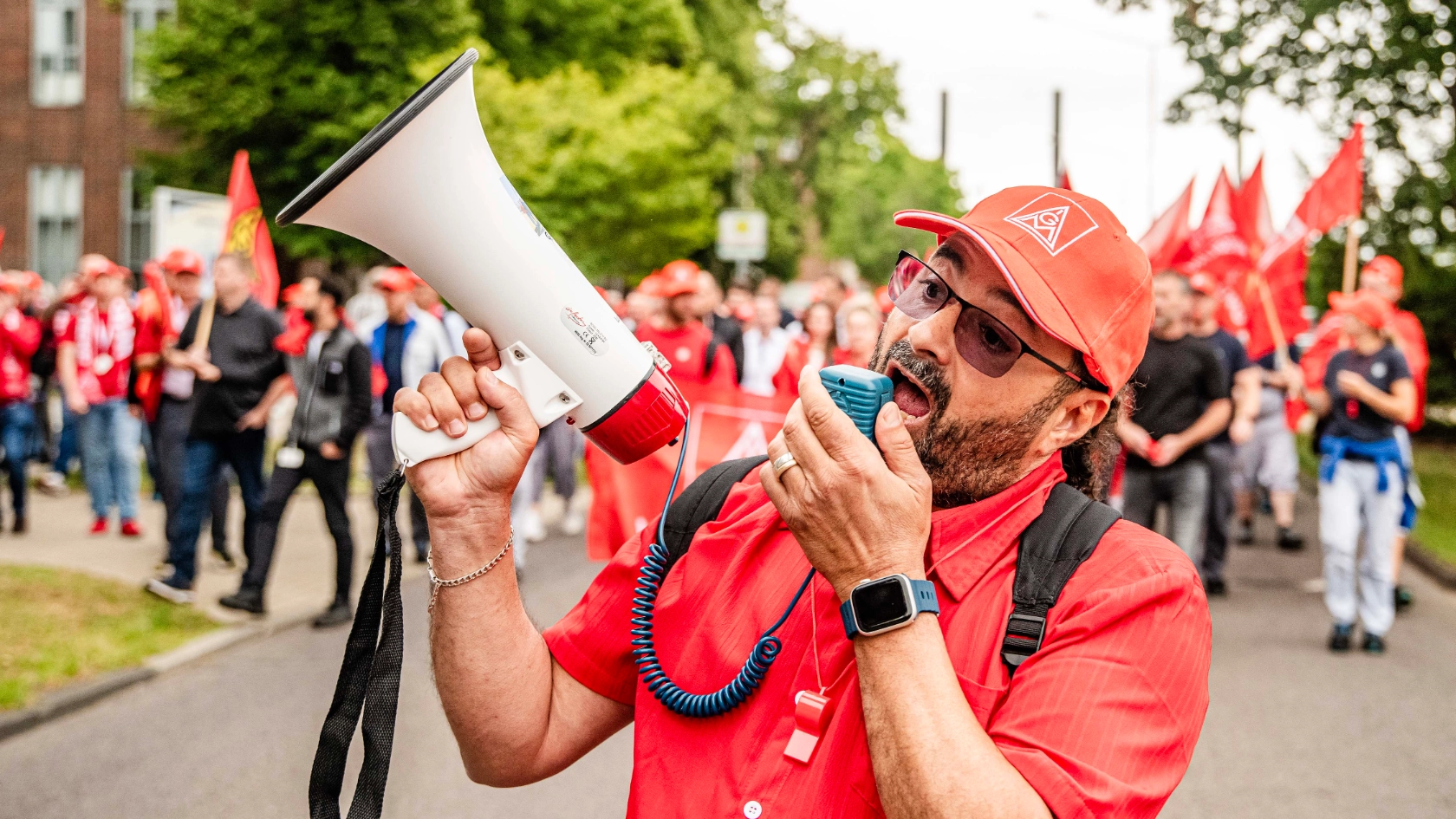
It’s the statement that steelworkers have been waiting for so long. Now Robert Habeck had it in store during his visit to Völklingen: “You wanted 2.6 billion; you’ll get 2.6 billion,” promised the Federal Minister of Economics. The politician stated that the funding—which comes partly from the federal government and partly from the state—has been approved by the federal government. Workers in the Saarland steel industry have been fighting for this since 2016. Most recently, 16,000 steelworkers took to the streets during major steel industry protest days in Dillingen and Völklingen. As is now evident, the pressure has paid off. “Today is a historic day and a tremendous success for all our colleagues who have been actively involved in our‘Steel Is the Future’campaign for years,” explained Lars Desgranges, chief representative of IG Metall, following Habeck’s visit. Jörg Köhlinger, district director of IG Metall Mitte, also emphasized the role of the metalworkers: “It took a great deal to get things moving in Berlin. The actions of the employees, the pressure from the works council and IG Metall, as well as that from the company, ultimately prompted policymakers to take action.”
Funding Ensures Good Jobs
Habeck’s funding commitment brings great relief to the Saarland steel industry, a relief also felt by Stephan Ahr, chairman of the group works council for SHS and Saarstahl AG: “Finally, the funding approval has arrived. Our team has been waiting for this for months, with growing frustration. Now our colleagues can breathe a sigh of relief and look to the future with greater confidence. We are confident that the transition to carbon-neutral steel production will be successful and that we will thereby make a significant contribution to climate neutrality.”
Michael Fischer, Deputy Chairman of the SHS Group Works Council and Chairman of the Dillinger Works Council, also sees the current announcements as a milestone toward which the company has been working for many years. “The transition will implement a massive project with a total volume of 3.5 billion euros, which will not only reduce the steel industry’s environmental impact on an unprecedented scale but also secure good, collectively bargained jobs in the Saar region for the long term.”
The focus now is on hydrogen and the bridge electricity price
In addition to workers in the Saarland, ThyssenKrupp employees also had to fight for a funding commitment by organizing a steel workers’ day of action. Here, too, pressure from the metalworkers led to success. There had already been good news from Salzgitter Flachstahl, where funding had already been approved. But workers in the German steel industry cannot rest on their laurels just yet. Although the first direct reduction plants are now being built to replace traditional blast furnaces and thus enable climate-neutral steel production, the transformation of the entire steel industry still has a long way to go. There are a total of 13 blast furnaces in Germany, all of which must be replaced. Hydrogen is needed to operate the direct reduction plants. Here, too, policymakers must pave the way for production and establish supply networks.
And then the energy-intensive industry—not just the steel industry—still needs a bridge electricity price. Although the government has put together a package of measures at the urging of IG Metall and the industry, it has not been sufficient so far. Jürgen Kerner, Second Chairman of IG Metall, emphasizes: “We acknowledge that the federal government is making progress on this issue. However, this proposal is still a long way from an effective bridge electricity price.” For IG Metall, this means the work continues.