The rise of electric vehicles could lead to approximately 76,000 jobs in powertrain technology becoming redundant in the automotive industry as early as 2030. This is the conclusion reached by the study “Effects of Vehicle Electrification on Employment in Germany” (“ELAB”) conducted by the Fraunhofer Institute for Industrial Engineering (IAO) in Stuttgart. The job losses will primarily affect the supplier industry.
In their most likely scenario, the researchers assume that electric vehicles will account for 25 percent of the market and hybrid vehicles for 15 percent. With this level of electrification and improvements in internal combustion engines, it would be possible to reduce carbon dioxide emissions from automotive traffic by up to 40 percent. But this will bring about massive upheavals in the automotive industry.
One in Two Affected
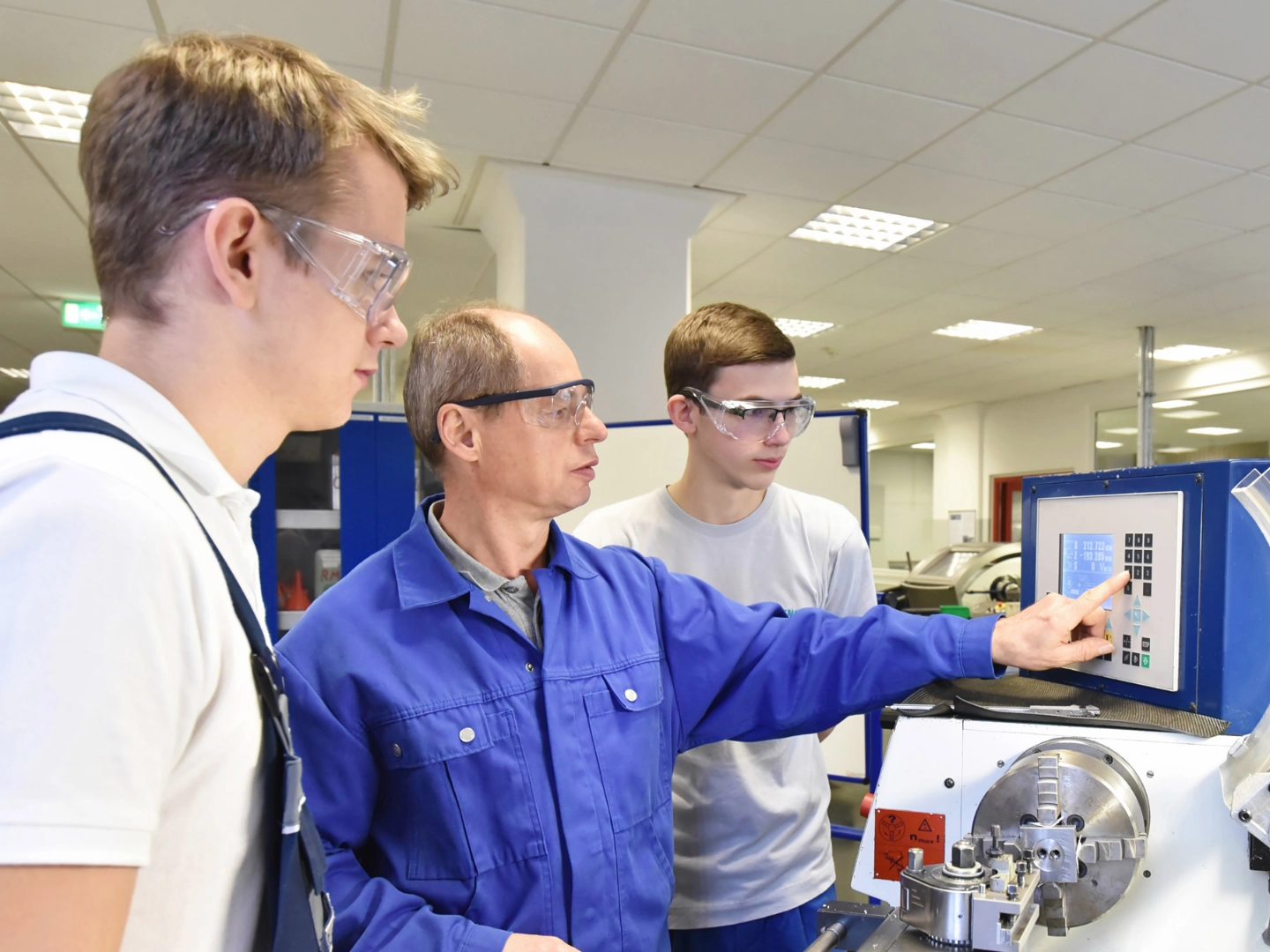
In their model, the scientists assume that 5.75 million powertrains will be produced in 2030—the same number as in 2016. They also take into account normal productivity gains, which mean that fewer and fewer workers are needed to produce the same volume of goods. In this scenario, approximately 76,000 workers could lose their jobs. On the other hand, about 25,000 new jobs will be needed to manufacture components for electric vehicles, such as batteries and power electronics. Thousands of workers would have to retrain for new jobs. As a result, this upheaval—directly or indirectly—will affect more than half of the 210,000 workers who develop and produce powertrains in the automotive and supplier industries. Added to this are the potential future consequences of digitalization on jobs.
“This development would have very different effects on individual companies and regions,” says Professor Oliver Riedel, director of the Fraunhofer Institute IAO. “The effects can be significant, for example, if smaller companies are unable to offset losses in sales of components for internal combustion engines” and consequently go bankrupt. And “if they are located in structurally weak areas where there are hardly any alternative employment opportunities.”
No Reason to Panic
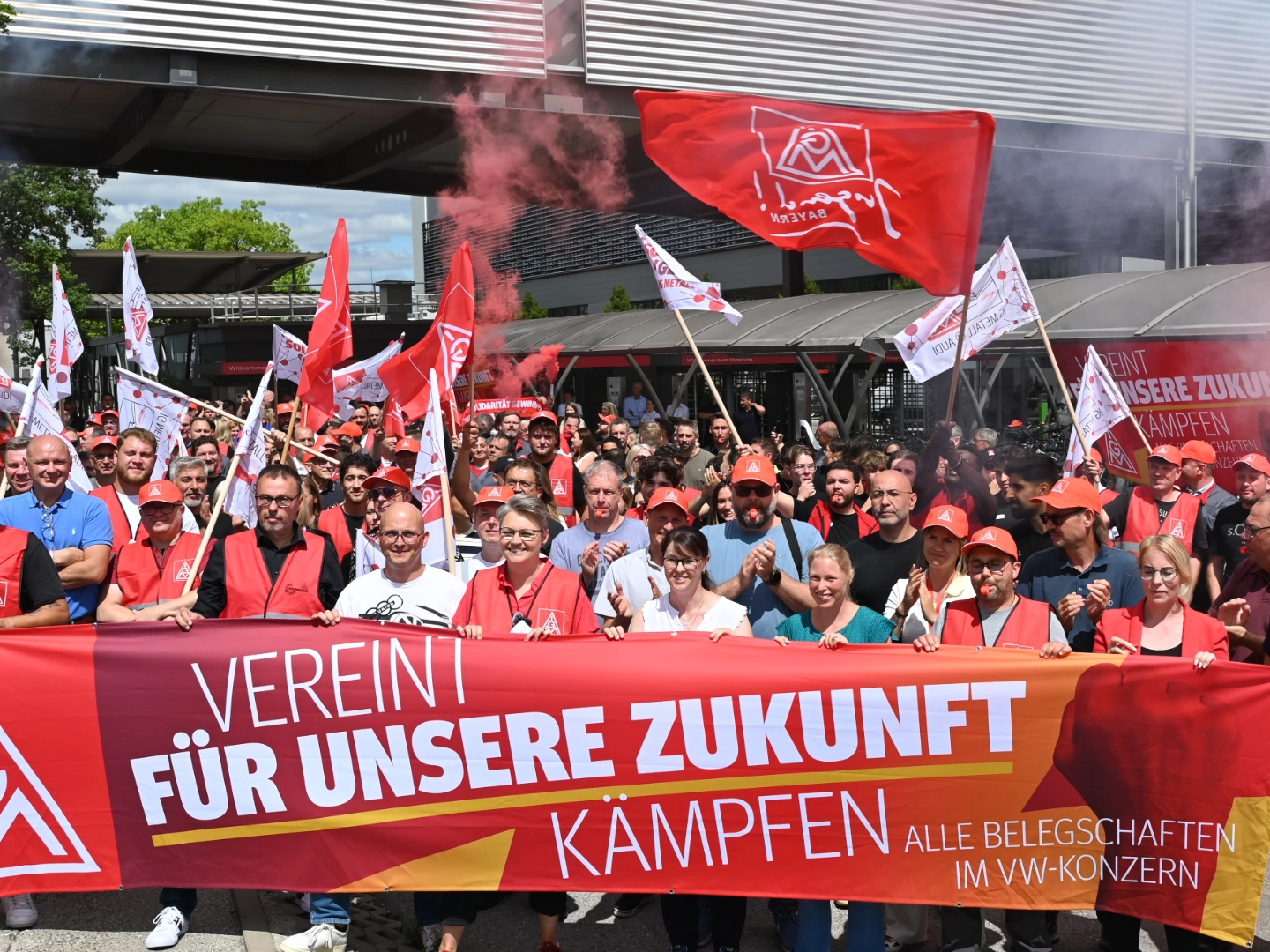
“From IG Metall’s perspective, the figures are no cause for alarm. The challenge is indeed great, but it can be overcome if the right framework conditions are created now,” says Jörg Hofmann, First Chairman of IG Metall, with conviction. “Policymakers and companies must now develop strategies to shape this transformation,” he says. “Policymakers must support the necessary structural change with targeted industrial and employment policies.” When the European Commission in Brussels regulates CO2 limits to protect the climate, it must set achievable targets for companies and allow sufficient time for adaptation. Not least because jobs are at stake and large-scale retraining efforts must be managed. Brussels must support this process.
We expect the federal government to finally present a coherent overall plan for the necessary infrastructure—especially for charging stations, power distribution networks, and sufficient electricity from renewable energy sources—but also for the supply of the raw materials needed for battery cells and recycling programs for used batteries. It is at least as important that the government not leave workers out in the cold. Many companies are overwhelmed by the extent of the training requirements that the transition places on their employees. We call on the government to support them, for example, with a new short-time work allowance for the transition.
Industry at a Crossroads
“We must use the coming years to set the necessary adaptation processes in motion,” warns Jörg Hofmann. “But the course for this is being set now.” To ensure that workers aren’t left behind in the midst of all these changes, companies must develop strategies and invest money to secure their locations and jobs. This could include, for example, investments in new products for new markets that have nothing to do with cars.
We also place great importance on ensuring that employees, works councils, and their union are involved from the very beginning when it comes to new strategies. After all, their future is at stake.
The Study: The study was initiated by IG Metall, the automakers BMW, Volkswagen, and Daimler, the automotive suppliers Robert Bosch, ZF Friedrichshafen, Schaeffler, and Mahle, and the German Association of the Automotive Industry. The study is based on data from the participating companies. It represents half of all employment in powertrain technology and is therefore highly representative of the entire automotive industry.