Automatic translation
This article has been translated automatically using computer technology. While we strive for accuracy, some wording or details may differ from those in the original article.
This translation was not manually reviewed. For important facts, quotations or legally sensitive information, please consult the German original. Individual selections, images, embedded media or technical terms may have been translated differently or incompletely.

Entry into the Workforce The Apprenticeship Market Put to the Test: Five Theses on the Start of the 2026 Apprenticeship Cycle

Vocational training is considered a model of success. Yet a decline in apprenticeship openings, financial worries among many apprentices, and millions of young people without vocational qualifications show that not everything is running smoothly in the apprenticeship market. Five theses on the start of the 2026 apprenticeship cycle.

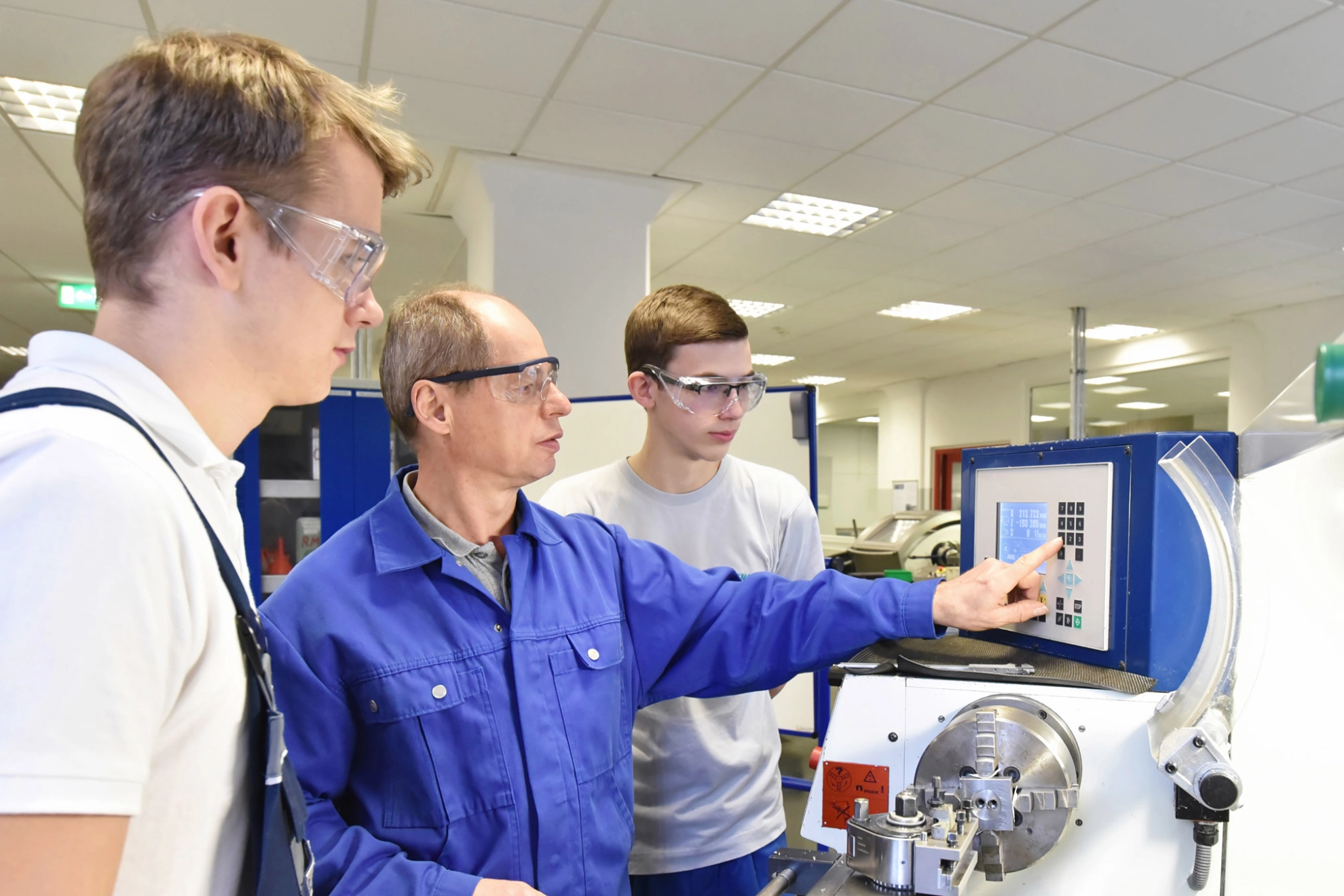
Junge Auszubildende in der technischen Berufsausbildung werden von älteren Trainer auf CNC-Drehmaschinen Maschinen unterrichtet

12 August 2026 12 August 2026


In August and September, a new chapter in life begins for around 500,000 young people in Germany: they are starting their vocational training. Official figures will not be available until the fall to show exactly how many trainees there will be this year. However, it is already clear that the number of new trainees has been declining recently.

The situation on the apprenticeship market has worsened further in 2025: According to DeStatis, approximately 461,800 new apprenticeship contracts were signed nationwide—2.8 percent fewer than in the previous year. At the same time, demand for apprenticeship positions remained high.

Yet vocational training is a valuable asset in Germany. The dual training system—which combines on-the-job learning with instruction at vocational schools—has ensured the qualification of skilled workers for decades. At the same time, this model is regarded internationally as unique and exemplary because it combines practical relevance, high-quality standards, and smooth transitions into employment—standards for which unions have been fighting for decades through collective bargaining agreements and co-determination.


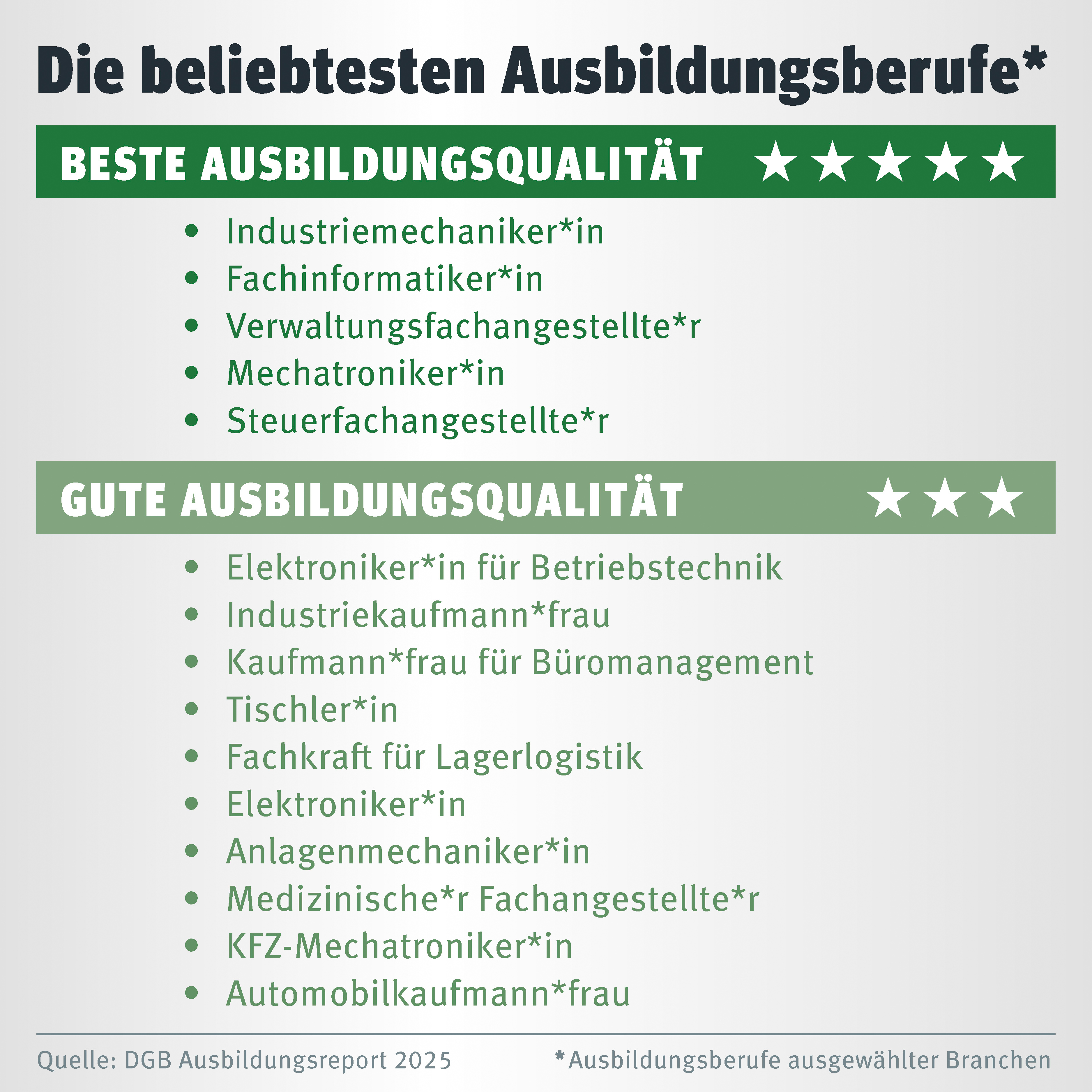
Beliebteste Ausbildungsberufe nach Ausbildungsqualität

However, the success of the apprenticeship model is by no means a given. To ensure it continues to provide skilled workers and open up good prospects for young people in the future, the current challenges must be taken seriously. Five points on the state of apprenticeships as the 2026 training cycle begins.


1. The shortage of skilled workers is also a shortage of apprenticeships.

Those who complain about a shortage of skilled workers must not cut back on apprenticeship positions and must not accept that millions of young people lack a vocational qualification. Yet both are happening: Although demand for apprenticeship positions rose last year, the number of available positions fell, according to the BIBB’s apprenticeship analysis.

The difficulties in the apprenticeship market cannot be explained by a lack of interest among young people. According to data from the Federal Employment Agency and the BIBB, approximately 54,400 apprenticeship positions remained unfilled in 2025, while at the same time, approximately 84,400 young people searched in vain for an apprenticeship position. The challenge, therefore, is not only to train more people, but also to better match apprenticeship positions with applicants.

At the same time, an enormous pool of skilled workers remains untapped: Around 2.9 million young adults in Germany do not have a vocational qualification. While companies complain about a shortage of skilled workers, the apprenticeship system still fails to open the door to qualified vocational training for all young people. Those without a vocational qualification face a higher risk of unemployment, have poorer career prospects, and often receive a lower pension in old age.


2. An apprenticeship should not put anyone at risk of poverty.

Vocational training opens up opportunities for a skilled career and an independent life. For many trainees, however, the financial reality is different: 62.8 percent say they cannot live independently on their training stipend. According to the DGB Apprenticeship Report 2025, nearly one-third rely on support from their parents, and one in eight also holds down a part-time job alongside their apprenticeship. On average, young workers are 20 years old when they begin their apprenticeship—making it all the more important to no longer be dependent on living with their parents. Yet this is often precisely the case.

A recent analysis of the WSI Collective Bargaining Archive shows just how large the difference can be between apprenticeships covered by collective bargaining agreements and those that are not. While apprentices in the metal and electrical industries in Baden-Württemberg receive 1,304 euros per month under collective bargaining agreements as early as their first year of training, the statutory minimum apprenticeship stipend is only 724 euros. About 45 percent of apprentices complete their training at companies without a collective bargaining agreement (WSI Collective Bargaining Archive 2026). Collective bargaining agreements thus not only ensure better pay but also enhance the overall appeal of vocational training.

3. Apprenticeships are popular, but the barriers to entry are often too high.

There is great interest in vocational training, but many young people face obstacles when it comes to finding the right path, applying for programs, and financing their training.

Dual vocational training remains a popular educational path for young people after high school. According to the Bertelsmann Foundation’s youth survey “Vocational Training Prospects 2025,” 43 percent of high school students want to pursue vocational training. Another 45 percent are still undecided.

At the same time, many young people feel they do not receive sufficient support on their path to vocational training. Only one-third of those surveyed say they are well-informed about career options. More than half, however, say that while there is enough information available, it is difficult to navigate.

Shortcomings are also evident when it comes to finding an apprenticeship position. According to the DGB Apprenticeship Report, family and friends were the most important source of support for just under half of the apprentices. In contrast, services offered by employment agencies and career guidance at school played a significantly smaller role.

Added to this are financial hurdles: For many young people, pursuing an apprenticeship is linked to concerns about whether the pay will be enough to live on. According to the Bertelsmann study, an insufficient apprentice salary is one of the main reasons people cite for not pursuing an apprenticeship.

4. Where collective bargaining agreements and employee participation apply, apprenticeships are better.

According to the DGB Apprenticeship Report 2025, industrial mechanics and mechatronics technicians are once again among the occupations with the highest quality of training. Both occupations belong to the traditional sectors represented by IG Metall, and that is no coincidence: high-quality training thrives where collective bargaining agreements, co-determination, and dedicated youth and apprentice representatives ensure reliable standards.

Large companies, which often have works councils as well as youth and apprentice representatives, consistently perform better in the DGB Apprenticeship Report. They ensure that training plans are followed and legal requirements are met.

Good training conditions also include good compensation. While the statutory minimum training allowance for the first year of training is 724 euros, apprentices in the metal and electrical industries already receive 1,304 euros in Baden-Württemberg and 1,272 euros in Saxony under collective bargaining agreements. Collective bargaining agreements thus create better financial conditions and make apprenticeships more attractive.

5. The future of industry also begins with vocational training.

Whether it’s new drive technologies, digitalization, or climate-friendly production: the skilled workers who will tackle these challenges in the future are being trained today. The BIBB Data Report 2025 underscores the central importance of vocational education and training for securing a skilled workforce and ensuring the competitiveness of the German economy.

This makes the trend in key industrial occupations all the more alarming. In the occupations of industrial mechanic, construction mechanic, toolmaker, machining mechanic, and mechatronics technician, the number of available apprenticeship positions in 2025 fell by 8.6 percent compared to the previous year, to 28,758. (Source: IG Metall, own calculations based on BIBB data)

Apprenticeships are therefore far more than just a means of nurturing the next generation. They are an investment in the future of companies and Germany as an industrial hub. Cutting back on apprenticeships today will exacerbate tomorrow’s skilled-labor shortages. With approximately 2.9 million young adults between the ages of 20 and 34 lacking vocational qualifications, Germany simply cannot afford this.

Beschäftigte stehen zu einem großen Herz zusammen
Become a member
Become part of a strong community

From legal protection in labor and social law matters to fair wages and salaries—we take personal and reliable care of our members.

New on igmetall.de
Aktionstag bei Mercedes Benz, Daimler, in Sindelfingen gegen die Angriffe auf Beschäftigten in der Automobilindustrie.
Resistance to Attempts at Drastic Cuts Auto industry workers issue a warning
Sie wollen doch nur dein Bestes
Redistribution Making Germany more equitable: We need this tax reform now
Der Streik bei Kelvion in Nobitz-Wilchwitz begann am 4. August 2026. Die Geschäftsleitung will nach Sarstedt/Niedersachsen verlagern - obwohl die Produktion in Wilchwitz profitabel und bis ins nächste Jahr ausgelastet ist.
"It’s worth fighting for!" Kelvion workers strike for a social collective bargaining agreement
Ruhrpott Rebellion am 07.07.2026
Welfare State September 26: Nationwide Day of Action for Social Policy
Beschäftigter arbeitet an einem Getriebe in einer Fabrik
Working Hours Why working longer doesn’t help—and actually does more harm than good
Ein männlicher Land- & Baumaschinenmechatroniker prüft einen Traktor mit einem Tablet
2026 Collective Bargaining Agreement for the Metalworking and Agricultural Engineering Sectors Greater Flexibility in the Metalworking and Agricultural Engineering Sectors in Lower Saxony and Bremen
Elektronikerin prüft die Spannung an einem Schaltschrank.
2026 Collective Bargaining Round for the Electrical Trades Wage Increase in the Electrical Trades in Berlin-Brandenburg
Benjamin Heine ist Mitarbeiter der BMA in Braunschweig
2026 Collective Bargaining Round for Metal Fabrication and Precision Engineering Higher Wages in the Metal Fabrication and Precision Engineering Sectors in Southwest Germany
Metall-Arbeiter beim Schleifen
2026 Collective Bargaining Round for the Metalworking Trade Employees in the Berlin-Brandenburg metalworking sector will receive higher pay
Beschäftigte von Thyssenkrupp demonstrieren in Essen am 23. Mai 2024 gegen das Vorgehen der Geschäftsführung beim geplanten Teilverkauf des Unternehmens.
Defend the welfare state All dates for nationwide actions against cuts to social services
IGM Aktion VW Wolfsburg
On September 21, things will get loud Nationwide Day of Action: Auto Industry Workers Fight Back Against Mass Layoffs
Auszubildender in einer Schreinerei
Apprenticeship Wages Questions and Answers About Apprenticeship Wages

Subscribe to the newsletter