“The board of directors up here on the fourth floor had better do their job,” Jörg Schlagbauer, chairman of the general works council, sums it up during the works council meeting: “Audi needs innovation, and Audi needs investment.” The metalworker makes it clear: “Behind every number is a person. Audi is more than just key figures; Audi is more than the four rings. Audi—that’s you, the employees.” Jürgen Kerner, vice chair of IG Metall, emphasizes: “Not like this, dear managers. We’re all worth our pay. If you want to be worth your pay, then finally do your job, dear managers.”
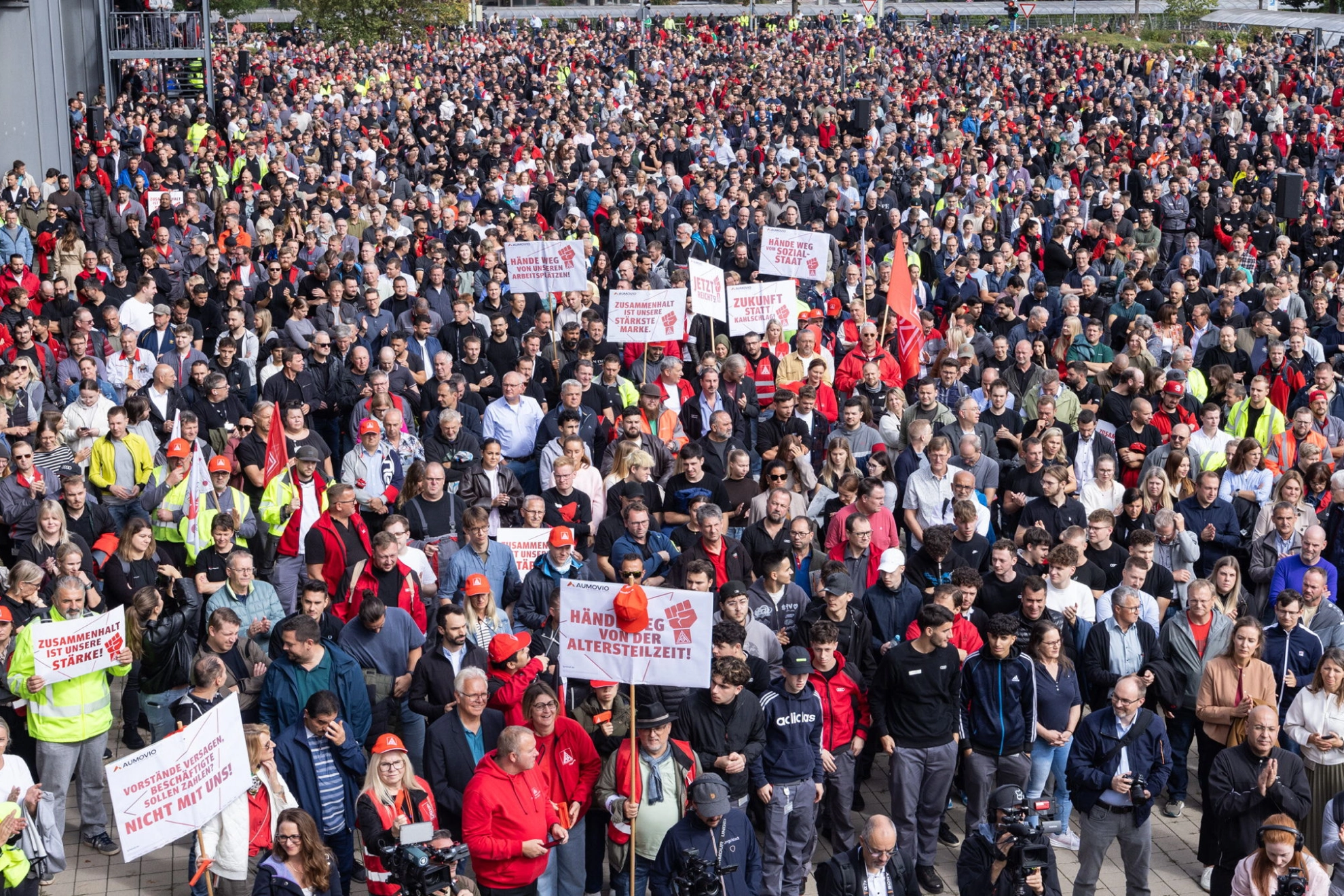
Loud cheers fill the packed square in front of Hall B. 5,000 people have come to the works council consultation session. It is a powerful, striking statement that the employees have made today in Ingolstadt.
And not just there.
A Future Instead of Cutbacks
Under the slogan “A Future Instead of Cutbacks,” around 175,000 workers demonstrated today against employers’ attacks on their jobs and working conditions in the automotive industry. They gathered at some 280 events across the country —at special works meetings scheduled specifically for this day, during protest-style, active lunch breaks, at rallies outside factory gates, at demonstrations in public squares, and at similar events. Loudly and unequivocally, they spoke out in support of the future of the auto industry in Germany.
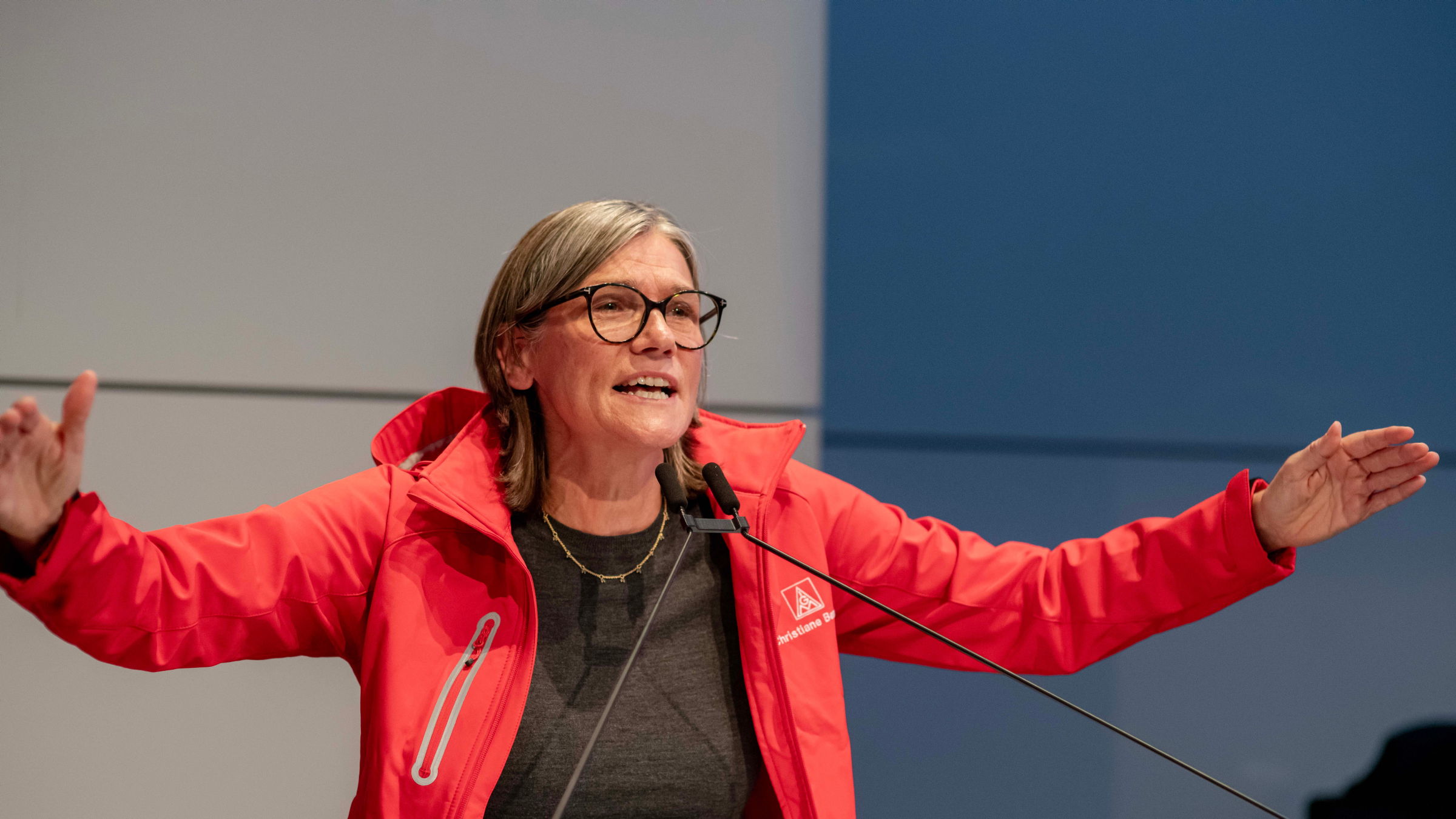
“Firing people won’t save the economy”: Christiane Benner at the Automotive Action Day in Wolfsburg.
Employees from all major automakers, as well as from dozens of large and small suppliers, took part. The workers criticized attacks on their rights, years of mismanagement, and the companies’ misguided crisis strategies. They loudly demanded that employers: “Stop the cutbacks and finally invest in the future of our plants!”
A wake-up call for employers and policymakers
Christiane Benner, President of IG Metall, calls on companies to rethink their approach: “Management must finally understand: Firing people won’t save the economy! That won’t bring the German auto industry back to the top. That will only succeed through innovation and bold investments in products, technology, and locations—in short, in the future. That is the message coming out of this day. A wake-up call to employers and policymakers! Workers in the automotive industry have sent a powerful message: They are no longer willing to pay for a crisis they did not cause. A big thank you goes out to all our colleagues who protested with us today for their jobs and for the prosperity of us all!”
It became clear to everyone on this day: Workers are no longer willing to accept austerity measures, job cuts, relocations, and plant closures. They are no longer willing to stand idly by and watch the attacks on jobs at German automotive sites—because the causes of the crisis do not lie with the workers.
Making the Industry Future-Proof
The automotive industry is under pressure: global upheavals in world markets, new competition, delayed investments, and poor management decisions have put the industry in a difficult position. Companies are responding with large-scale job cuts, plant closures, and relocations abroad. This is unsettling workers, jeopardizing the future of this key industry, and threatening the prosperity of entire regions.
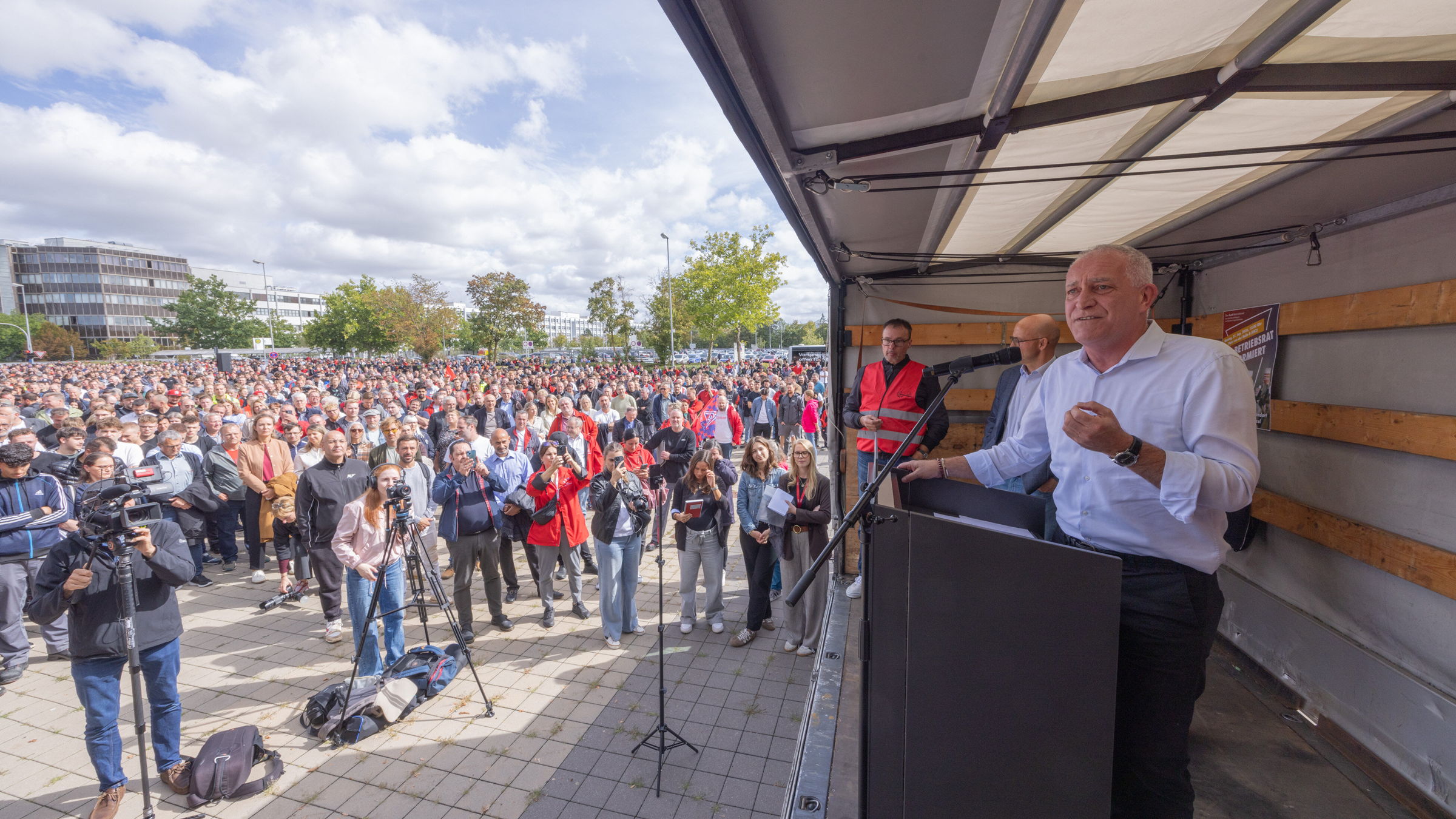
Foto: Alexander von Spreti
“Not like this, dear managers”: Jürgen Kerner at the Automotive Action Day in Ingolstadt.
IG Metall is therefore urging that the industry in Germany be made future-proof again by having companies focus on innovation, invest in future-oriented fields, and adapt their strategies to changing markets. IG Metall condemns the employers’ fierce attacks on workers’ rights—such as the 35-hour workweek, collective bargaining agreements, and co-determination—as fundamentally wrong, counterproductive, and unjust.
IG Metall also calls for an active industrial policy that takes the changing global conditions seriously and takes countermeasures: through targeted support, effective trade protection, and clear local-content requirements. Furthermore, IG Metall is committed to ensuring that the perspective of industrial workers is not lost in the federal government’s current reform efforts. The union makes it clear: Retirement after 45 years for long-term insured workers, as well as partial retirement under the block model, must be preserved.
Recommended reading:













To load this video, you must enable YouTube cookies and thereby agree to the YouTube privacy policy.