Automatic translation
This article has been translated automatically using computer technology. While we strive for accuracy, some wording or details may differ from those in the original article.
This translation was not manually reviewed. For important facts, quotations or legally sensitive information, please consult the German original. Individual selections, images, embedded media or technical terms may have been translated differently or incompletely.

FAQ on the Crisis in the Automotive Industry Solidarity is our strongest asset

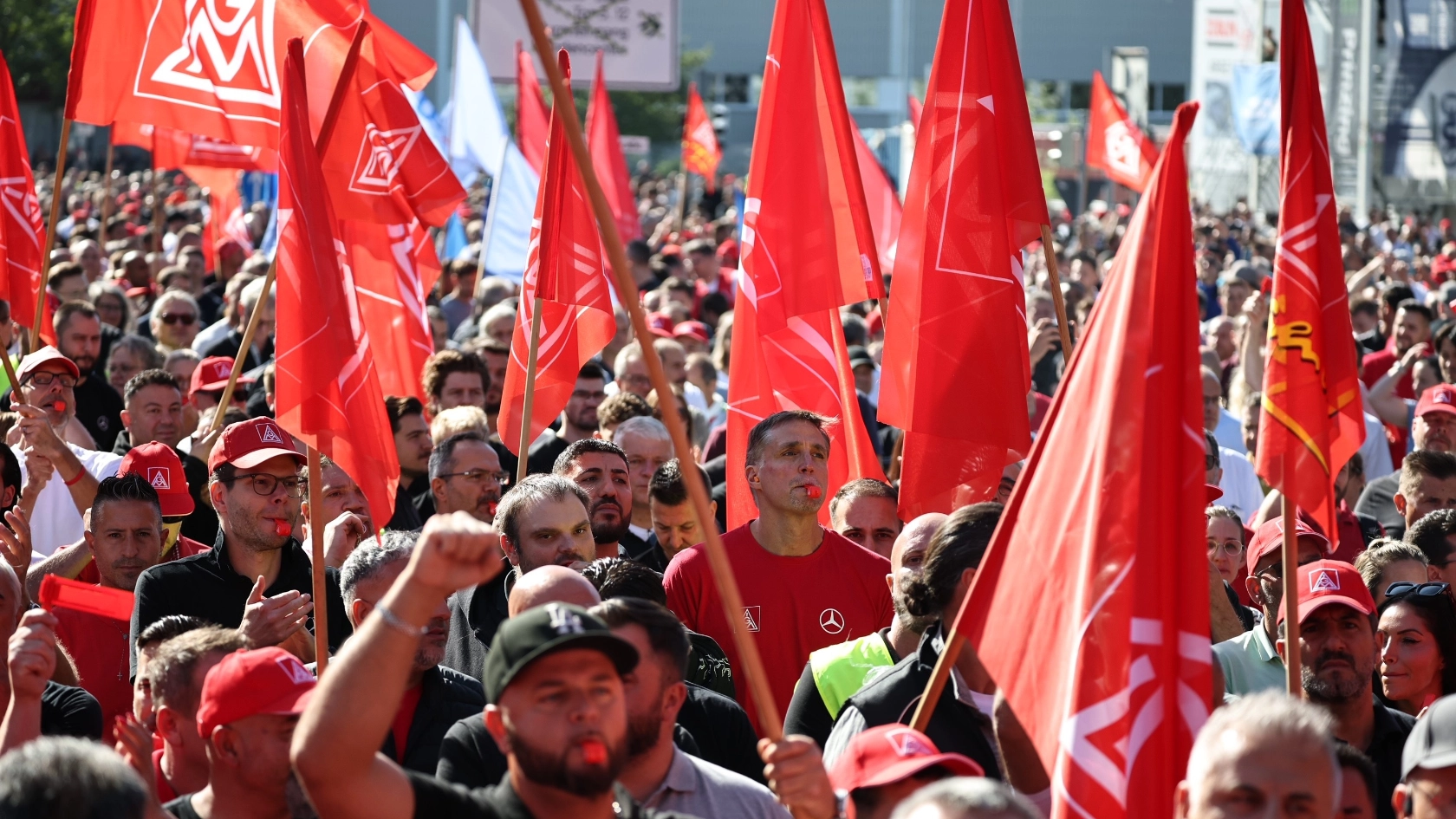
Cost-cutting measures, layoffs, plant closures: Across Germany, automakers and suppliers are delivering bad news: Employees have had enough. On September 21, IG Metall will organize all-day, nationwide actions and protests at German automotive sites.

Audi Ingoldstadt Tor 10

4 August 2026 4 August 2026 |
Updated on 11 August 2026 11 August 2026


Now it’s BMW’s turn. The Munich-based automaker recently announced plans to cut up to 8,000 jobs worldwide. And even though the job cuts in Germany are supposed to be carried out through natural turnover and a voluntary severance program—many colleagues are currently worried and fearing for their jobs.

And it’s not just BMW: The attack on jobs at German automotive sites that we’re currently witnessing is unprecedented. Cost-cutting programs, job cuts, relocations, plant closures: Across Germany, decision-makers at automakers and suppliers are delivering bad news, and the uncertainty among employees is immense.

However, the causes of this crisis do not lie with the workers. They stem from poor management decisions, delayed investments, and shifts in global markets. Foreseeable developments were underestimated in recent years, and responses to them were delayed or failed to materialize altogether. Instead, managers are relocating production out of Germany to circumvent social and environmental standards and to cut costs at any price.

Unfortunately, many supposedly simple but incorrect explanations dominate in politics, industry associations, and the media: they blame excessively high wages, an overbearing welfare state, or electric cars.

In this FAQ, we provide the correct answers to the most frequently asked questions.


Why is the German automotive industry in crisis?

• More suppliers are competing on the global market. New competitors have entered the fray, including Tesla and Chinese manufacturers. Competition is becoming fiercer and more challenging for German manufacturers, as their rivals have improved in terms of productivity and in the key future-oriented fields of electric mobility, battery technology, and software.

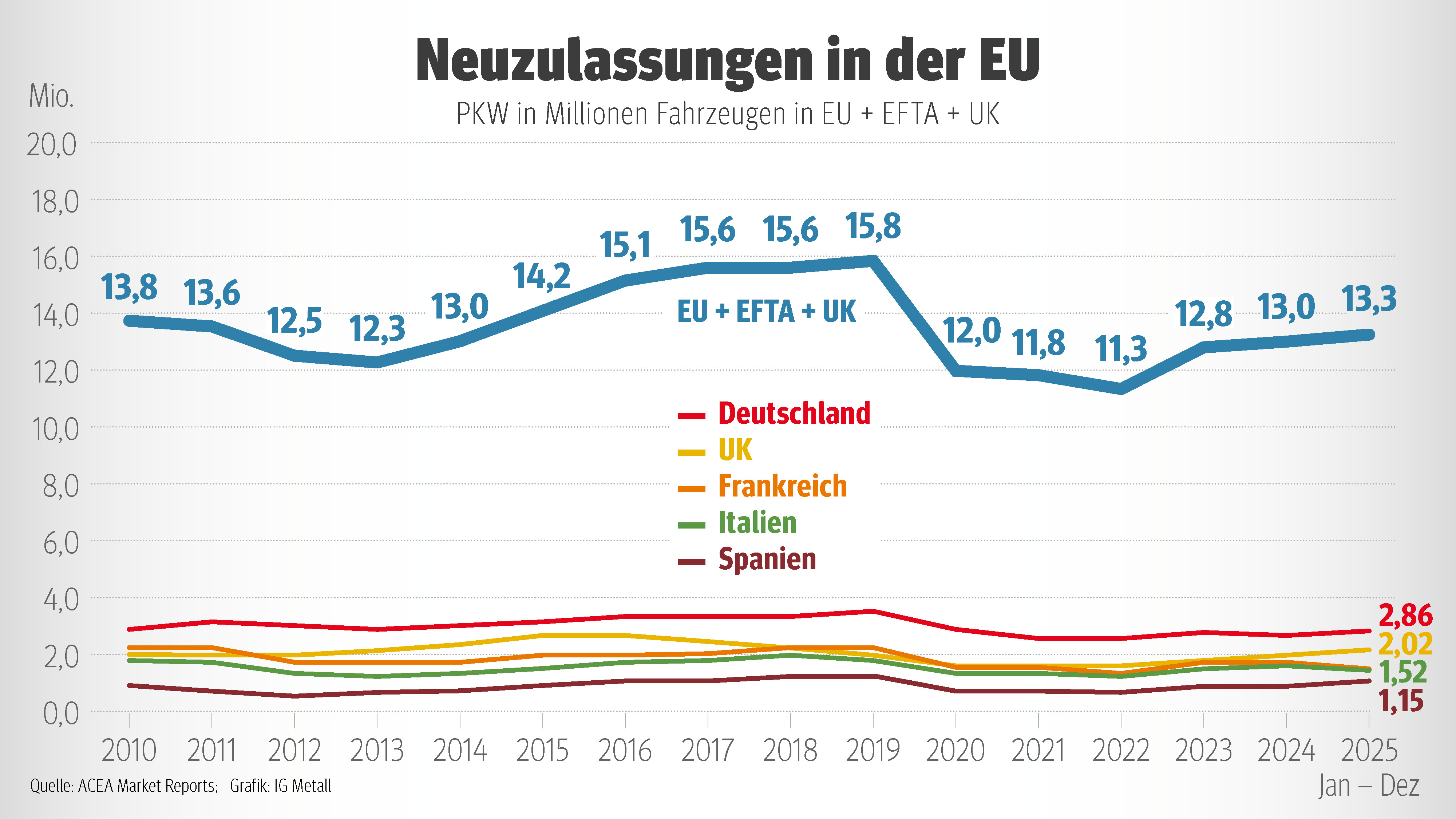
• Although global demand for automobiles is recovering, it remains below the pre-crisis level of 2018, particularly in Europe and Germany (chart: new registrations in the EU). The global economy, the lingering effects of the pandemic, the energy crisis, wars, and conflicts are the causes. The market’s recovery to the record levels of 2019 is proceeding slowly, if at all.

• In this regard, it is not only the automotive industry in Germany that is facing difficulties. The world’s largest automaker, Toyota, is projecting a 21.5% year-over-year decline in profits for 2025, while the largest U.S. automaker, General Motors, is forecasting a decline of as much as 55% for the same year. All established automakers are threatened by low demand and heavily subsidized competition. Even Chinese automakers, particularly the market leader BYD, are in crisis because domestic demand is currently declining sharply.

• The Chinese market is the world’s largest automotive market. In China, half of all new cars are already electric, and German manufacturers are performing poorly in this segment and falling behind. As a result, they are losing market share, and profits from their China operations are declining. For example: Volkswagen’s profits from its Chinese joint ventures totaled 4.6 billion euros in 2018, but by 2025, they had fallen to around 0.95 billion (Source: Volkswagen Group, 2025 Annual Report).

Where have the record profits of the major automakers from recent years actually gone?

• Until recently, many companies in the automotive and supplier industries had posted record profits—for example, Volkswagen with a profit of just under 18 billion euros in 2023, BMW with over 18 billion in 2022, and Mercedes with 23.4 billion in 2021. A large portion of these record profits from recent years was distributed to shareholders in the form of dividends. At Volkswagen, for example, payments to shareholders rose sharply. Whereas the Porsche and Piëch families received approximately 750 million euros in dividends annually through their holding company until 2020, this figure has averaged just under 1.8 billion euros per year since 2021. While payouts to the heirs of the Porsche and Piëch families have more than doubled, salaries at Volkswagen have increased by only 11% over the same period. And just to put that in perspective: a skilled worker would have to work about 100,000 years to earn the Porsche/Piëch dividends from 2014 to 2024.

• Between 2021 and 2025, 2.17 billion euros of Mercedes’ dividends went to Li Shufu, the owner of the Chinese automaker Geely. BMW and Mercedes also adopted a strategy of share buybacks to artificially inflate their stock prices in the short term. At BMW, share buybacks alone have generated an additional profit of about one billion euros since 2022 for major shareholder Susanne Klatten, and as much as 1.25 billion euros for Stefan Quandt during this period. These are all investment funds that were not put to use, resulting in the disproportionately large enrichment of shareholders.

• In addition, a great deal of money was lost due to management decisions that, in hindsight, proved to be wrong, risky, or too short-sighted. On top of that, there were cases of regulatory violations and legal disputes that tied up significant funds. This is another reason why it is wrong to place the blame for the current situation on the employees. Many problems are home-grown and stem from the companies’ strategic decisions, not from wages or working conditions.

• Following the “boom years,” stock prices at many companies have now plummeted. The capital markets are thus anticipating a further decline in the market shares of German automakers. Falling stock prices stem from a lack of investor confidence in the future. However, poor forecasts stem from a lack of investment in future-oriented products and solutions—both in the past and present. Instead of addressing the root cause of the problem and securing long-term market share through investment, German automakers have been primarily focused on stabilizing their stock prices through financial transactions—effectively treating symptoms at great cost.

Are German wages far too high? Are they to blame for the crisis?

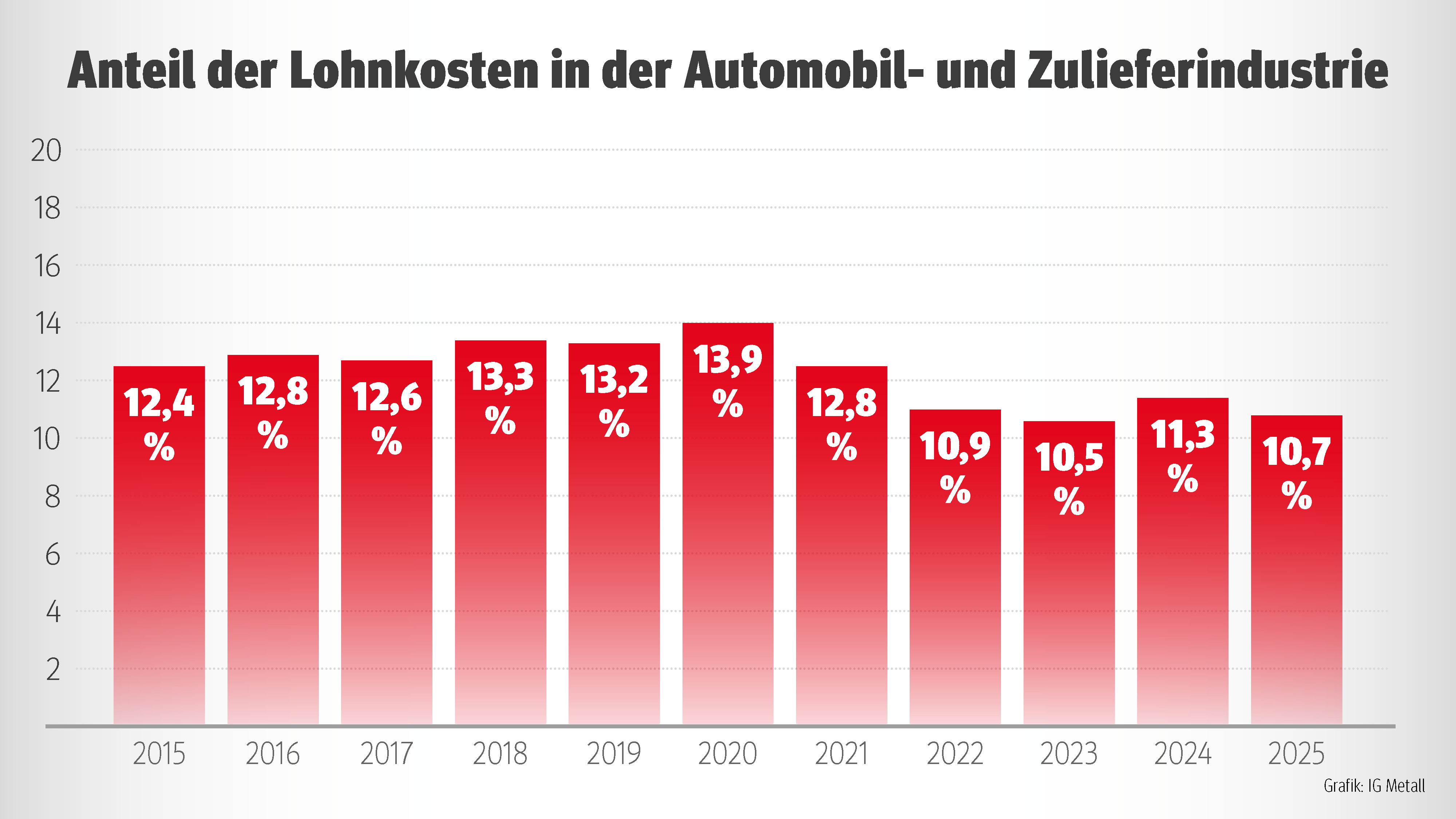
• Labor costs are only a relatively minor factor in the cost structure of the automotive and supplier industries (Chart: Share of Labor Costs). Furthermore, they have declined noticeably in recent years. In 2020, labor costs still accounted for 13.9% of total revenue, whereas by 2025 they will account for only 10.7% of revenue.

• While these are average figures and the share may be higher for some suppliers, the numbers clearly illustrate the scale of the issue. And they show just how much employers are deliberately exaggerating the issue. • In an international comparison, unit labor costs (the labor costs required to manufacture a single product, such as a finished car) have remained at roughly the same level relative to those of other countries for many years, while export performance (an indicator of how well a country sells goods and services abroad) is declining. So, once and for all: It’s not about wages!

• A recovery in real wages following the long period of inflation is also the only chance for a recovery in domestic demand and thus a contribution to an improved automotive economy.

• While wages account for less than one-fifth of revenue in the automotive industry, some managers are now trying to make up for their strategic mistakes at the expense of employees, driven by shareholders’ ever-increasing demands for returns. We demand: A focus not on short-term return targets, but on long-term profitability. We need strategic investments and the cooperative development of visions for the future together with employees.

Would it help if we all worked longer hours?

• No. The demand to abolish the 35-hour workweek makes absolutely no sense if the problem is underutilization of capacity. The problem facing German automakers is low demand and, as a result, underutilization of production capacity. Not a single additional car will be sold just because the workforce works longer hours. This is a strategy by employers to pressure employees into resigning voluntarily and to build pressure ahead of upcoming collective bargaining negotiations. Eliminating the option to work from home is also part of this strategy.

• In fact, Germany is one of the most productive countries in the world. If you divide the gross domestic product by the total number of hours worked, you get a figure for German productivity. It is nearly twice as high as in Hungary, for example, and even slightly higher than that of the United States.

• One reason for this enormous productivity is precisely that we have shorter working hours than other countries. People are nowhere near as productive in the eighth hour of the workday as they are in the fourth or fifth. Getting a lot of work done in a short amount of time is the definition of productivity, and it’s something we should be proud of in this country.

• Moreover, the growth potential resulting from an increase in working hours would be limited. The fact is: We’re working more than ever before. This is because a much higher proportion of the population is working today than in the past. This is due to higher labor force participation among women. If we want to mobilize more workers, this would be the better place to start: Expanding child care enables more women to pursue gainful employment.

Some companies are really struggling. Don’t we need to cut back on wages, bonuses, or work schedules to save jobs?

• Such agreements are business as usual for IG Metall. Last year alone, we facilitated hundreds of deviations from standard agreements; in the automotive industry alone, these were concessions worth billions that affected hundreds of thousands of employees. At Volkswagen, Mahle, Mercedes, and many other companies, we have put together such packages. A few months later, the employers then follow suit.

• We are currently seeing this at the VW Group. In 2024, IG Metall reached a collective bargaining agreement with the Group that was characterized by concessions. Given the Group’s stated situation, the employees were willing to make these concessions. Key points included a job guarantee through the end of 2030 (with no layoffs for operational reasons) and a commitment to avoid plant closures. Less than two years later, the executive board has now reignited the debate over plant capacity utilization and the necessity of closures. This is unacceptable.

• IG Metall is prepared to accept cuts to protect jobs when companies are truly struggling. In the 2004 Pforzheim Agreement, IG Metall agreed with the employers’ association Südwestmetall that companies facing severe economic hardship may deviate from collective bargaining standards in order to preserve jobs. In return, companies must allow IG Metall to verify whether a crisis actually exists. Companies that fail to do this but publicly complain about excessively high labor costs are not acting out of a struggle for survival, but rather to further increase their profits at the expense of their employees.

• Such measures do not solve long-term problems anyway. What is needed is sound regional development policy and investment in business models of the future.

Why shouldn’t companies move to cheaper locations?

• Because it is irresponsible toward their locations, employees, and regions. In the process of globalization of companies and financial markets, companies have increasingly lost their regional ties. Responsibility toward employees is also steadily declining. It is a morally wrong decision to always choose only the cheapest possible locations.

• Because it’s short-sighted. Offshoring has often not paid off in the long run. Companies end up returning later, having wasted a lot of money. Furthermore, it’s unwise to sacrifice the facilities and workers needed to regain a leading position in the future simply for the sake of short-term profits. Demographic change and a shortage of skilled workers will inevitably lead to a situation where, if the automotive industry cuts jobs now, it will lack the workforce it needs in the future. Instead, we need higher rates of continuing education and vocational training to ensure the long-term availability of tomorrow’s skilled workers.

• Because Germany is competitive. Quote: “Compared to all other major trading partners, Germany’s price competitiveness has hardly deteriorated. Compared to China, however, it has deteriorated massively—primarily because of a currency that is undervalued by about 20–30 percent and artificially lowers the price of Chinese exports. Even if Germany were to do everything in its power to boost competitiveness, China’s politically engineered price advantage would remain too great.” So said Michael Hüther, director of the German Economic Institute (an employer-friendly organization), on July 10, 2026. The root causes of our problems, therefore, lie elsewhere.

What should companies do, from IG Metall’s perspective?

• Think and act for the long term. Short-sighted austerity measures and the closure of business locations do not secure the future—not even that of the company itself. All the problems that companies supposedly face right now with Germany as a business location will, in the long run, also arise at all other locations. Labor and energy costs will even out over time. Germany offers legal certainty that is lacking in other countries. Investments in Germany will pay off in the long run, especially in times of geopolitical uncertainty.

• Restore innovation leadership: An Audi advertising slogan used to be “Vorsprung durch Technik” (Advancement through Technology). The German automotive industry must return to that level. Unfortunately, it has lost its technological leadership in several key areas over the past few years. This requires investment in research and development, as well as in new manufacturing facilities, to actually implement new developments.

• Investing in German locations. German locations have been neglected relative to the rest of the world in recent years, which has contributed to the loss of technological leadership. What is needed now are investments to create highly productive facilities where there are people to operate them—that is, at the locations that have already been established.

• Investment in people: Continuing education and training to secure the skilled workers of the future. The qualification requirements for workers in automotive manufacturing are changing. Instead of relying on a steady influx of newly trained experts into the companies and “weeding out” the older ones, the industry should provide continuing education for the existing workforce so that they can continue to contribute to production in the new automotive landscape.

• Good Products for Everyone: We need more high-volume models at German locations. Pure luxury strategies have failed just as much as VW’s massive product range. We need cars that can be produced in large quantities as a standardized model. This lowers costs because more identical parts can be used and fewer different production steps are required. It also allows for the refinement of these high-volume models, which in turn helps margins rise again.

What must policymakers do to support Germany as an automotive hub?

• The federal government and the EU must implement more effective and proactive industrial policies, including for automotive manufacturing sites. Key industries such as battery production must receive stronger financial support throughout the entire value chain. The charging infrastructure for electric mobility and the network of refueling stations for heavy-duty commercial vehicles with hydrogen-powered engines must be advanced more aggressively across Europe. The supply of critical raw materials throughout the industrial value chain must become a core and key issue: diversifying sources of supply, substituting critical raw materials, and recycling to increase the availability of secondary raw materials.

• The automotive industry is globally interconnected and needs open markets. But in this new era of geo-economic competition, Germany and the European Union must act with greater self-confidence. If the U.S. practices hard-line protectionism and China practices state capitalism with subsidies, then the EU must stand its ground. We need more trade protection and local-content requirements to maintain European value creation and build it up for the future.

• When it comes to competition over location costs, not every complaint from businesses is unfounded. Energy prices in Germany are too high; there is unnecessary bureaucracy; and planning and approval processes must be accelerated. Policymakers have taken the first steps, but more needs to be done. We need a predictable and competitive industrial electricity price, less bureaucratic burden—especially for SMEs—and faster planning and approval processes for new and expanded industrial sites. 

• Policymakers in Berlin and Brussels have rightly pushed forward climate protection in the transportation sector. At the same time, they have still not sufficiently established the framework conditions necessary to achieve climate targets. In particular, charging infrastructure in many European Union member states needs to be expanded; the same applies to the development of a resilient and competitive battery value chain in Germany and Europe, not least to reduce systemic dependence on Asian suppliers.

• The federal government should provide greater support to small and medium-sized enterprises in the supplier industry undergoing transformation by helping them finance new business models through liquidity and equity financing, for example through the new “Deutschlandfonds.” 

• Policymakers in Berlin and Brussels must make it a much higher priority to preserve industrial sites in their regions and to demand new investments, including from companies. Any concessions regarding regulation or subsidies should be clearly tied by policymakers to the preservation of existing value creation or investment in new value creation in Germany and Europe. Instead of applauding companies’ attempts to blackmail through threats of relocation and to drive down wages, policymakers must see themselves as advocates for workers and the regions.

The U.S. is pursuing a protectionist trade policy, and China is subsidizing its auto industry. What should the EU do?

• The automotive industry is globally interconnected and needs open markets. But when the U.S. practices hard-line protectionism through tariffs and China practices state capitalism through massive subsidies and the export of excess capacity, there is no fair competition. The EU, too, must therefore focus on strengthening its own industrial bases in the face of these new trade conflicts. Above all, this means investing, strengthening its own single market, and building resilience in its own value creation. But we also need more targeted trade protection to ensure a “level playing field.”

• An example: The European Commission has conducted a comprehensive investigation into distortions of competition in the battery electric vehicle sector and, based on this, has imposed countervailing duties. IG Metall welcomes this approach. The measures make an important contribution to restoring fair competitive conditions while also strengthening investment and employment in Europe. However: We urgently need tariffs on Chinese plug-in hybrid vehicles, because in response to the BEV tariffs, China is shifting its exports to plug-in hybrids. Their share has risen from 3% in 2024 to 18% in the first quarter of 2026. This is putting massive pressure on sales of hybrid cars manufactured in Germany, as the price differences between Chinese and German hybrid vehicles are enormous. This was not determined by the market, but by China’s subsidy policy. The EU must respond to this.

• IG Metall has long advocated for a European local-content strategy. Anyone selling products in Europe should also produce a large portion of them in Europe. This must be comprehensively supported and incentivized, and it should also apply to vehicles. At the beginning of the year, the European Commission put forward proposals for “Made in EU” criteria in the automotive sector. This is a huge step in the right direction. Under these proposals, public procurement and public funding would be tied to the “Made in EU” criterion. In the future, only “Made in EU” cars would be recognized for quotas on company fleets or small electric cars.

• A 70% requirement for all components will also allow the supplier industry to benefit from the regulation. In addition, gradually increasing European content quotas for batteries and electronics will create incentives for new value creation in the EU and for supply chain resilience. IG Metall supports this approach and calls on the federal government to stop opposing it. We need strong “Made in EU” criteria without loopholes when it comes to the electrification of corporate fleets, small electric cars, procurement, and subsidy measures.

• Unfortunately, the effectiveness of this approach is undermined by numerous loopholes. For example, only new or amended subsidy measures fall under the requirements. Even with a cost difference of just 25%, the procurement criteria can be disregarded. Furthermore, the group of eligible countries is being expanded—in part due to pressure from the German federal government—to a very broad scope in some cases. From IG Metall’s perspective, only the 27 EU member states, plus the United Kingdom, Switzerland, Liechtenstein, Norway, and Iceland (“EFTA”), should be included. The rest are not “Made in EU.”

• The EU’s proposals regarding rules for foreign investments by major market players (such as those from China) in the automotive and battery sectors also point in the right direction with requirements concerning European employment and the transfer of know-how. This can prevent negative examples, such as BYD’s establishment in Hungary, where exclusively imported components are assembled by foreign workforces and no genuine European value added or employment is created.

• Unfortunately, a major threat to global trade is currently coming from the U.S. The U.S. president’s erratic and chaotic tariff policy threatens prosperity and employment around the world. Europe must find a unified response and avoid an escalation of the trade dispute. In these difficult times for the German automotive industry and its workers, these developments are adding fuel to the fire of uncertainty. Ultimately, the planned tariffs will be borne by workers in the automotive sector and consumers in the U.S.

Is the so-called “phase-out of internal combustion engines” by 2035 to blame for the crisis?

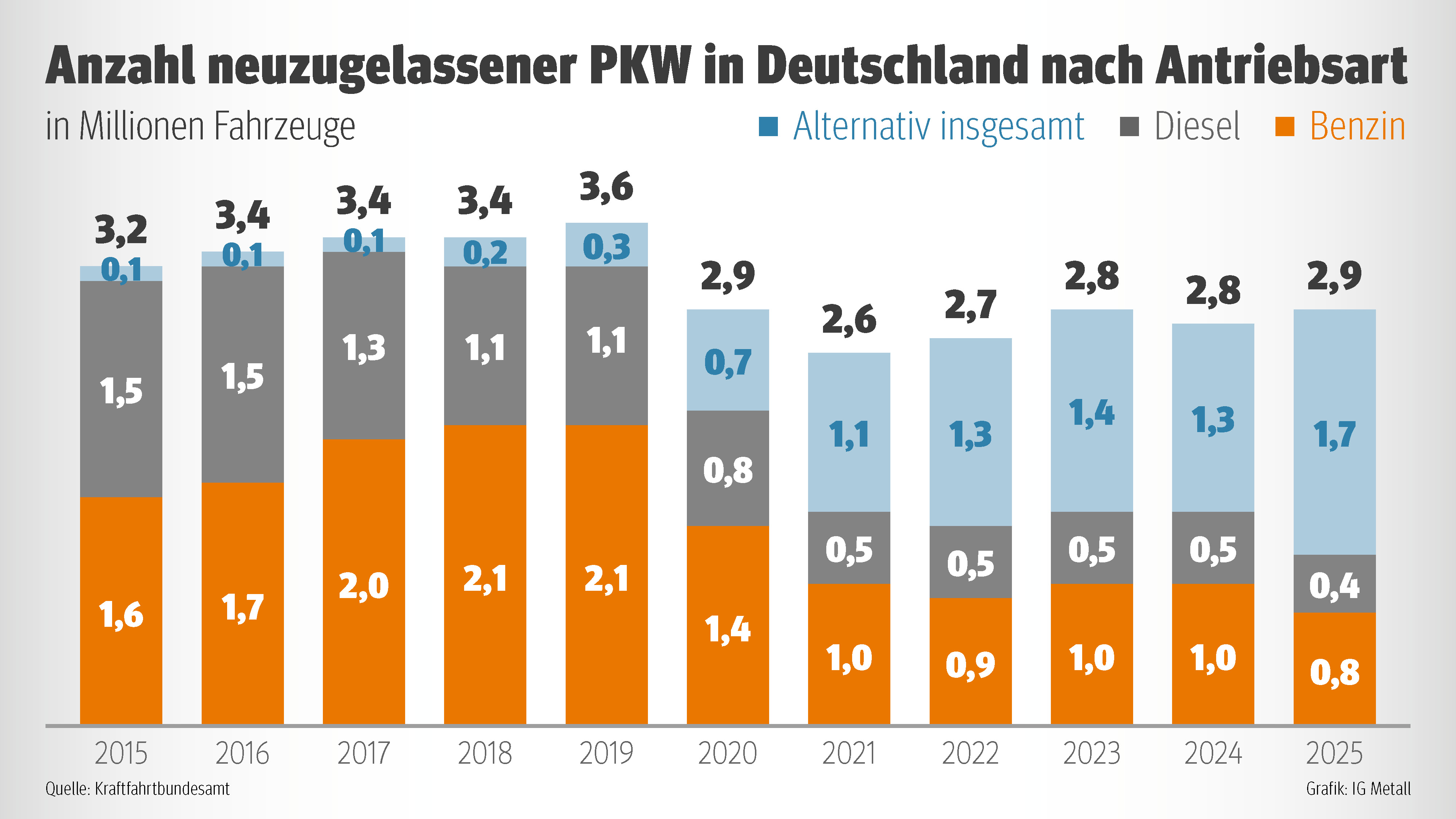
• The current situation has little to do with EU CO₂ regulations. “A significant portion of the decline in value added therefore does not result directly from EU legislation regarding the phase-out of internal combustion engines, but rather from the relative shift in global demand and production structures” (Fraunhofer IAO, ELAB2040, Brief Study 2026). Currently, growth in the European market is actually driven primarily by battery-electric vehicles; in June 2026, new registrations in the EU (plus the UK and EFTA) grew by 13.6%, with battery-electric vehicles increasing by more than 60% compared to the previous year (chart: New registrations by powertrain type). Plug-in hybrids also rose by 25%. Germany has become the world’s second-largest location for electric car production. “Without the production of electric cars, manufacturing in Germany would be roughly at the 1966 level” (German Economic Institute: “The Automotive Industry in 2024,” Cologne, September 22, 2024).

• The current attacks by management on staff and production sites often have entirely different motives. Sites are being shut down, and new manufacturing facilities are being established in low-cost locations abroad. Transformation is often merely a pretext; the real goal is margin optimization. Many managers struggle with the transformation and fall back into old patterns. Shareholders are demanding quick returns.

• According to most forecasts, the share of pure internal combustion engine vehicles in the most important and largest markets will continue to decline, while the share of electrified vehicles will continue to rise. However, hybrids and plug-in hybrids are playing a greater role in the transition than previously expected. So there will still be a market for vehicles with internal combustion engines. However, their share will decline, and these sales alone will not be enough to lead the German auto industry out of the crisis. Even a German “isolated solution” focused on internal combustion engine cars cannot save the globally positioned German auto industry.

Do the EU’s CO2 regulations need an update?

Yes, IG Metall is calling for some adjustments to the European CO2 regulations.

• The focus must remain on e-mobility, but we need more flexibility for hybrid vehicles such as plug-in hybrids (PHEVs) or vehicles with range extenders (EREVs) even beyond 2035. These vehicles make an important contribution because they combine CO2 reduction, value creation, employment, and social acceptance. The currently planned tightening of the “utility factor” will make these vehicles unattractive to both customers and manufacturers. This will cost jobs, particularly in the regionally based supplier industry. The EU Commission should absolutely refrain from this tightening. At the same time, measures must be taken to increase the proportion of electric driving in these vehicles in order to improve their actual CO2 footprint.

• The EU Commission should present its proposal “for the registration of vehicles powered exclusively by CO2-neutral fuels after 2035,” as has already been promised on several occasions. Despite all skepticism regarding the realistic mass availability of truly sustainable and climate-neutral alternative fuels, this prospect should not remain blocked by regulation. Investors and companies can then reassess the business case for this technology.

• We do not need any further unnecessary cost pressure on companies. To avoid manufacturers having to pay penalties for failing to meet fleet emission limits, it should therefore remain possible to spread CO2 reduction targets over several years. This “banking and borrowing” approach provides flexibility without allowing for higher overall CO2 emissions.

• IG Metall supports the European Commission’s proposal to count green steel toward fleet CO2 targets. This helps the steel industry, the automotive industry, the climate, and European resilience. It should be made possible even before 2035—for example, starting in 2030. In addition, further CO2 reduction measures along the automotive supply chain should be eligible for credit, such as measures in the areas of aluminum or recycling.

Are German automakers really that far behind when it comes to software—or is the problem being exaggerated?

• Yes, the problems are real. When it comes to software, digital vehicle functions, and rapid product development, some U.S. suppliers and, above all, Chinese manufacturers have caught up or even overtaken us in key areas. This applies not only to user interfaces but also to updates, connectivity, battery management, and new digital services.

• However, this does not mean that employees in Germany caused the problem. Many difficulties are home-grown: overly complicated corporate structures, too many parallel platforms, constant strategy shifts, delayed action, and too little trust in their own development and software teams. For too long, software was treated as an add-on to hardware, not as the core of the product.

• The answer, therefore, must not be to outsource software expertise or relocate it abroad. Those who lose control over vehicle software lose a central part of future value creation. Companies must strengthen their software expertise in Germany and Europe: with clear responsibilities, stable teams, training, and binding investments.

• For employees, one thing is clear: software is not a peripheral issue. It plays a decisive role in determining which products are successful, which locations have a future, and where new jobs are created. That is why software expertise is integral to the industrial future of automotive hubs. 

• And here, Europe certainly offers advantages: data sovereignty, data protection, a uniform regulatory framework within the EU single market, and legal certainty that is unmatched in other regions. Companies should draw strength from this to develop software in Europe according to the European gold standard. This can provide a competitive advantage.

Why should any of this matter to me if I don’t even work in the auto industry?

• The automotive industry makes a significant contribution to Germany’s GDP. A crisis in the auto industry affects the entire country. Fewer jobs and lower wages lead to reduced demand in all other sectors of the economy. In cities where a large portion of value creation depends on the auto industry, job cuts would trigger further job losses—even at companies that have no direct connection to the automotive sector but rely on local demand.

• When wages fall so that profits can rise again, this amounts to a redistribution not only to the wealthiest in our society, but to the wealthiest in the world. Thirty percent of Volkswagen is owned by foreign institutions, primarily the State of Qatar. At Mercedes, 5% of dividends flow to Kuwait, 20% to the rest of Asia, and 17% to the U.S. At BMW, only 15% of institutional investors are from Germany. Cutting wages to increase profits leads to capital outflow and makes Germany as a whole poorer, since money is pulled out of the domestic economic cycle. 

• And on a fundamental level: Wages and compensation distribute the value created by a company and an economy fairly, including among those who create that value through their work. Weakening the “primary distribution” of economic output also undermines the model of a society with a strong middle class and equitable distribution. This is because financial capital is typically concentrated in the hands of only a few. That is why it affects us all when more and more value is funneled to capital owners. This leaves regions, municipalities, social institutions, and the many service providers—who then lack contracts—at a disadvantage, and ultimately the people, who find it increasingly difficult to afford a good life.

• Strong employee participation and public oversight of the goals and purposes of large companies are therefore both right and important. Some today criticize the VW Act as “outdated.” It is, in fact, a model for the future—especially in difficult times.

Beschäftigte stehen zu einem großen Herz zusammen
Become a member
Become part of a strong community

From legal protection in labor and social law matters to fair wages and salaries—we take personal and reliable care of our members.

New on igmetall.de
Aktionstag bei Mercedes Benz, Daimler, in Sindelfingen gegen die Angriffe auf Beschäftigten in der Automobilindustrie.
Resistance to Attempts at Drastic Cuts Auto industry workers issue a warning
Sie wollen doch nur dein Bestes
Redistribution Making Germany more equitable: We need this tax reform now
Der Streik bei Kelvion in Nobitz-Wilchwitz begann am 4. August 2026. Die Geschäftsleitung will nach Sarstedt/Niedersachsen verlagern - obwohl die Produktion in Wilchwitz profitabel und bis ins nächste Jahr ausgelastet ist.
"It’s worth fighting for!" Kelvion workers strike for a social collective bargaining agreement
Ruhrpott Rebellion am 07.07.2026
Welfare State September 26: Nationwide Day of Action for Social Policy
Beschäftigter arbeitet an einem Getriebe in einer Fabrik
Working Hours Why working longer doesn’t help—and actually does more harm than good
Ein männlicher Land- & Baumaschinenmechatroniker prüft einen Traktor mit einem Tablet
2026 Collective Bargaining Agreement for the Metalworking and Agricultural Engineering Sectors Greater Flexibility in the Metalworking and Agricultural Engineering Sectors in Lower Saxony and Bremen
Elektronikerin prüft die Spannung an einem Schaltschrank.
2026 Collective Bargaining Round for the Electrical Trades Wage Increase in the Electrical Trades in Berlin-Brandenburg
Benjamin Heine ist Mitarbeiter der BMA in Braunschweig
2026 Collective Bargaining Round for Metal Fabrication and Precision Engineering Higher Wages in the Metal Fabrication and Precision Engineering Sectors in Southwest Germany
Metall-Arbeiter beim Schleifen
2026 Collective Bargaining Round for the Metalworking Trade Employees in the Berlin-Brandenburg metalworking sector will receive higher pay
Beschäftigte von Thyssenkrupp demonstrieren in Essen am 23. Mai 2024 gegen das Vorgehen der Geschäftsführung beim geplanten Teilverkauf des Unternehmens.
Defend the welfare state All dates for nationwide actions against cuts to social services
IGM Aktion VW Wolfsburg
On September 21, things will get loud Nationwide Day of Action: Auto Industry Workers Fight Back Against Mass Layoffs
Auszubildender in einer Schreinerei
Apprenticeship Wages Questions and Answers About Apprenticeship Wages

Subscribe to the newsletter