Hammer blows thunder through the ship’s hull. Welding torches spew sparks. Clouds of smoke drift through narrow passageways.
In the midst of it all stands metalworker Alfred Freese. He’s hoisting steel plates under a press. He coughs repeatedly. Then he pauses briefly—and collapses. Right at his workstation.
The scene is from the docudrama “The Brave 56.” Alfred Freese isn’t a real person. But in the 1950s, tens of thousands of workers toiled just like him in the shipyards of northern Germany.
And they all face the same problem: If they get sick, they stop receiving their wages. All they get then is a meager sick pay. But that amounts to only about half of their normal pay.
For workers and their families, this loss quickly leads to dire financial straits. They can no longer pay their rent and have too little money for food, heating, and clothing.
The risk of falling ill or getting injured is high. Shipyards are among the most dangerous workplaces. “There was a rule of thumb: one dead person for every ship,” recalls former shipyard worker Hans-Gerhard Leu in the docudrama.
All of this takes place in the midst of West Germany’s “economic miracle,” a time when companies were making huge profits and growth was in the double digits.
And all this while salaried employees had already had a legal right to continued pay in the event of illness for decades. Workers did not have this security back then. This led to despair, anger, and the feeling of being treated as second-class citizens.
Aspiration and Reality
IG Metall had already had this issue on its agenda for years. At the 1954 union convention, it adopted the demand for “collective bargaining provisions for continued pay during illness.”
Now, in the fall of 1956, this demand is finally set to become a reality.
Because employers are strictly opposed to continued pay, a bitter conflict looms. IG Metall therefore strategically chooses the venue for this conflict: the workforces at the major shipyards are strongly unionized. Moreover, shipbuilding is booming in the Federal Republic. The order books are full. Shipowners such as the Greek “tanker king” Aristotle Onassis are ordering their ships in Schleswig-Holstein. A strike in this situation costs the companies a lot of money.
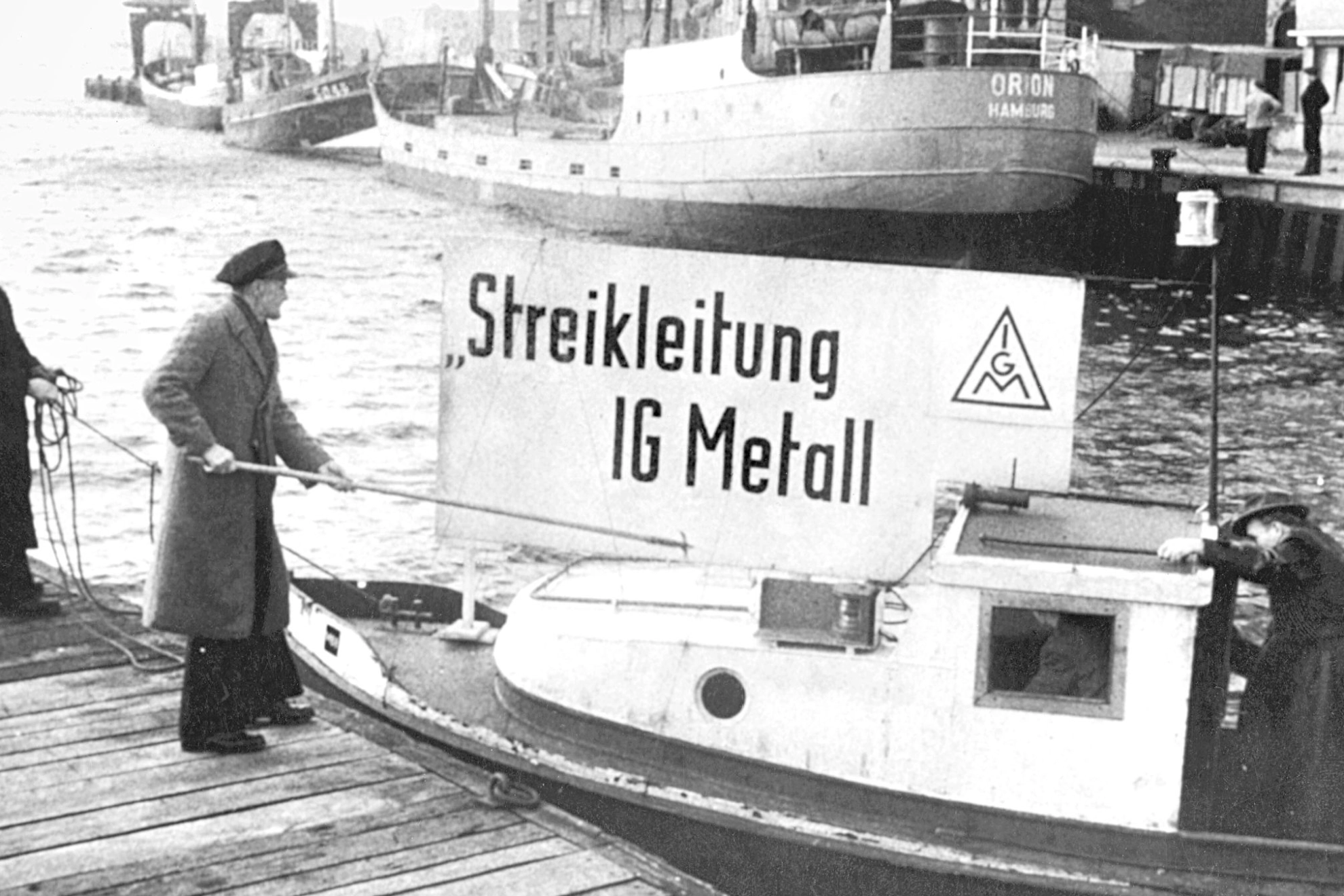
The strike begins at 6 a.m.
On October 24, 1956, the time had come: As the early shift began, 18,000 metalworkers at 15 plants went on strike. In the preceding strike vote, 77.5 percent had voted in favor of industrial action.
The strike has three main goals:
- Wage compensation for illness for up to six weeks
- Additional vacation pay of 7.50 marks per vacation day
- Longer vacation: 18 days per year
IG Metall is now applying its new strike tactic of “flexible escalation” for the first time. This means the strike begins at a few select large companies with a particularly high number of union members.
Afterward, the strike is to be gradually expanded, thereby continuously increasing the pressure—depending on how the employers respond. And for now, the employers are not open to a compromise.
They had already shown themselves to be unyielding during the failed negotiations leading up to the strike. Profit motives are the primary driving force behind this stance. But prejudices and a lack of trust toward their own employees also play a major role.
Time and again, business owners claim that continued pay encourages employees to skip work. In mid-December 1956, the magazine of the employers’ associations (BDA) stated: Continued pay in the event of illness undermines employees’ “personal responsibility” and leads to an “increased incentive to call in sick.”
For the strikers, such statements are a provocation. They are working themselves to the bone on the factory floors. Many become disabled years before reaching retirement age. Continued pay must be implemented!
So the metalworkers continue to tighten the screws. They expand the strike in ten stages. In January 1957, a total of 34,000 workers in 38 plants are on strike.
The workers’ fighting spirit is strong. A strike vote is held three times on a new negotiation outcome. Twice, IG Metall members vote to continue the strike—the second time even against the recommendation of the bargaining committee.
It is winter; Christmas comes and goes. The strikers suffer wage losses as a result of the labor dispute. Nevertheless, they persevere.
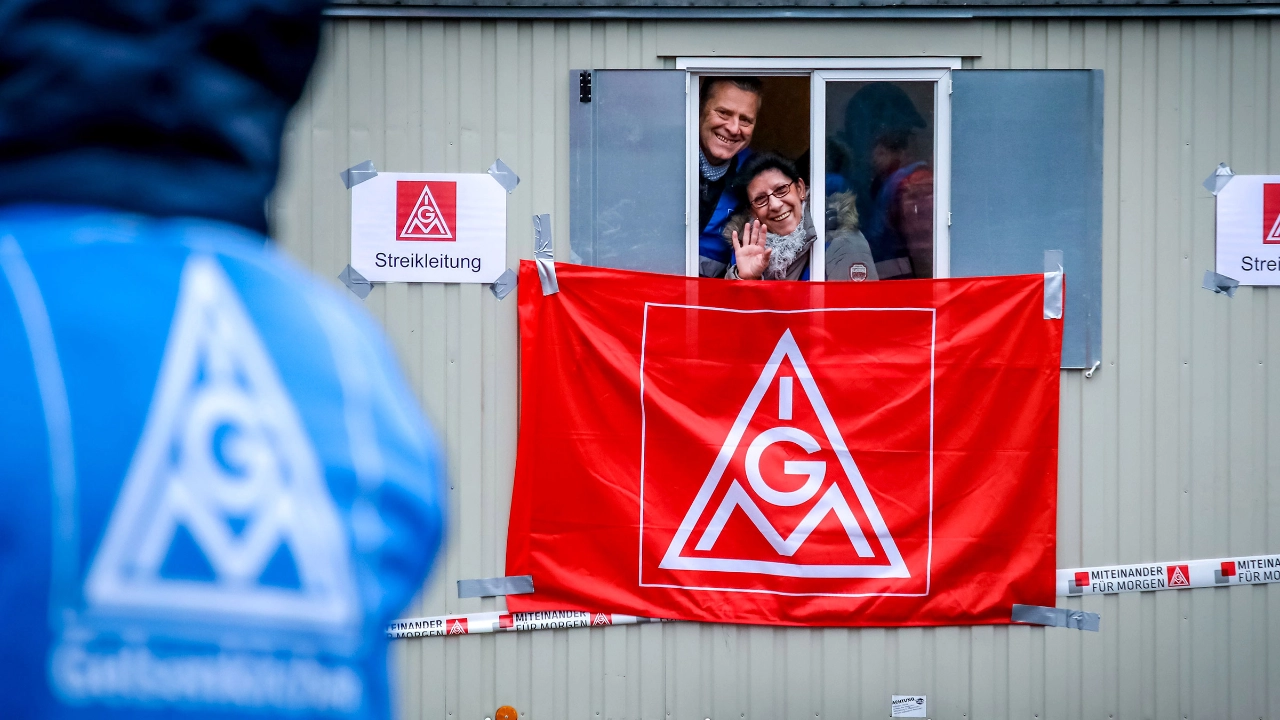
The local IG Metall chapter does a great deal to bolster their resolve. A newspaper is published every day of the strike. It provides updates on the status of the negotiations and uses cartoons to poke fun at the employers’ propaganda. Dozens of events take place: a fashion show, cabaret, film screenings, and puppet shows for the children.
The aim is for the strikers’ families to come together, share experiences, feel a sense of community—and, for a few hours, forget the hardships of the daily strike.
At Christmas 1956, metalworkers from across Germany sent gifts to Schleswig-Holstein for the children of the strikers.
A Breakthrough for Equal Rights
After 114 days, the strike finally ended—with a breakthrough. From then on, companies paid wage compensation starting on the fourth day of illness. The preceding waiting days were also paid in the event of a prolonged illness. In addition, workers received longer vacation time and more vacation pay.
The impact of this collective bargaining agreement extended far beyond the metal industry. As early as June 1957, the Bundestag passed the “Workers’ Sickness Act,” which generally improved continued wage payments. In 1969, the “Continued Wage Payment Act” finally ensured substantial equality between blue-collar and white-collar workers.
With its strike, IG Metall paved the way for one of the great achievements of the German welfare state.
At the time, it was not yet foreseeable that this achievement would have to be defended time and again. But that is exactly what happened.
In the 1990s, the conservative government of Chancellor Helmut Kohl (CDU) cut continued pay to 80 percent. Employees had to get by on less money when they were sick.
IG Metall subsequently secured 100 percent continued pay through collective bargaining agreements. Three years later, it was enshrined in law once again.
And today?
Today, employers’ associations are once again demanding unpaid waiting periods in the event of illness—with the same insinuations about “skipping work” as in the 1950s.
The struggle that metalworkers fought so successfully in 1956–57: It seems it will never end.