Solving problems: For the federal government, that’s part of the job description. That’s what it’s elected to do. One of the problems that Chancellor Friedrich Merz (CDU) wants to solve is the allegedly excessive rate of sick leave in Germany.
No one wants to be sick. So reducing sick leave sounds like a good thing at first.
The question is: How can this be done?
For Merz, the case seems clear. He wants to make it harder for employees to call in sick. Back in July, the federal government’s leadership decided to abolish the practice of reporting sick by phone , which was introduced during the COVID-19 pandemic.
Second measure: In the future, employees will be required to submit a doctor’s note starting on the very first day of illness.
In practical terms, this means that anyone who calls in sick at work must immediately go to a doctor’s office and have a medical certificate (“unfit for work”) issued. This applies even if the illness is expected to last only one or a few days.
Employers can already require a medical certificate on the first day, and some do. In the future, however, it would become mandatory for everyone.
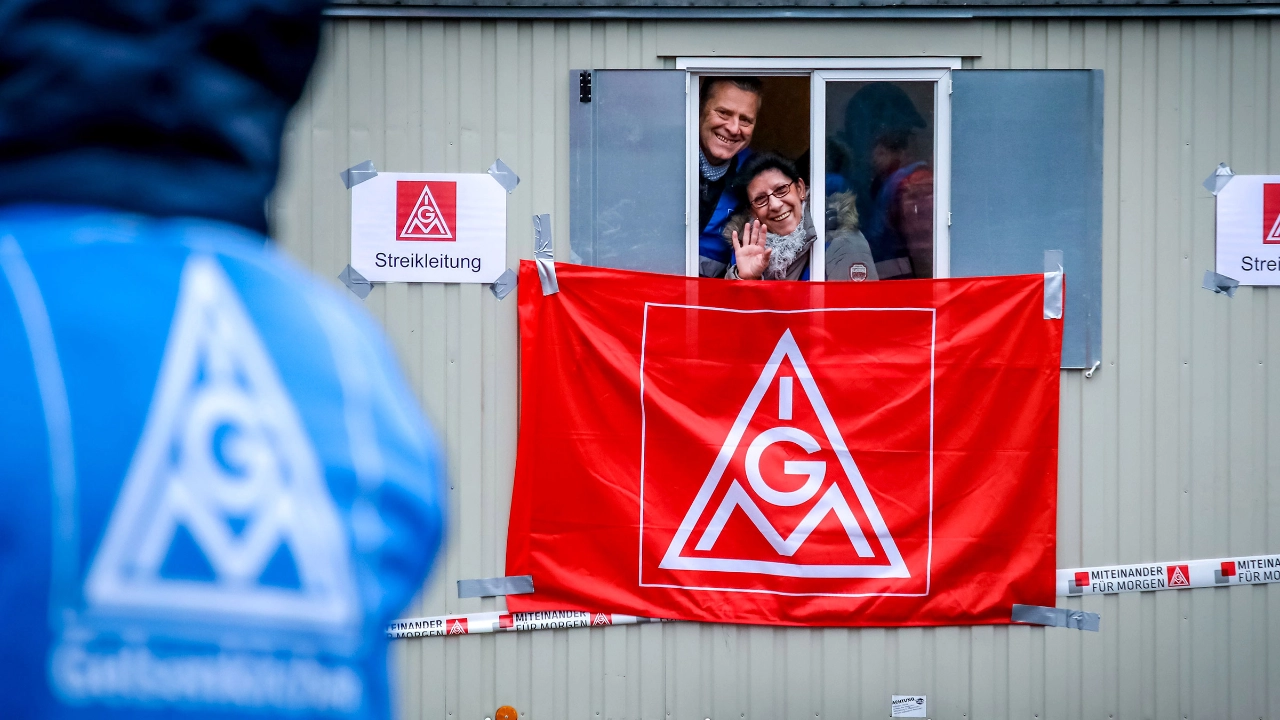
IG Metall strongly opposes this. And there are many reasons for this opposition.
Employees Under General Suspicion:
The first and perhaps most important reason against the immediate requirement for a doctor’s note is the mistrust toward employees. “A requirement for a doctor’s note starting on day one places millions of employees under general suspicion,” says IG Metall’s Social Affairs Director Ralf Reinstädler. Labor law experts and HR specialists agree.
It was palpable during the recent union demonstrations against cuts to social benefits: Many employees perceive the announced requirement for a doctor’s note as a vote of no confidence in them—as if they were constantly calling in sick and therefore needed to be monitored more closely.
How the chancellor intends to win people over with this attitude remains a mystery.
Overburdened Medical Practices:
Many doctors’ offices are already overburdened today. The National Association of Statutory Health Insurance Physicians (KBV) has therefore sharply criticized the federal government’s plans: For them, it “borders on insanity to drive tens of thousands more people into doctors’ offices just to fill out forms.” Anyone who has a cough or a gastrointestinal infection belongs in bed, not in an overcrowded doctor’s office.
Higher Sick Leave Rates:
Sitting shoulder to shoulder in the waiting room instead of resting and recovering. That alone could increase sick leave.
Other effects could be even more dangerous: The additional pressure on employees could lead to more people dragging themselves to work while sick and infecting others there. In a survey by the social welfare association VdK, 14 percent of respondents said they would rather go to work sick than make a doctor’s appointment. Twenty-one percent said they would take a longer sick leave as a precaution to avoid having to see a doctor again. Both of these factors would drive sick leave rates up rather than down.
It remains to be seen how people would actually react to the requirement to provide a doctor’s note starting on day one. However, the AOK also considers the described effects plausible and warns against them.
More bureaucracy:
Reducing bureaucracy—that, too, is a goal that Chancellor Merz repeatedly cites. A requirement to provide a doctor’s note starting on the first day of illness would have exactly the opposite effect: Companies would have to monitor compliance with the requirement. Doctors’ offices would have to handle more appointments. And employees would have to schedule appointments and submit sick notes.
And if lawmakers were to allow companies to deviate from the new medical certificate requirement via collective bargaining agreements or company-level agreements, these provisions would first have to be negotiated and put in writing.
Misleading Figures:
Why has the debate over sick leave in Germany flared up in the first place? A key reason is that the number of sick days has risen significantly in recent years. In 2020, employees were on sick leave for an average of 11.2 days. By 2025, that figure had risen to 14.6 days.
Chancellor Merz commented: “That’s almost three weeks during which people in Germany are not working due to illness. Is that really right? Is that really necessary?”
For health experts, it has long been clear: The longer absences are largely due to the introduction of the electronic sick note (eAU). Before the eAU existed, employees had to submit the “yellow slip” themselves to their health insurance provider and employer. Many did not do so. As a result, sick days were only partially recorded. Today, the statistics are closer to reality —but people aren’t necessarily sick more often or for longer periods. In an international comparison, Germany ranks in the middle in terms of sick leave.
So one might reasonably ask: Does the problem that Chancellor Merz is so eager to solve even exist?
How we can actually make Germany healthier:
Better health: Everyone can probably agree on this goal. What’s needed to achieve it is obvious: “If you really want to reduce sick leave, you have to focus above all on long-term illnesses ,” says Anke Jurchen, head of workplace health management at AOK Nordost. “They account for most days missed, and the trend is on the rise. More prevention, more workplace health management, and good medical care are effective remedies.”
IG Metall’s Social Affairs Director Ralf Reinstädler shares this view: “Health-promoting working conditions are the foundation for a healthy workforce,” he says.
Mistrust toward all employees, on the other hand, does not help.