Automatic translation
This article has been translated automatically using computer technology. While we strive for accuracy, some wording or details may differ from those in the original article.
This translation was not manually reviewed. For important facts, quotations or legally sensitive information, please consult the German original. Individual selections, images, embedded media or technical terms may have been translated differently or incompletely.

2024 Metal and Electrical Industry Collective Bargaining Round “We want more money because we need it”

Persistently high prices are putting a strain on workers in the metal and electrical industries. That is why more money to boost their purchasing power is their top priority. This is shown by a survey conducted by IG Metall regarding the metal industry wage negotiations, which begin in September. Those feeling the strain the most are apprentices and dual-track students.
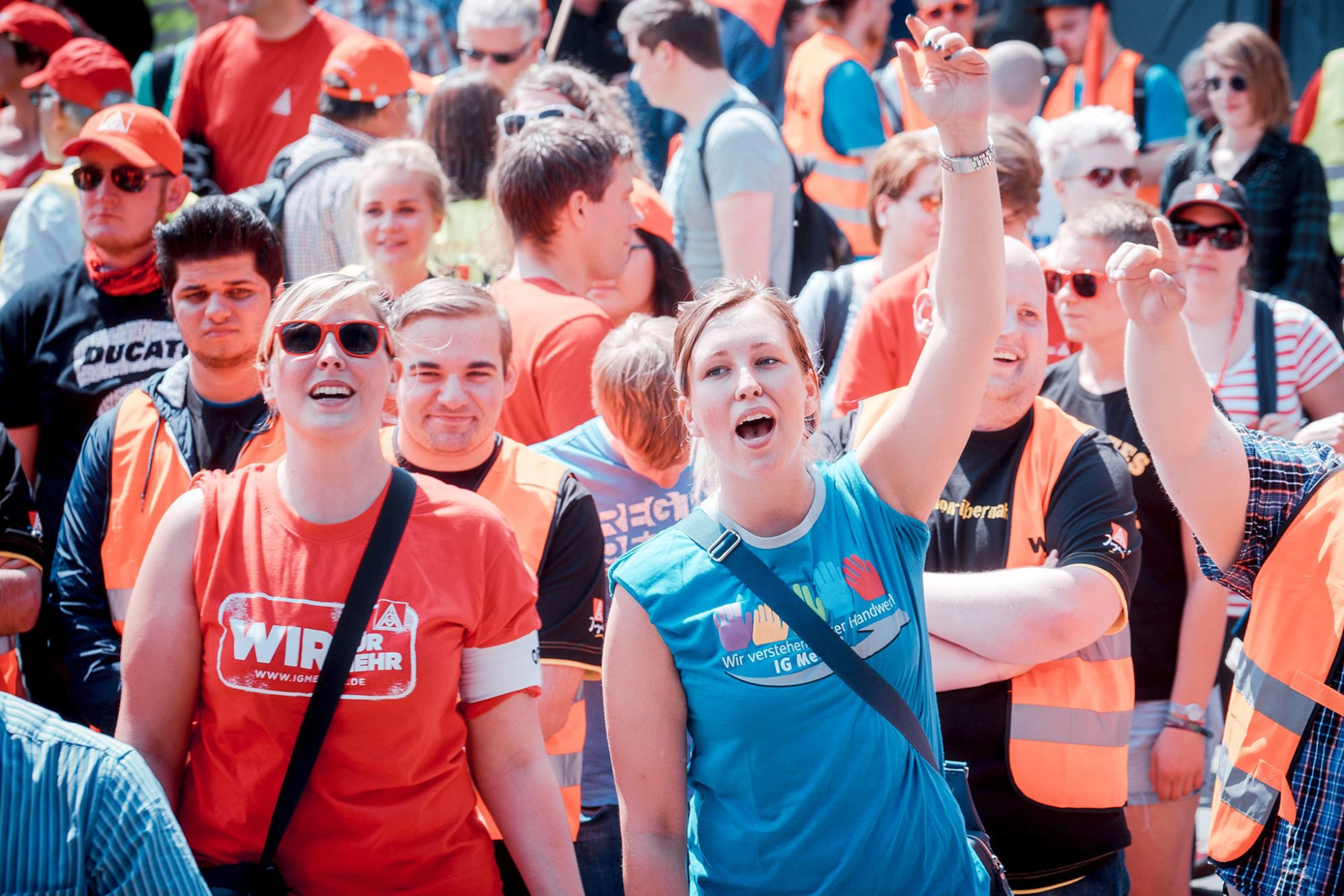
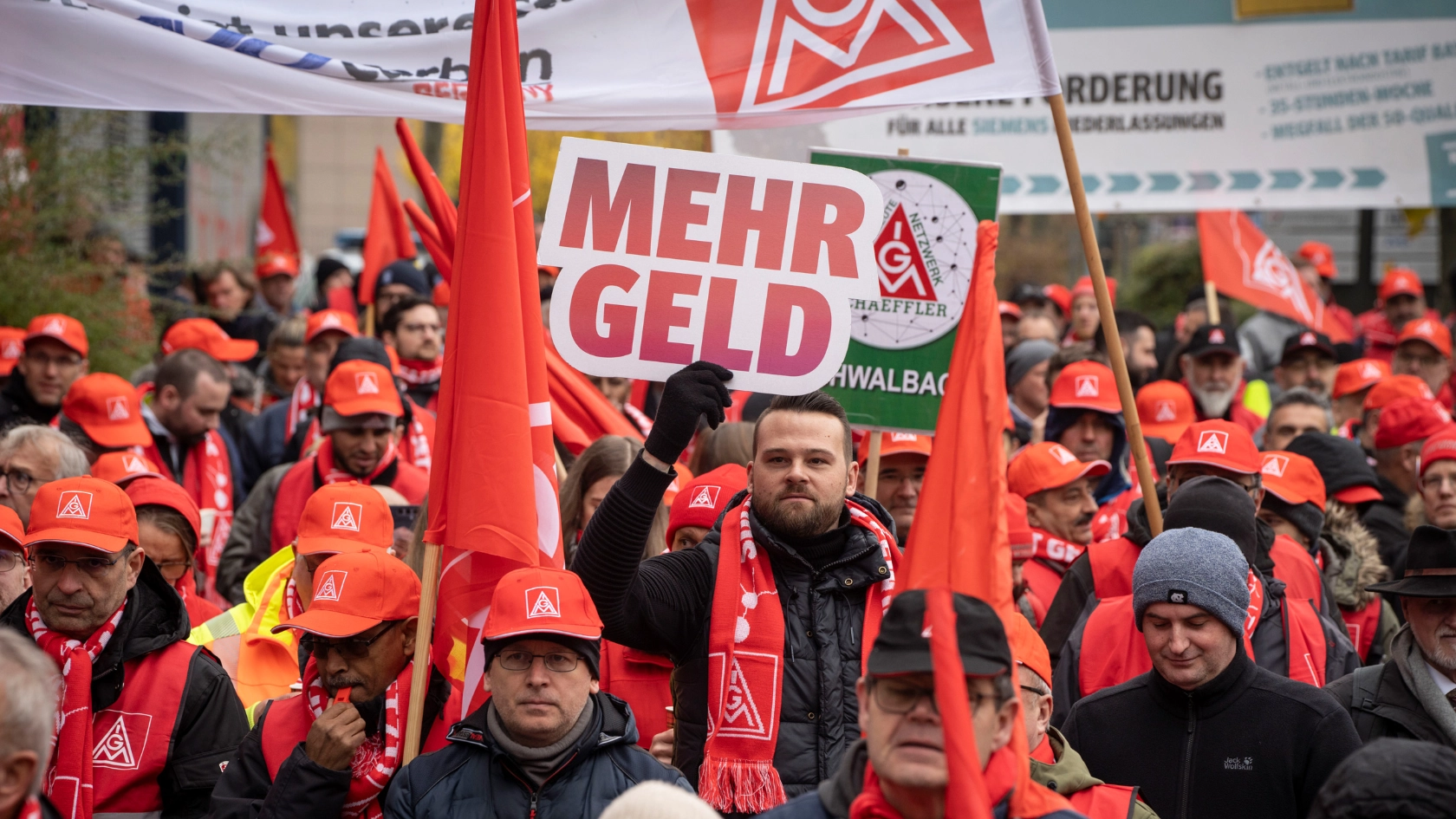
In Mitten einer größeren Menge recken zwei junge Menschen während einer Demonstration die Hände in die Luft.

12 June 2024 12 June 2024


On June 21, the elected bargaining committees will decide on IG Metall’s demands for the collective bargaining negotiations in the metal and electrical industries, which are set to begin in mid-September. Discussions among IG Metall members and shop stewards at the companies have been ongoing for weeks. In addition, IG Metall surveyed employees at the companies—and 318,000 employees from 2,700 companies responded.


Need More Money – More Purchasing Power

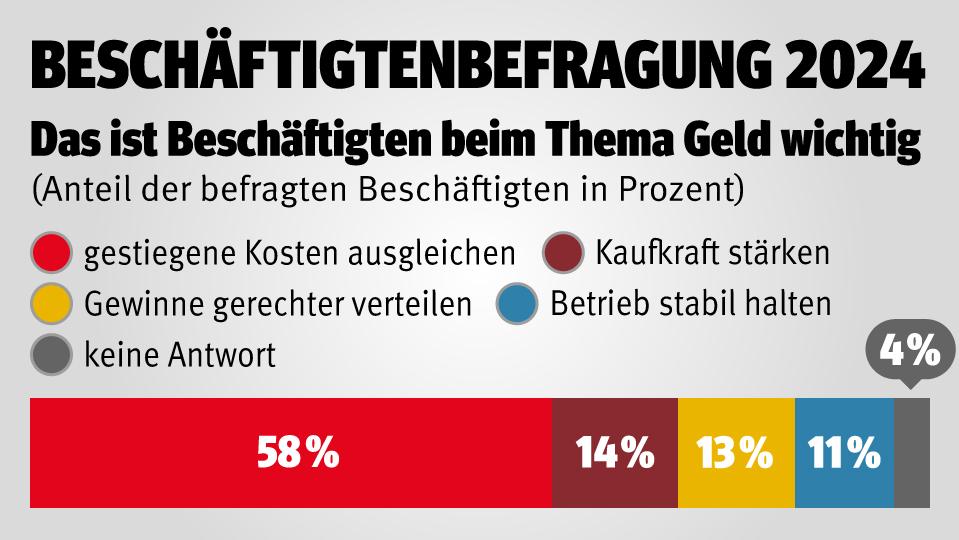
Above all, workers in the metal and electrical industries expect a noticeable pay raise. 72 percent of the workers surveyed say they need higher wages to offset inflation and strengthen their purchasing power.
“Inflation may be slowing, but prices remain high,” explains Christiane Benner, President of IG Metall. “Workers expect employers to provide a noticeable and lasting increase in pay to counter price pressures.”

In fact, strengthening purchasing power would also make economic sense: Private demand accounts for about half of the gross domestic product (GDP) and is thus even more important than exports. However, inflation is eroding purchasing power and, with it, private consumption. Private consumption must be stimulated so that the economy can grow again.


Grafik Beschäftigtenbefragung zur Tarifrunde Metall- und Elektroindustrie 2024: Darum brauchen Beschäftigte mehr Geld


Economic Situation: Poor Overall—Good at the Workplace

Employees view the economic situation in a nuanced way: 41 percent perceive the overall situation in Germany as bad or very bad. By contrast, 80 percent of employees consider the economic situation at their own workplace to be okay, and 44 percent even consider it good or very good.

“Overall, employees view the economic situation at their workplaces much more positively than the current complaints from employers’ associations would suggest,” emphasizes Nadine Boguslawski, who is responsible for collective bargaining policy on the IG Metall executive board. “There is something to be shared.”


Apprentices and students are particularly hard hit by rising prices

Apprenticesand dual-trackstudents are particularly burdened by price increases. Sixty-eight percent of the employees surveyed share this view. Among apprentices and dual-track students themselves, 93 percent say they need more money because of the increased costs.

Currently, apprentices in the metal and electrical industries earn an average of 1,167.50 euros per month under collective bargaining agreements. That money simply isn’t enough anymore. The rising cost of living is placing a particular burden on low-wage earners, such as apprentices and dual-track students.

And the days when apprentices were still minors are long gone. Today, the average age of apprentices is over 20. About a quarter are even 22 or older. They often want more independence from their parents, their own apartment—or an apprenticeship or dual study program at a specific company that may be farther away. At the same time, employers are demanding ever-greater flexibility and mobility.

Voices from the Youth
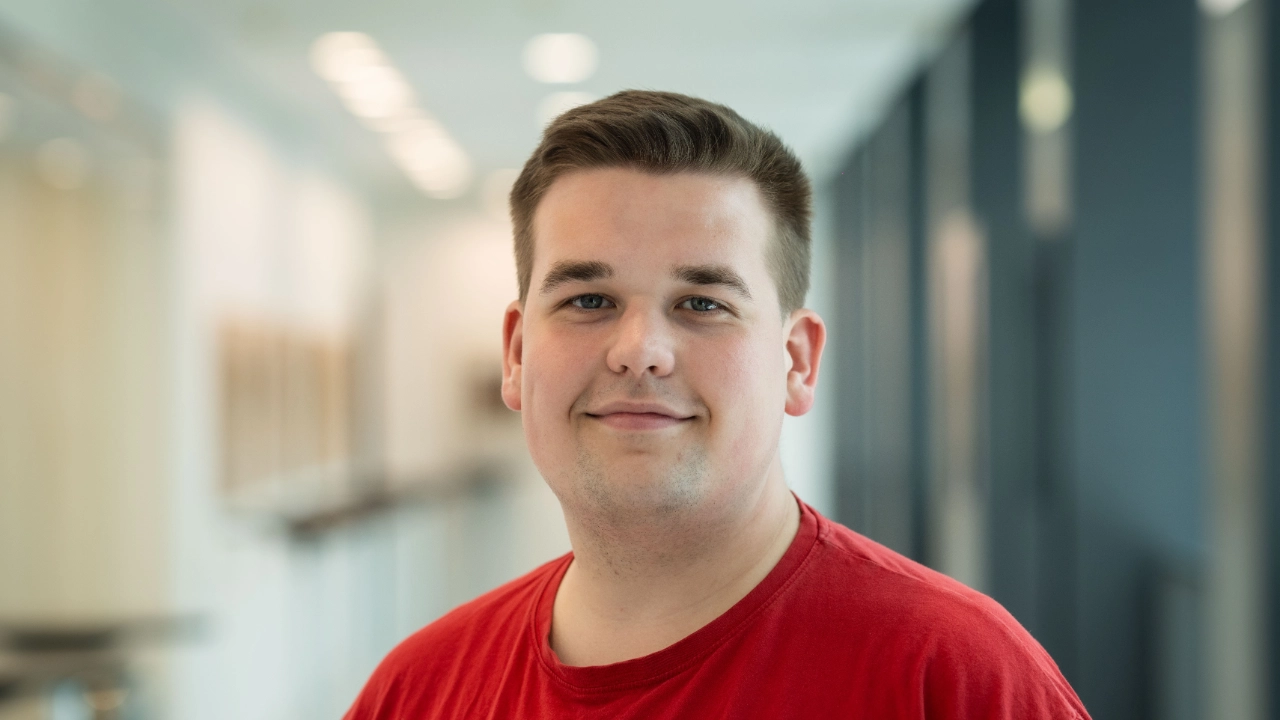
Alexander Lipp Opel Rüsselsheim

Alexander Lipp, Opel, Rüsselsheim

“Dual-track students are often forced to study in a different location than where they work. As a result, they have to pay for at least an apartment or a room in a shared apartment. In Frankfurt, that’s 500 to 600 euros for a room in a shared apartment. It’s no different for apprentices. This isn’t about saying, ‘I want to go on vacation more often once a year.’ We want more money because we need it.”
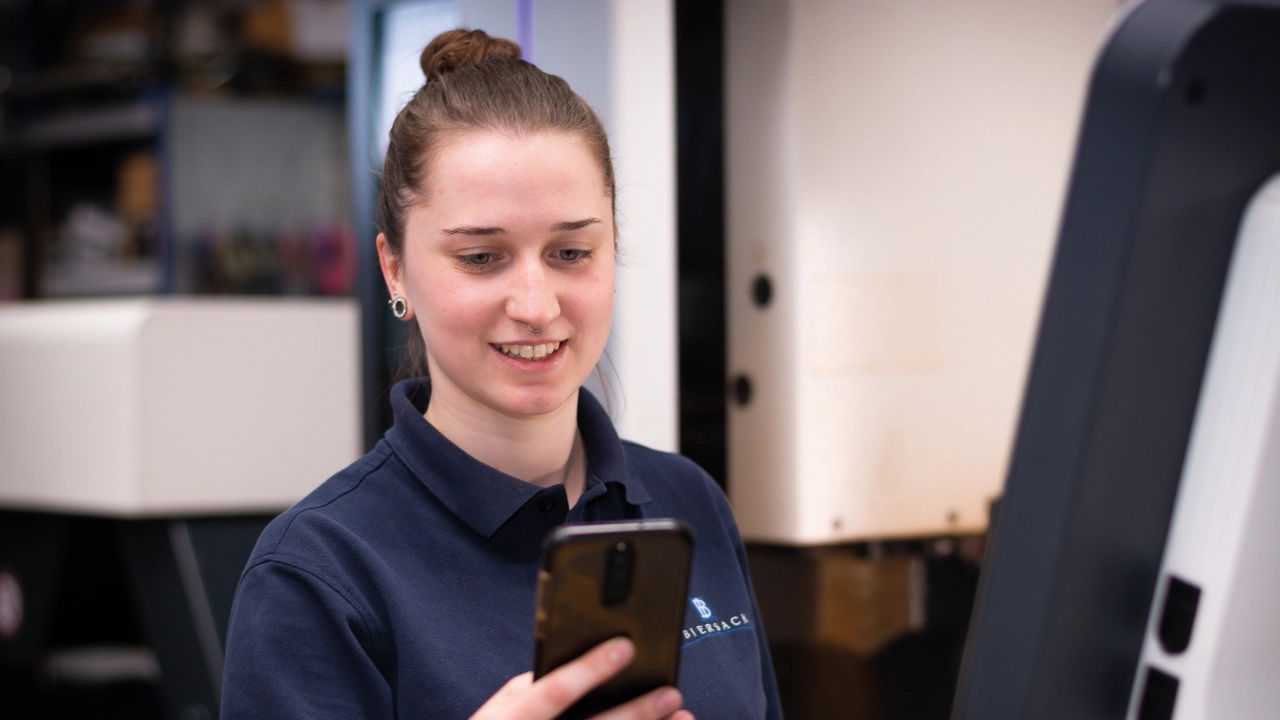
Samet-Can Cabuk, Ford, Köln

Samet-Can Cabuk, Ford, Cologne

“Many apprentices and dual students have part-time jobs. Instead of studying for exams, many have to earn extra money to make ends meet. We’ve had a few cases where apprentices quit because they could no longer afford the commute to work. We need a higher apprenticeship stipend—a significantly higher one.”
Gianna Leo, Volkswagen, Wolfsburg

Gianna Leo, Volkswagen, Wolfsburg

“Many people still have an outdated image in their minds: 16-year-old boys and girls living with their parents, taking the bus to work, and spending their money at the mall. Today, apprentices and dual-track students are 20 years old on average and have to support themselves. And everything has become more expensive. We need training stipends across the board that we can actually live on.”
Nick Thiele, Bosch Automotive Steering, Schwäbisch-Gmünd

Nick Thiele, Bosch Automotive Steering, Schwäbisch-Gmünd

“Our apprentices tell us that the money is barely enough. Some still get money from their parents because they can’t make ends meet on their own: rent, transportation costs, food, insurance—the money disappears quickly. At the same time, even large companies are having trouble finding apprentices. That’s why we say: Offer more money, and young people will be more likely to choose an apprenticeship again.”
Leon Knauer, Körber Technology, Hamburg

Leon Knauer, Körber Technology, Hamburg

“Living in cities like Hamburg is no longer affordable for apprentices and dual students. And in places where people pay little for housing, they generally need a car to get to their training company. So the costs just shift elsewhere. We therefore urgently need a significant increase in apprenticeship wages.”
Kilian Bergauer, BMW Leipzig

Kilian Bergauer, BMW, Leipzig

“The living conditions for apprentices and dual students have changed. Training often requires a change of residence. In places where housing is affordable, apprentices and dual students quickly find themselves dependent on having a car. But there’s no discount for apprentices at the gas station. They pay the same prices and drive the same distances as skilled workers.”

Apprenticeship wages must increase significantly

More and more young people are no longer pursuing vocational training at all, preferring instead to take on part-time jobs after school. With a “midi-job” (up to 2,000 euros gross), they can earn almost twice as much. The result: 2.64 million young people between the ages of 20 and 34 have no vocational qualification. At the same time, the German economy is increasingly complaining about a shortage of skilled workers.

To make vocational training and dual study programs more attractive again and enable young people to lead independent lives, IG Metall believes that apprenticeship wages must therefore increase significantly.


More Control Over Their Own Time

The 318,000 employees surveyed also view their working hours as an important issue. Here, they are calling for practical solutions that offer them greater flexibility. For 85 percent of those surveyed, greater autonomy and self-determination regarding working hours are very important or important. 

More than half of those surveyed would like more individual options to choose between time and money, as is already made possible by the“Collective Bargaining Supplement”(T-ZUG) in the metal industry for employees facing particular burdens (such as caring for children or family members, or working shifts).

Beschäftigte stehen zu einem großen Herz zusammen
Become a member
Become part of a strong community

From legal protection in labor and social law matters to fair wages and salaries—we take personal and reliable care of our members.

Don’t miss any collective bargaining news with push notifications

IG Metall app for Android and iOS

With our IG Metall app, we keep you informed about collective bargaining negotiations and agreements, pay raises, and special payments. Also in the app: a shift scheduler, advice on all aspects of working life, services, and more. Important: Enable push notifications!

More
2024 Metal Industry Collective Bargaining Round
New on igmetall.de
Aktionstag bei Mercedes Benz, Daimler, in Sindelfingen gegen die Angriffe auf Beschäftigten in der Automobilindustrie.
Resistance to Attempts at Drastic Cuts Auto industry workers issue a warning
Sie wollen doch nur dein Bestes
Redistribution Making Germany more equitable: We need this tax reform now
Der Streik bei Kelvion in Nobitz-Wilchwitz begann am 4. August 2026. Die Geschäftsleitung will nach Sarstedt/Niedersachsen verlagern - obwohl die Produktion in Wilchwitz profitabel und bis ins nächste Jahr ausgelastet ist.
"It’s worth fighting for!" Kelvion workers strike for a social collective bargaining agreement
Ruhrpott Rebellion am 07.07.2026
Welfare State September 26: Nationwide Day of Action for Social Policy
Beschäftigter arbeitet an einem Getriebe in einer Fabrik
Working Hours Why working longer doesn’t help—and actually does more harm than good
Ein männlicher Land- & Baumaschinenmechatroniker prüft einen Traktor mit einem Tablet
2026 Collective Bargaining Agreement for the Metalworking and Agricultural Engineering Sectors Greater Flexibility in the Metalworking and Agricultural Engineering Sectors in Lower Saxony and Bremen
Elektronikerin prüft die Spannung an einem Schaltschrank.
2026 Collective Bargaining Round for the Electrical Trades Wage Increase in the Electrical Trades in Berlin-Brandenburg
Benjamin Heine ist Mitarbeiter der BMA in Braunschweig
2026 Collective Bargaining Round for Metal Fabrication and Precision Engineering Higher Wages in the Metal Fabrication and Precision Engineering Sectors in Southwest Germany
Metall-Arbeiter beim Schleifen
2026 Collective Bargaining Round for the Metalworking Trade Employees in the Berlin-Brandenburg metalworking sector will receive higher pay
Beschäftigte von Thyssenkrupp demonstrieren in Essen am 23. Mai 2024 gegen das Vorgehen der Geschäftsführung beim geplanten Teilverkauf des Unternehmens.
Defend the welfare state All dates for nationwide actions against cuts to social services
IGM Aktion VW Wolfsburg
On September 21, things will get loud Nationwide Day of Action: Auto Industry Workers Fight Back Against Mass Layoffs
Auszubildender in einer Schreinerei
Apprenticeship Wages Questions and Answers About Apprenticeship Wages

Subscribe to the newsletter