How does a “collectivebargaining round”actually work? And how does IG Metall arrive at its demands for collective bargaining with employers?
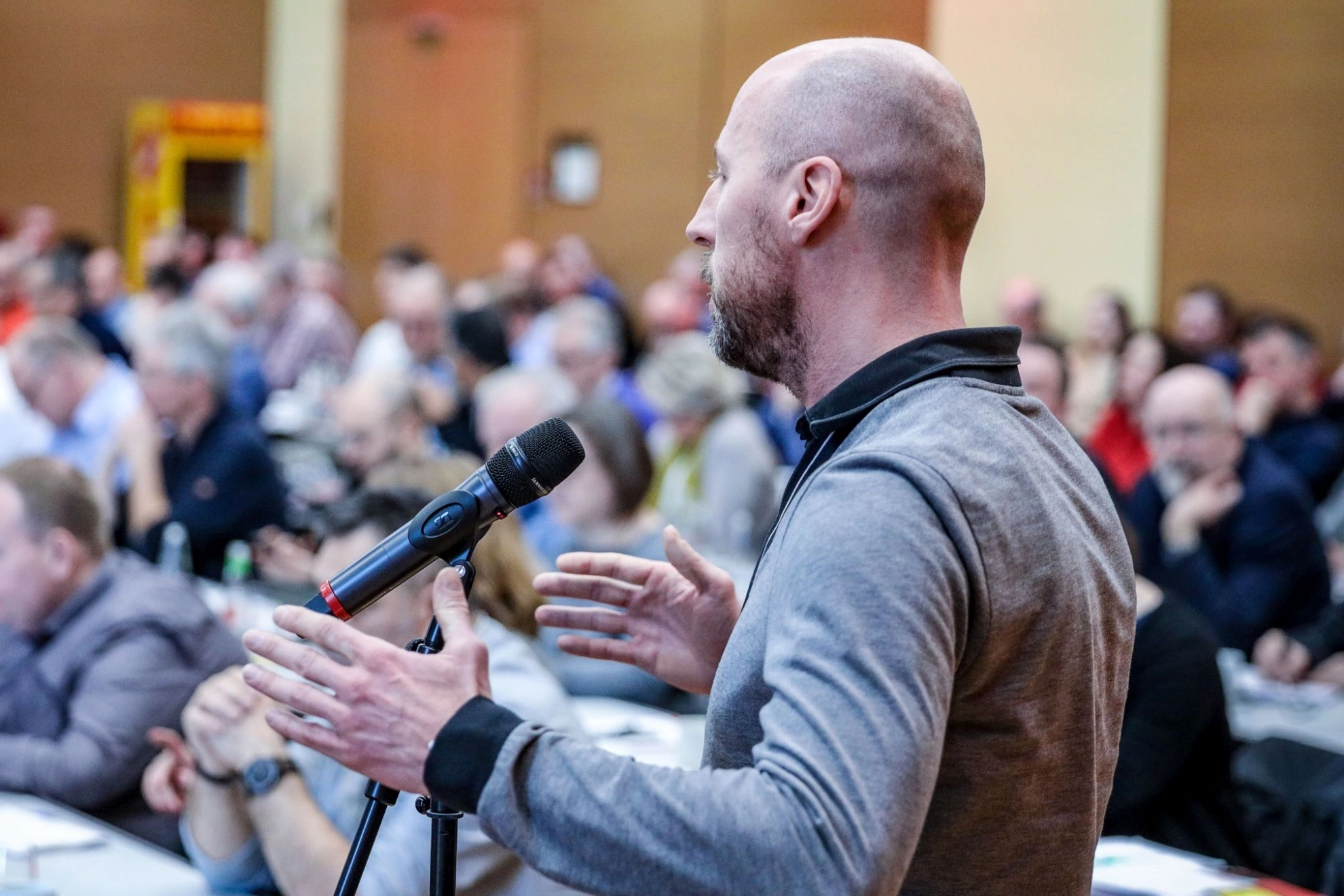
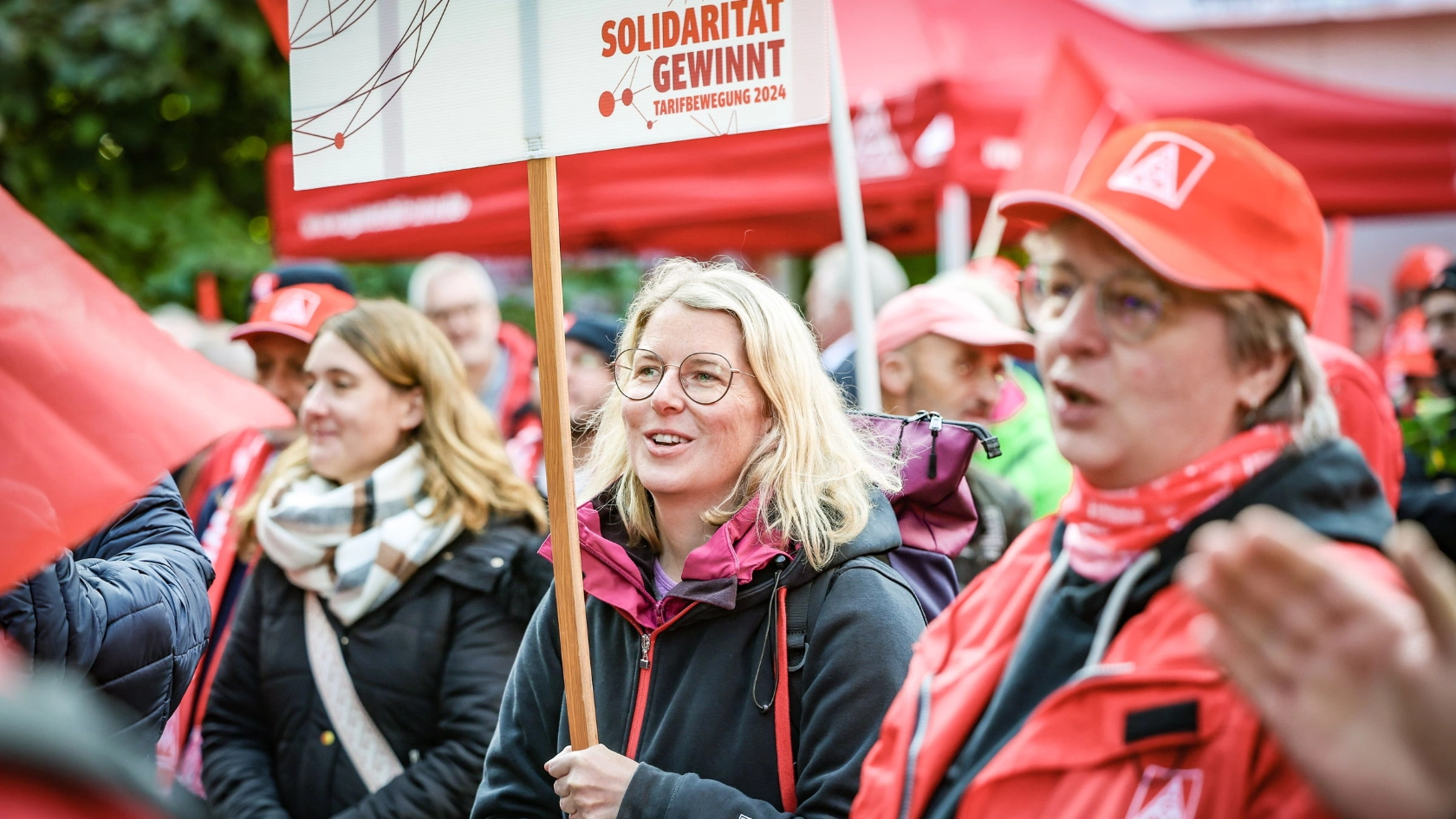
At the outset, IG Metall members debate the issues in their workplaces and union committees—such as the local IG Metall shop steward committee: What should we demand? More money—and how much? Or do we need to address working hours? Union members, IG Metall shop stewards, and works council members discuss these issues with employees and compile them as potential demands to present to the collective bargaining committees —or they bring them directly to those committees themselves.
The IG Metall bargaining committees are composed of representatives of IG Metall members from the workplaces and industries to which the collective bargaining agreement applies or to which the new agreement is intended to apply—mostly works council members and IG Metall shop stewards from the workplaces. The bargaining committee discusses the issues raised in the workplaces, consolidates them, and uses them to develop joint demands for specific collective bargaining provisions that IG Metall aims to secure in the upcoming collective bargaining negotiations.
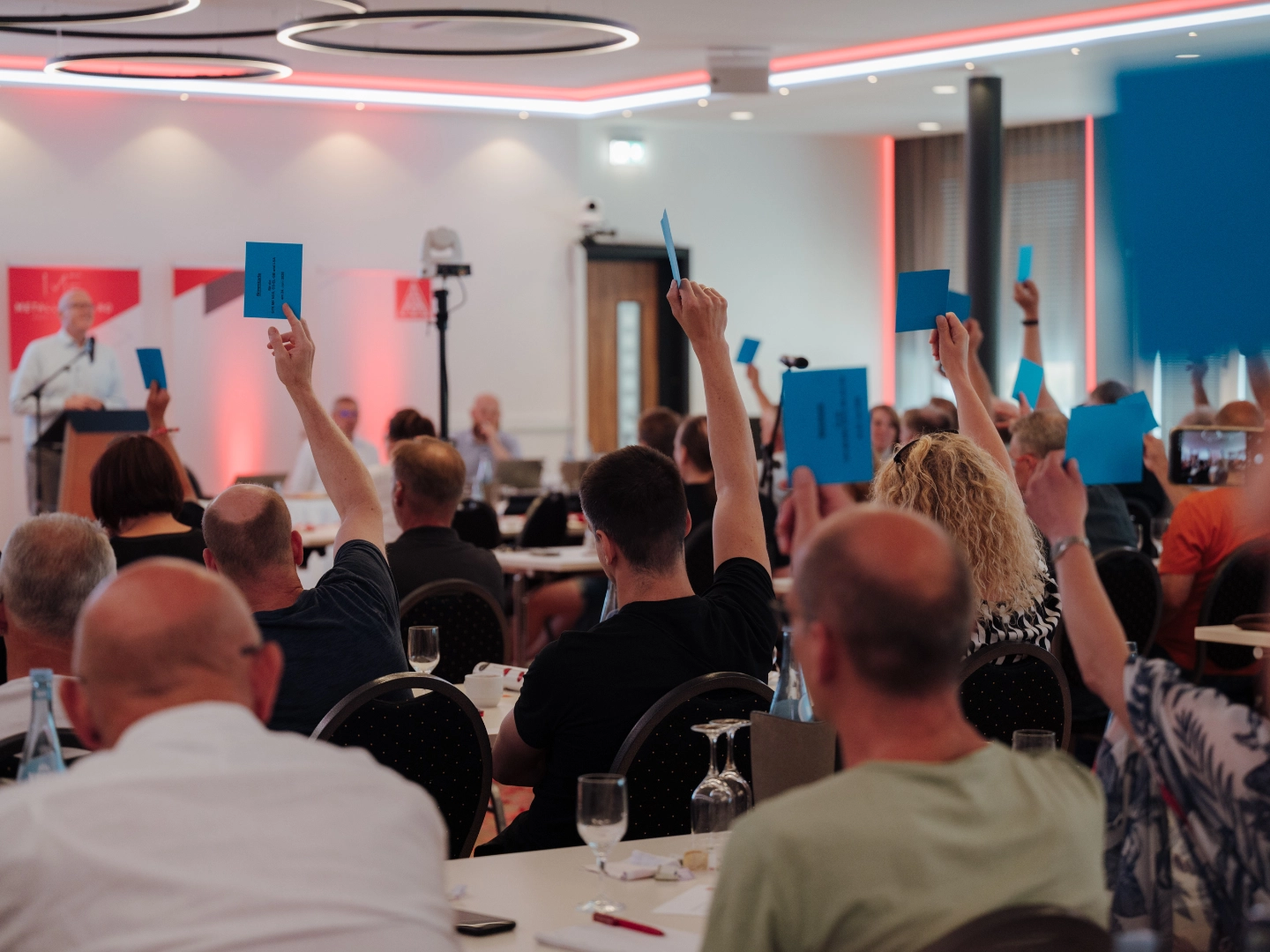
The collective bargaining committee formulates demands and conducts negotiations. It is elected by the members at the workplace (for company-level collective bargaining agreements) or by the delegates’ assembly (for industry-wide collective bargaining agreements). Illustration: Stephanie Brittnacher
The collective bargaining committees decide on the bargaining demands
The members of the bargaining committees are elected at the local IG Metall offices —or, in the case of in-house collective bargaining agreements, directly at the workplace—and are responsible for the bargaining region—or the company—to which the collective bargaining agreement applies. In the metal and electrical industries, for example, the bargaining regions include Bavaria, Baden-Württemberg, Hesse, Thuringia, North Rhine-Westphalia, the Coast, and Saxony-Anhalt. In each bargaining area, IG Metall negotiates separately with the regional employers’ associations.
In the collective bargaining process for the metal and electrical industries, for instance, the regional bargaining committees compile the discussions held so far in the workplaces and submit them as an initial proposal to the IG Metall Executive Board. The Executive Board then adopts a nationwide recommendation for demands, which is subsequently discussed once more by shop stewards, works council members, and IG Metall members to determine whether it aligns with their needs at the workplace.
After further debates on the demands and consultations within the workplaces, the regional bargaining committees summarize the discussions to date and forward the results to the IG Metall Executive Board.
In other industries, the process is somewhat simpler—without a recommendation on demands from the IG Metall Executive Board.
Constant Dialogue with the Grassroots
Throughout the bargaining debate, the members of the bargaining committees remain in constant dialogue with IG Metall members at their workplaces. They represent their colleagues’ concerns within the committee, keep them informed about the discussions taking place in the bargaining committees, and discuss these matters with them.
Based on the reviewed and discussed Executive Board recommendation, the regional bargaining committees for the metal and electrical industries decide on the demands for their bargaining area. After the IG Metall Executive Board has finally confirmed the demands, the IG Metall district leaderships forward the demands decided upon for their bargaining areas to the employers.
This formally clears the way for collective bargaining in the metal and electrical industries.