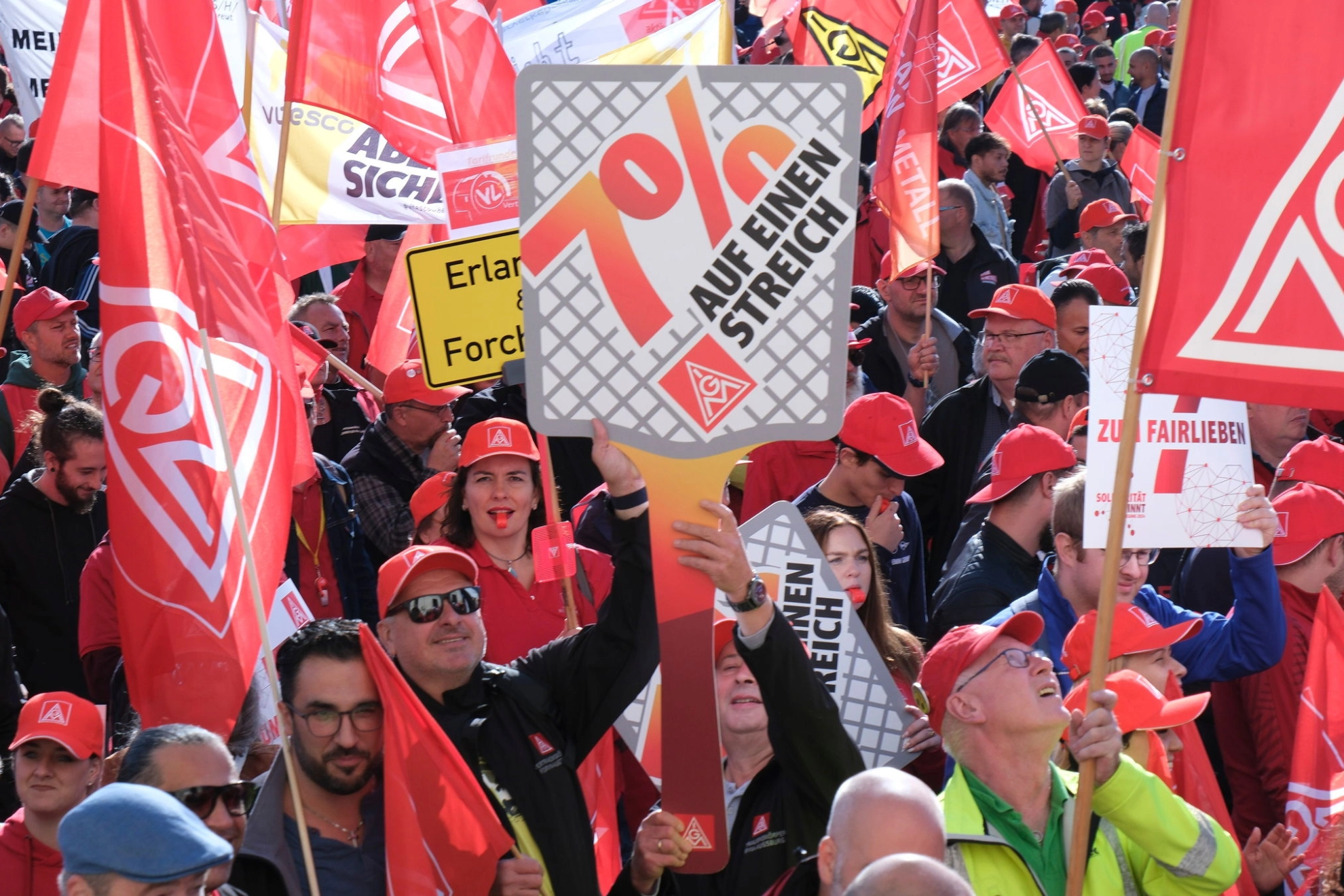
Monthly wages for workers in the metal and electrical industries are set to rise by 7 percent over a 12-month period. Apprentices are to receive an additional 170 euros per month.
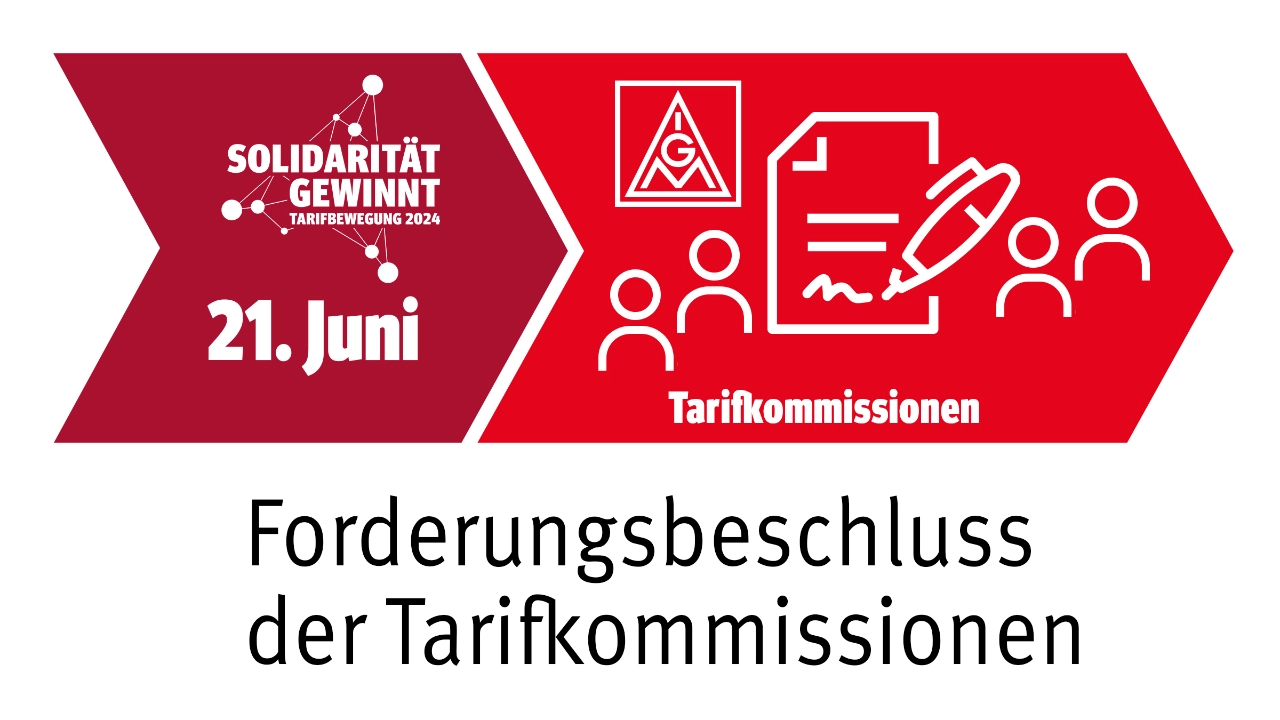
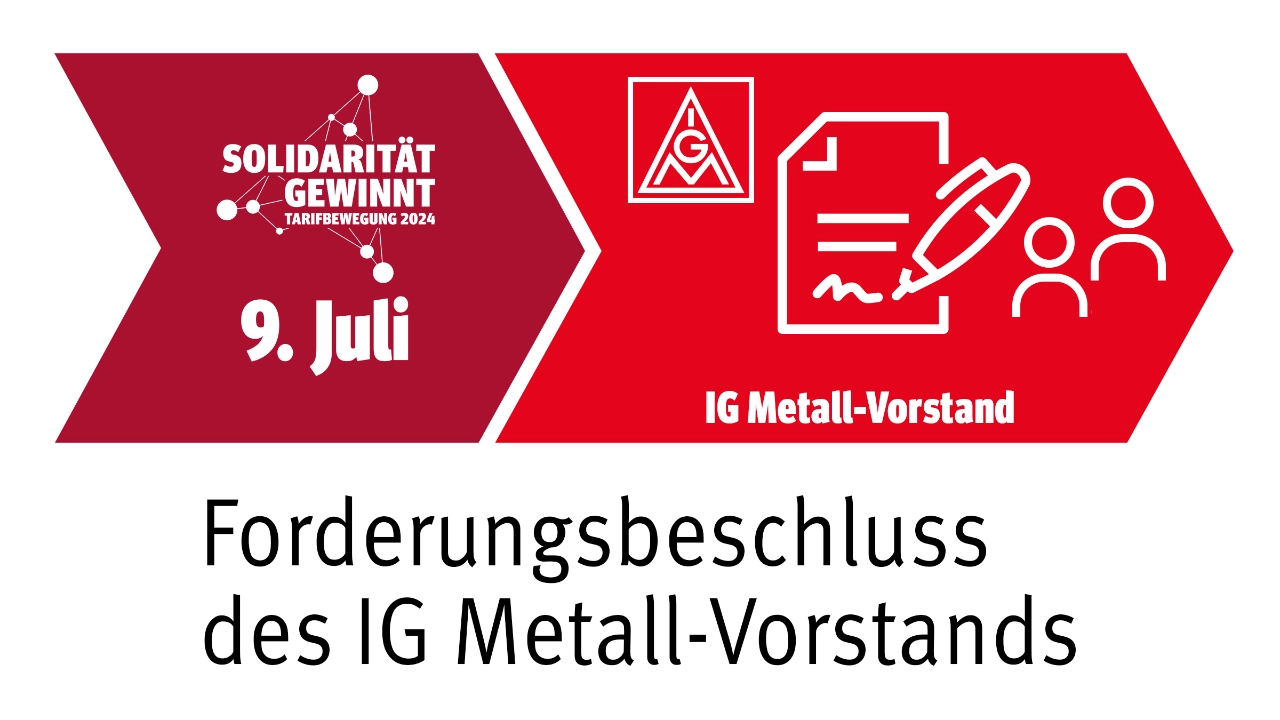
Following discussions at the workplace and a survey of 318,000 employees, the elected bargaining committees of IG Metall adopted this demand at the end of June for the collective bargaining negotiations in the metal and electrical industries. The IG Metall executive board confirmed this demand in early July.
In addition, IG Metall intends to discuss with employers greater flexibility for employees regarding working hours. There will also be a social component for employees in the lower pay grades, who are particularly affected by high prices.
Inflation is falling—but high prices remain
High inflation in recent years has made everything more expensive. Price increases have eroded wage gains.
Although the inflation rate has fallen back to 1.6 percent, that does not mean prices are dropping. They are simply rising at a slower pace.
“The inflation rate may be falling, but prices at the checkout counter remain high for people,” emphasizes Christiane Benner, President of IG Metall. “Now, with a 7 percent raise, workers deserve a reliable, long-term adjustment.”
Above all, workers want more money
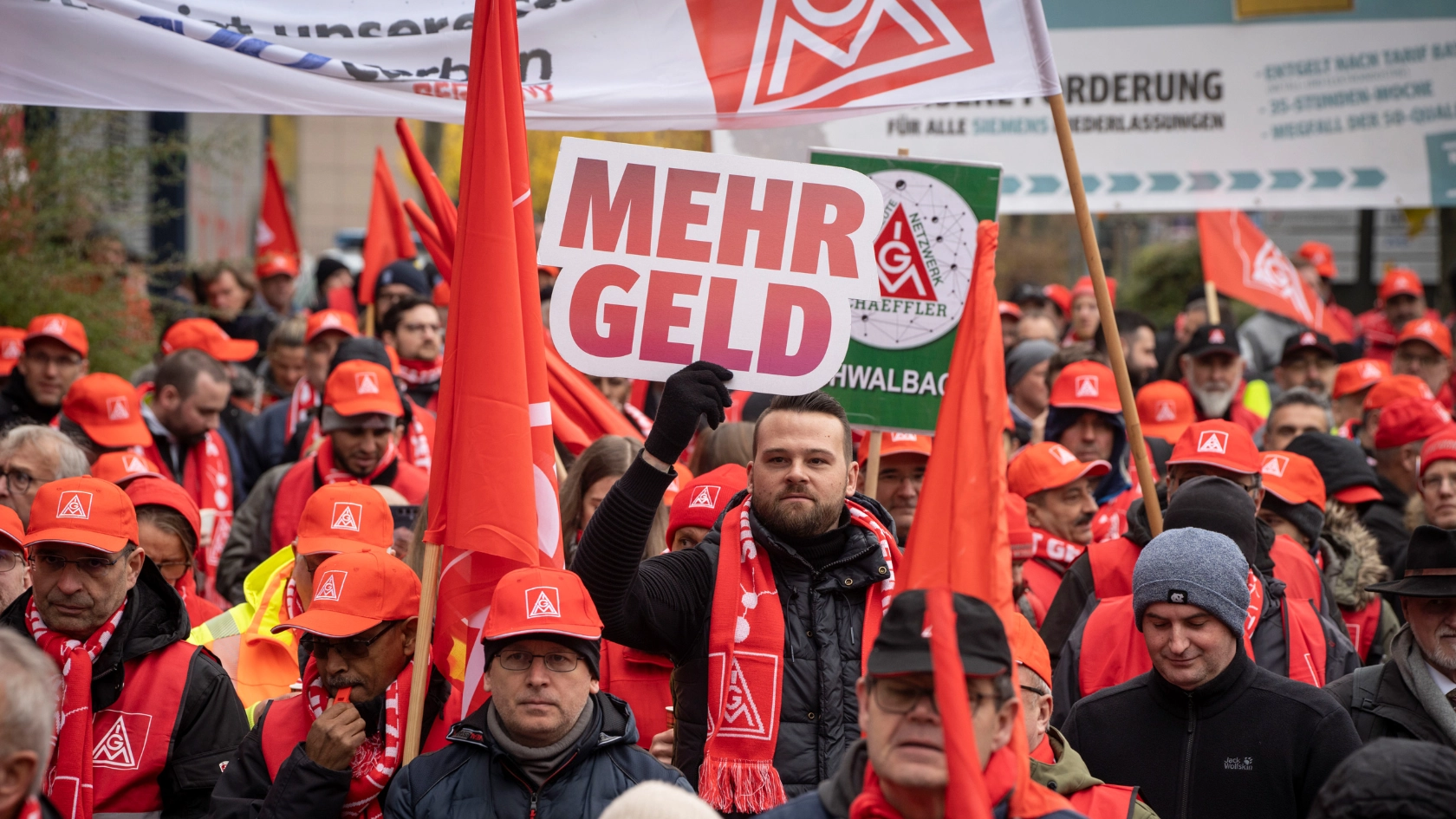
Workers on the shop floor see it the same way: In a survey of 318,000 workers at 2,700 companies in the metal and electrical industries, IG Metall wanted to know what we should demand in collective bargaining negotiations.
The result: 58 percent want to offset their increased costs, while 14 percent want to boost their purchasing power.
Our purchasing power boosts the economy
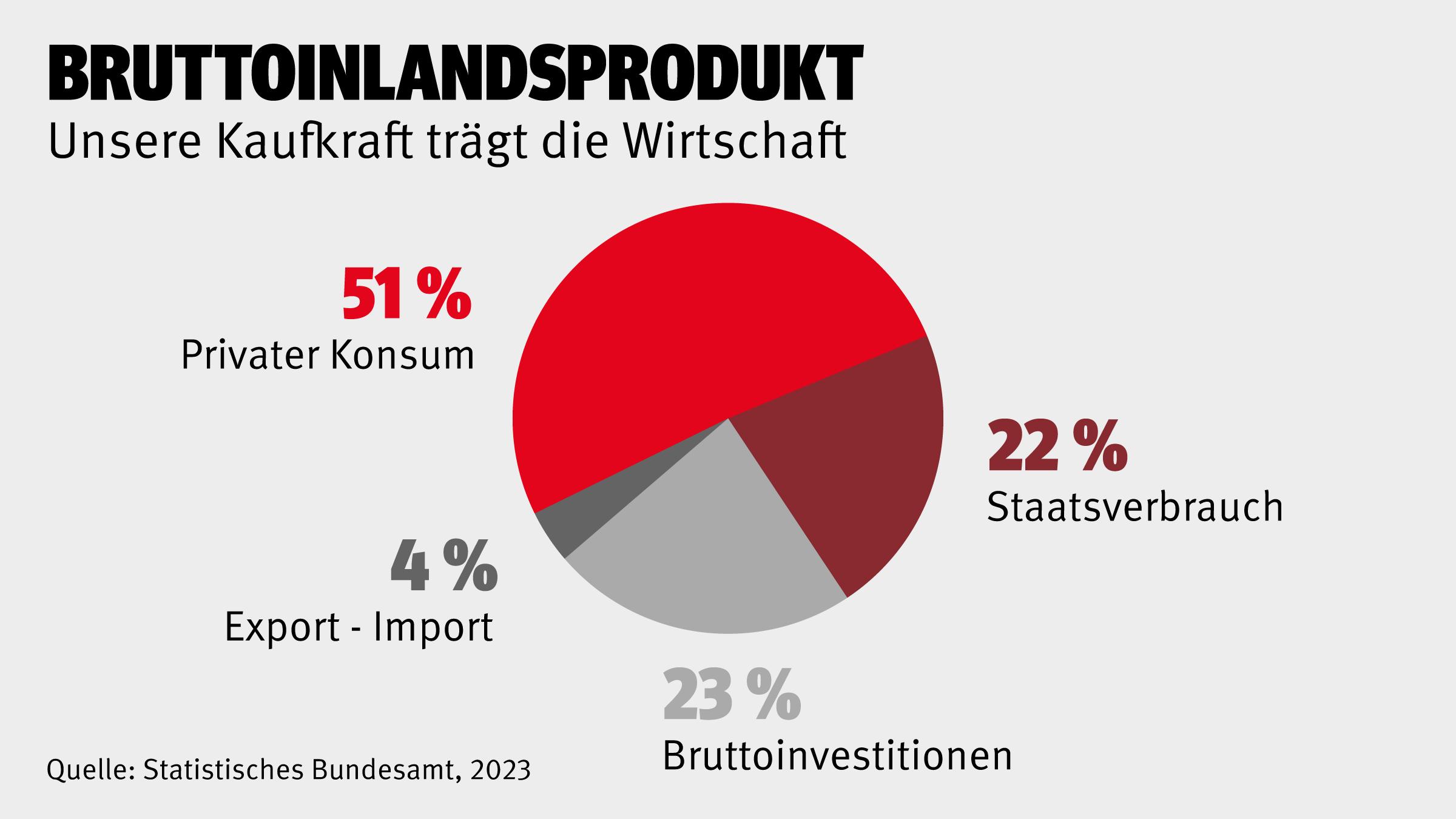
Workers’ purchasing power is a crucial factor in reviving the sluggish German economy: 51 percent of gross domestic product is driven by private consumption. But that has plummeted due to inflation in recent years, because people are holding onto their money and holding back on purchases.
Weak private consumption has been the main cause of the meager growth in recent years.
Economic researchers are banking on private consumption: In their forecasts, they assume that private consumption will pick up significantly again. In other words: Economic growth will only return with increased private consumption.
However, this can only work if people have more money in their wallets and, consequently, greater purchasing power. The 3.8 million workers in the metal and electrical industries, along with their families, play a major role in this.
Apprentices and students are particularly hard-hit by high prices
Low-income workers are particularly affected by high prices. In the metal and electrical industries, this especially includes apprentices and dual-track students working in companies: Their training stipends are no longer enough to cover rent, food, and gas. Many rely on part-time jobs.
Fewer and fewer apprentices still live with their parents. And they’re no longer 16 years old: their average age at the start of their apprenticeship is now 20. Many also have to move to another region for their apprenticeship.
Fewer and fewer apprentices—2.86 million without a vocational degree
On top of that, fewer and fewer young people are even starting an apprenticeship. More and more prefer to work part-time jobs: A “Midijob” can earn up to 2,000 euros gross—almost twice as much as an apprenticeship in the metal and electrical industries.
The result: In 2022, 2.86 million people between the ages of 20 and 34 lacked a vocational qualification—2.86 million potential skilled workers who are missing from the labor market. At the same time, the population is aging. Unlike in the past, when companies could still choose their own apprentices, many apprenticeship positions now remain unfilled—and companies are increasingly struggling to find enough skilled workers.
IG Metall Calls for 170 Euros as an “Attractiveness Booster” for Apprenticeships
Times have changed. In many skilled trades, employers have now recognized this—and have negotiated significant increases in apprenticeship wages with IG Metall to make their programs more attractive to young people. In other sectors covered by collective bargaining agreements, apprenticeship wages have also risen at an above-average rate in recent years—but not in the metal and electrical industries.
That is why IG Metall is calling for an additional 170 euros per month for apprentices in the metal and electrical industries. This would make it possible once again for apprentices to live independently on their training allowances—but also to make vocational training in the metal and electrical industries more attractive again.
Companies can afford it
Employers, of course, are complaining: IG Metall’s demands are far too high. Basically, they can’t afford any pay raises at all.
And yes: The economy—and especially the metal and electrical industries—is in crisis. Production has fallen by 7 percent compared to 2023.
And yes: It’s true that collectively bargained wages have risen by 50 percent since 2010, while prices have risen by only 36 percent during that time. But in recent years, there have been virtually no real wage increases, as record-high inflation has taken its toll.
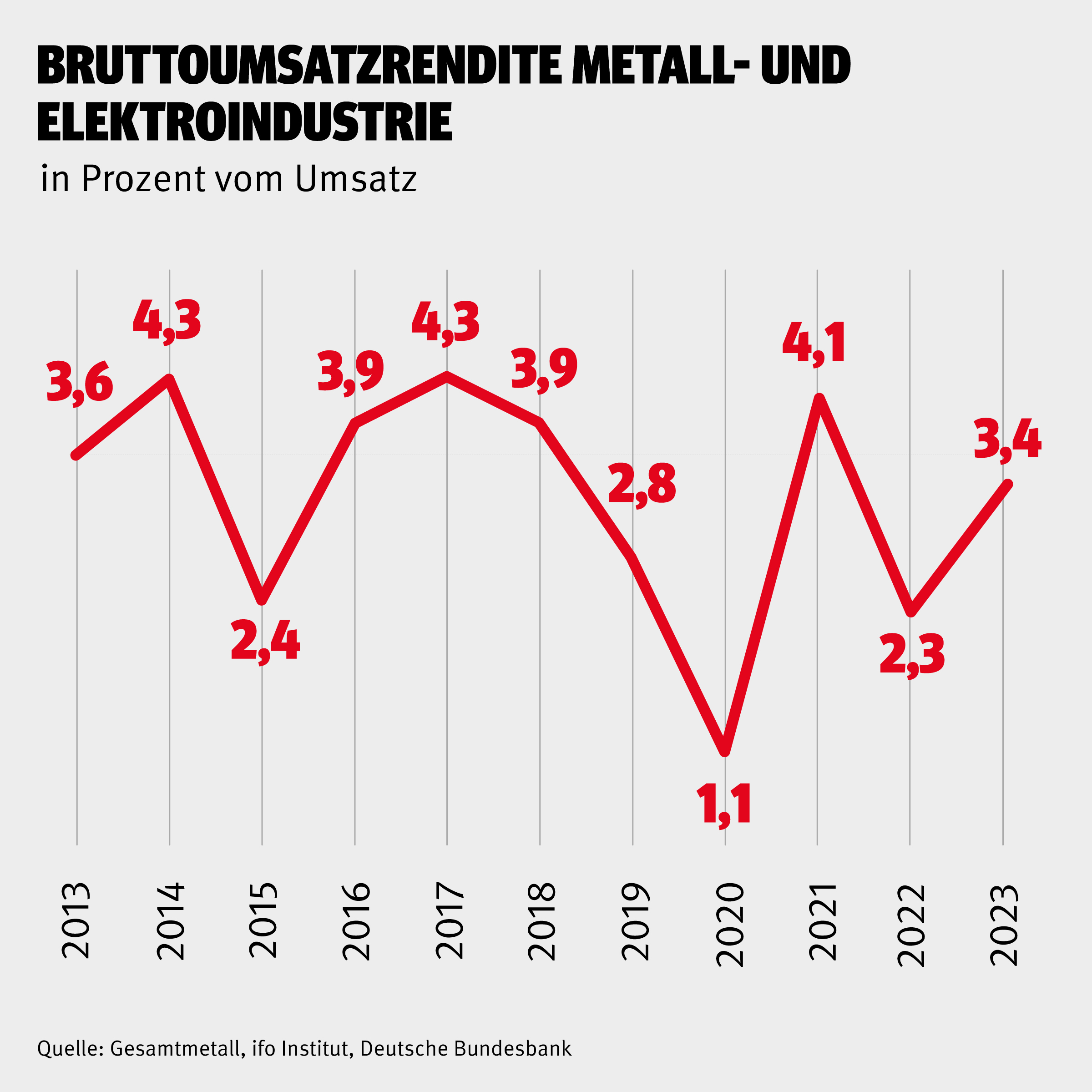
Furthermore, many companies are still making healthy profits. The return on sales for companies in the metal and electrical industries stood at 3.4 percent gross in 2023 (chart), and for publicly traded companies in the metal and electrical industries, it was as high as 8.5 percent. Only 22 percent of the 318,000 employees surveyed by IG Metall rate the situation at their company as poor.
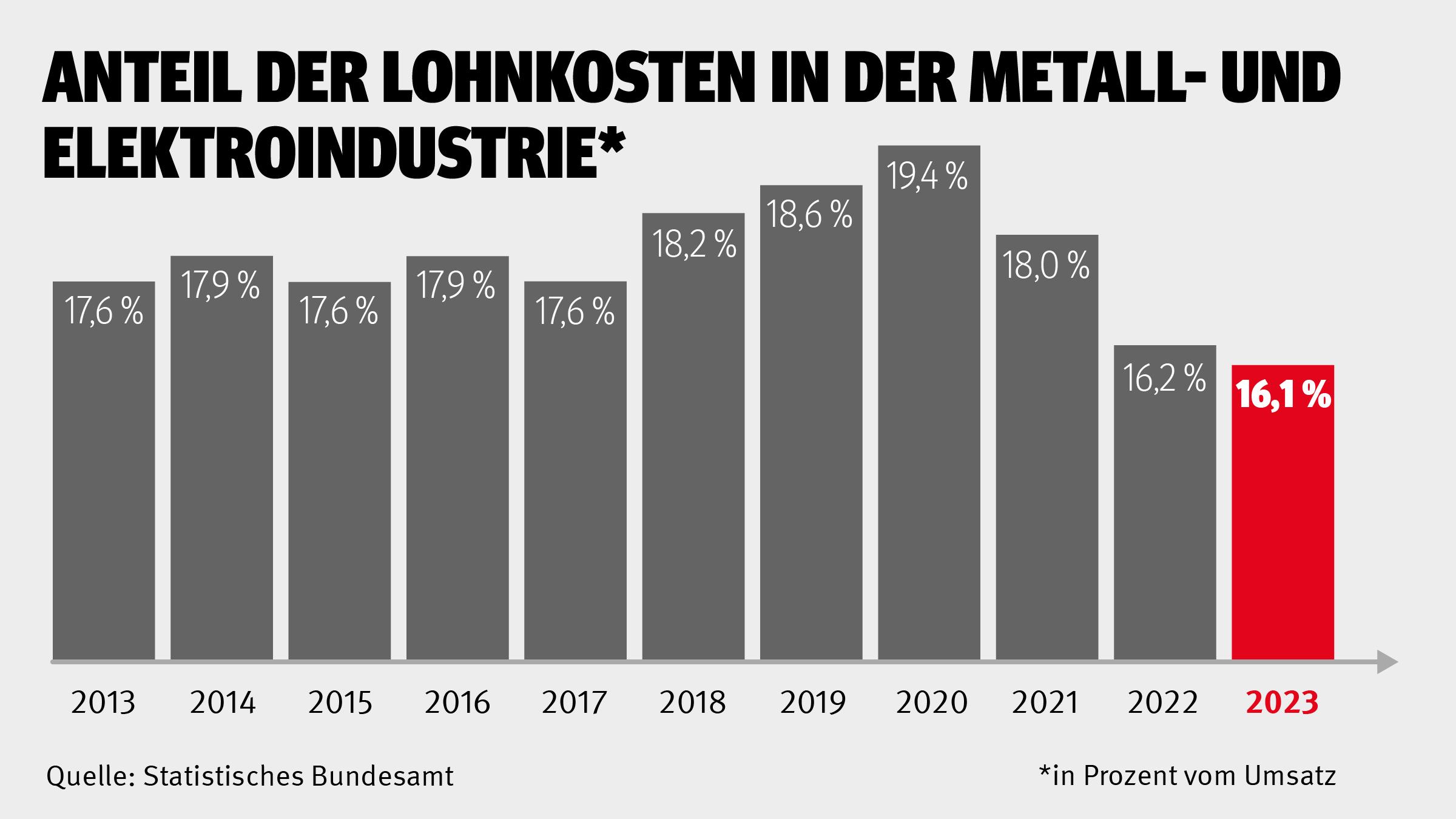
Finally, the share of labor costs in the metal and electrical industries stood at just 16.1 percent in 2023, albeit due to increased energy costs.
Therefore: A 7 percent pay increase is affordable—and an additional 170 euros for apprentices is not excessive. “With our demand, we respect the varying situations of companies, because we’re not lumping them all together,” emphasizes Nadine Boguslawski, who is responsible for collective bargaining policy on the IG Metall executive board. “In return, we expect employers to respect the situation and the realities of life faced by employees.”
Employers Reject Demands
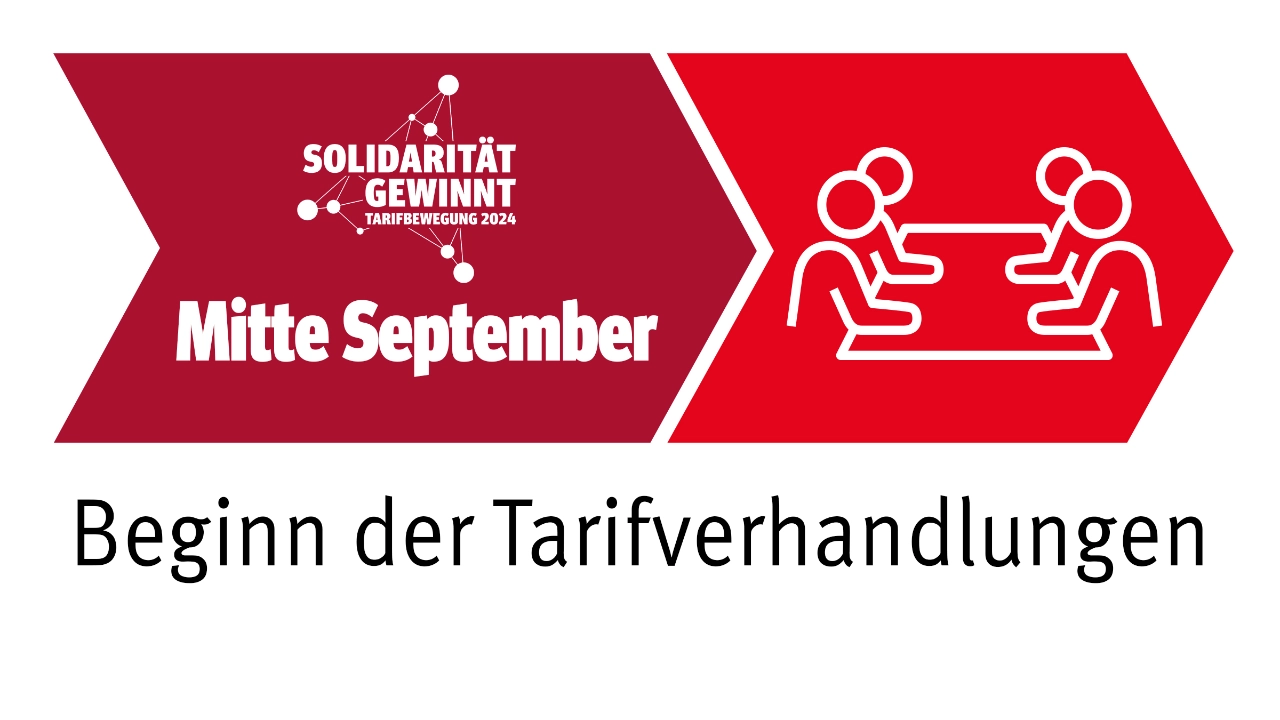
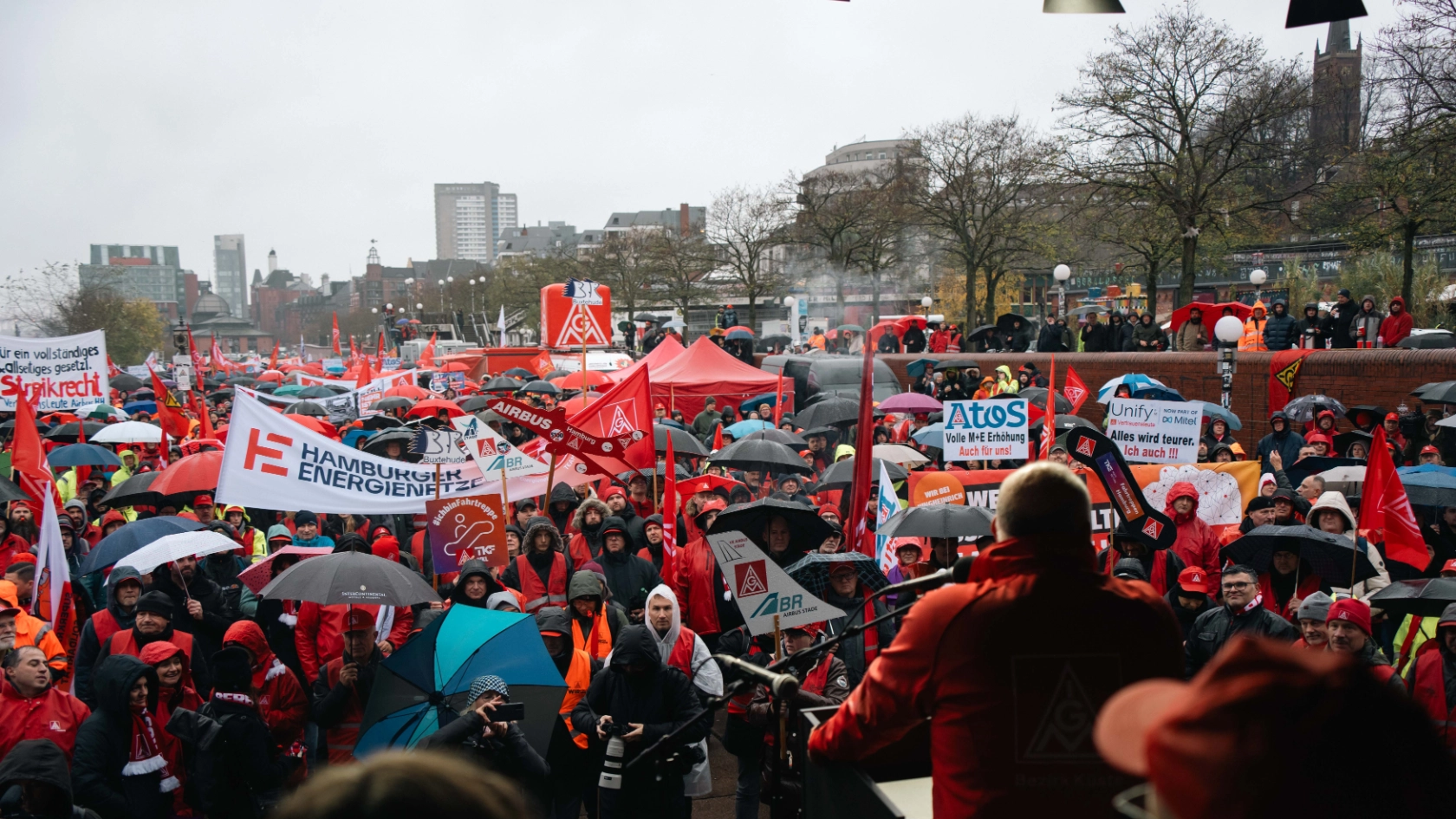
Collective bargaining negotiations have been underway since September 11. So far, employers have rejected IG Metall’s demands, citing the poor economic situation and threatening to cut 300,000 jobs.
They also claim that even with a pay raise, workers would not increase their spending but would save even more. In fact, however, the savings rate stands at 11 percent—a perfectly normal figure. During the COVID-19 years and the boom years of the 2010s, the savings rate was significantly higher. Moreover, it is primarily those in the higher income brackets who are saving. The lower half of the population saves virtually nothing.
Enough with the threats of closures and relocations. Workers need security. With its 11-point plan, IG Metall is calling on employers to demonstrate corporate responsibility for our industrial nation, Germany, and to invest—but policymakers must also step up: They must invest in infrastructure and education through an investment program totaling 60 billion euros annually over the next ten years.
You can find our 11-point plan here.
You can find the current status of collective bargaining negotiations here.













To load this video, you must enable YouTube cookies and thereby agree to the YouTube privacy policy.