The 72,000 workers in the steel industry in northwestern Germany will receive a significant pay raise—and an additional vacation allowance that can be converted into days off. IG Metall and the German Steel Employers’ Association reached this agreement in Düsseldorf overnight from Saturday to Sunday—after 16 hours of negotiations.
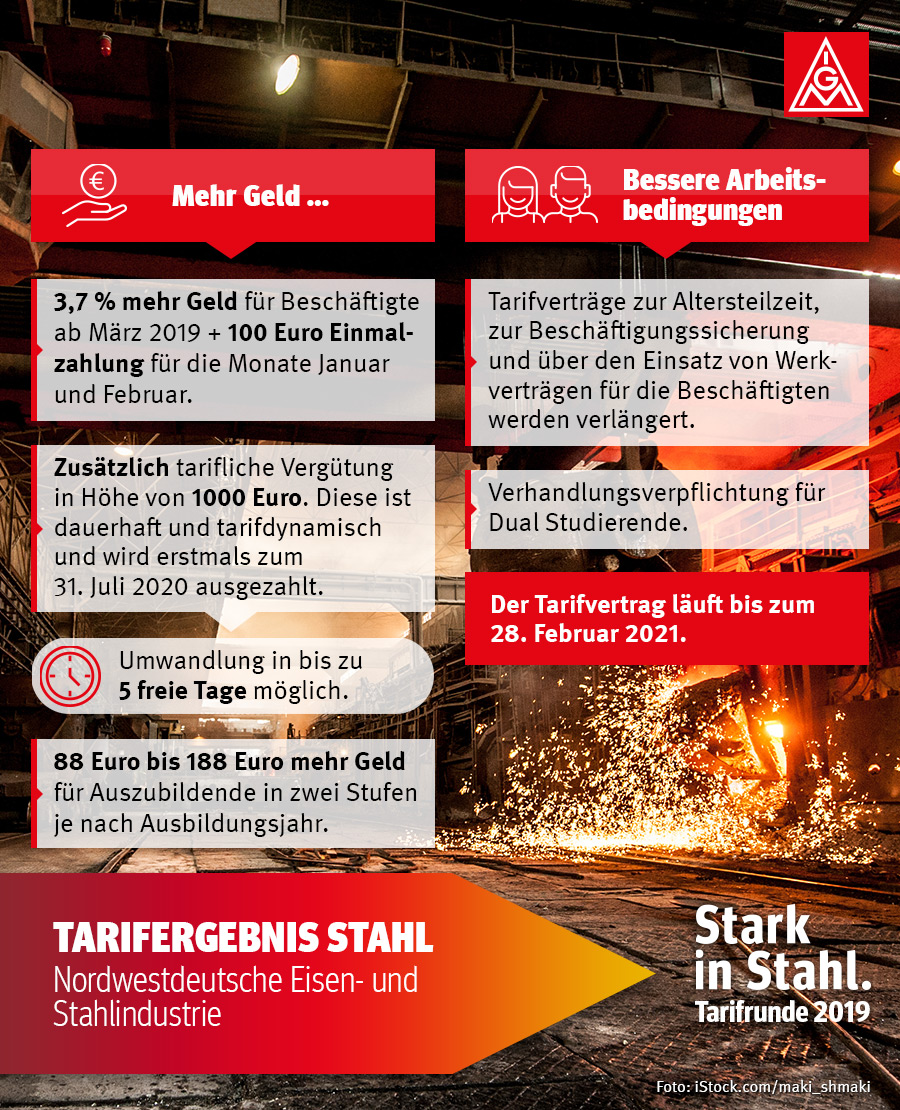
For January and February 2019, there will be a one-time payment of 100 euros. Retroactive to March, wages and salaries will increase by 3.7 percent. Apprentices will receive a two-stage increase in their apprenticeship stipend ranging from 88 to 188 euros, depending on their year of training; this corresponds to an increase of 9.9 to 18.7 percent.
Employees can convert compensation into time off
Starting in 2020, all employees will receive an additional vacation allowance of 1,000 euros, which will be paid out in July. This allowance is index-linked, meaning it will be increased regularly. Employees can convert this allowance into days off. Up to five days off are possible. The number of days off is determined by the total number of requests within a company. The principle of communicating vessels applies: If there are many requests, the number of days off available to each individual decreases. If not all requested days off can be taken, they will be paid out.
The collective bargaining agreements on partial retirement, job security, and contract work have been extended. In addition, an obligation to negotiate collective bargaining coverage for dual-track students was agreed upon.
The collective bargaining agreement has a term of 26 months and is valid through February 2021.
“The collective bargaining agreement has a strong social component”
“Employees will receive a significant increase in their real income. Furthermore, the option to convert the additional collective bargaining allowance of 1,000 euros into days off provides greater autonomy over working hours and alleviates the strain of shift work,” said Jörg Hofmann, President of IG Metall. “Following the collective bargaining agreement in the metal and electrical industries, we have now taken an important step toward greater autonomy over working hours in the steel industry as well. With the disproportionately large increase in apprenticeship wages, we are also ensuring the competitiveness of steel companies in attracting young skilled workers in times of change.”
Knut Giesler, IG Metall district director for North Rhine-Westphalia and chief negotiator, said: “The result is impressive. We’ve secured a substantial pay increase. The lower pay grades, in particular, stand to benefit greatly from the additional 1,000 euros in collectively bargained compensation. This gives the collective bargaining agreement a strong social component.”
Strong Support from Workers
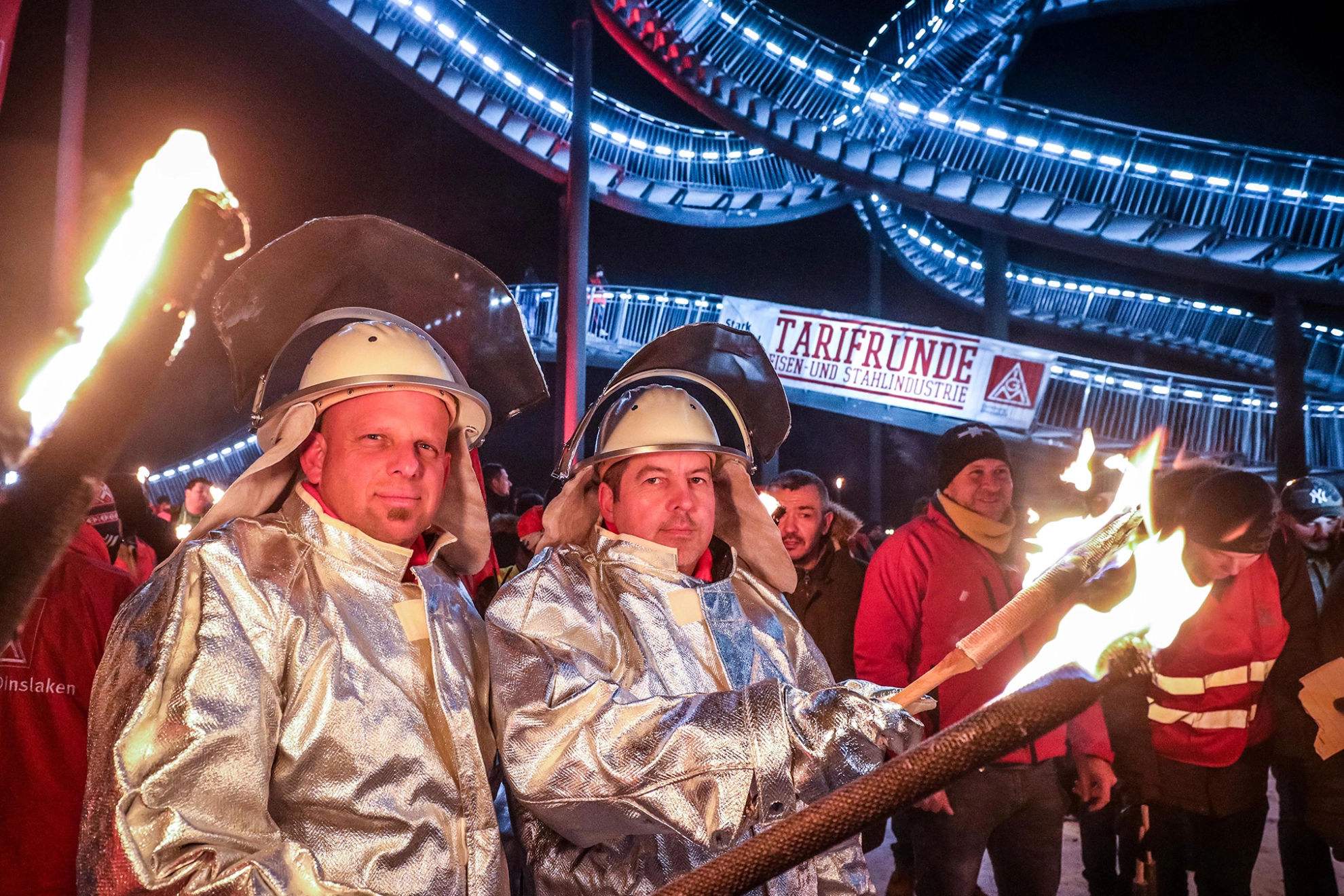
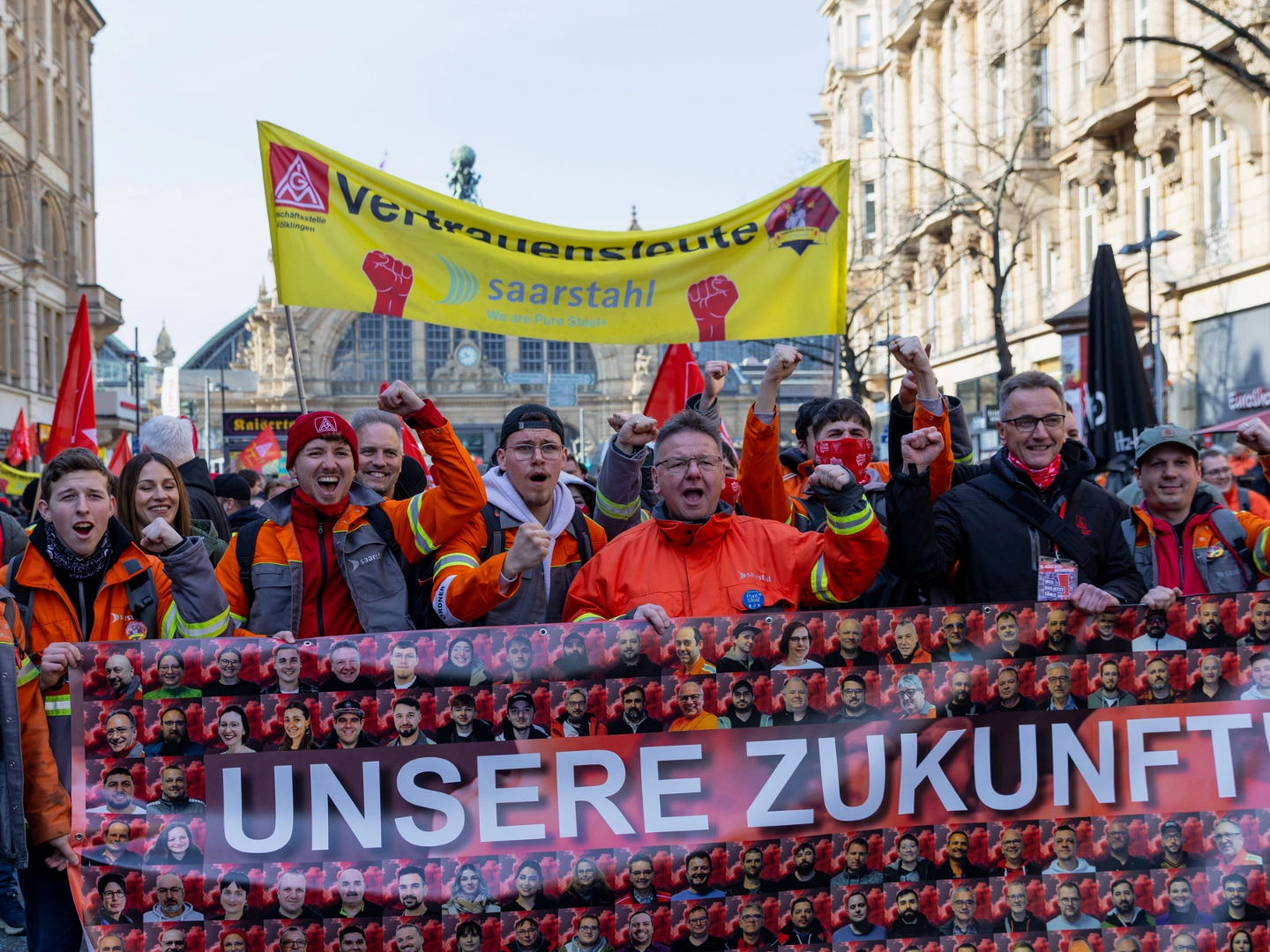
This outcome in the steel industry of northwestern Germany was made possible by the enormous pressure exerted by the employees. A total of 26,000 steelworkers supported IG Metall’s demands. “I would like to express my sincere thanks to everyone for this,” said Giesler. “Without this strong support, we would not have been able to secure this major collective bargaining package.”