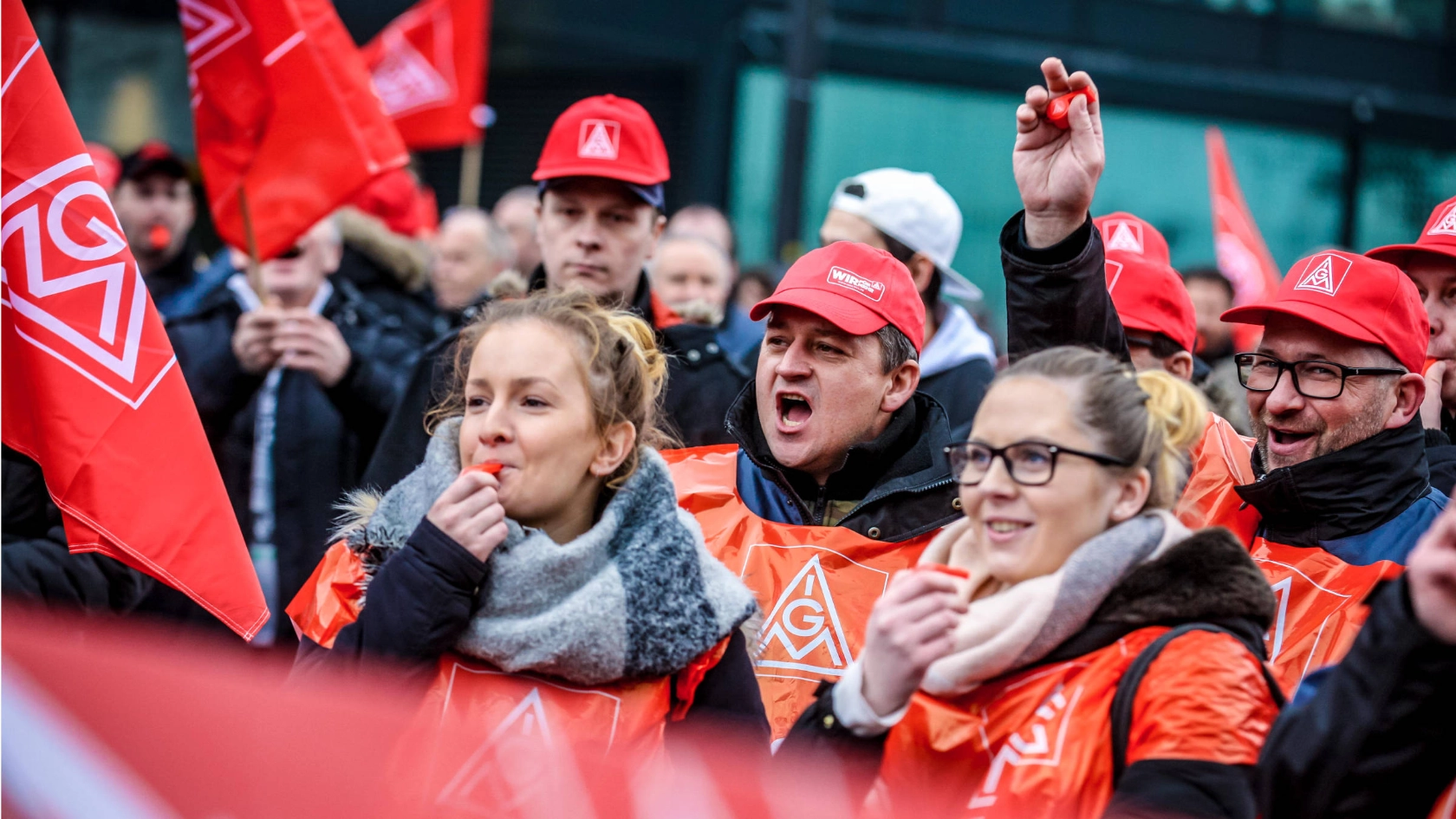
Automaker BMW plans to award logistics services in vehicle and component manufacturing to external companies in the future only if those companies have negotiated a collective bargaining agreement with us on behalf of their employees. Group management and the General Works Council have agreed to this in a corresponding “Memorandum of Understanding.”
Outsourcing services is also common practice at BMW. At the Wackersdorf production site in Bavaria, for example, parts of the logistics operations were outsourced via a contract for services to the Bremen-based company BLG. On behalf of BMW, the company packs auto parts for shipment to assembly plants abroad. And in Neutraubling, near Regensburg, around 850 employees of the logistics provider Syncreon prepare auto parts for BMW for worldwide shipment.
Same Work, Unequal Conditions
It is not uncommon for service providers and regular employees to work side by side. However, the same work does not necessarily mean the same conditions: “There are increasingly frequent cases of a two-tier system among employees within a single value chain: on the one hand, good working conditions thanks to collective bargaining agreements; on the other, significantly worse or even precarious conditions,” says Jürgen Wechsler, district director of IG Metall in Bavaria. He views the BMW agreement as a success in the fight against poorer working conditions for contract workers.
Our goal is to prevent the outsourcing of work from core operations wherever possible. Where that is not possible, the first step is to establish works councils that help shape working conditions in the employees’ best interests: for example, when it comes to working hours and overtime, training and continuing education, or allowances, incentives, and bonuses. The works council also has a say in matters of layoffs and new hires. In the second step, we then work toward concluding a collective bargaining agreement with the respective company so that employees end up with more money in their pockets.
Better Off with a Company Collective Bargaining Agreement
Significant improvements for employees have already been achieved at BMW service providers such as Schnellecke, Faurecia, WISAG, and Voith Industrial. There, we were able to secure company-level collective bargaining agreements that include substantial pay raises and, in some cases, shorter working hours for employees.
As part of the agreement reached, further improvements will follow. “We want good working conditions for all employees—not only when they work at BMW, but also when they work for BMW. I will continue to advocate for the principle of ‘one plant—one workforce—one collective bargaining agreement’ to apply at BMW,” says Manfred Schoch, Chairman of the BMW General Works Council.