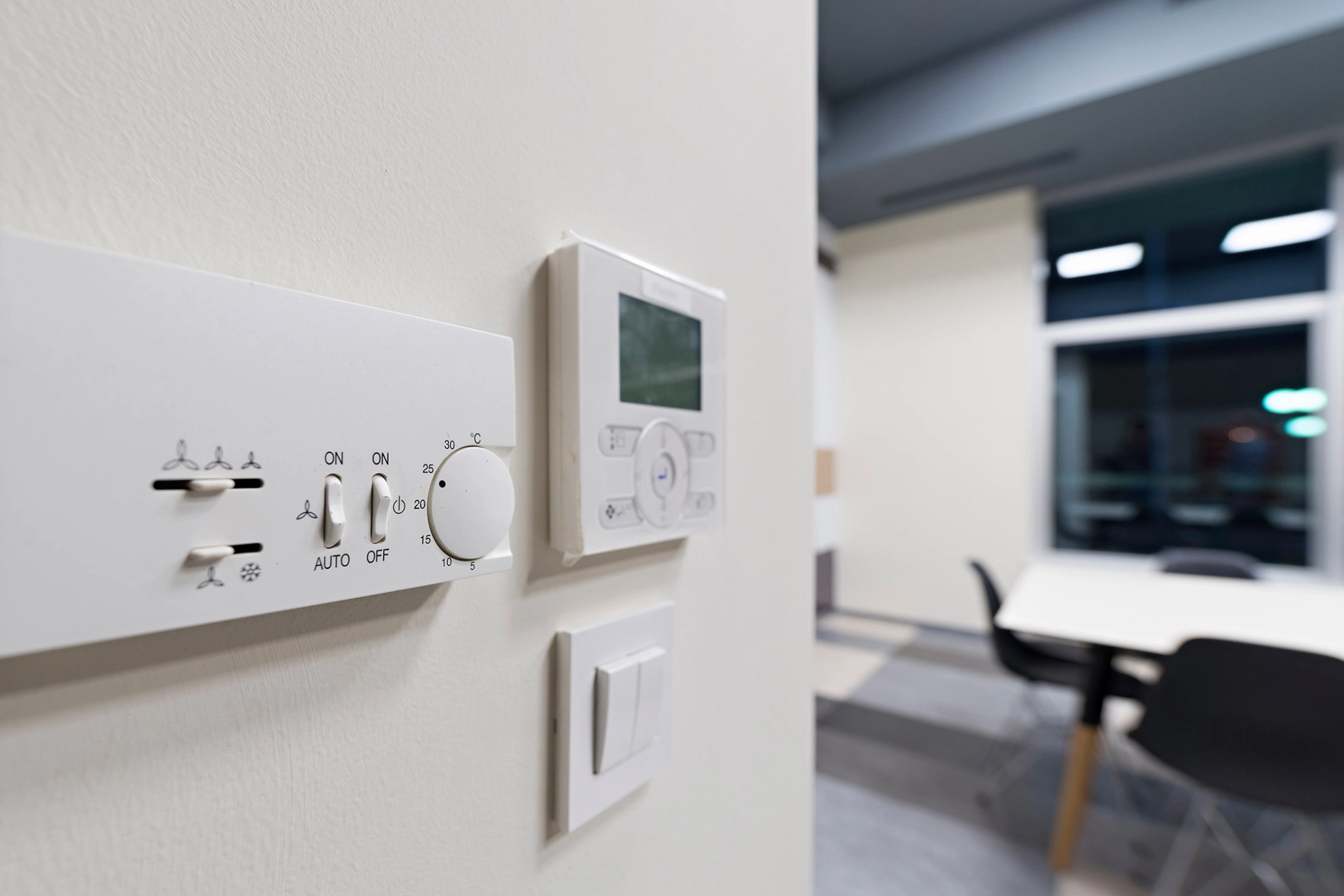
Fresh air, a comfortable temperature, adequate humidity: The criteria for a good indoor climate almost sound like something you’d find in a wellness spa. But anyone who downplays these factors is mistaken.
The indoor climate has a huge impact on performance. Only those who find the conditions at work comfortable are fully operational and able to concentrate without distraction.
Indoor climate affects people
Thermal comfort —that’s the technical term for a neutral perception of the climate. This means that the combination of temperature, air movement, humidity, and air quality is balanced.
People then have a relatively low metabolic rate and energy expenditure. Their performance reserves are high. Conversely, a poor indoor climate forces the body to compensate, thereby impairing work performance.
Dry air often leads to:
- Dehydration
- Mucous membrane irritation
- Eye irritation
- Weakened immune system
Drafts or cold air currents from air conditioning units often cause neck and back pain. Heat can be responsible for:
- Fluid loss
- Cardiovascular weakness and dizziness
- Rapid fatigue
- Nausea
These correlations have been well researched
The recommended air temperature for office work is 20 degrees. It is measured 60 centimeters above the floor for sedentary work and 110 centimeters above the floor for standing work. The optimal humidity level is between 40 and 60 percent.
“The links between indoor climate, health, and performance are well documented. It is also well known what constitutes a good indoor climate and what contributes to it,” says Manfred Scherbaum, occupational health expert at IG Metall. This knowledge must be put into practice in the workplace. “If necessary, with the involvement of experts.”
Tips for a Good Indoor Climate in Winter
Employees can do several things to promote a good indoor climate:
- Ventilate regularly and ensure a supply of fresh air
- Open windows wide instead of leaving them ajar
- Don’t overheat the room—this lowers humidity.
- Do not place damp cloths or water containers on radiators—they are breeding grounds for bacteria
- Houseplants provide oxygen and humidity (e.g., ferns). Some can even absorb pollutants (e.g., rubber plant).
- Printers and copiers should be kept in a separate room whenever possible. They emit heat and often fine dust as well.
Stay Informed and Have a Say
Employers have a responsibility regarding indoor climate. The Workplace Ordinance specifies the basic requirements companies must follow. Details can be found in the so-called “Technical Rules”—for example, regarding room temperature and ventilation.
As for room temperature, it must be “conducive to good health.” The same applies to the supply of breathable air. If an air conditioning system is necessary to provide fresh air in a building, it must be “fully operational at all times.” There must also be no disruptive drafts, and the air from the air conditioning system must not be contaminated with substances or particles that pose a health risk.
In Case of Doubt, Contact the Works Council
But what should you do if your employer fails to meet these obligations? The first point of contact is the works council. It has co-determination rights regarding health and safety and can enforce protective measures for employees.
Note: Tips for dealing with dust and fumes in assembly halls and workshops can be found here.