Compensation for Night Work
If an early shift follows a night shift, a single day off is not enough to make up for the sleep deficit. A minimum of two days off is required. Furthermore, switching backward from the late shift to the early shift or from the night shift to the late shift is not permitted. This is because it fails to meet the minimum of eleven hours of rest time required under Section 5 of the Working Hours Act.
Normally, the collective bargaining parties have specified in their agreements what compensation employees receive for their night work hours. Where such collective bargaining provisions for compensation do not exist, the law applies: Employees must then be granted an appropriate number of paid days off or receive an appropriate premium on top of their normal gross wages. In the interest of protecting employees’ health, time-off compensation should always take precedence over financial compensation for the special stresses associated with night work.
In principle, at least one evening per week, between Monday and Friday, should be off.
At least 15 Sundays off
Every employee must have at least 15 Sundays off per year. The regulations governing working hours, breaks, and rest periods also apply on Sundays and holidays. The same applies to the statutory maximum working hours and compensation periods, which must not be exceeded by working on Sundays and holidays.
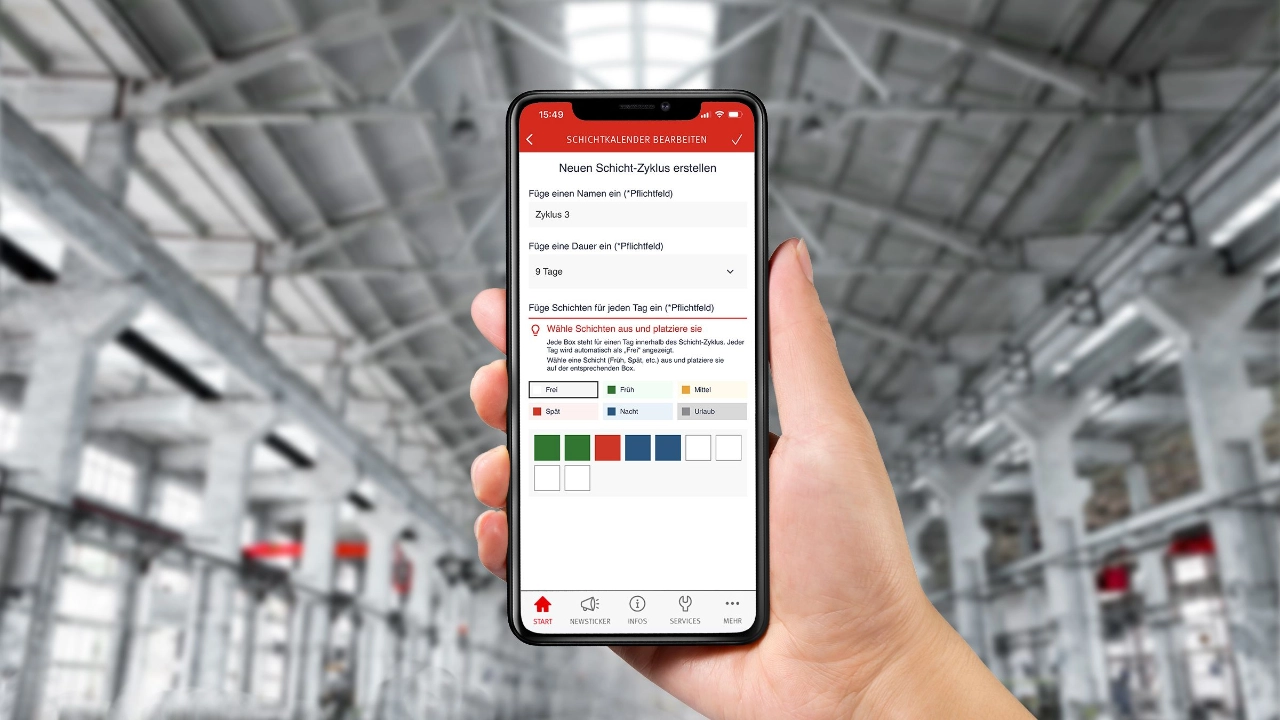
Many surveys show that shift workers want more control over their time and greater predictability in their daily lives. Successful workplace examples—such as a workgroup organizing its own shifts using a smartphone app—prove that this is possible. Sufficient notice periods are also necessary so that individuals can plan their daily lives with stability. In addition, at least one weekend per month should be free of work to allow time for family and social interactions.
What to Keep in Mind About Breaks
Breaks should not be scheduled too close to the beginning or end of a shift. Several short breaks provide more rest than one or a few longer ones. However, breaks for meals must be long enough to avoid having to eat in a hurry. There are collective bargaining agreements governing meal breaks in three-shift operations. A 30-minute break is required no later than after six hours of work. Anyone working more than nine hours a day must take at least a 45-minute break in accordance with Section 4 of the Working Hours Act.
Sleep Tips for Shift Work
Working at night disrupts your circadian rhythm. Many shift workers lack restful sleep, and many colleagues suffer from sleep disorders. The rest lost due to night work cannot be fully made up for during the day. This is because it’s noisier during the day, the sun is shining, it’s warmer, and everyone else is awake. As a result, the deep sleep and dream phases—which are crucial for recovery—occur less frequently or are less intense than during nighttime sleep.
Those affected should therefore take precautions: It’s advisable to turn off the phone and doorbell, as well as to thoroughly ventilate and darken the bedroom. Sleep-inducing medications or alcohol should be avoided, as should coffee and other caffeinated beverages—especially during the last four hours before bedtime. Establishing consistent rituals after work can signal to the body that it’s almost time for bed. This could be a specific piece of music, a favorite scent, or even a hot bath.
Nutrition Tips
Since shift workers have a different daily rhythm, they must also eat at different times. Those affected should consume at least three to five smaller meals throughout their waking hours. For the morning shift, a snack in the morning and a hot main meal at noon are recommended.
The night shift poses a real challenge to the body’s natural rhythm. It usually begins between 8:00 and 10:00 p.m. and lasts until the next morning. Before starting work, night-shift workers should eat a light meal and a main meal around midnight. Between 4 and 5 a.m., a light snack can be consumed, such as fruit, fruit compote, yogurt, a slice of bread with butter, muesli, or a warm broth. This helps prevent blood sugar levels from dropping too low.
Since appetite and hunger are reduced at night due to various hormonal mechanisms, most shift workers do not actually need food. Therefore, only those who are hungry should eat. Meals should be easily digestible and not too heavy. This helps prevent obesity and reduces the risk of developing diabetes.
Consult the Works Council
The works council has the right to participate in decisions regarding the introduction and organization of shift work—regardless of whether the entire company operates on shifts or only certain departments do. It can also influence decisions regarding breaks, shift handover times, compensation for these periods, and staffing levels. In most companies, works councils negotiate company agreements on shift work. These agreements set out the details. The same advice that IG Metall gives on other issues applies to shift work as well: If you have a problem, you should speak with your local works council representative.