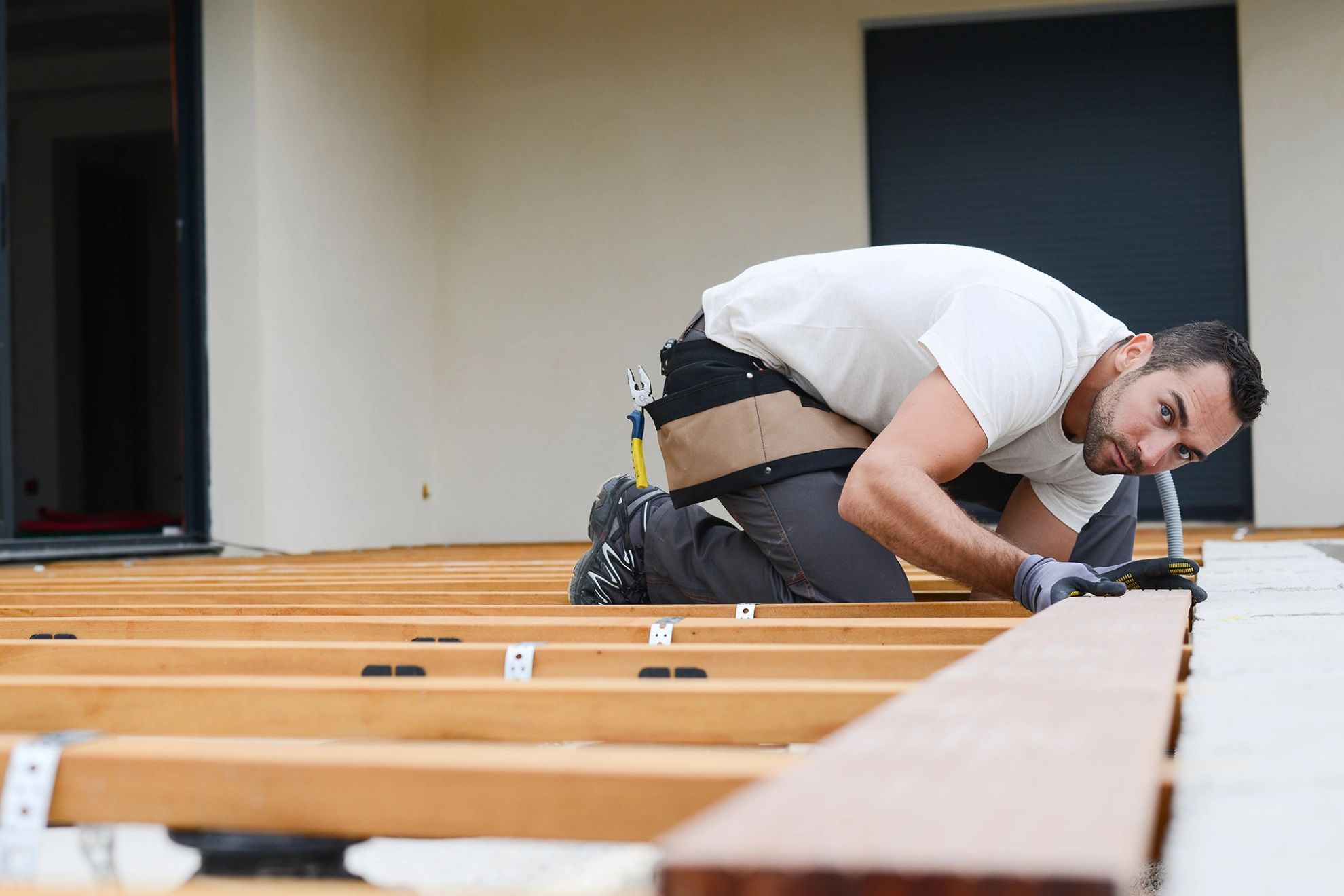
On average, a female worker employed in a skilled trades business earns nearly 1,000 euros less than an employee in another type of business. While skilled trades workers earn an average of 3,217 euros gross per month, the average wage across all economic sectors is 4,180 euros. This was determined by researchers Katarzyna Haverkamp and Kaja Fredriksen from the Economic Institute for Small and Medium-Sized Enterprises and Skilled Trades at the University of Göttingen in a study titled“Wage Structure in the Skilled Trades”commissioned by the Hans Böckler Foundation.
Skilled tradespeople constitute a significant group among the working population. Well over five million people—12.5 percent of all employees—belong to this group. They work in professions as diverse as hairdressers, butchers, masons, and roofers. 1.8 million of them work in the professions for which we, as a union, are responsible: for example, as automotive technicians, carpenters, metalworkers, dental technicians, and in companies specializing in plumbing, heating, and air conditioning. Where does the wage gap between them and other workers come from?
Are they less qualified?
Are skilled tradespeople less qualified than workers in other sectors? The Göttingen study shows that this cannot be the reason. After all, there are hardly any differences in education. Only 7 percent of skilled tradespeople have not completed vocational training or hold a college degree, compared to just over 8 percent in other industries. The two researchers found that the higher the level of education and the more qualified the workers are, the wider the wage gap becomes.
For unskilled and semi-skilled workers, wages in the skilled trades and the economy as a whole hardly differ. But skilled workers in the trades earn significantly less: an average of 13.89 euros gross per hour. In the economy as a whole, the average wage is 16.27 euros. For highly qualified professionals, such as master craftsmen, technicians, or business specialists, the gap is 20.54 versus 24.88 euros.
Larger Companies = Larger Gap
Nor is it the case that women are driving down wages in the skilled trades. While female employees do earn less on average than men, only 18 percent of workers in the skilled trades are women. Across all sectors, their share is just under 38 percent. If the “gender pay gap” were a factor, it would therefore have to have a positive effect on average wages in the skilled trades.
The fact that women in the skilled trades work more often in small businesses than employees in other sectors (one in five works in a business with nine or fewer employees, compared to just 7.6 percent in other sectors) accounts for no more than four to seven percent of the difference. While wages in large industrial companies are generally higher than in small firms, the situation is different in the skilled trades: the larger the skilled trades business, the wider the wage gap becomes compared to other businesses of a similar size.
70 Percent Not Covered by Collective Bargaining Agreements
So there must be another reason for such a wide wage gap. “The main reason is that many companies and associations are increasingly less bound by collective bargaining agreements today,” says Ralf Kutzner, who is responsible for the skilled trades on our board. “Collective bargaining agreements apply to less than 30 percent of workers in the skilled trades.” In the economy as a whole, however, about half of all employees benefit from wages and working conditions set by collective bargaining agreements. This also explains why skilled workers in the skilled trades earn less. After all, it is the collective bargaining agreements that ensure qualifications are appropriately reflected in wages.
Many businesses, such as car dealerships, have opted out of collective bargaining agreements because they wanted to undercut their competitors through price dumping. Without a collective bargaining agreement, they were able to drive down wages, extend working hours, and cut vacation days. However, the damage to the companies themselves was greater than the benefit. At the moment, amid a booming economy, it is primarily the owners of skilled trades businesses who are complaining about a shortage of skilled workers. In a recent survey, 86 percent stated that they are unable to fill open positions.
Young People Are Leaving
High school graduates prefer to apply for jobs in industry because the training conditions and compensation are better there. Of those who complete an apprenticeship in the skilled trades, 35 percent move directly to industry after their final exam. Ralf Kutzner is advocating for a minimum apprenticeship wage that no skilled trades business may fall below.
“But the guilds and guild associations must finally do their part as well,” Kutzner demands. Under current law, guilds are required to conclude collective bargaining agreements. This has been confirmed by an expert opinion from legal scholar Winfried Kluth. “It is actually a privilege for the guilds to be able to fulfill a social welfare function through collective bargaining. Anyone who abandons this is renouncing the social partnership,” says Ralf Kutzner. “The guilds must commit to their regulatory responsibilities and resume concluding regional collective bargaining agreements with us,” he urges. However, since many are failing to do so, the legislature must act. Kutzner demands that guilds which fail to do their job lose their status as public-law institutions.
The Future Lies with the Majority
“If companies continue to dig in their heels, however, we are also prepared to fight for collective bargaining agreements, company by company. To be able to exert the necessary pressure within companies, though, it’s important that as many skilled trades workers as possible become union members,” says Kutzner. We especially want to reach out to young workers.
Rather than fighting with uncooperative guilds and company executives over collective bargaining coverage, Ralf Kutzner would prefer to discuss with the skilled trades associations how employers and we can jointly contribute our expertise to shape working conditions in a way that enables the industry to successfully navigate the future. A lot will change in the near future. Digitalization is also a major issue in the skilled trades. Take auto repair shops, for example. Or building services engineering: the digitally networked “smart home” will revolutionize the work of electricians and those in the plumbing, heating, and air conditioning sectors. To prepare for this, businesses must ensure that both they and their employees are ready.