Automatic translation
This article has been translated automatically using computer technology. While we strive for accuracy, some wording or details may differ from those in the original article.
This translation was not manually reviewed. For important facts, quotations or legally sensitive information, please consult the German original. Individual selections, images, embedded media or technical terms may have been translated differently or incompletely.

Co-determination Laws Laws on employee co-determination in German companies

Democracy must not end at the factory gate. In German companies, employees have a say in decision-making. Employee participation is enshrined in various laws. Here is a brief historical overview.

Mehrere Männer, die klatschen, in einer Reihe.

11 December 2018 11 December 2018


Co-determination Act for the Coal and Steel Industries of 1951

In companies in the coal and steel industry—including mining, iron, and steel companies with more than 1,000 employees—so-called parity-based co-determination applies. This means that half of the supervisory board must consist of employees. In addition, there must be at least one neutral supervisory board member who breaks ties in votes. Furthermore, labor unions have the right to nominate a labor director as an equal member of the company’s executive board.


Works Constitution Act of 1952 and One-Third Participation Act of 2004

The Works Constitution Act governs employees’ participation rights within the company and the cooperation between their elected works councils and the employer. The Works Constitution Act of 1952 also contained provisions on employee co-determination in corporations not covered by the Coal and Steel Co-determination Act, which were significantly weaker: employees are allocated only one-third of the seats on the supervisory board. At the time, the trade unions viewed the provisions on co-determination in the 1952 Works Constitution Act as a major step backward—compared to the far-reaching co-determination, including on economic matters, that had existed in the postwar years. In 2004, the co-determination rights were removed from the Works Constitution Act and transferred , with minor changes, to the One-Third Participation Act . The One-Third Participation Act applies to corporations (AG, GmbH, KGaA, VVaG) with more than 500 employees.


Co-Determination Act of 1976

The 1976 Employee Co-determination Act applies to corporations (such as AG, KGaA, and GmbH) with more than 2,000 employees that are not subject to the Coal and Steel Co-determination Act. Under the 1976 Co-Determination Act, parity-based co-determination applies. This means that half of the seats on the supervisory board are filled by elected employee representatives. However, management appoints the chair of the supervisory board, who has a double vote . As a result, in the event of a tie, the shareholders always have one more vote.


We explain what co-determination is and how it helps employees

We explain how co-determination works in the workplace

We explain how co-determination works on the supervisory board

Co-determination
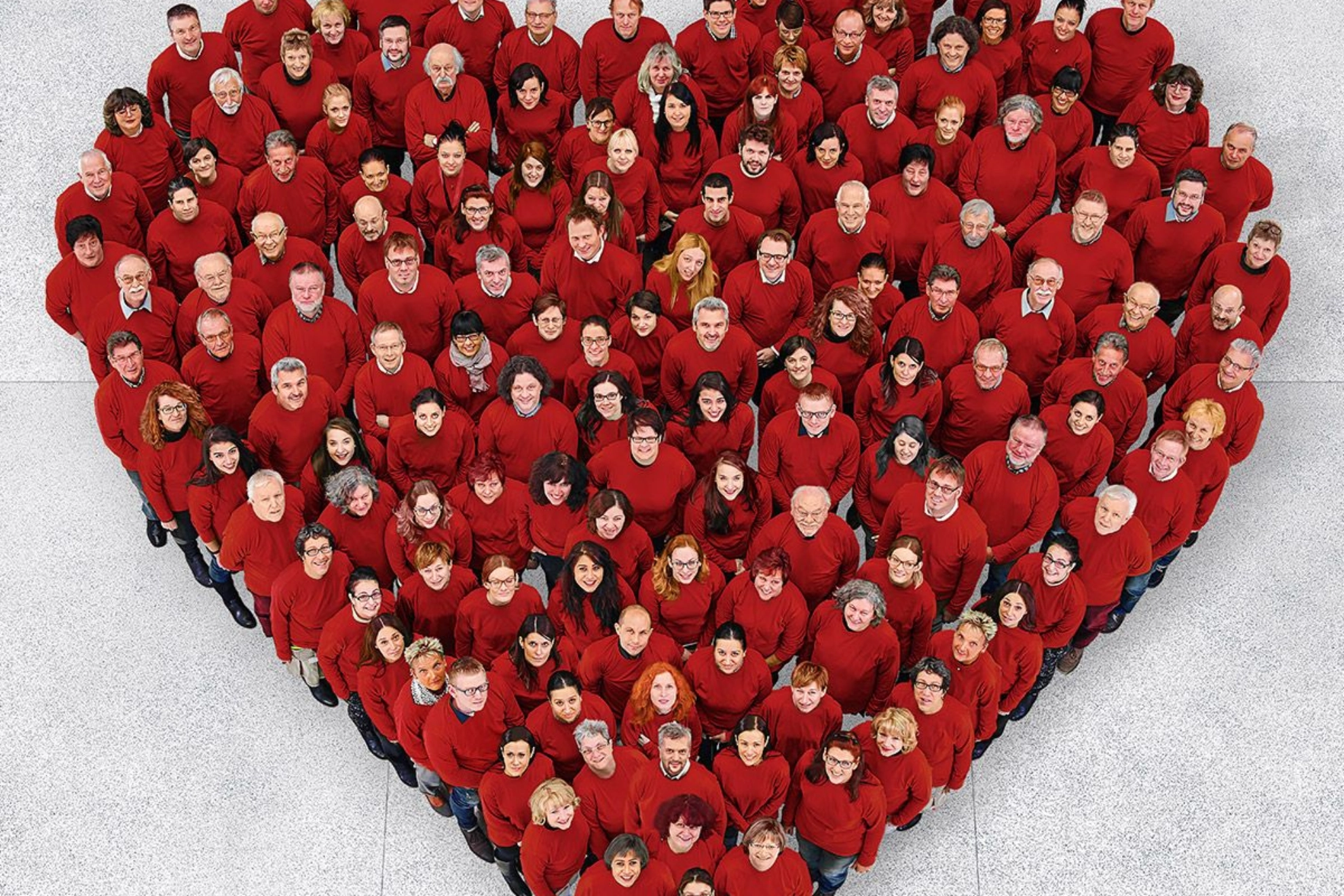
Beschäftigte stehen zu einem großen Herz zusammen
Become a Member
Become part of a strong community

From legal protection in labor and social security matters to fair wages and salaries—we provide personalized and reliable support to our members.

New on igmetall.de
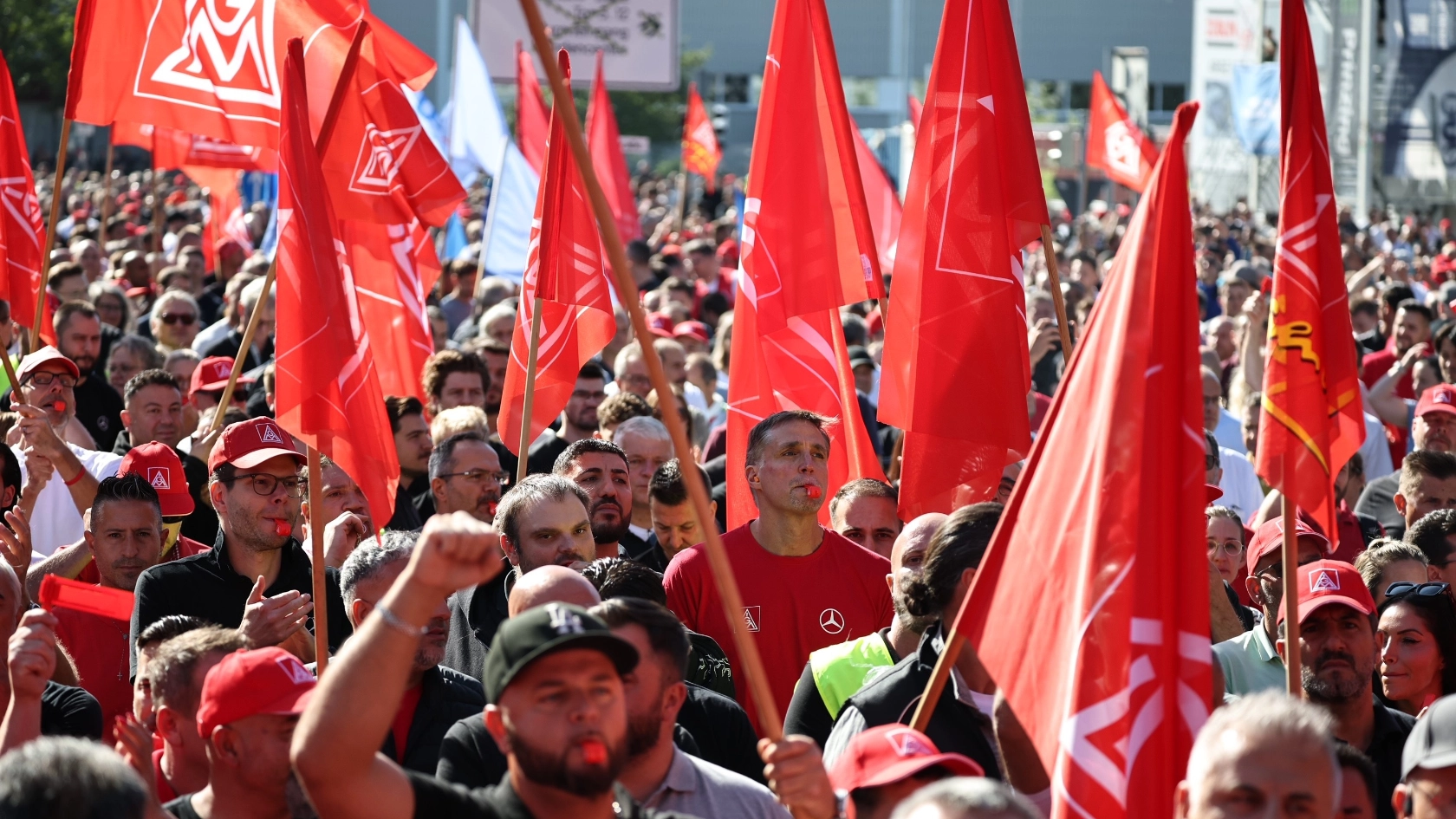
Aktionstag bei Mercedes Benz, Daimler, in Sindelfingen gegen die Angriffe auf Beschäftigten in der Automobilindustrie.
Resistance to Attempts at Drastic Cuts Auto industry workers issue a warning
Sie wollen doch nur dein Bestes
Redistribution Making Germany more equitable: We need this tax reform now
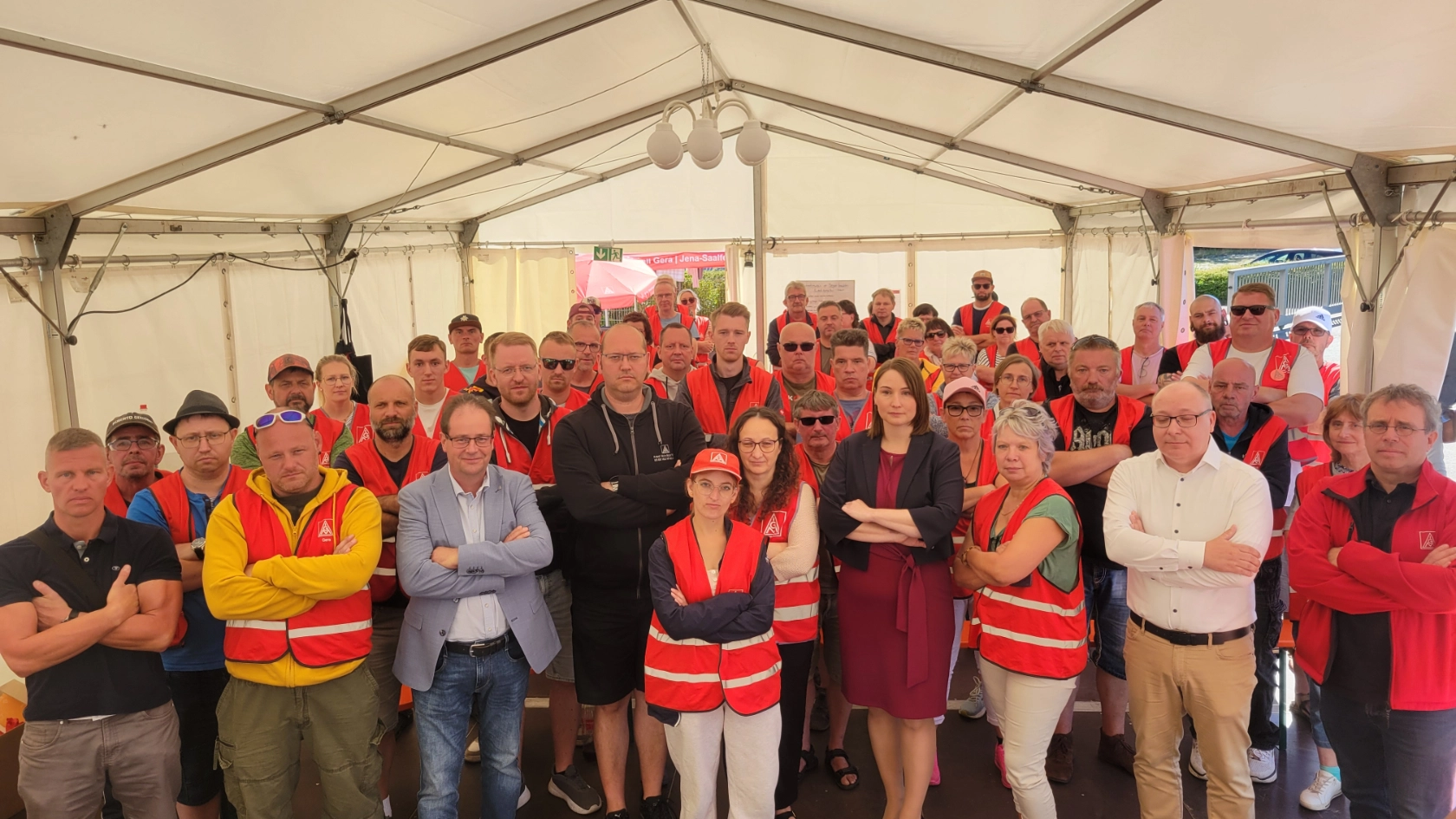
Der Streik bei Kelvion in Nobitz-Wilchwitz begann am 4. August 2026. Die Geschäftsleitung will nach Sarstedt/Niedersachsen verlagern - obwohl die Produktion in Wilchwitz profitabel und bis ins nächste Jahr ausgelastet ist.
"It’s worth fighting for!" Kelvion workers strike for a social collective bargaining agreement
Beschäftigter arbeitet an einem Getriebe in einer Fabrik
Working Hours Why working longer doesn’t help—and actually does more harm than good
Ein männlicher Land- & Baumaschinenmechatroniker prüft einen Traktor mit einem Tablet
2026 Collective Bargaining Agreement for the Metalworking and Agricultural Engineering Sectors Greater Flexibility in the Metalworking and Agricultural Engineering Sectors in Lower Saxony and Bremen
Elektronikerin prüft die Spannung an einem Schaltschrank.
2026 Collective Bargaining Round for the Electrical Trades Wage Increase in the Electrical Trades in Berlin-Brandenburg
Benjamin Heine ist Mitarbeiter der BMA in Braunschweig
2026 Collective Bargaining Round for Metal Fabrication and Precision Engineering Higher Wages in the Metal Fabrication and Precision Engineering Sectors in Southwest Germany
Metall-Arbeiter beim Schleifen
2026 Collective Bargaining Round for the Metalworking Trade Employees in the Berlin-Brandenburg metalworking sector will receive higher pay
Beschäftigte von Thyssenkrupp demonstrieren in Essen am 23. Mai 2024 gegen das Vorgehen der Geschäftsführung beim geplanten Teilverkauf des Unternehmens.
Defend the welfare state All dates for nationwide actions against cuts to social services
IGM Aktion VW Wolfsburg
On September 21, things will get loud Nationwide Day of Action: Auto Industry Workers Fight Back Against Mass Layoffs
Auszubildender in einer Schreinerei
Apprenticeship Wages Questions and Answers About Apprenticeship Wages
MINT-Berufe, etwa Industriemechanikerin oder Industriemechaniker, sind bei den Betrieben sehr gefragt.
When Your Apprenticeship Isn’t Going Well Having problems with your apprenticeship? We have solutions

Subscribe to the newsletter