July 1, 1957, was an important date for German workers: On this day, the Workers’ Sickness Act went into effect. For the first time in history, it granted workers the right to receive support from their employers in the event of illness—though initially, this was limited to a supplement. Previously, workers who were unable to work due to illness received sick pay from health insurance funds, which was significantly lower than their previous wages. The Workers’ Sickness Act now required employers to supplement these amounts: initially to 90 percent of wages starting on the third day of absence. Following a legislative amendment in 1961, this was raised to 100 percent starting on the second day of absence—for up to six weeks.
Metalworkers Strike for Continued Wage Payments
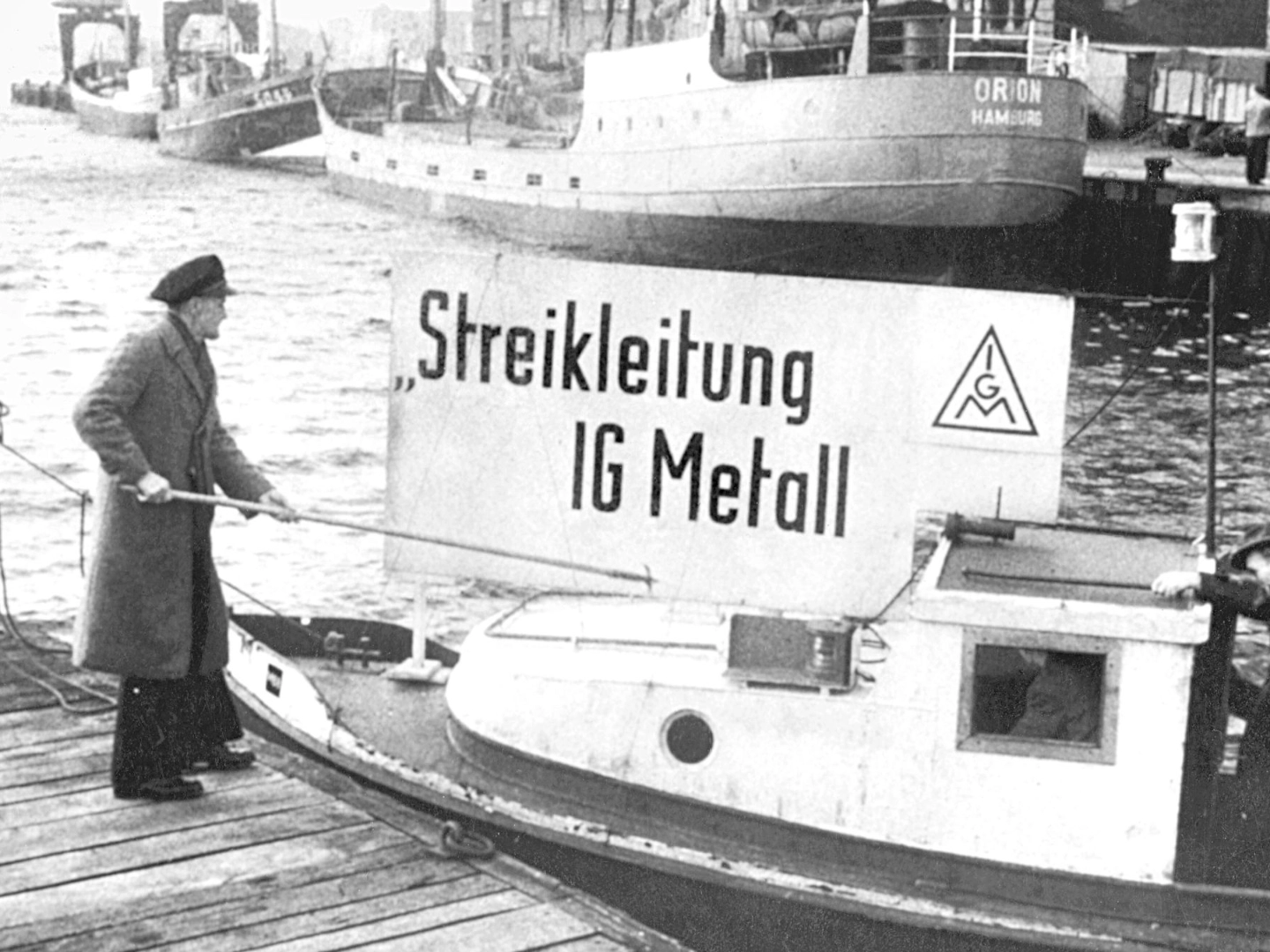
Employers had been required to continue paying their sick employees’ wages for six weeks since 1861. For about 100 years, industrial workers were treated unequally compared to their office-based colleagues. The fact that this finally came to an end between 1957 and 1961 was thanks to the production workers—metalworkers—and the IG Metall union. In 1956–57, more than 34,000 metalworkers in Schleswig-Holstein fought for a collective bargaining agreement guaranteeing continued pay during sick leave in a labor dispute that lasted several months. They went on strike for 114 days to achieve this. It was the longest strike since 1905 and the third-longest in the history of the Federal Republic. This labor dispute put pressure on the Bundestag to finally address the issue. And so, in 1957, the Occupational Diseases Act was enacted.
A Happy Ending?
Since 1994, the entitlements of blue-collar and white-collar workers have been uniformly regulated for everyone under the Continued Pay Act. A happy ending? At the moment, it looks that way. But that wasn’t always the case. Employers have repeatedly tried to roll back continued pay provisions—to cut costs. This was especially true in the 1990s. For example, association presidents advocated for the introduction of waiting periods: Employees would receive no pay for the first three days of incapacity for work. This met with fierce resistance from the unions. But in the final phase of the CDU-FDP coalition government under Chancellor Helmut Kohl, they achieved a victory. In 1996, the law was amended: Sick employees no longer received 100 percent of their net wages, but only 80 percent. The employers’ joy, however, was short-lived. In 1998, the year the Red-Green coalition government replaced the CDU-FDP cabinet, the amendment was overturned. Since then, the rule has been: full pay during sick leave.