Wood and Plastic
A 4.9 percent pay increase in two stages. Doubling of the Demographic Fund to support healthcare and partial retirement. IG Metall reached this collective bargaining agreement in October—and has since implemented it in an increasing number of bargaining regions.
Negotiations in the wood and plastics industry have been virtually concluded since December. Only Berlin and Brandenburg remain; negotiations are still ongoing there.
Companies in the wood and plastics industry have weathered the COVID-19 crisis relatively well; many have even increased their revenue. Nevertheless, employers are offering only 1.2 percent—and want to abolish the Demographic Fund. Among other things, this fund pays for partial retirement—which is particularly important for employees, many of whom are older.
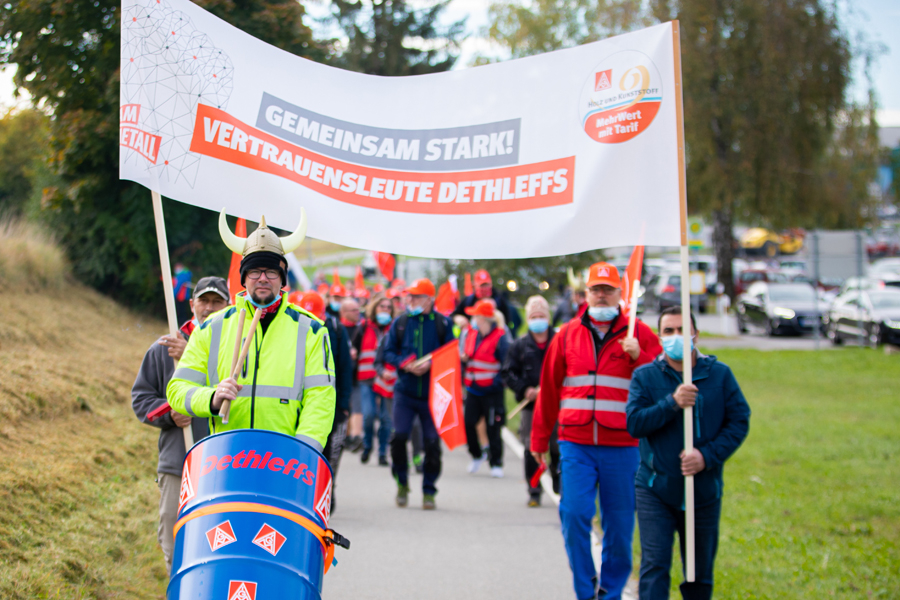
14,000 workers applied pressure through warning strikes, and thousands are participating in protests. In October, IG Metall first secured a victory in Lower Saxony: a 4.9 percent pay increase in two stages. The Demographic Fund is being doubled to 600 euros per employee per year.
However, this is too expensive for employers in other collective bargaining regions. They are demanding cuts—even in Saxony, where wages are already lower. But that doesn’t happen. In Saxony , wages actually increase by 5.5 percent. In Berlin and Brandenburg, too, the bosses want cuts. Negotiations have stalled. Protests are being planned.
14,000 employees are applying pressure with warning strikes—as seen here at the motorhome manufacturer Dethleffs in Isny, Allgäu. Photo: Andreas Brüstl
Skilled Trades
Significantly higher wages starting in January across many industries. Numerous negotiations are underway at the start of the year.
In December, IG Metall reached numerous collective bargaining agreements, some with significant pay increases effective January 1, 2022—for example, a 3.45 percent raise for plumbing trades in Hesse and a 5.6 percent raise for carpentry trades in eastern Germany.
Negotiations will continue seamlessly in 2022, for example in the electrical trades in Hesse and Rhineland-Palatinate. Starting in February, wages in the automotive trade will increase by 2.2 percent. Many more collective bargaining rounds in the skilled trades are scheduled for the rest of the year.
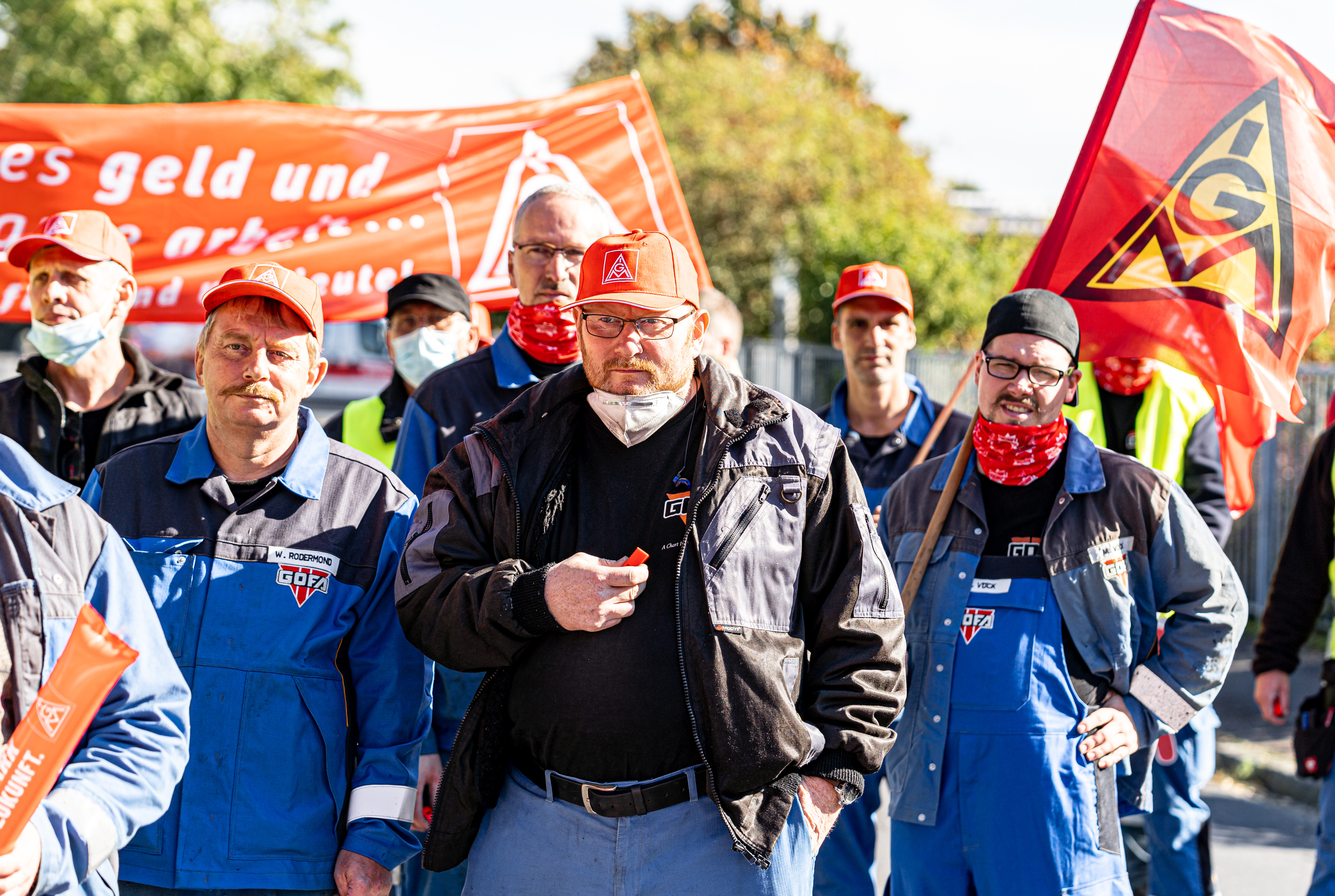
More and more workers in the skilled trades are joining IG Metall (up 7.7 percent in 2021) and participating in actions. Pictured here: a warning strike in the metalworking sector in North Rhine-Westphalia. Photo: Bernd Röttgers
April: Textile Industry in Eastern Germany
This primarily affects automotive suppliers impacted by supply bottlenecks at manufacturers.
On April 30, the wage agreements in the Eastern Textile Industry will expire. In the West, IG Metall secured a 325-euro COVID-19 bonus and a 2.7 percent pay increase, as well as improved partial retirement arrangements, in early 2021 .
2022 is unlikely to be any easier. The Textile East sector primarily includes automotive suppliers (such as seat manufacturers) that are fully impacted by supply bottlenecks at their customers in the automotive industry.
May: Iron and Steel Industry
Supply bottlenecks are also affecting the steel industry. Wage increases are a key issue in the companies.
The collective bargaining agreements in the iron and steel industry expire on May 30; in Saarland, they expire on August 31. In the 2021 steel industry wage negotiations, IG Metall secured a collective bargaining bonus that can be converted into time off to help secure employment. The situation remains challenging in 2022: Due to supply bottlenecks—such as those involving semiconductor chips—customer companies are ordering less steel.
September: Metal and Electrical Industries
The metal and electrical industry remains in crisis. IG Metall is keeping a close eye on the development of real wages.
On September 30, 2022, the collective bargaining agreements in the metal and electrical industry will expire—and IG Metall will once again be able to negotiate new agreements. This will require the commitment of all IG Metall members: Many companies are in crisis due to the pandemic, industrial transformation, and shortages of chips and raw materials.
“Securing the Future” was therefore the motto of the 2021 collective bargaining campaign. IG Metall secured new provisions to protect jobs by reducing working hours. The new transformation allowance, which will be available for the first time in February, can be used to partially offset lost wages.
The crisis will continue in 2022, but IG Metall is keeping a close eye on the development of real wages. After all, it is workers’ purchasing power that stabilizes the economy despite the crisis. The negotiations are expected to be difficult.