IG Metall is responding to the COVID-19 pandemic. “This crisis calls for solutions based on solidarity. What matters now is that workers are given security,” says Jörg Hofmann, President of IG Metall. The first step was taken by the collective bargaining partners in the metal and electrical industries in North Rhine-Westphalia. There, on March 20, they agreed on a crisis package that has now been adopted by all collective bargaining regions.
In North Rhine-Westphalia, “we have concluded a collective bargaining agreement that protects jobs and incomes and allows parents to care for their children when daycare centers and schools are closed. This agreement helps mitigate the effects of the COVID-19 crisis and strengthens social cohesion,” emphasizes Jörg Hofmann.
With their swift action, the collective bargaining parties are demonstrating just how much a partnership supported by strong unions and employers’ associations can achieve for people. IG Metall is also aiming to establish such industry-wide regulations in other sectors in the near future.
Quick and Pragmatic Solutions
The collective bargaining agreement reached in North Rhine-Westphalia includes the following points:
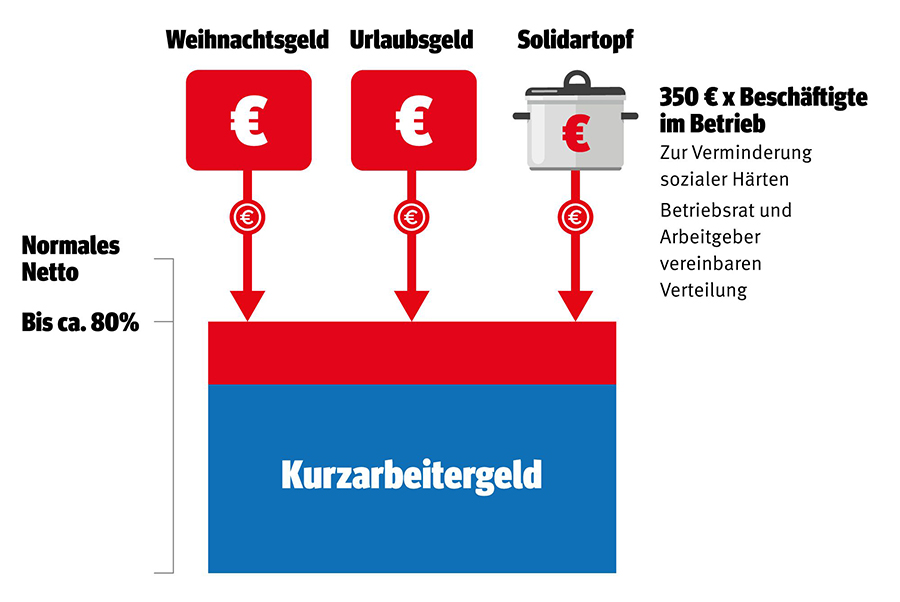
- Regulations on short-time work that can maintain employees’ net wages at approximately 80 percent of their regular level. This is achieved by phasing out special payments and providing an employer subsidy of 350 euros per full-time employee
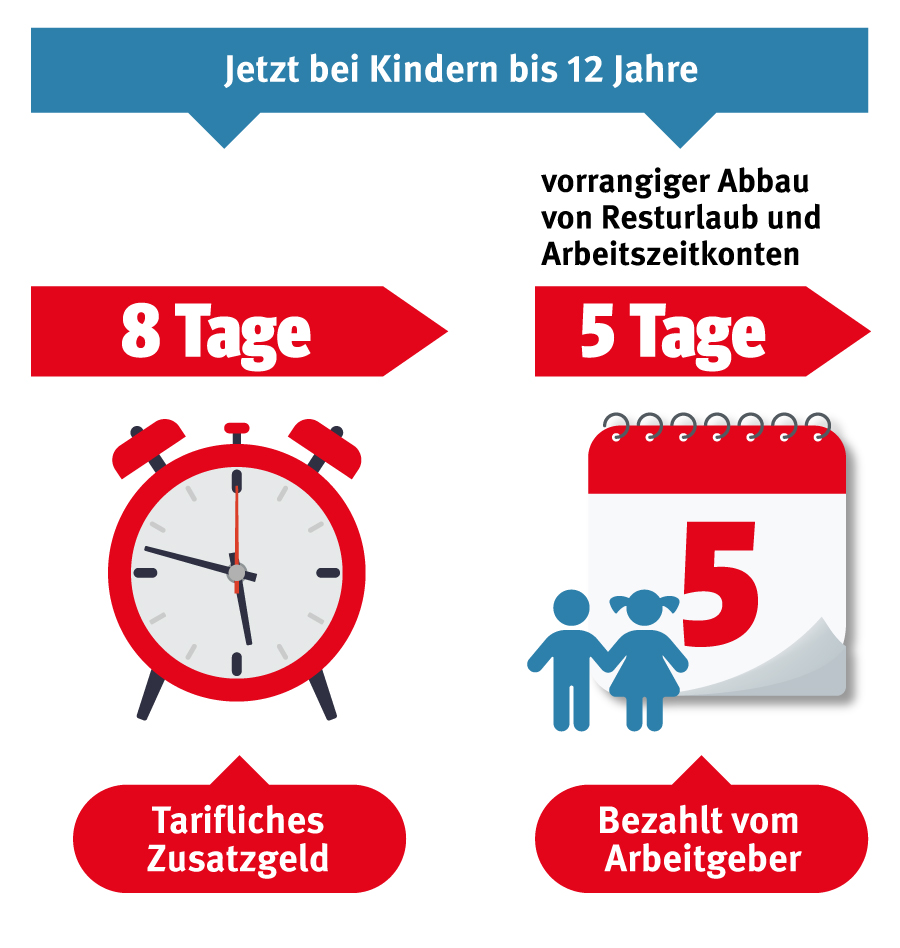
- In the event of daycare center and school closures, parents with children up to age twelve may take eight days off for child care instead of receiving the collective bargaining-mandated additional pay.
- In addition, in 2020, employees will receive at least five days off for child care—where absolutely necessary—without these days being counted toward vacation time, and their pay will continue to be paid.
The collective bargaining agreements take effect immediately and may be terminated as of December 31, 2020. The IG Metall Executive Board has since approved the negotiation outcome and, taking regional conditions into account, recommended its adoption nationwide.
Knut Giesler, IG Metall regional director in North Rhine-Westphalia and chief negotiator, emphasizes: “It was important to us to provide people with security through sound and tailored solutions, even in the most difficult times.” As a result, provisions were agreed upon that secure jobs, minimize financial losses during short-time work, and offer opportunities to better manage childcare.
IG Metall and employers have now adopted the crisis package in all collective bargaining regions, including: Baden-Württemberg, Bavaria, the coastal regions, Saxony-Anhalt, Thuringia, Hesse, Rhineland-Palatinate, Saarland, Berlin, Brandenburg, and Saxony, as well as Lower Saxony and Osnabrück-Emsland-Grafschaft Bentheim. ( As of March 27, 2020)
In Baden-Württemberg, more extensive supplementary payments for short-time work have been in place for years. Negotiations are still ongoing in other collective bargaining regions.
Graphic: IG Metall
Ongoing Metal Industry Collective Bargaining Round Is Suspended
Jörg Hofmann emphasizes that, with this crisis measure in place, the outstanding issues from the 2020 collective bargaining round in the metal and electrical industries remain on the agenda. “I’ve always said: We’re not going to reach a ‘coronavirus agreement.’ The major challenges of transformation remain on the agenda.” The president of IG Metall adds: “Once we’ve dealt with the immediate problems, we’ll turn our attention back to the issues of the future.”
Following IG Metall’s proposal for a moratorium, discussions and negotiations took place regarding job security, skills development, and future collective bargaining agreements to address digitalization and transformation in the metal and electrical industries. Other topics, in addition to wage increases, include the harmonization of working hours in the eastern federal states and collective bargaining provisions for dual-track students and apprentices.
FAQ on the Crisis Package












To load this video, you must enable YouTube cookies and thereby agree to the YouTube privacy policy.