Automatic translation
This article has been translated automatically using computer technology. While we strive for accuracy, some wording or details may differ from those in the original article.
This translation was not manually reviewed. For important facts, quotations or legally sensitive information, please consult the German original. Individual selections, images, embedded media or technical terms may have been translated differently or incompletely.

T-ZUG in the Metal and Electrical Industry T-ZUG and T-Geld are now available

With their July paycheck, employees in the metal and electrical industries will receive their Collective Bargaining Supplement (T-ZUG A) in the amount of 27.5 percent of their monthly pay—as well as their Transformation Allowance (T-Geld) in the amount of 18.4 percent of their monthly pay.
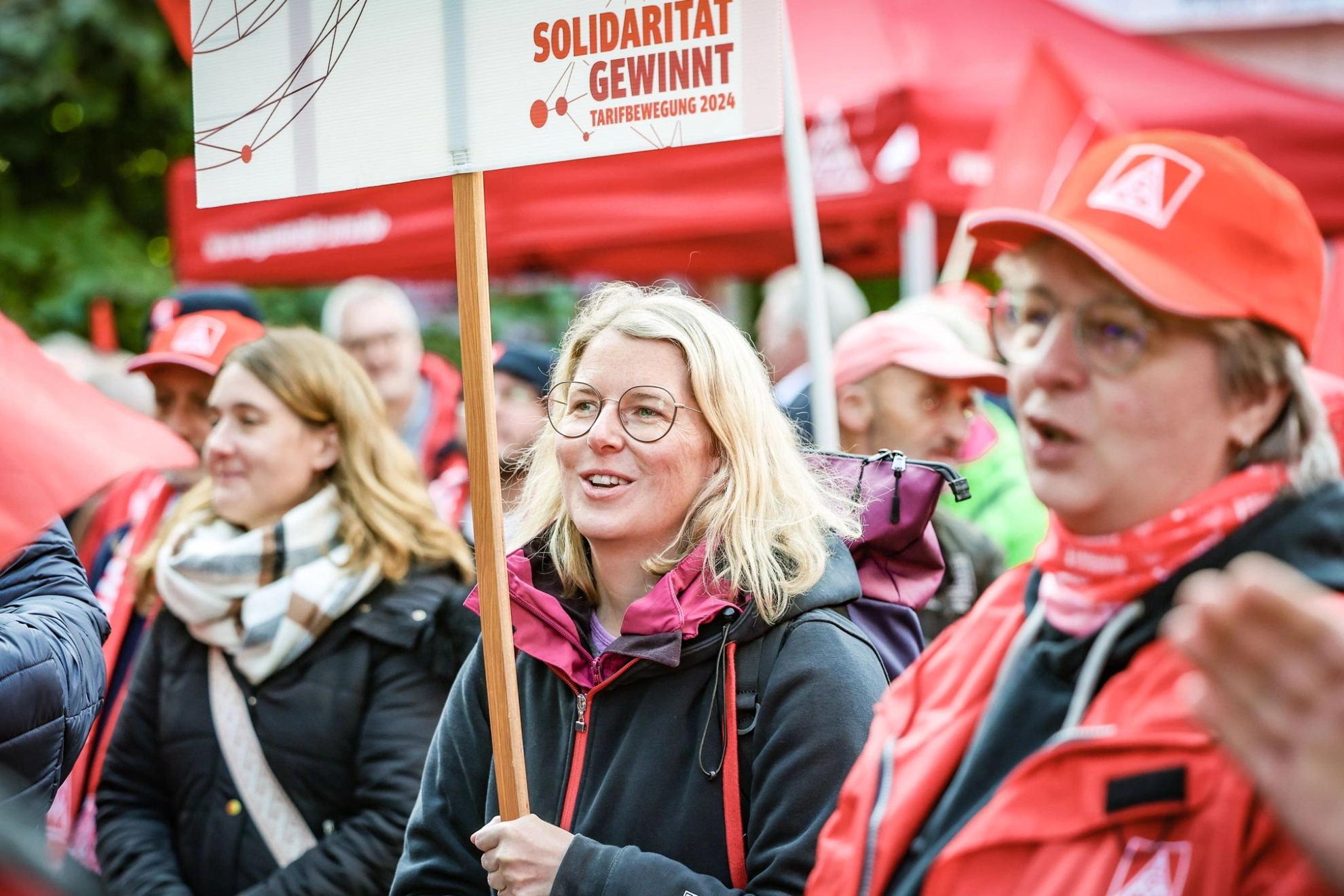
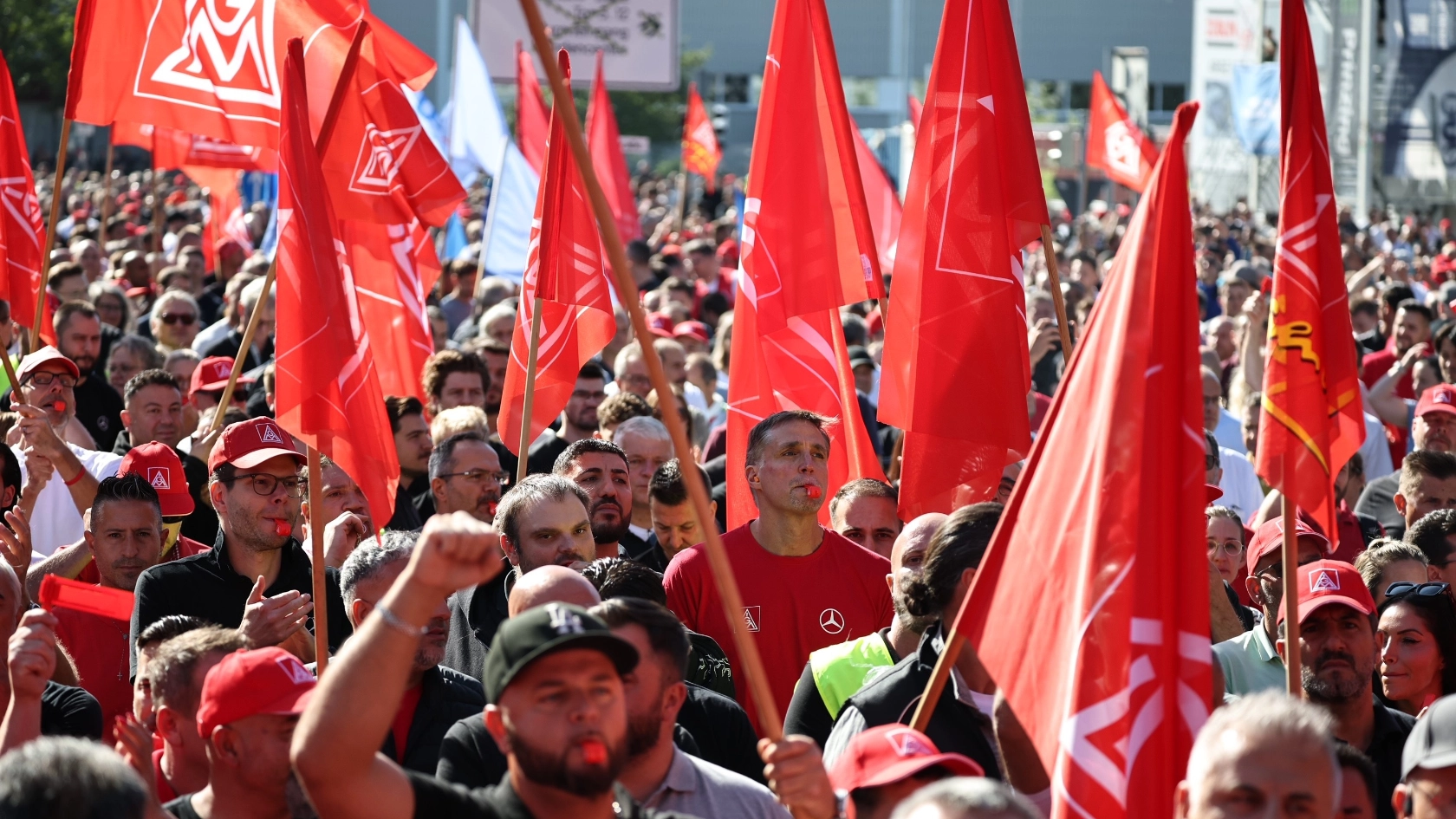
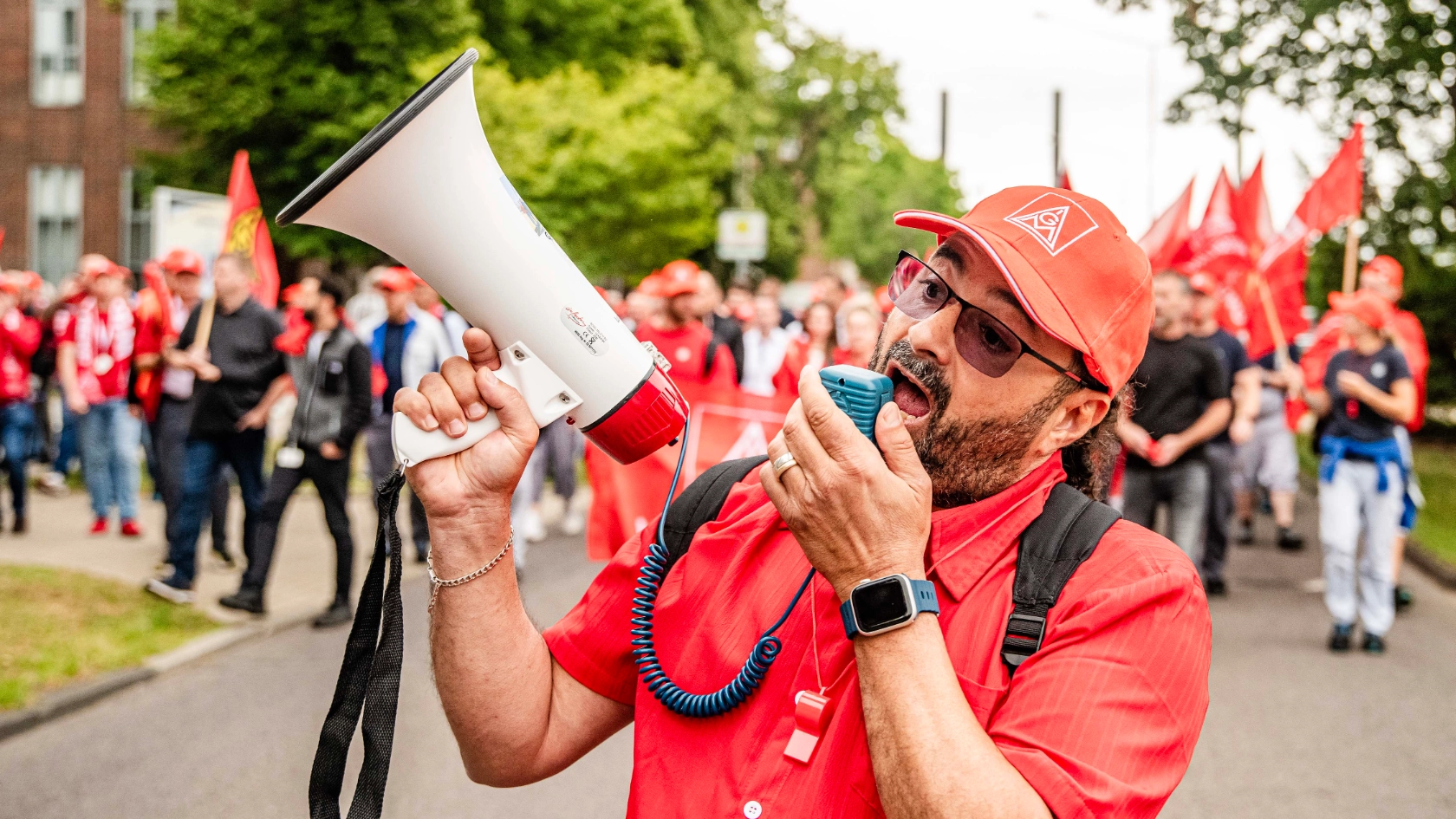
Beschäftigte demonstrieren in Münster zur zweiten Verhandlungsrunde in der Metall-Tarifrunde 2024.

24 July 2023 24 July 2023 |
Updated on 22 July 2026 22 July 2026


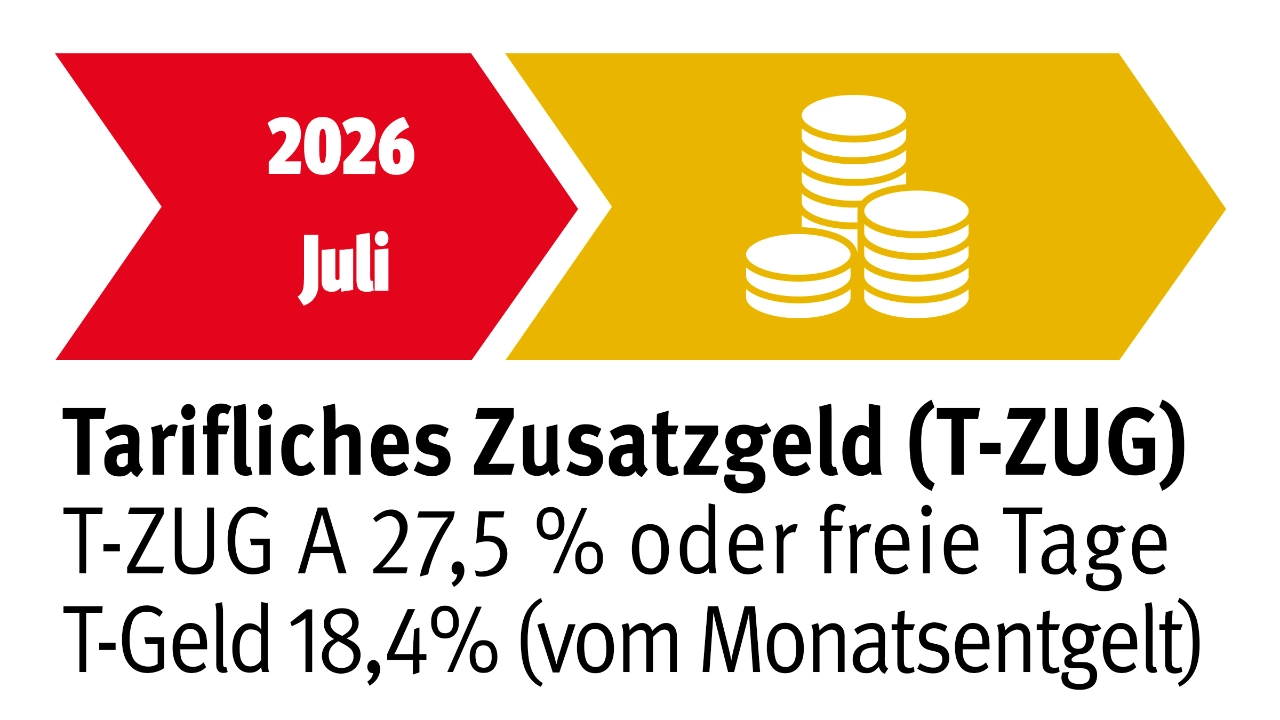
Up to 46 percent is now added to the monthly pay: Employees at companies in the metal and electrical industries covered by collective bargaining agreements will receive, with their July paycheck, their Collective Bargaining Supplement (T-ZUG A ) amounting to27.5 percent of their individual monthly pay, as well as their Transformation Allowance (T-Geld, Trafobaustein ) amounting to 18.4 percent of their monthly pay. 
The T-ZUG (A) can also be converted into up to 8 additional days off per year. IG Metall members who care for children, provide care for relatives, or work shifts are legally entitled to this. You can submit the request to convert the T-ZUG (A) into days off for the following year to your employer by October 31, though different deadlines may have been agreed upon at your workplace. Ask your IG Metall works council or your local IG Metall office.

You can find more information about the T-ZUG option to choose between cash and time off under T-ZUG A in our FAQ

Please note: During crises, many companies also use the collective bargaining supplementary payment to secure jobs, for example by requiring all employees to choose days off instead of cash. The transformation allowance (T-Geld, Trafobaustein) may also be reduced or suspended if the company’s net return is below 2.3 percent. 


Four special payments per year under the collective bargaining agreement 

In collective bargaining rounds in recent years, IG Metall has secured, in addition to the vacation bonus (in May or June, an additional 50 percent per vacation day) and the Christmas bonus (usually at the end of November, up to 55 percent depending on length of service), secured additional annual special payments under the collective agreement: the Collective Agreement Supplement (T-ZUG A and B) and the Transformation Allowance (T-Geld, Trafo module). 

Here’s how much money will be paid out in the metal and electrical industries in 2026
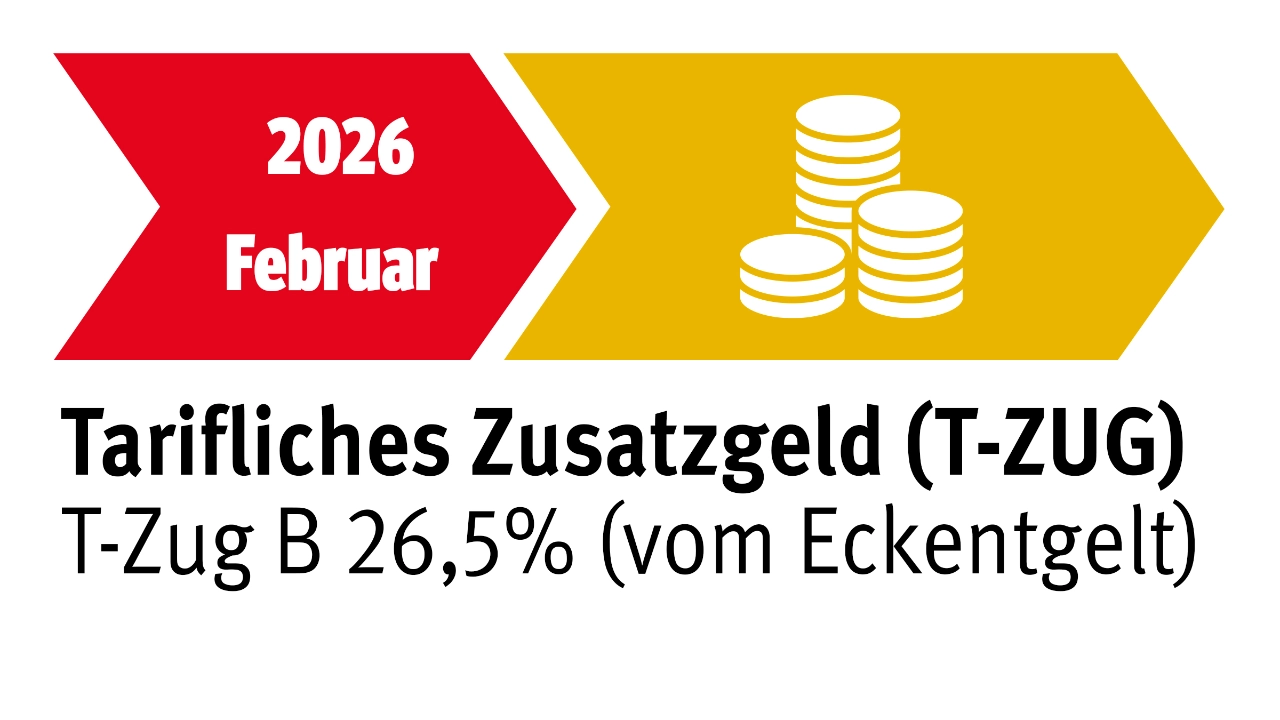
Grafik: Tarifliches Zusatzgeld T-Zug B von Höhe von 26,5 Prozent des Eckentgelts im Februar 2026
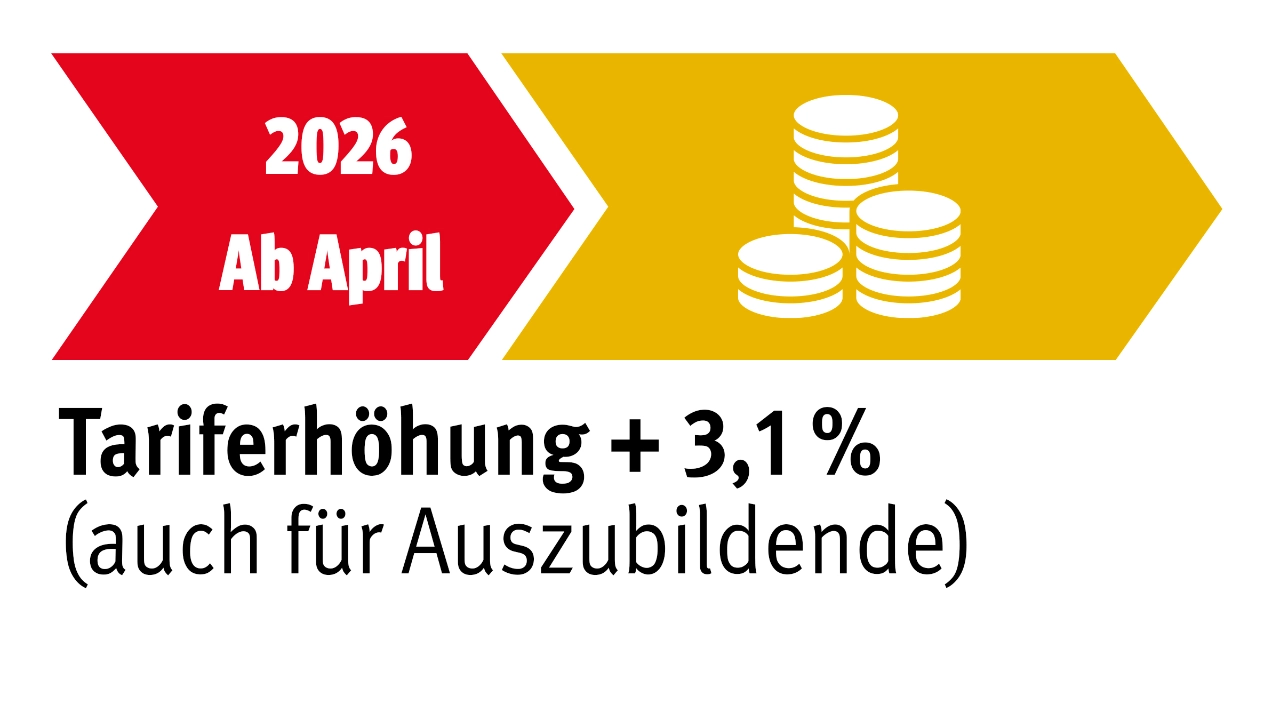
Grafik: Tariferhöhung in der Metall- und Elektroindustrie in Höhe von 3,1 Prozent ab April 2026, auch für Auszubildende
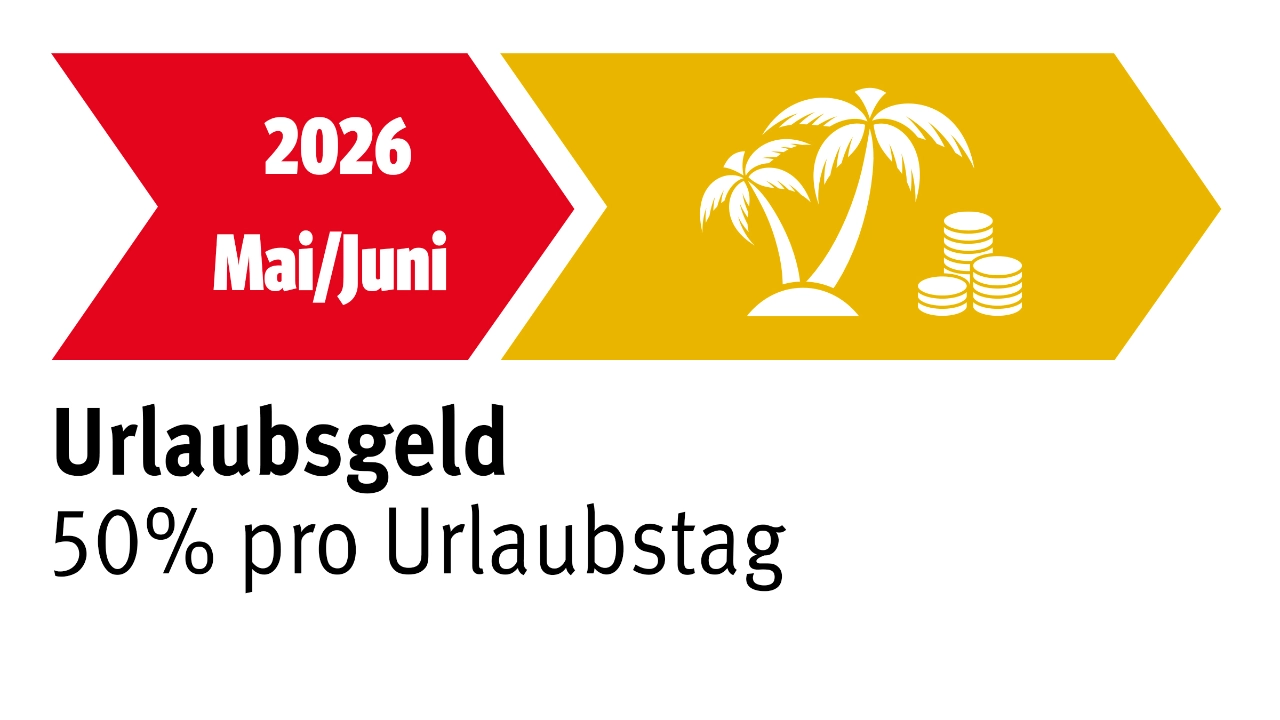
Grafik: Auszahlung Urlaubsgeld in Höhe von 50 Prozent pro Urlaubstag im Mai oder Juni 2026
Grafik: Auszahlung des Tariflichen Zusatzgelds T-Zug A von 27,5 Prozent oder freie Tage und des T-Geld von 18,4 Prozent des Monatsentgelts im Juli 2026
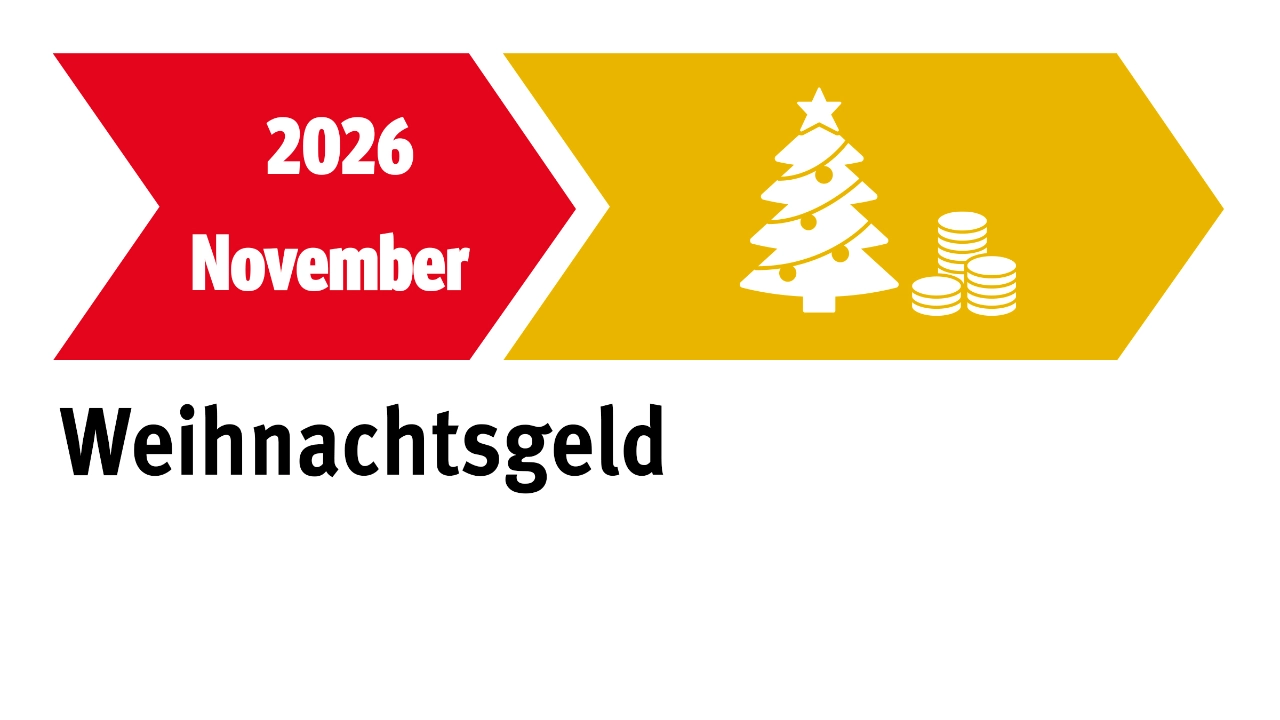
Grafik: Auszahlung Weihnachtsgeld in der Metall- und Elektroindustrie im November 2026

The Collective Bargaining Supplement (T-ZUG) is broken down into  

  • T-ZUG A: 27.5 percent of the individual’s average monthly salary  

    and  

  • T-ZUG B or supplementary amount: 26.5 percent of the base pay for the respective pay scale area 


The first installment of the Collective Bargaining Supplement—the supplementary amount or T-ZUG B—was already paid in February 2026, amounting to 26.5 percent of the base wage for skilled workers, amounting to approximately 900 euros gross depending on the collective bargaining region—about 300 euros more than before. The increase stems from the last metal industry collective bargaining round at the end of 2024, during which IG Metall used warning strikes to secure, among other things, an increase in T-ZUG B from 18.5 to 26.5 percent effective February 2026. 


T-ZUG B Secured as a “Social Component”

The advantage of special payments such as the T-ZUG B and the transformation allowance (T-Geld) is that they can be applied differentially and converted into time off to secure jobs during company crises without reducing the monthly salary. 

When the T-ZUG was introduced in 2018, IG Metall and employers agreed that the T-ZUG B could be “adjusted”—that is, deferred or suspended entirely—in the event of a poor economic situation at the company. However, the T-ZUG B supplement is also an important social component: Because it is paid as a percentage of the base pay rather than the individual monthly pay, all pay grades receive the same flat-rate amount: previously 18.5 percent of the base pay—and starting in February 2026, 26.5 percent of the base pay. Depending on the collective bargaining region, this amounts to between 845 and 952 euros gross. As a result, employees in the lower pay grades receive a higher percentage of their individual income than employees in the higher pay grades. 

To preserve this social component, IG Metall, in the 2024 metal industry collective bargaining agreement that the T-ZUG B will no longer be “differentiated” in the future. Instead, the transformation allowance (T-Geld, Trafobaustein)—previously paid out in February and amounting to 18.4 percent of individual monthly pay (which is therefore not a social component)—will now assume this differentiating function. The differentiation of the T-Geld may be applied if the company’s net return is below 2.3 percent. 

However, since companies cannot yet sufficiently predict how the economic situation will develop over the course of the year when the T-Geld is paid out in February, IG Metall and employers have postponed the payment of the T-Geld to July—in exchange for the T-ZUG B, which was previously paid out in July and is now paid in February.  
 

Please note: Only members of IG Metall have a legal right to collective bargaining benefits, including the four special collective bargaining payments. However, employers typically pay these benefits to non-members as well, even though they are not required to do so—if only to prevent more employees from joining IG Metall as a result.


Beschäftigte stehen zu einem großen Herz zusammen
Become a member
Become part of a strong community

From legal protection in labor and social law matters to fair wages and salaries—we take personal and reliable care of our members.

New on igmetall.de
Aktionstag bei Mercedes Benz, Daimler, in Sindelfingen gegen die Angriffe auf Beschäftigten in der Automobilindustrie.
Resistance to Attempts at Drastic Cuts Auto industry workers issue a warning
Sie wollen doch nur dein Bestes
Redistribution Making Germany more equitable: We need this tax reform now
Der Streik bei Kelvion in Nobitz-Wilchwitz begann am 4. August 2026. Die Geschäftsleitung will nach Sarstedt/Niedersachsen verlagern - obwohl die Produktion in Wilchwitz profitabel und bis ins nächste Jahr ausgelastet ist.
"It’s worth fighting for!" Kelvion workers strike for a social collective bargaining agreement
Ruhrpott Rebellion am 07.07.2026
Welfare State September 26: Nationwide Day of Action for Social Policy
Beschäftigter arbeitet an einem Getriebe in einer Fabrik
Working Hours Why working longer doesn’t help—and actually does more harm than good
Ein männlicher Land- & Baumaschinenmechatroniker prüft einen Traktor mit einem Tablet
2026 Collective Bargaining Agreement for the Metalworking and Agricultural Engineering Sectors Greater Flexibility in the Metalworking and Agricultural Engineering Sectors in Lower Saxony and Bremen
Elektronikerin prüft die Spannung an einem Schaltschrank.
2026 Collective Bargaining Round for the Electrical Trades Wage Increase in the Electrical Trades in Berlin-Brandenburg
Benjamin Heine ist Mitarbeiter der BMA in Braunschweig
2026 Collective Bargaining Round for Metal Fabrication and Precision Engineering Higher Wages in the Metal Fabrication and Precision Engineering Sectors in Southwest Germany
Metall-Arbeiter beim Schleifen
2026 Collective Bargaining Round for the Metalworking Trade Employees in the Berlin-Brandenburg metalworking sector will receive higher pay
Beschäftigte von Thyssenkrupp demonstrieren in Essen am 23. Mai 2024 gegen das Vorgehen der Geschäftsführung beim geplanten Teilverkauf des Unternehmens.
Defend the welfare state All dates for nationwide actions against cuts to social services
IGM Aktion VW Wolfsburg
On September 21, things will get loud Nationwide Day of Action: Auto Industry Workers Fight Back Against Mass Layoffs
Auszubildender in einer Schreinerei
Apprenticeship Wages Questions and Answers About Apprenticeship Wages

Subscribe to the newsletter