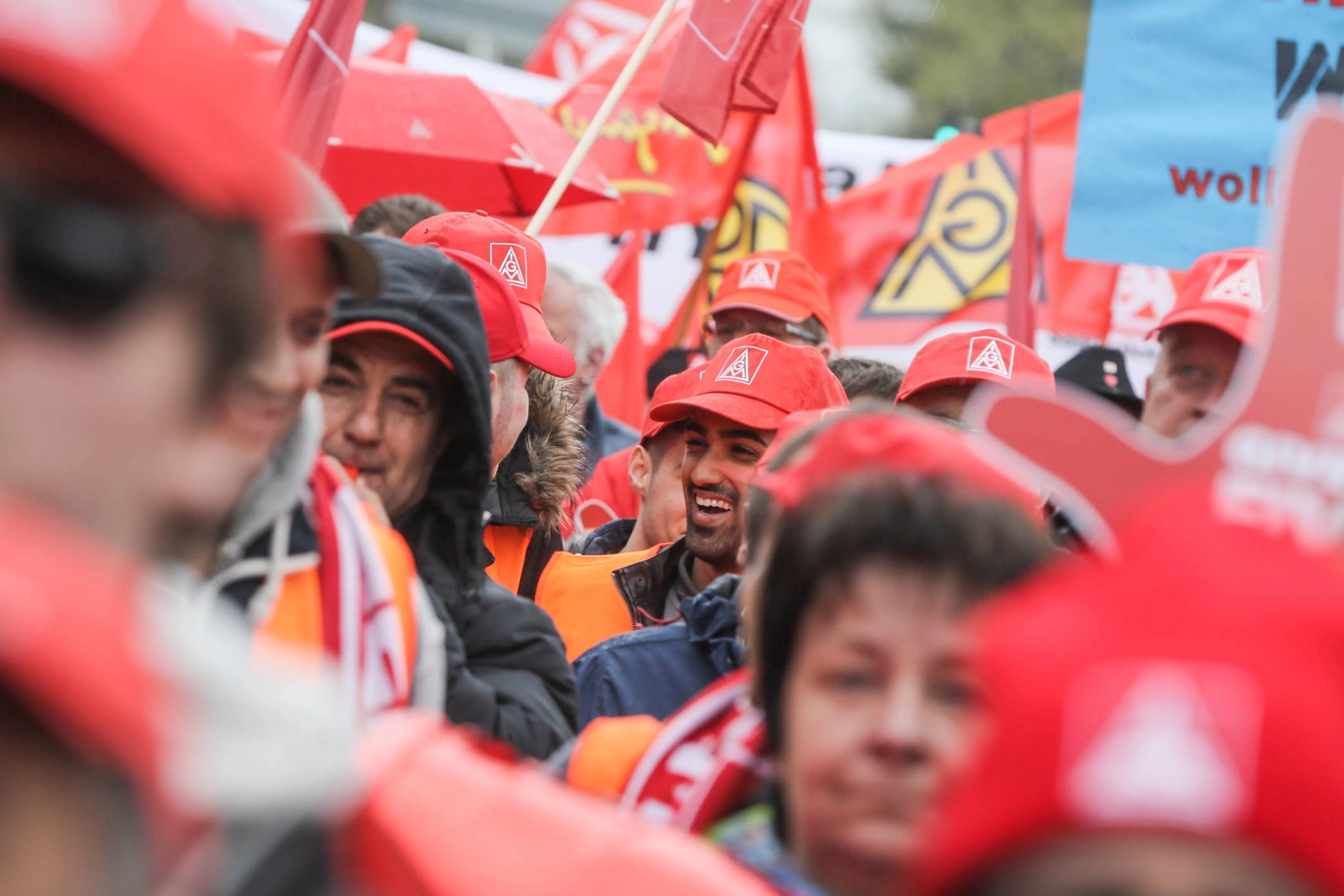
During the 2025 automotive collective bargaining round, IG Metall secured not only a pay raise but also the new WorkFlex+ collective bargaining agreement. This agreement now gives employees in the automotive trade the option to convert pay into up to 5 additional days off per year.
What is WorkFlex+ all about?
With WorkFlex+, you can flexibly convert part of your salary into additional days off. This gives you more time for yourself, your family, or your hobbies—and it’s completely hassle-free!
Who is eligible?
All employees at companies covered by a collective bargaining agreement who have been with the company for at least 12 months can use WorkFlex+. The only exceptions are apprentices, interns, volunteers, and those in similar employment arrangements. Executive employees or authorized signatories may also be excluded, depending on the collective bargaining region. Check with your local IG Metall office.
How many additional days off are possible?
You can request up to 5 additional days off per calendar year. These days off must always be taken as full days. Unfortunately, half-days or individual hours are not possible.
How does payment work on these days?
On WorkFlex+ days, you do not receive a salary—neither under the collective bargaining agreement nor above it. The value of a day is calculated the same way as for a vacation day.
How do I request my days off?
You simply submit the request as you would for regular vacation days—as part of your company’s standard vacation planning process. You can do this either on short notice or as part of the annual planning. You can request your first WorkFlex+ days starting October 1, 2025, for the year 2026.
Are there any restrictions on when I can take these days?
Your requests will be considered as long as there are no operational reasons against them or conflicts with other colleagues’ vacation requests. WorkFlex+ days are generally not available in December. Additionally, no more than 20 percent of a group of employees may take WorkFlex+ days at the same time. For small groups (fewer than 5 people), it’s possible that only one person will be granted time off.
What happens if I get sick on an approved WorkFlex+ day?
If you’re on sick leave, the day counts as unused. You’ll receive your salary as usual and can resubmit a request for that day later. However, unused WorkFlex+ days expire at the end of the year.
What if, for example, I take parental leave or am sick for an extended period?
For every full month without a salary entitlement (e.g., parental leave), your entitlement is reduced proportionally. Example: If you take 3 months of parental leave during the year, you’ll still be entitled to 4 WorkFlex+ days.
Can I carry over WorkFlex+ days to the next year?
No, the days must be taken during the current calendar year. They expire on December 31.
What about my working time account?
If you have a work time account, it should be in the black when you submit your request—unless the negative hours were caused by company-related reasons. Check with your works council about this.
Does the works council have a say in this?
Yes, the works council can regulate details such as the application process or vacation planning in a company agreement.
Do WorkFlex+ days affect my special payments or my vacation pay?
This can vary by region depending on the collective bargaining area. If you have questions, your local IG Metall office can help. In principle, vacation pay could theoretically decrease due to WorkFlex+ days, but in practice, the payment usually remains constant.
What about short-time work benefits or sick pay?
If you take WorkFlex+ days during the assessment period, this may slightly affect your income and, consequently, your short-time work allowanceor sick pay.
What about part-time employees or those on fixed-term contracts?
Part-time employees are also entitled to 5 WorkFlex+ days per year, regardless of how many days they work. Employees on fixed-term contracts can use WorkFlex+ if they have been with the company for at least 12 months. If the contract expires before the end of the year, the entitlement is calculated on a pro-rata basis.

 IG Metall Locally