Automatic translation
This article has been translated automatically using computer technology. While we strive for accuracy, some wording or details may differ from those in the original article.
This translation was not manually reviewed. For important facts, quotations or legally sensitive information, please consult the German original. Individual selections, images, embedded media or technical terms may have been translated differently or incompletely.

Questions and Answers About Short-Time Work How Short-Time Work Works

Short-time work allows companies to weather difficult economic downturns. Employees then receive short-time work benefits. We explain how it works.

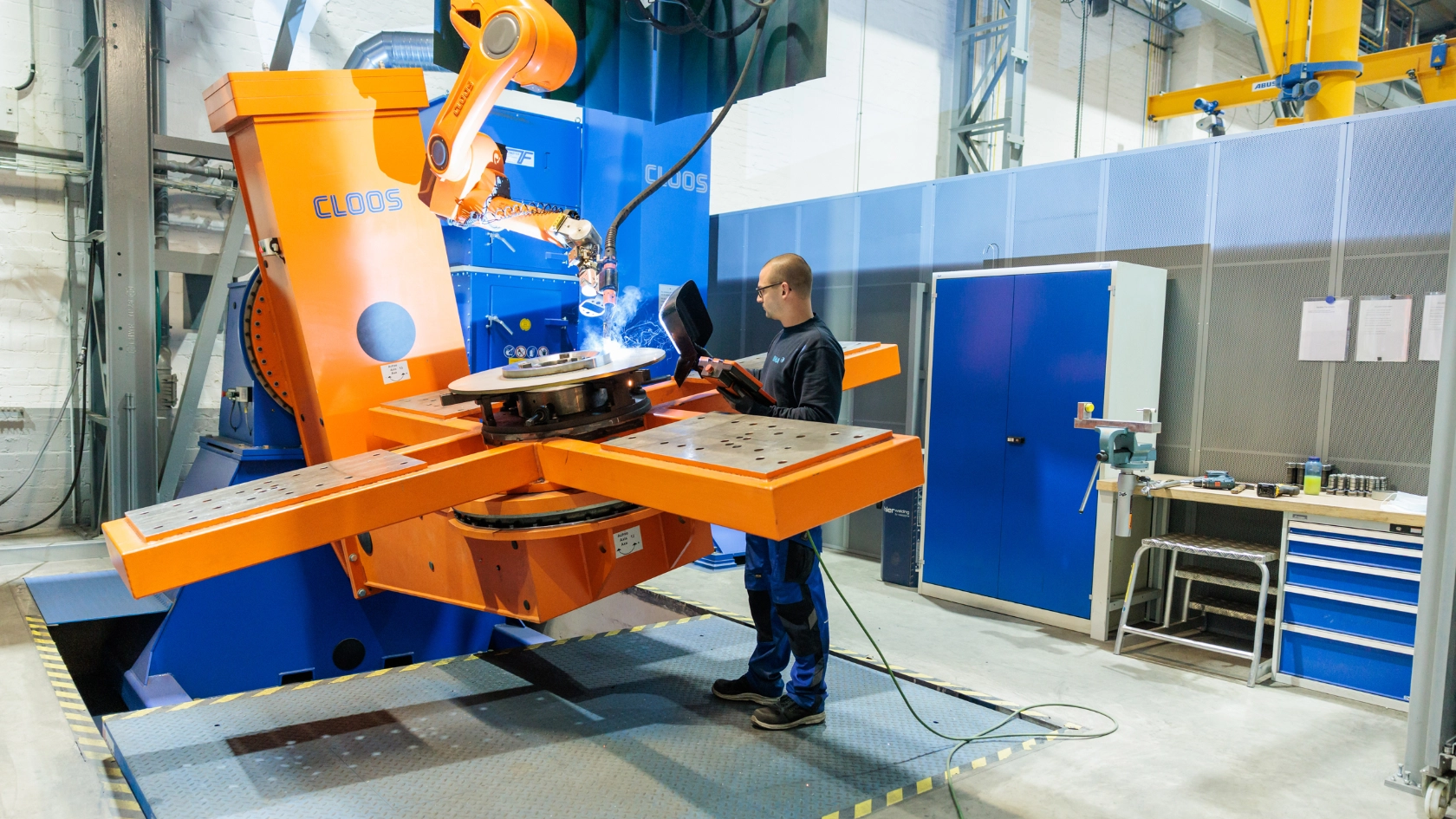
Mann steht an einer Maschine in einer Werkshalle

19 December 2024 19 December 2024 |
Updated on 17 December 2025 17 December 2025


The risk of lost work hours is generally borne by the employer. If a company faces financial difficulties, short-time work can help secure jobs. But how does short-time work work, and what do I need to keep in mind? How is short-time work compensation calculated? We answer the most important questions from employees. This guide provides a brief overview of the currently applicable regulations regarding short-time work and short-time work benefits. It is not a substitute for legal advice. In general, many specific details are also often regulated in collective bargaining agreements or company agreements on short-time work.

Tip: Short-time work allowance calculator from IG Metall and MetallRente


What is short-time work?

Short-time work means that employees work fewer hours than usually specified in their employment contract. There can be various reasons for this. To date, short-time work has mostly been used during economic downturns when orders and revenue are lacking, such as during the 2008–2009 financial and economic crisis, the COVID-19 crisis, and economic disruptions caused by the war in Ukraine. Short-time work has helped preserve jobs and expertise. It can affect an entire workforce or only a portion of the employees.

What are the requirements for short-time work?

The Employment Agency pays short-time work benefits under certain conditions. These benefits are intended for cases in which companies experience a significant loss of work, whether due to economic reasons or an unavoidable event (e.g., flooding). Before implementing short-time work, the company must have attempted to prevent the loss of work, for example by granting vacation time. The company must return to normal working hours within the foreseeable future. To prevent the loss of work, time accounts must also be used in accordance with legal requirements. In doing so, it may also be necessary to establish negative time balances. In addition, at least one-third of the employees working at the company must be affected by a loss of pay exceeding 10 percent of their monthly gross pay.

Does an employer have to apply for short-time work for the entire company, or can only individual departments be affected?

Short-time work does not have to be implemented and reported for the entire company. It can also be limited to individual departments.

What is short-time work compensation?

Short-time work benefits are a benefit provided by unemployment insurance. Employees on short-time work earn less or, in the case of “zero short-time work,” receive no pay at all. Short-time work benefits at least partially offset this shortfall.

How much is short-time work compensation, and how is it calculated?

Short-time work benefits are calculated based on the net loss of pay. They generally replace about 60 percent of the lost net pay. If at least one child lives in the household, the short-time work benefits amount to about 67 percent of the lost net pay.

When calculating short-time work benefits, the “normal” net pay from the pay stub is not used; instead, a so-called flat-rate net pay is used. The Employment Agency provides a table for this purpose.

Tip: “MetallRente” short-time work allowance calculator

Does the employer contribute to the short-time work allowance?

For employees, short-time work means a loss of pay. IG Metall calls on employers to reduce this pay gap by making supplementary payments to the short-time work allowance. In many industries and companies, collective bargaining agreements and company-specific regulations are in place to supplement the short-time work allowance. IG Metall offices, works councils, and union representatives are happy to provide information on this.

How long is short-time work compensation paid?

The statutory benefit period for short-time work benefits is a maximum of 12 months. However, the federal government has the option to extend this period by decree. It exercised this option again in December 2025, extending the benefit period to up to 24 months. This applies until December 31, 2026, at the latest. Once the benefit period has been exhausted, a certain period must elapse without short-time work before short-time work benefits can be paid again.

Do I need to file an application with the Federal Employment Agency myself?

No, the employer is responsible for filing the short-time work notification and the application for short-time work benefits on behalf of the employees.

When and from whom will I receive my payment?

You receive everything from a single source—your employer. Your employer pays your wages (reduced by the amount of work lost), the short-time work allowance, and any supplements to the short-time work allowance. The Federal Employment Agency then reimburses your employer for the short-time work allowance.

How is short-time work implemented at the company?

In companies with a works council: Short-time work cannot be implemented without the works council’s approval. Works councils are guarantors of good working conditions: Working and pay conditions are noticeably better in companies with a works council. During the current crisis, many works councils have already succeeded in securing a top-up to the short-time work allowance.

In companies without a works council: Here , the employer must agree on the introduction of short-time work individually with all affected employees. IG Metall supports you and your colleagues in establishing a works council.

Can my employer require me to use my vacation time?

Your employer is required, within certain limits, to do everything possible to avoid a loss of work. Only once this has been done can short-time work benefits be claimed. Therefore, your employer can generally require you to use your accrued vacation days. Days that have already been scheduled do not have to be used to avoid short-time work; they are, so to speak, protected from changes.

For vacation days that have not yet been scheduled, the employer must schedule them toward the end of the vacation year to avoid short-time work. However, this applies only if the vacation cannot be carried over to the following vacation year.

Can my employer require me to use up my working time account to avoid a loss of work?

Yes, but not without restrictions. A work-time account does not have to be used in all cases. For example, work-time accounts that serve a specific purpose (e.g., pension transition, caregiving leave, parental leave, training) are protected. For other accounts, only a portion may need to be used. In principle, however, it may also be necessary to allow accounts to go into the negative.

I’m a temporary worker—am I also eligible for short-time work benefits?

Temporary agency workers are not eligible to receive short-time work benefits. Section 11(4), sentence 2, of the Temporary Employment Act (AÜG) applies to them, according to which the right of temporary agency workers to compensation in the event of default by the agency cannot be waived or restricted by contract.

Can I receive short-time work benefits if I have a part-time job?

No, because this is not a so-called employment relationship subject to social security contributions. Therefore, according to the law, there is no entitlement to short-time work benefits.

What happens with social security?

For wages earned during short-time work, employers and employees generally each pay half of the social security contributions. For the working hours lost due to short-time work, social security contributions are reduced to 80 percent. The employer bears this cost alone—unless the employee participates in a training program during the short-time work period. In that case, under certain conditions, the employer is reimbursed for half of the social security contributions by the Employment Agency.

Do I have to pay taxes on short-time work benefits?

Short-time work benefits are generally tax-free. Employees must report these benefits on their tax returns. However, they affect the tax rate applied to the employee’s remaining income. As a result, the remaining income may be taxed at a higher rate (progression clause), which could lead to a tax backpayment. The legislature has now also made employer contributions to short-time work benefits tax-free.

Do I have to be reachable and available during “zero short-time work”?

Yes, because short-time work may be interrupted at short notice, and work may then have to resume. If you are unreachable and unable to report to work, this may have consequences under labor law.

How does short-time work affect my vacation entitlement and my pay during vacation?

While an employee is taking their statutory minimum vacation, they are entitled to at least their usual wages, regardless of any previous periods of short-time work. The European Court of Justice ruled this in the case of a German employee. However, the number of vacation days may be reduced due to short-time work.

According to the case law of the Federal Labor Court, full workdays lost due to short-time work are treated in the calculation of annual leave as days on which a part-time employee is not required to work. This applies, in any case, where the Federal Leave Act (BUrlG) governs the calculation of leave entitlement. However, the BUrlG provides only minimum protection for employees. More favorable calculation rules are therefore not precluded by law.

In many employment relationships, there are indeed provisions that ensure the original vacation entitlement remains unaffected even when entire workdays are lost due to short-time work. The legal situation must therefore always be assessed based on the specific circumstances of the company or the individual employee.

It is also important to note that if an employee has already taken more vacation than they are entitled to when short-time work is subsequently taken into account, there is no reversal. This means that the employee may “keep” the vacation time granted to them.

Can I take on a side job while on short-time work?

Generally speaking, yes. However, if you take on this side job only after short-time work has begun, the pay from your side job will be factored into the calculation of your short-time work benefits. A side job that you were already doing before and that you simply “continue” during short-time work is not taken into account when calculating your short-time work benefits.

What happens to my continued pay if my employer implements short-time work while I’m sick?

Without short-time work, the following applies: If you become unable to work, you are entitled to your regular pay from your employer for the first six weeks of your incapacity. If you are sick for longer than six weeks, you will then receive sick pay from your health insurance provider. If you become ill before short-time work begins, you will receive your pay—reduced by the amount of work lost—from the start of short-time work at your company, along with sick pay equal to the amount of short-time work benefits. Starting in the 7th week, you’ll receive your regular sick pay from your health insurance provider. Short-time work does not reduce the amount of this benefit. If you’re already receiving sick pay when short-time work begins, nothing changes for you.

What happens if I get sick while on short-time work?

In this case, for the first six weeks, you will receive continued pay from your employer for the hours not lost due to the work stoppage, as well as sick pay for short-time work equal to the amount of the short-time work allowance. Starting in the 7th week of your inability to work, you will receive sick pay from your health insurance provider. Short-time work does not reduce this amount.

Can employees be laid off for business reasons during the period of registered short-time work?

Under the principle of proportionality (termination as a last resort), the introduction of short-time work during a temporary loss of work—as a less severe measure—may render a termination for operational reasons inadmissible. However, short-time work does not preclude terminations for operational reasons. If a termination does occur, short-time work benefits can no longer be paid. For this reason, collective bargaining agreements or company agreements often prohibit layoffs for operational reasons during the period of short-time work.

How does short-time work compensation affect parental leave benefits?

Parental allowance is generally calculated based on the earnings from the last 12 months prior to the month of the child’s birth. Parental allowance is intended to at least partially offset the loss of income. If you are on short-time work during this period, these months are included in the calculation of the parental allowance.

How does short-time work affect my company pension plan (bAV)?

There is no one-size-fits-all answer to this question, as the implications vary depending on the funding method and terms of the company pension plan.

If the occupational pension plan is funded solely by the employer, the employer’s contributions to the plan will generally—though not in every case—decrease along with the reduced pay. This ultimately results in lower occupational pension benefits. You can obtain information and assistance from your works council or the human resources department.

Even for occupational pension plans financed solely by employees (or co-financed by the employer with subsidies) through deferred compensation, a reduced salary—or one that is entirely replaced by short-time work benefits—has consequences: Some employees can continue to make the agreed-upon deferred compensation contributions, drawing on their personal assets in cases of “zero short-time work.” However, many can no longer afford the contributions, in which case suspending the occupational pension plan or deferring contributions may be an option. In these cases, you should ask your contact person in the human resources department or the pension provider to explain your options. Request a written statement detailing the expected effects on your occupational pension plan and what you should keep in mind.

Our company is covered by an IG Metall collective bargaining agreement—does this give me any advantages?

IG Metall has been able to secure several improvements related to short-time work. These improvements are legally binding only for IG Metall members. If you have any questions about this, please contact your local IG Metall office. If you are not yet an IG Metall member, you can join online here.

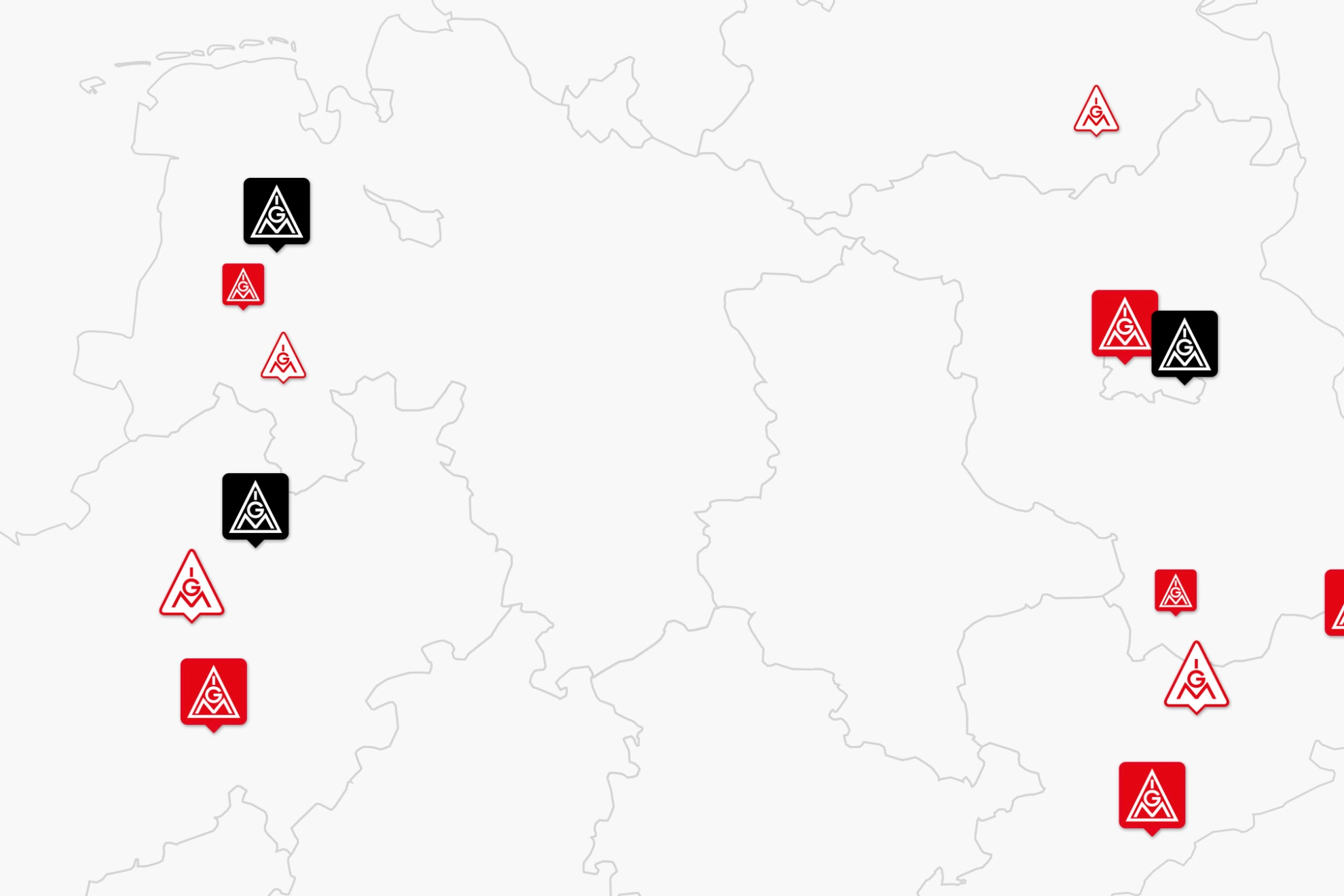
Landkarte mitmarkern für Geschäftsstellen
IG Metall on Site
Advice, Service, Assistance

Any questions? Contact your local IG Metall office for more information.

Ein lachender Mann mit IG Metall-Kappe in einer Menschenmenge.
IG Metall App
News straight to your smartphone

News on current topics, guides, pay scale tables, and more—download the IG Metall app for Android or iOS!

New on igmetall.de
Aktionstag bei Mercedes Benz, Daimler, in Sindelfingen gegen die Angriffe auf Beschäftigten in der Automobilindustrie.
Resistance to Attempts at Drastic Cuts Auto industry workers issue a warning
Sie wollen doch nur dein Bestes
Redistribution Making Germany more equitable: We need this tax reform now
Der Streik bei Kelvion in Nobitz-Wilchwitz begann am 4. August 2026. Die Geschäftsleitung will nach Sarstedt/Niedersachsen verlagern - obwohl die Produktion in Wilchwitz profitabel und bis ins nächste Jahr ausgelastet ist.
"It’s worth fighting for!" Kelvion workers strike for a social collective bargaining agreement
Ruhrpott Rebellion am 07.07.2026
Welfare State September 26: Nationwide Day of Action for Social Policy
Beschäftigter arbeitet an einem Getriebe in einer Fabrik
Working Hours Why working longer doesn’t help—and actually does more harm than good
Ein männlicher Land- & Baumaschinenmechatroniker prüft einen Traktor mit einem Tablet
2026 Collective Bargaining Agreement for the Metalworking and Agricultural Engineering Sectors Greater Flexibility in the Metalworking and Agricultural Engineering Sectors in Lower Saxony and Bremen
Elektronikerin prüft die Spannung an einem Schaltschrank.
2026 Collective Bargaining Round for the Electrical Trades Wage Increase in the Electrical Trades in Berlin-Brandenburg
Benjamin Heine ist Mitarbeiter der BMA in Braunschweig
2026 Collective Bargaining Round for Metal Fabrication and Precision Engineering Higher Wages in the Metal Fabrication and Precision Engineering Sectors in Southwest Germany
Metall-Arbeiter beim Schleifen
2026 Collective Bargaining Round for the Metalworking Trade Employees in the Berlin-Brandenburg metalworking sector will receive higher pay
Beschäftigte von Thyssenkrupp demonstrieren in Essen am 23. Mai 2024 gegen das Vorgehen der Geschäftsführung beim geplanten Teilverkauf des Unternehmens.
Defend the welfare state All dates for nationwide actions against cuts to social services
IGM Aktion VW Wolfsburg
On September 21, things will get loud Nationwide Day of Action: Auto Industry Workers Fight Back Against Mass Layoffs
Auszubildender in einer Schreinerei
Apprenticeship Wages Questions and Answers About Apprenticeship Wages

Subscribe to the newsletter