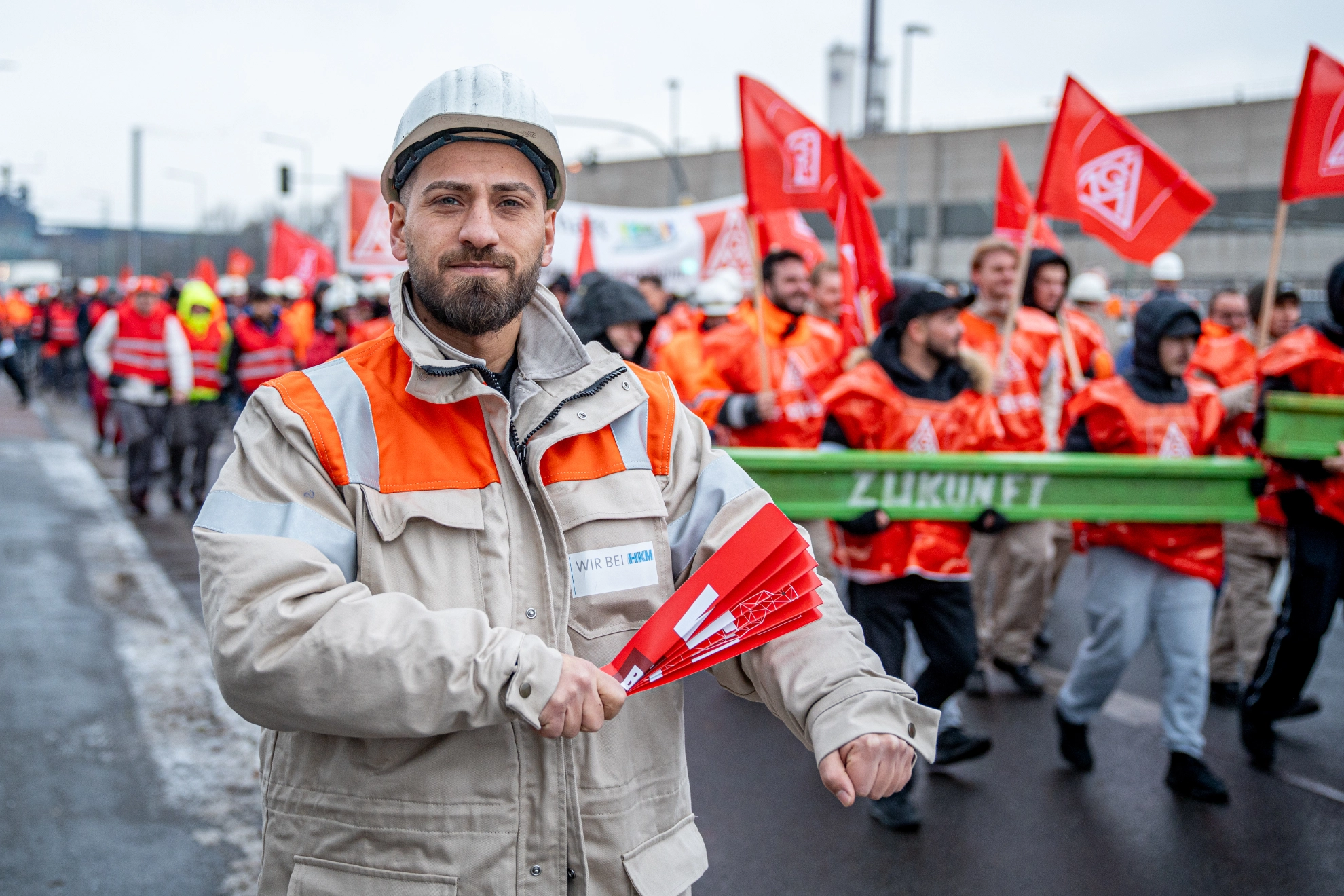
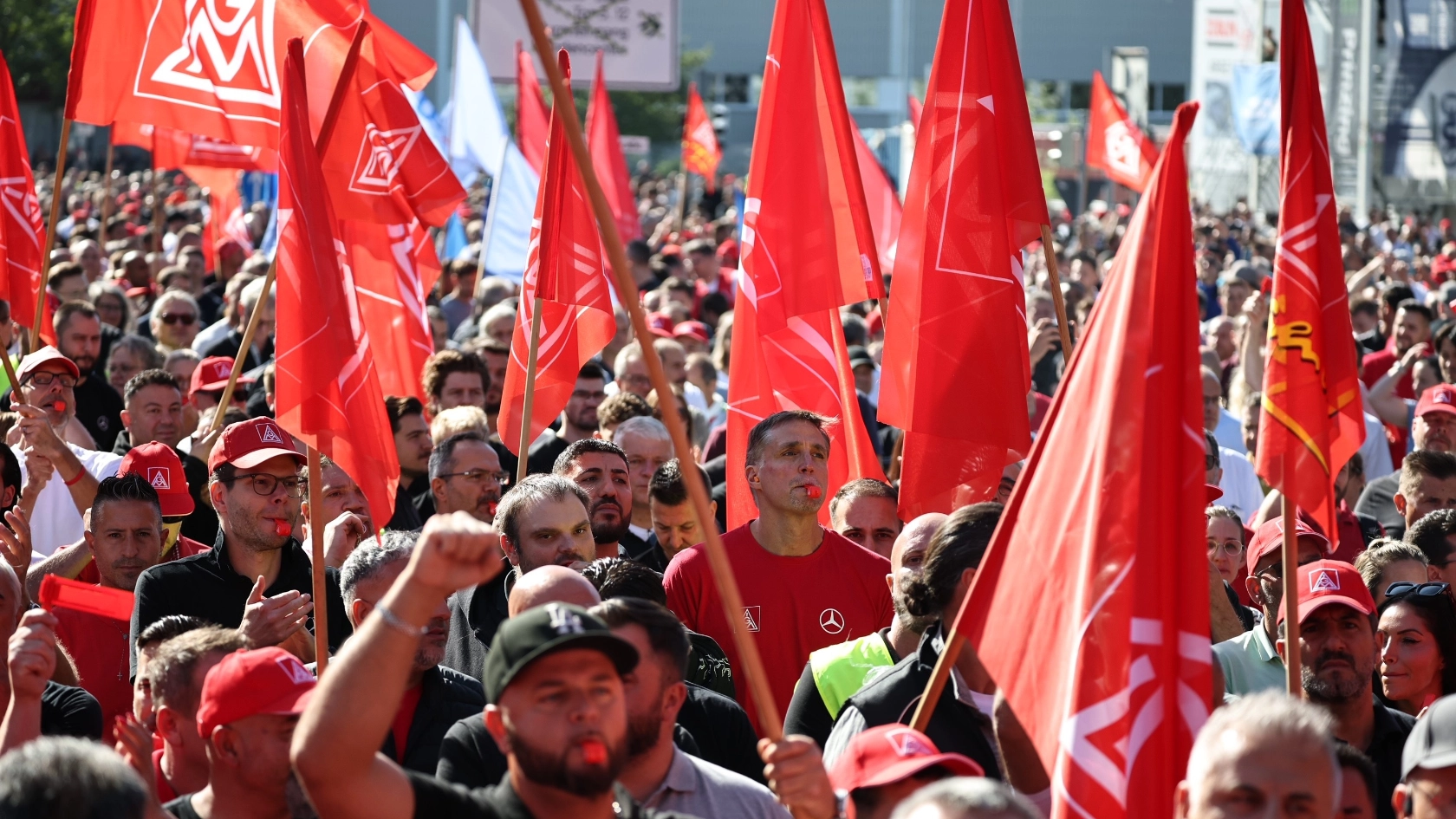
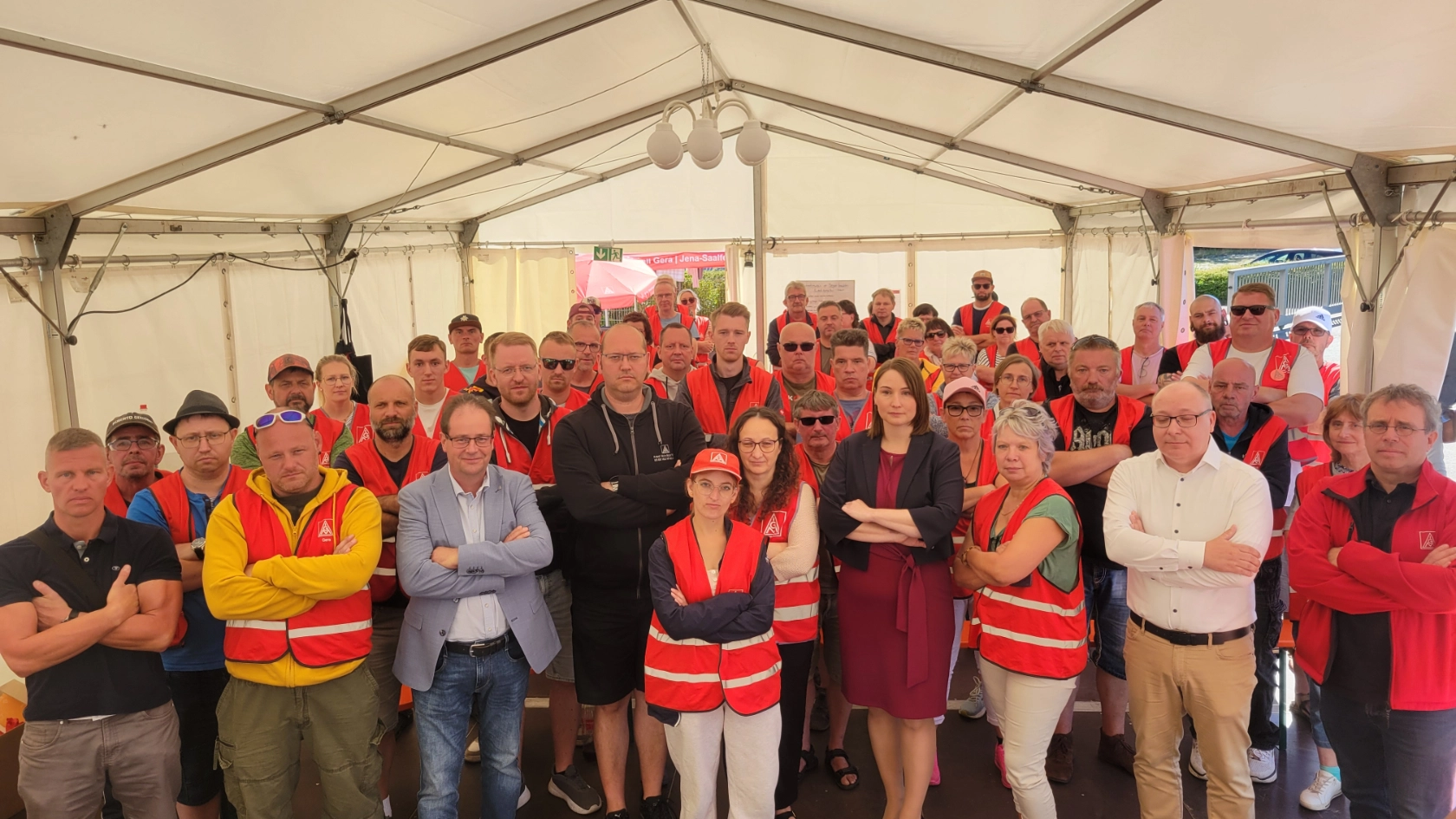
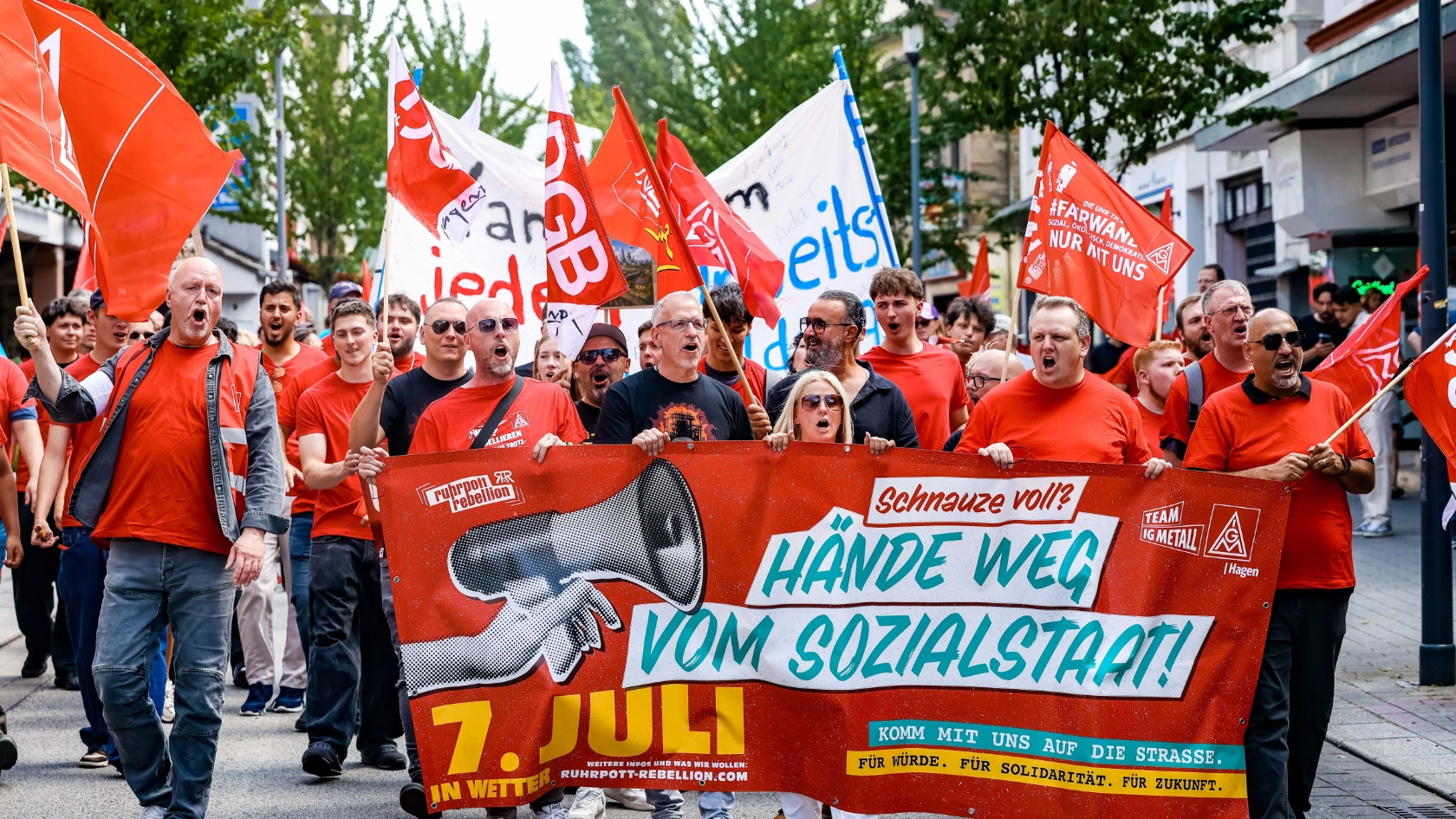
Higher wages and job security in the crisis-stricken steel industry: Following the negotiations in the northwestern German steel industry, IG Metall has now also reached a collective bargaining agreement in the eastern German steel industry:
- A 1.75 percent pay increase starting in January 2026
- 75 euros more per month for apprentices
- Valid through December 31, 2026
Job security extended
In addition, the collective bargaining provisions on job security will be extended. In addition to working time accounts, these provisions allow for a reduction in working hours to up to 28 hours per week, with partial wage compensation, in order to secure jobs.
Furthermore, the hiring of trainees is also guaranteed.
Furthermore, the collective bargaining agreements on work contracts and partial retirement have been extended.
“Responsibility for Steel” Project Nearly Failed
In the steel industry of northwestern Germany, a breakthrough was achieved on September 30 at the last minute, just before the end of the peace obligation at midnight. The collective bargaining negotiations were extremely difficult and were on the verge of breaking down on several occasions. Warning strikes at the plants had already been prepared.
“Unfortunately, it took four rounds of negotiations to reach this outcome. The ‘Responsibility for Steel’ project nearly failed,” explains Knut Giesler, regional director of IG Metall NRW and chief negotiator for the steel industry in northwestern Germany, who reported the outcome of the negotiations live via video—first to the bargaining committees and then to IG Metall members—that very night. “Fortunately, in the end, everyone faced up to their responsibilities. The outcome takes the steel industry’s unique situation into account.”
From the employees’ perspective, job security is particularly important during this deep crisis. IG Metall views the above-average pay increase for apprentices as a positive sign that the steel industry in Germany has a future.
“In the end, we secured an outcome that makes an important contribution to job security for workers and to stabilizing incomes,” says Jan Otto, IG Metall regional director for Berlin-Brandenburg-Saxony and chief negotiator for the East German steel industry. “Now IG Metall will once again ramp up the pressure on policymakers. The federal government must finally introduce the industrial electricity rate as promised and ease the burden on the steel industry when it comes to energy costs.”
“An Acceptable Outcome Given the Situation in the Steel Industry”
The members of the IG Metall negotiating committee—including works council members and IG Metall shop stewards from all major steel companies—view the outcome as an acceptable compromise in difficult times.
“Given the current economic situation in the steel industry and the political context, this is an acceptable outcome,” says Dirk Riedel, a member of the negotiating committee, works council member, and head of the IG Metall shop stewards at ThyssenKrupp Steel Duisburg-Hamborn/Beeckerwerth. “In doing so, we as employees have taken on responsibility. We would have expected the same level of responsibility from the employers.”
“We went into these negotiations with the goal of securing something for the apprentices, and we’ve achieved that,” says Selin Cakir, chair of the youth and apprentice representative body at Salzgitter Flachstahl, who helped negotiate on behalf of the young workers. “The hiring of trainees continues to be regulated by the extension of the collective bargaining agreement to secure employment, and in addition, compensation is increasing by 75 euros, which isn’t bad either.”
Now It’s Up to the Bargaining Committees
Now the bargaining committees must approve the outcome of the negotiations. Votes are scheduled for October 14 and 16. Finally, the IG Metall executive board will decide whether to accept the collective bargaining agreement.
“The negotiations were tough, but in the end, the collective bargaining system worked. We took responsibility and proved that collective bargaining agreements can overcome crises,” explains Nadine Boguslawski, who is responsible for collective bargaining policy on the IG Metall Executive Board. “We have achieved our goal as IG Metall: income, employment, and skilled workers are solidly secured. The new collective bargaining agreements on pay and job security create stability and prospects. However, collective bargaining can only be one building block for a sustainable steel industry. We’ve done our part to the best of our ability. The future of the German steel industry now lies in the hands of sound corporate leadership and strategic policy. We need an industrial electricity price to be implemented quickly and tangible projects from the special investment fund as soon as possible.”
The collective bargaining agreements apply to 60,000 employees in the iron and steel industry in northwestern Germany and 8,000 employees in eastern Germany.
2025 Saarland Steel Collective Bargaining Round