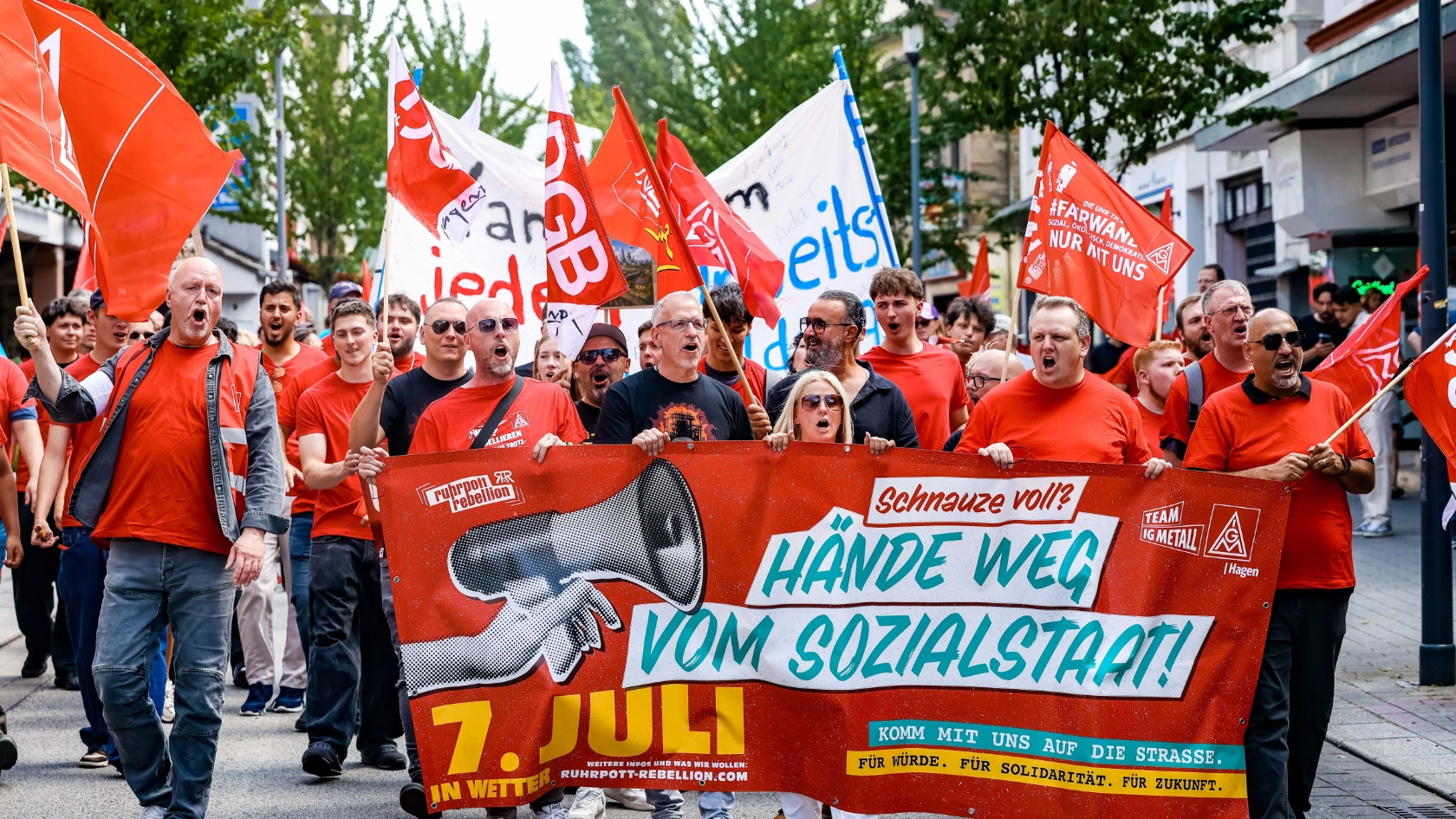
Collective bargaining negotiations in the iron and steel industry begin on Tuesday. IG Metall is demanding that employers guarantee jobs and full purchasing power. This was decided on Thursday by the bargaining committees of the steel industries in northwestern and eastern Germany. The IG Metall Executive Board confirmed and approved the bargaining demands on Friday morning.
In addition, IG Metall is calling on policymakers to finally establish favorable framework conditions for a sustainable steel industry. The federal government must provide relief by reducing the price of industrial electricity. The special investment fund must be quickly channeled into tangible projects. IG Metall expects Brussels to implement a European local-content policy in response to the tariff crisis and imports of low-cost steel.
Employers must also take responsibility during the crisis
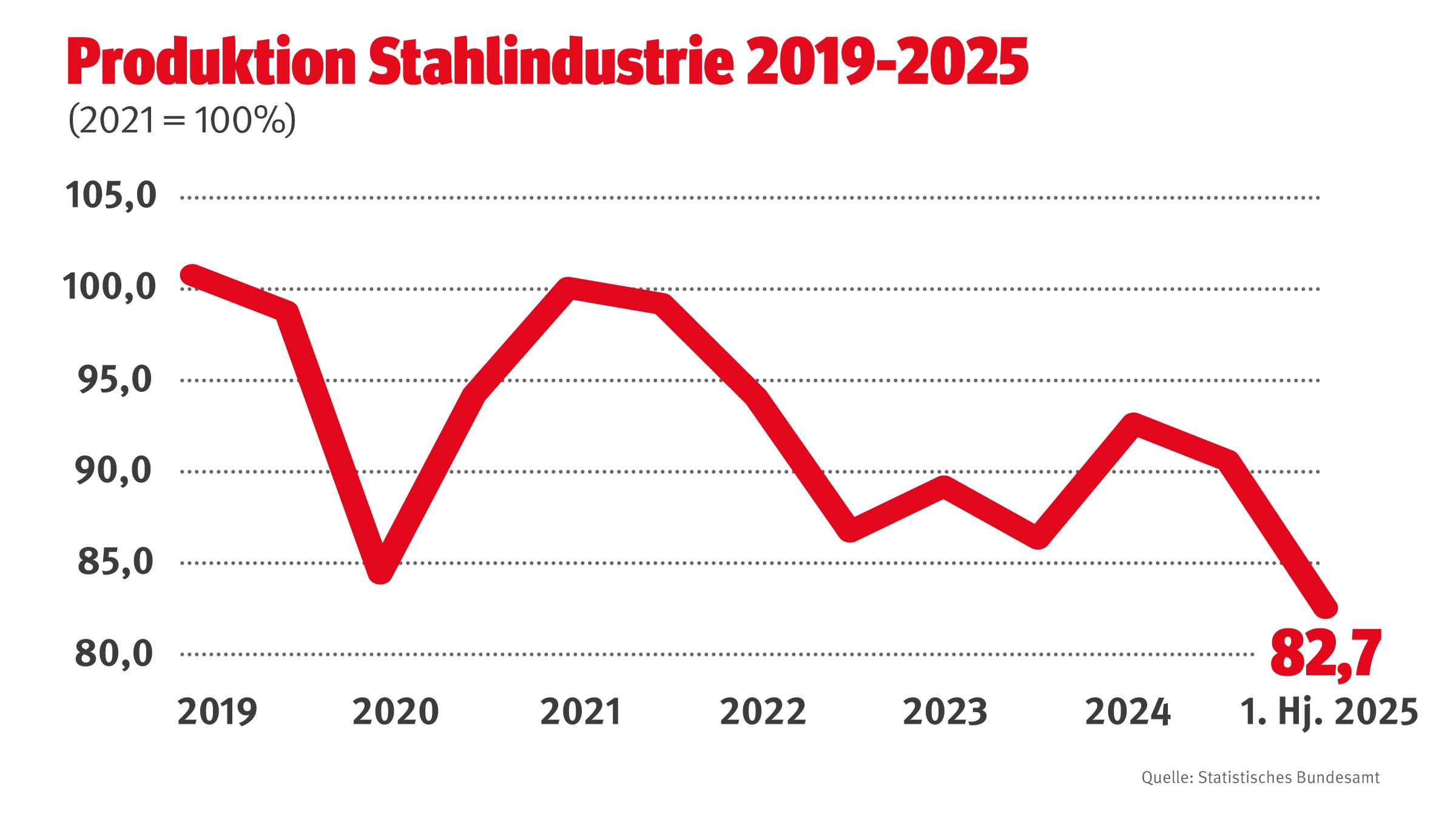
The economic conditions surrounding the steel collective bargaining round are extremely difficult. Crude steel production has fallen by 12 percent compared to the previous year. And companies are operating at a loss and cutting jobs.
“We are fully aware of the situation. We want to—and must—secure jobs, real wages, and skilled workers. Companies should also have an interest in this,” explains Nadine Boguslawski, IG Metall’s executive board member responsible for collective bargaining. Employers and policymakers now have a responsibility not to jeopardize Germany’s position as an industrial hub. “We want to prevent the bleeding out of Germany’s key industry and its workers at every level,” Boguslawski makes clear. “Through collective bargaining agreements, we think and act with an eye toward the future.”
For this reason, IG Metall—as it has done in the past during times of economic instability—is refraining from making a specific, quantified wage demand and is instead calling for a comprehensive package that secures jobs—as well as real wages—to maintain workers’ purchasing power and ensure that the steel industry remains attractive to skilled workers in competition with other sectors. IG Metall is calling on companies to make use of the options available under collective bargaining agreements to preserve jobs, such as collective bargaining agreements designed to secure employment.
IG Metall Will Not Accept a Zero Wage Increase
However, one thing is also clear: IG Metall will not accept a zero wage increase, emphasizes Knut Giesler, regional director of IG Metall NRW and chief negotiator for the steel industry in northwestern Germany. “For purely economic reasons alone, workers’ purchasing power must be safeguarded. It would be absurd to stifle domestic demand as well, given the economic downturn and collapsing export markets. Preserving workers’ purchasing power to stabilize the domestic economy is part of any promising anti-crisis strategy. Securing purchasing power requires both: preserving jobs—without which workers would have no income at all—and safeguarding real incomes. That is why we want to secure jobs and incomes.”
“IG Metall is very familiar with the economic situation in the steel industry and bases its collective bargaining demands on that,” affirms Jan Otto, district director of IG Metall Berlin-Brandenburg-Saxony and chief negotiator for the East German steel industry. “But to avoid any misunderstandings, let me make one thing very clear: The fact that we are refraining from making a specific monetary demand does not mean that we have no demands of the employers. On the contrary, we are holding them accountable to take responsibility, especially now.”
Economic Situation: In the Red Across the Board
“The steel industry is in the midst of a multi-faceted crisis. The economic crisis in the downstream sectors is taking a toll on steel producers,” explains Knut Giesler, chief negotiator for the Northwest region. “Added to this are energy prices that are far too high and the massive cost burden resulting from the transition to green steel. Furthermore, global factors, such as tariff policies and pressure from rising steel imports, are leading to significant uncertainty and disruptions in the steel market. The fact that policymakers in Germany and Europe are merely standing by and watching on many of these issues, rather than establishing framework conditions that would provide the steel industry with security for its future, does not make the situation any easier for the industry.”
In nearly all plants, working hours have been reduced to safeguard jobs, as permitted by IG Metall’s collective bargaining agreements on employment security, in order to prevent layoffs.
AtThyssenkrupp Steel, Germany’s largest steel manufacturer, for example, IG Metall has negotiated a restructuring collective bargaining agreement, which IG Metall members at the company have just voted on: Working hours will be reduced to 32.5 hours per week. More than 4,000 older employees (out of a total of 27,000) will be sent into early retirement via a “retirement bridge” program with compensatory payments. This ensures that the workforce reduction is carried out in a socially responsible manner. Until 2030, layoffs for operational reasons are permitted only as a last resort.
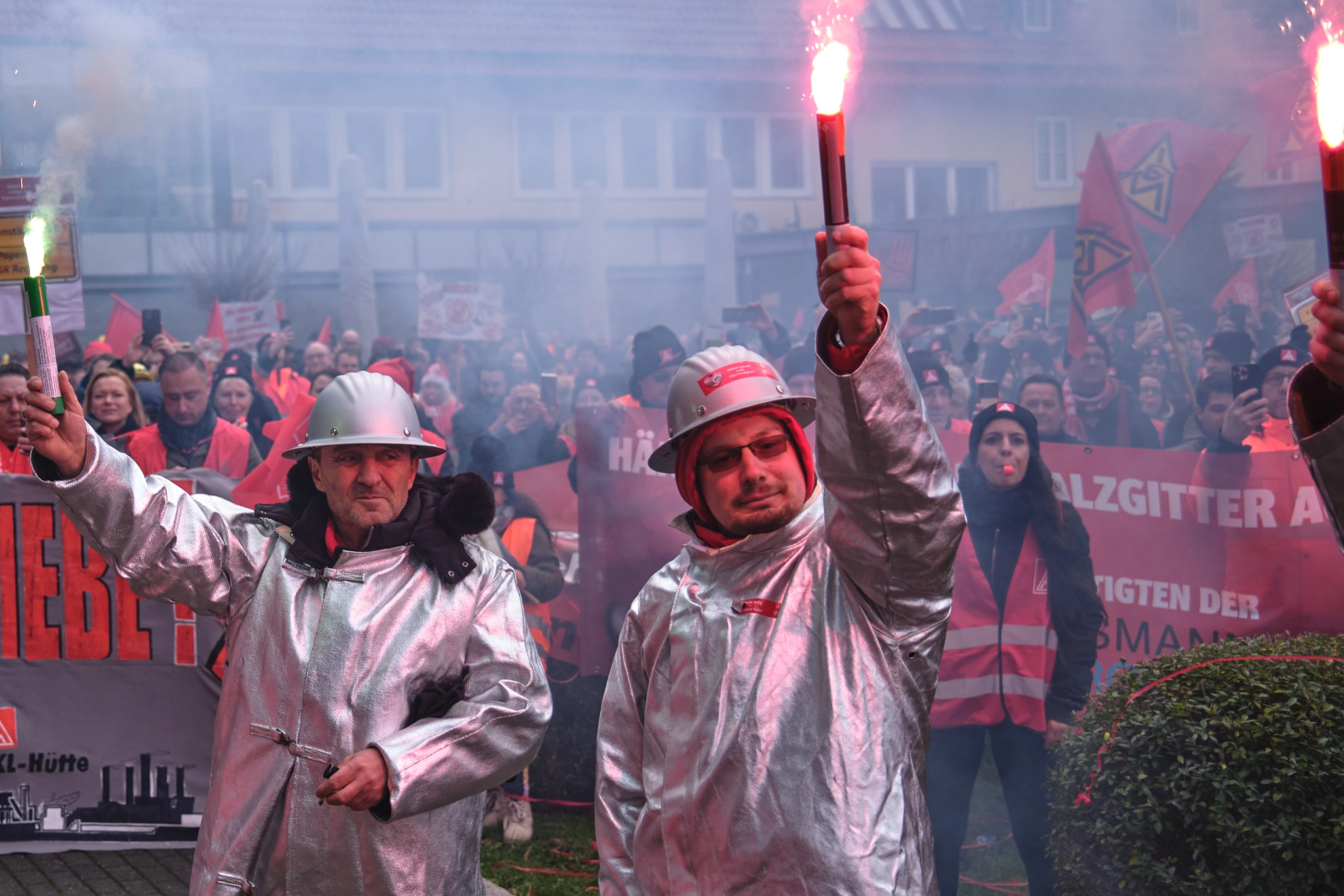
At many other companies, employees and IG Metall are currently fighting against job cuts. A transfer collective bargaining agreement is also in effect at Saarstahl. Salzgitter is facing the threat of restructuring. At Hüttenwerke Krupp Mannesmann GmbH (HKM) in Duisburg, the future of the steelworks is at stake. Therefore, securing jobs is one of IG Metall’s goals in the 2025 steel industry collective bargaining round.
“In negotiations for job security at crisis-stricken companies, workers have already made concessions up front,” clarifies IG Metall collective bargaining board member Boguslawski. “They need a guarantee in a new collective bargaining agreement as a framework: their standard of living must not deteriorate.”
Across Germany, 82,000 workers in the steel industry are covered by collective bargaining agreements. The negotiations now getting underway initially affect 68,000 steelworkers, primarily in northwestern and eastern Germany. The steel collective bargaining round for the Saarland will begin in mid-November.
Timeline for Steel Collective Bargaining Rounds
Northwestern and Eastern German Steel Industry
- September 11: The bargaining committees adopt their recommended demands.
- September 12: The IG Metall Executive Board adopts the final demands for the negotiations.
- September 16: Start of collective bargaining negotiations.
- September 30, midnight: The collective bargaining agreements expire. End of the peace obligation.
- October 1: Warning strikes are now permitted.
Saarland Steel Industry
- December 31: The term of the wage collective bargaining agreement ends. The peace obligation ends.
We will announce the exact dates at a later time.
Further information, flyers, and the latest news