Automatic translation
This article has been translated automatically using computer technology. While we strive for accuracy, some wording or details may differ from those in the original article.
This translation was not manually reviewed. For important facts, quotations or legally sensitive information, please consult the German original. Individual selections, images, embedded media or technical terms may have been translated differently or incompletely.

Declining Collective Bargaining Coverage 130 billion euros stolen! The exodus from collective bargaining agreements

Without a collective bargaining agreement, everything’s a mess. This isn’t just true for employees, who end up with much less money in their pockets at the end of the year without one. The government and the general public suffer, too. Billions are lost every year.

Beschäftigte während einem Warnstreik in der Textil-Tarifrunde West 2023

22 November 2023 22 November 2023


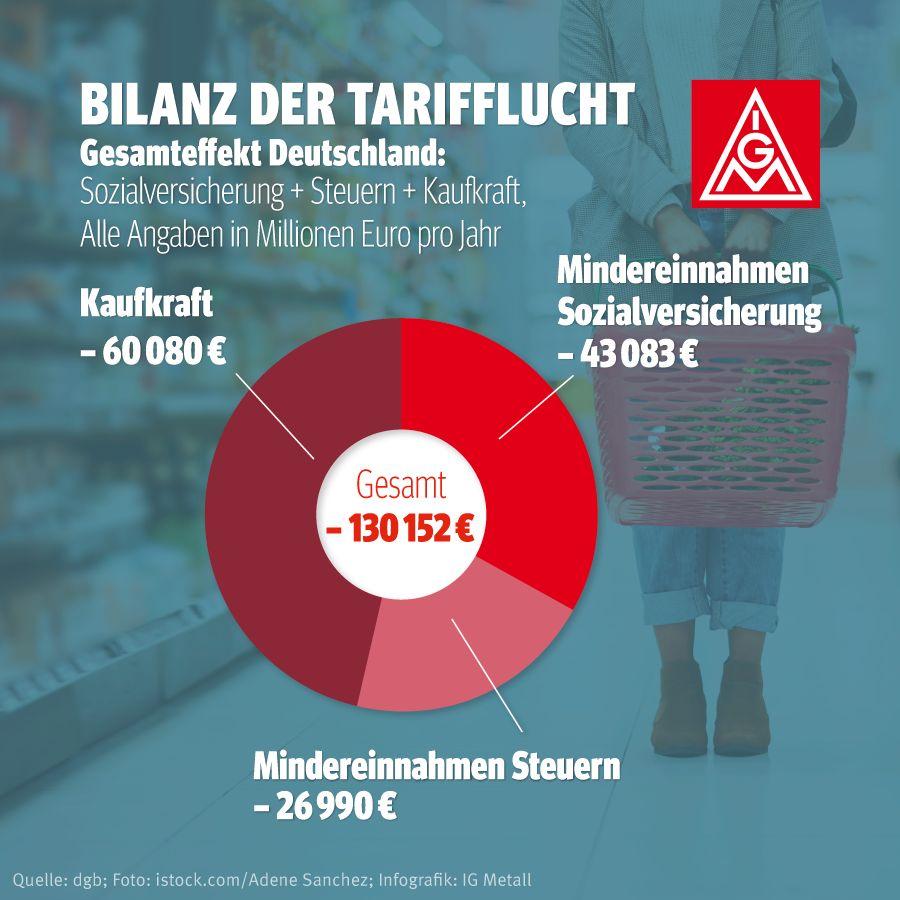
Employees without a collective bargaining agreement earn an average of 3,022 euros less net per year. This is due to lower wages, but also to the fact that they often receive no vacation pay or Christmas bonus, and allowances and other special payments are usually lower or nonexistent. However, employees aren’t the only ones suffering from declining collective bargaining coverage: The government and the general population lose a total of 130 billion euros each year due to the lack of collective bargaining agreements. The DGB has now calculated this figure based on a special analysis by the Federal Statistical Office.

But how exactly is this enormous sum calculated? Due to lower wages and salaries resulting from the absence of strong collective bargaining agreements, the government loses approximately 43 billion euros annually in social security contributions. Social security contributions, such as health insurance or pension insurance, are calculated as a percentage of gross wages. If these wages are lower, the government consequently loses funds that could otherwise be redistributed to the community based on need.


Tortendiagramm zeigt: Dem Staat und der Allgemeinheit entgehen jährlich 130 Milliarden Euro durch Tarifflucht.


Then there is the reduced tax revenue resulting from the failure to adhere to collective bargaining agreements. This amounts to 27 billion euros per year. The third decisive factor is the decline in purchasing power caused by low wages and salaries. If collective bargaining agreements were universally applied, employees would have approximately 60 billion euros more in their bank accounts and could reinvest this money into the local economy through consumption and investment.


Politicians must take action—pass the Collective Bargaining Compliance Act now!

Significant regional differences are evident. Looking at eastern Germany in terms of lost social security contributions, lower tax revenues, and declining purchasing power due to lower wages and salaries, the total shortfall here amounts to more than 31 billion euros. In the west, the total shortfall is as high as 99 billion euros.

The unions are fighting every day for greater adherence to collective bargaining agreements. Currently, IG Metall is fighting alongside the employees of the ride-hailing service Moia —a wholly owned VW subsidiary—to move away from dumping wages just barely above the minimum wage and toward a collective bargaining agreement. At another startup, employees and IG Metall have just achieved success: The 1,300 employees of bicycle manufacturer Canyon have not only secured a new collective bargaining agreement with significantly better wages plus Christmas and vacation bonuses, but their workweek will also be reduced to 37.5 hours in the future.

Unions alone will not be able to win the fight against collective bargaining evasion. Politicians must take action. The DGB is calling for public funds and subsidies to go only to companies that adhere to collective bargaining agreements. The current government has included the so-called Collective Bargaining Compliance Act in its coalition agreement. The law is intended to implement the unions’ demand that government contracts and subsidies be awarded only to companies that pay according to collective bargaining agreements. The law has not yet been enacted. Federal Labor Minister Hubertus Heil announced at the IG Metall union convention in late October that the bill would be introduced before the end of this year. The DGB further demands that it must become easier to declare a sector’s collective bargaining agreements generally binding on all companies.

New on igmetall.de
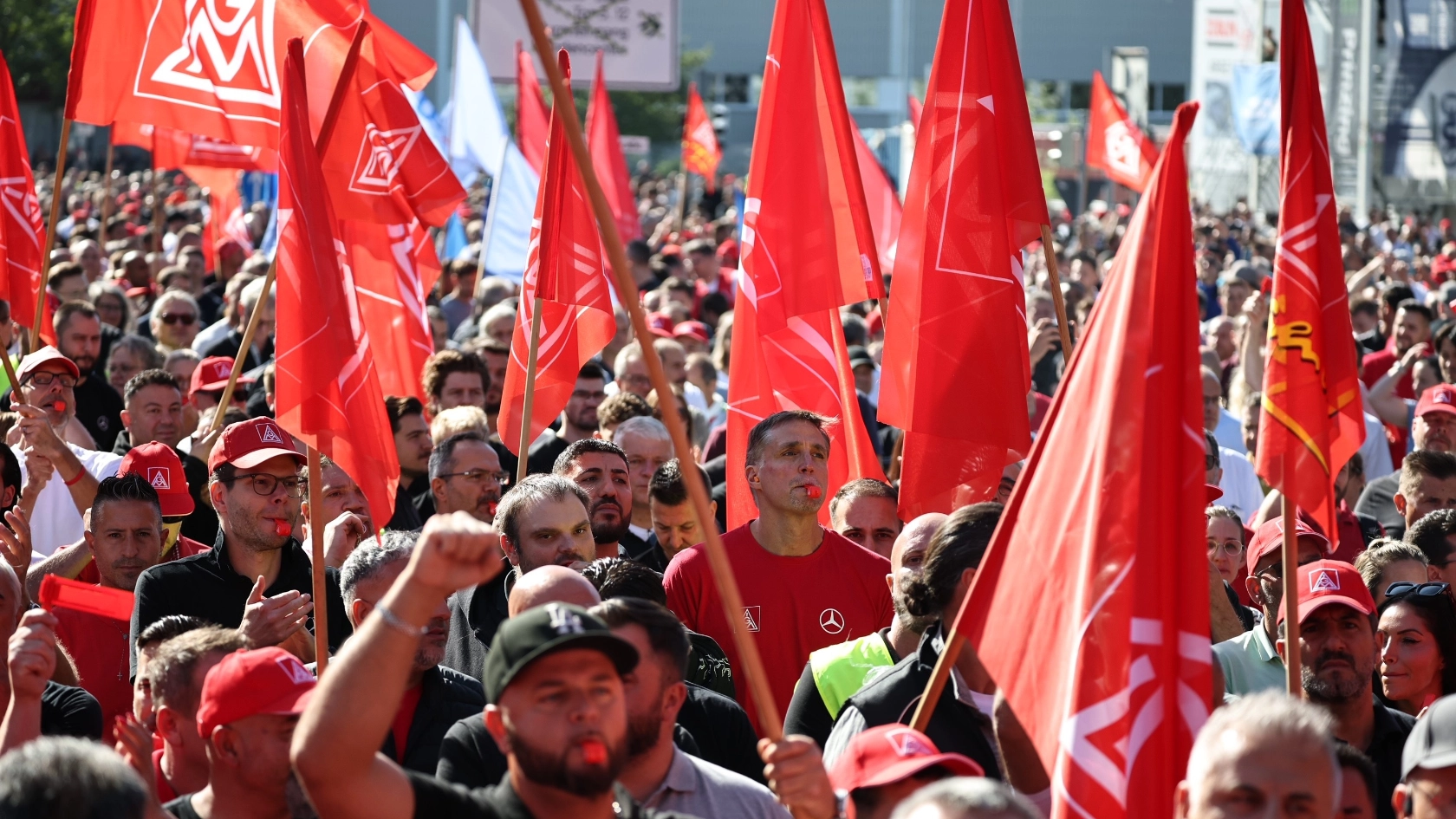
Aktionstag bei Mercedes Benz, Daimler, in Sindelfingen gegen die Angriffe auf Beschäftigten in der Automobilindustrie.
Resistance to Attempts at Drastic Cuts Auto industry workers issue a warning
Sie wollen doch nur dein Bestes
Redistribution Making Germany more equitable: We need this tax reform now
Der Streik bei Kelvion in Nobitz-Wilchwitz begann am 4. August 2026. Die Geschäftsleitung will nach Sarstedt/Niedersachsen verlagern - obwohl die Produktion in Wilchwitz profitabel und bis ins nächste Jahr ausgelastet ist.
"It’s worth fighting for!" Kelvion workers strike for a social collective bargaining agreement
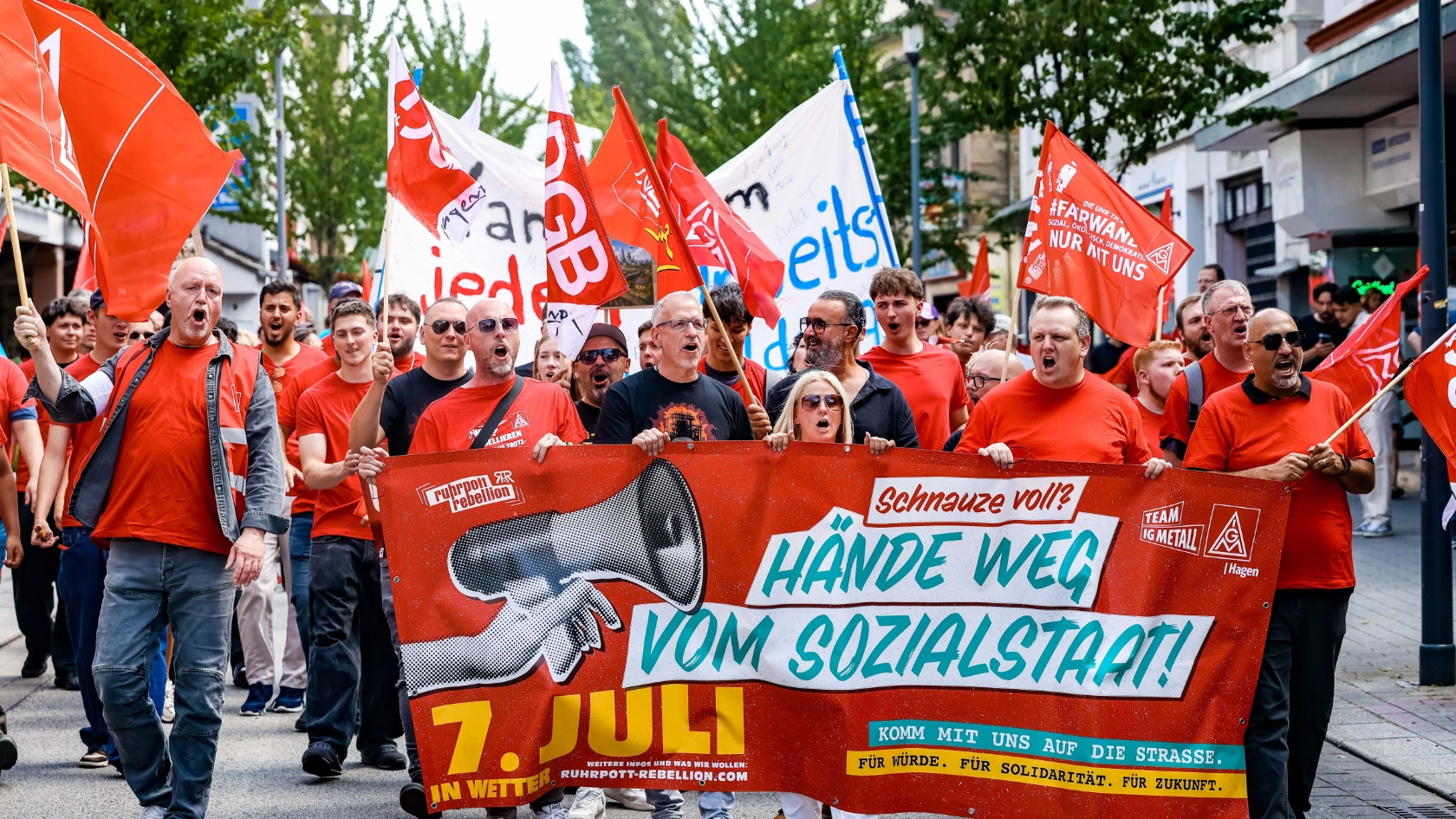
Ruhrpott Rebellion am 07.07.2026
Welfare State September 26: Nationwide Day of Action for Social Policy
Beschäftigter arbeitet an einem Getriebe in einer Fabrik
Working Hours Why working longer doesn’t help—and actually does more harm than good
Ein männlicher Land- & Baumaschinenmechatroniker prüft einen Traktor mit einem Tablet
2026 Collective Bargaining Agreement for the Metalworking and Agricultural Engineering Sectors Greater Flexibility in the Metalworking and Agricultural Engineering Sectors in Lower Saxony and Bremen
Elektronikerin prüft die Spannung an einem Schaltschrank.
2026 Collective Bargaining Round for the Electrical Trades Wage Increase in the Electrical Trades in Berlin-Brandenburg
Benjamin Heine ist Mitarbeiter der BMA in Braunschweig
2026 Collective Bargaining Round for Metal Fabrication and Precision Engineering Higher Wages in the Metal Fabrication and Precision Engineering Sectors in Southwest Germany
Metall-Arbeiter beim Schleifen
2026 Collective Bargaining Round for the Metalworking Trade Employees in the Berlin-Brandenburg metalworking sector will receive higher pay
Beschäftigte von Thyssenkrupp demonstrieren in Essen am 23. Mai 2024 gegen das Vorgehen der Geschäftsführung beim geplanten Teilverkauf des Unternehmens.
Defend the welfare state All dates for nationwide actions against cuts to social services
IGM Aktion VW Wolfsburg
On September 21, things will get loud Nationwide Day of Action: Auto Industry Workers Fight Back Against Mass Layoffs
Auszubildender in einer Schreinerei
Apprenticeship Wages Questions and Answers About Apprenticeship Wages

Subscribe to the newsletter