Politicians Have Not Done Their Homework So Far
There are 13 blast furnaces in operation in Germany—all of which must be replaced by direct reduction plants, and problems are already arising with the very first plants; Thyssenkrupp is by no means an isolated case. The necessary infrastructure is also lacking in many places. Direct reduction plants require hydrogen to produce steel in a climate-neutral manner. But there is a lack of pipelines for transport, as well as a significant expansion of renewable energy sources needed to produce green hydrogen. And then there are the high energy costs. IG Metall is calling for an industrial electricity rate so that steel mills in Germany can produce competitively. But Finance Minister Christian Lindner, in particular, is still resisting.
Political wrangling is unsettling the entire industry
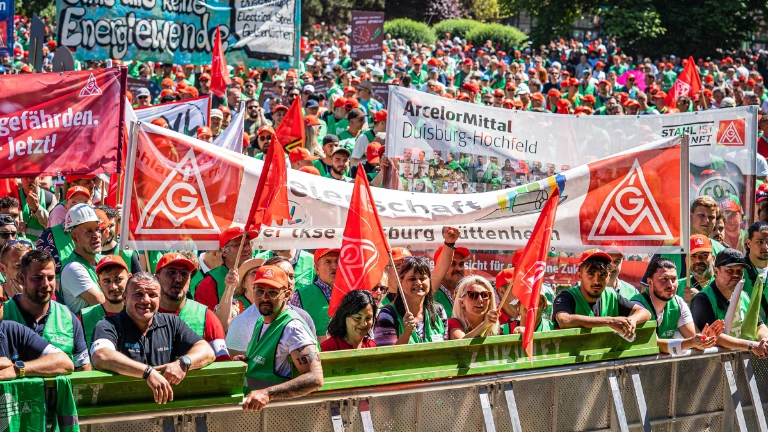
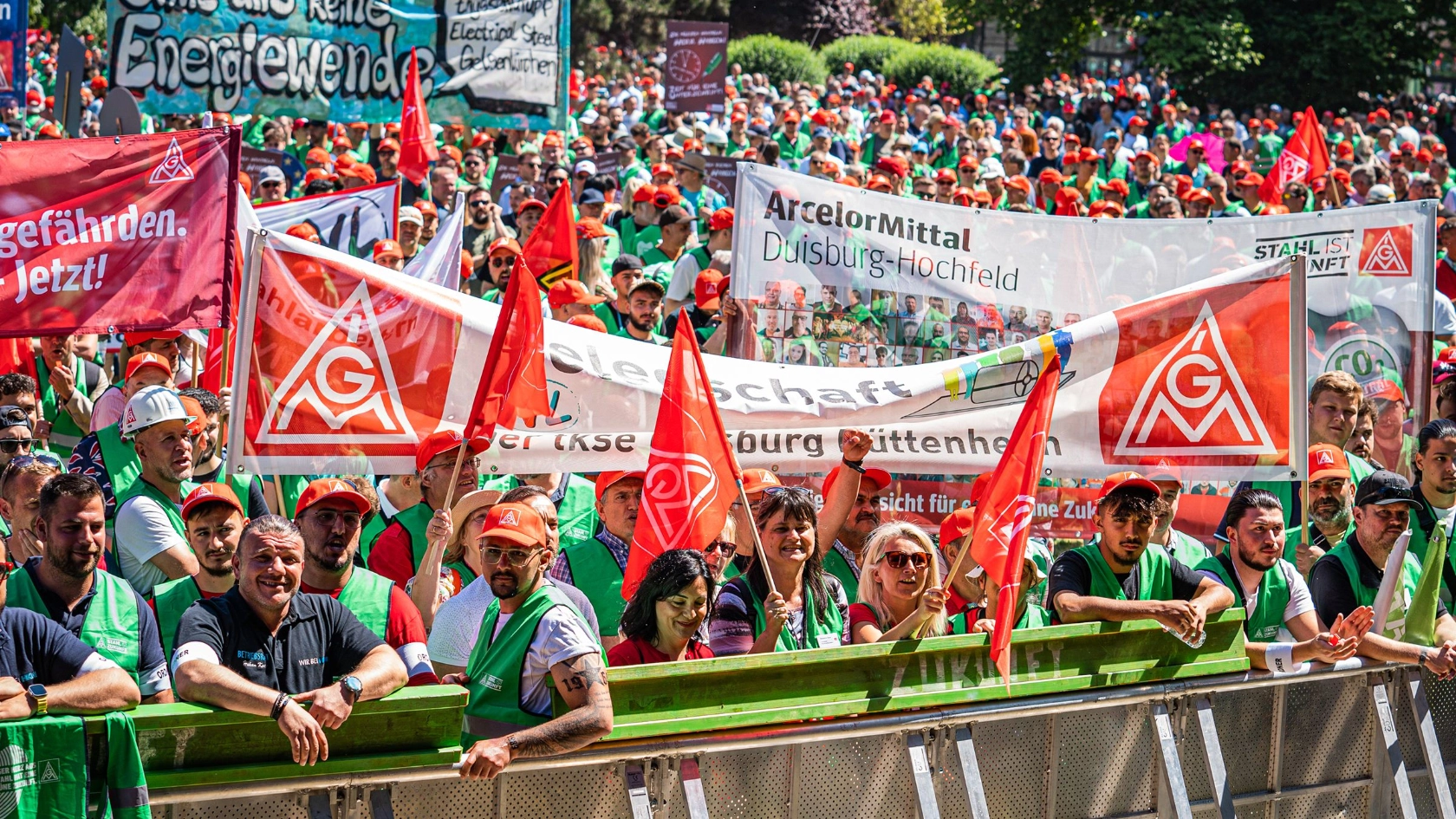
All of this is making more than just Thyssenkrupp Steel employees nervous. “We, too, are on the verge of making investments. And we, too, have not yet received an official funding approval,” reports Wolfgang Kleber, works council chairman at ArcelorMittal in Duisburg. What’s currently happening at Thyssenkrupp is deeply unsettling for employees at his site. That’s why the metalworker makes it clear: “The federal government made a commitment. Now it has to stick to it. No one understands this back-and-forth. Steel only has a future if we set the course now. The government has to decide: Does it still want steel production in Germany, or not? We’re turning up the pressure now.”
Investments in green steel have the greatest impact
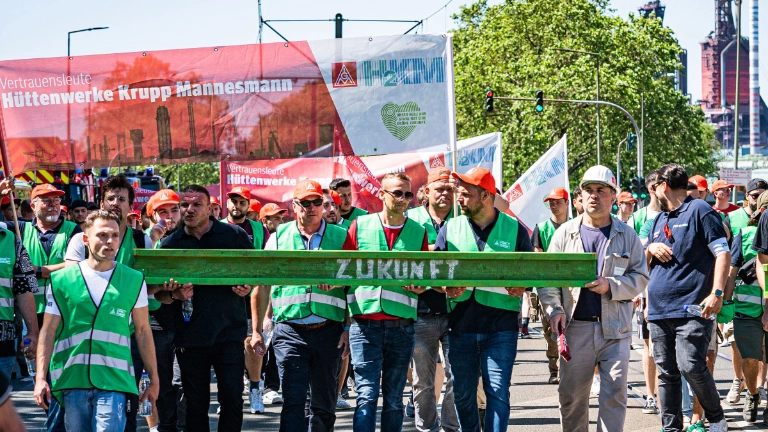
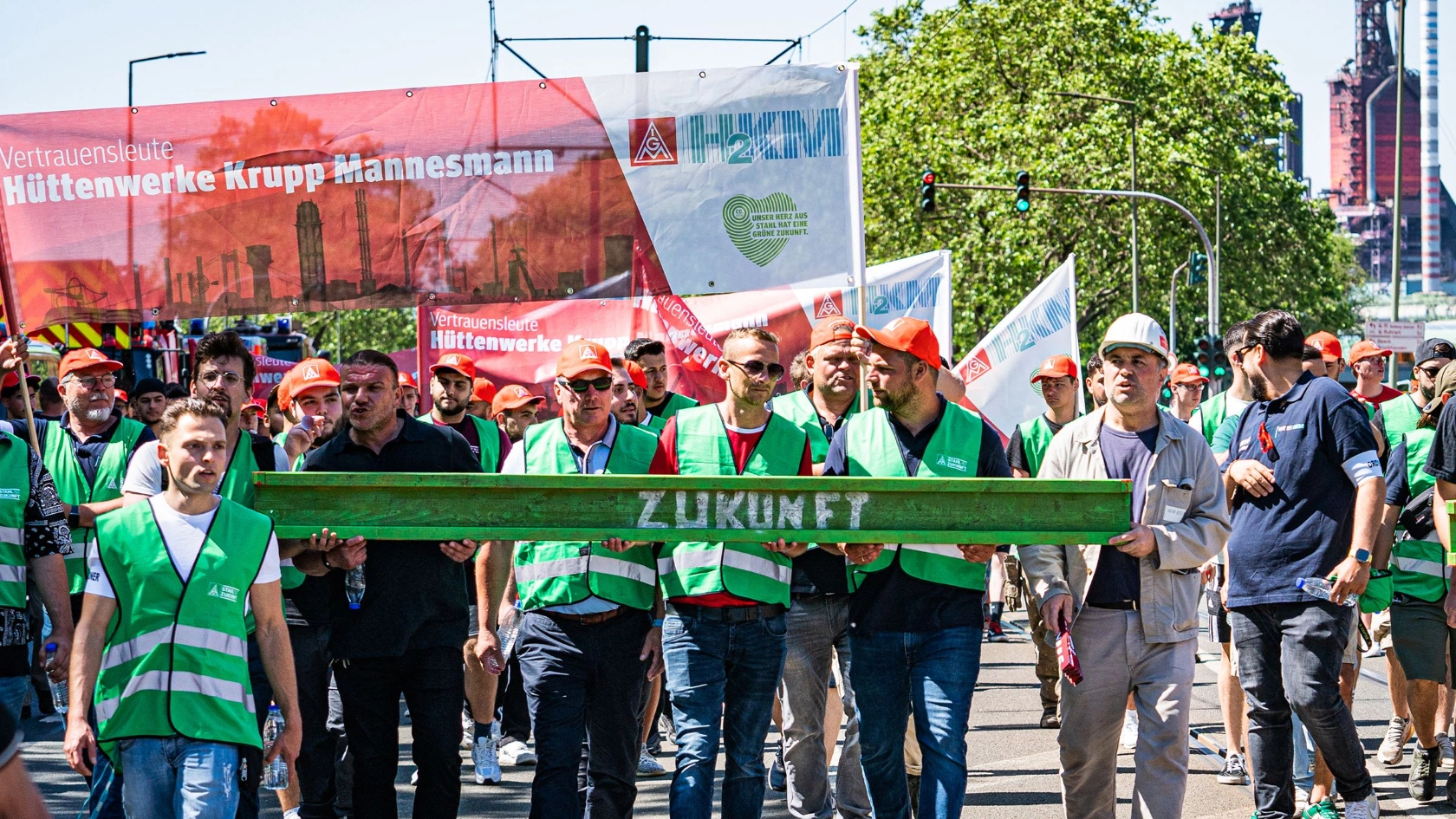
At HKM, too, people don’t understand why the money hasn’t been on the table long ago. “If Robert Habeck is serious about the ecological transition, then he must act now. Steel is a major source of CO2 emissions. Every euro invested in our industry has a two- or threefold positive impact on our carbon footprint,” explains Marco Gasse, chairman of the works council at HKM Duisburg. Gasse emphasizes: “That’s why I don’t understand why the Minister of Economic Affairs is hesitating now, while Berlin and Brussels are passing the buck back and forth. We at HKM urgently need the transformation to finally get underway. To do that, we need investment and certainty.”
Habeck Promises to Transform the Entire Steel Industry
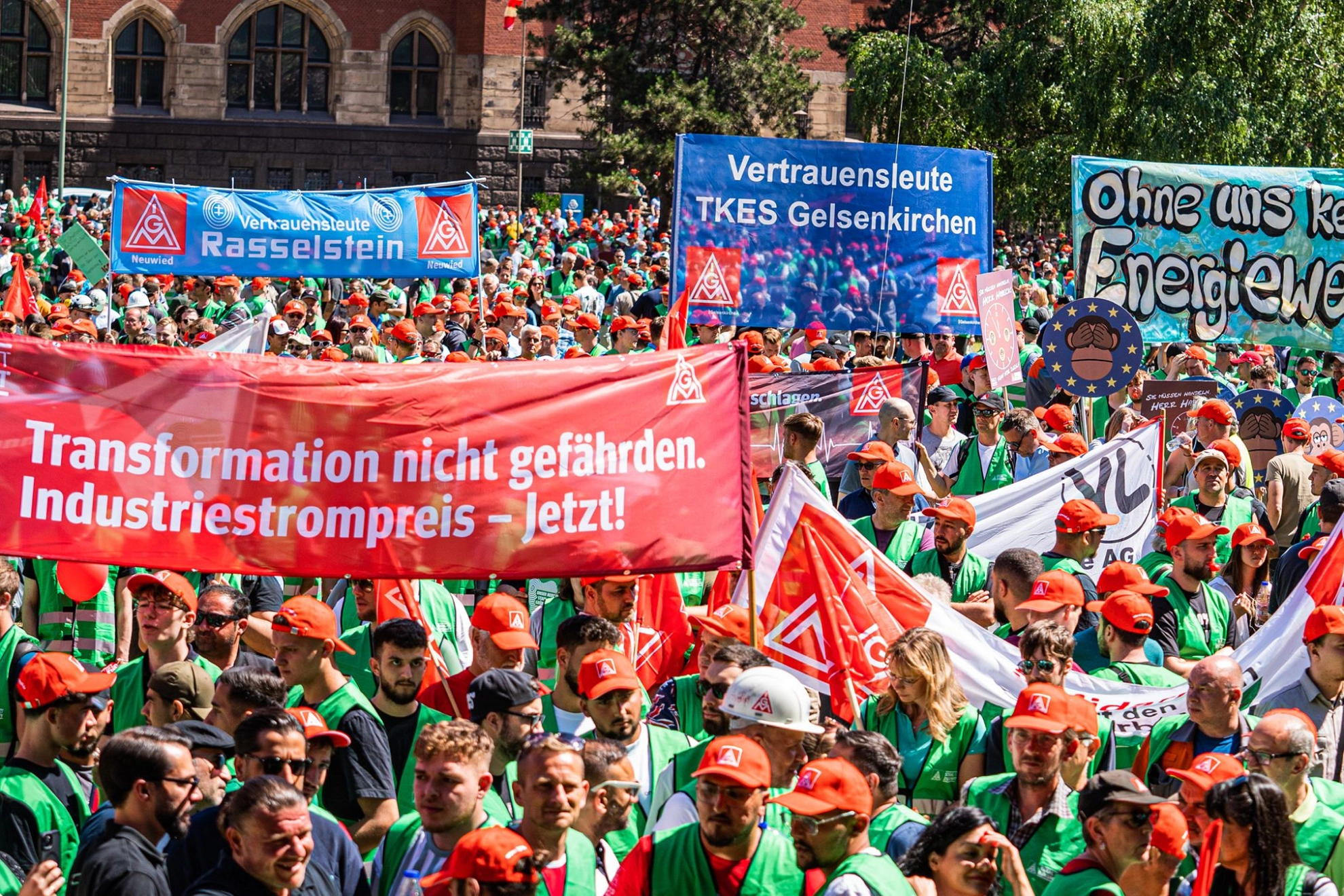
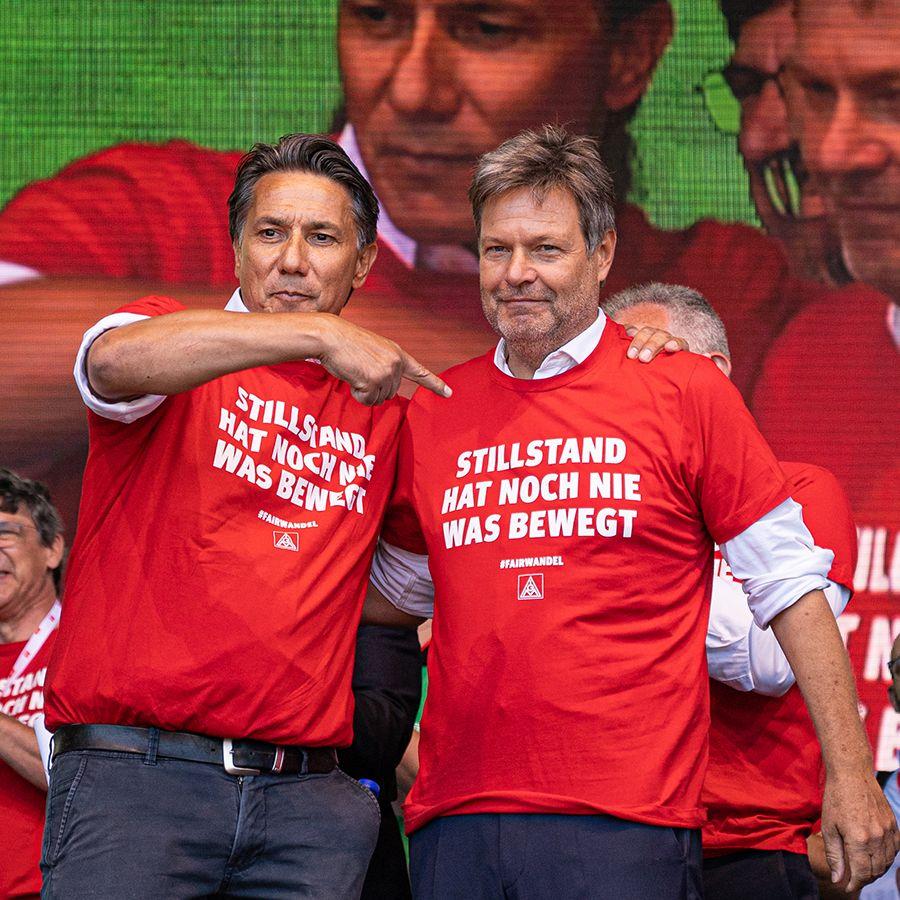
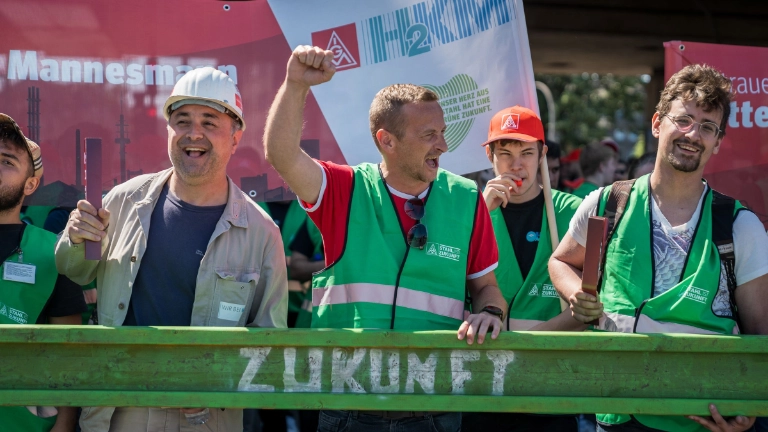
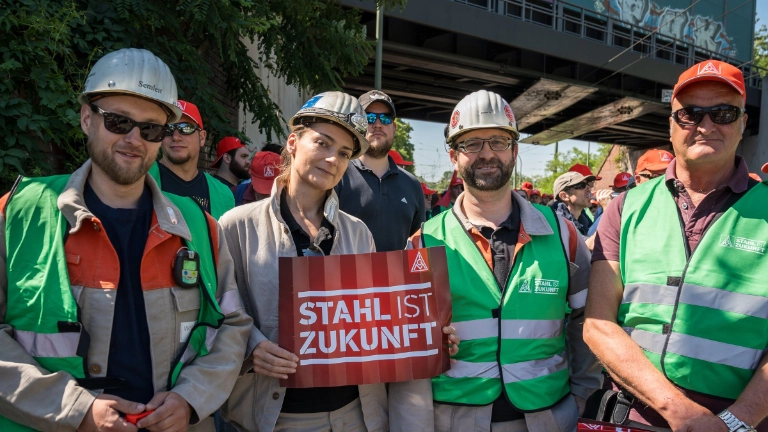
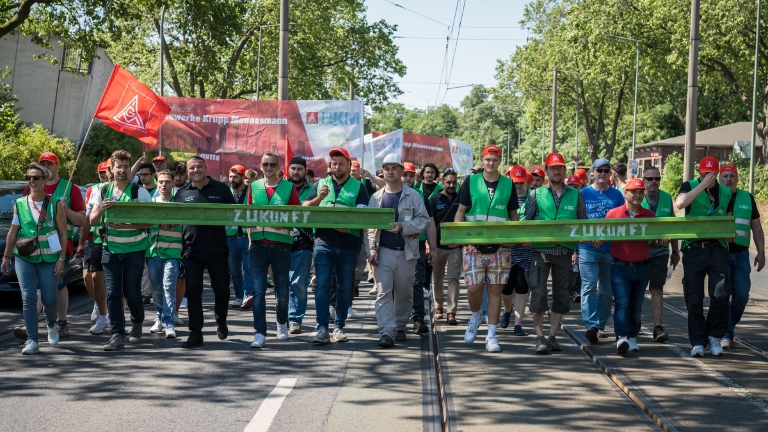
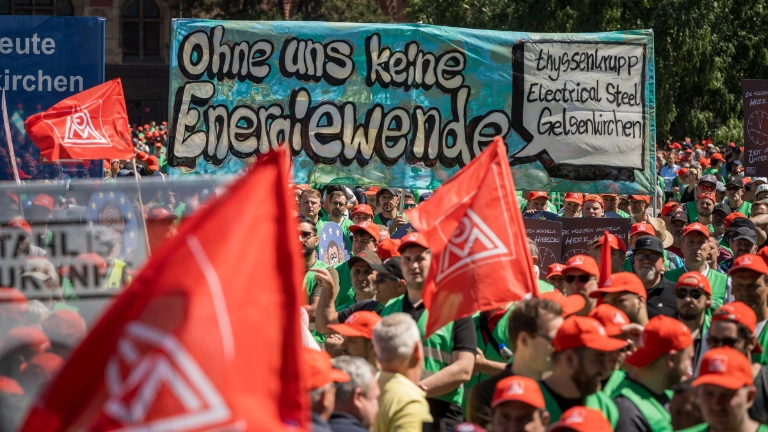
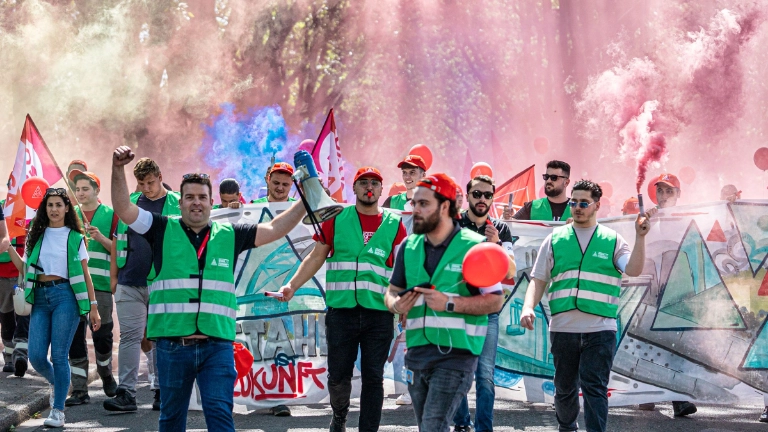
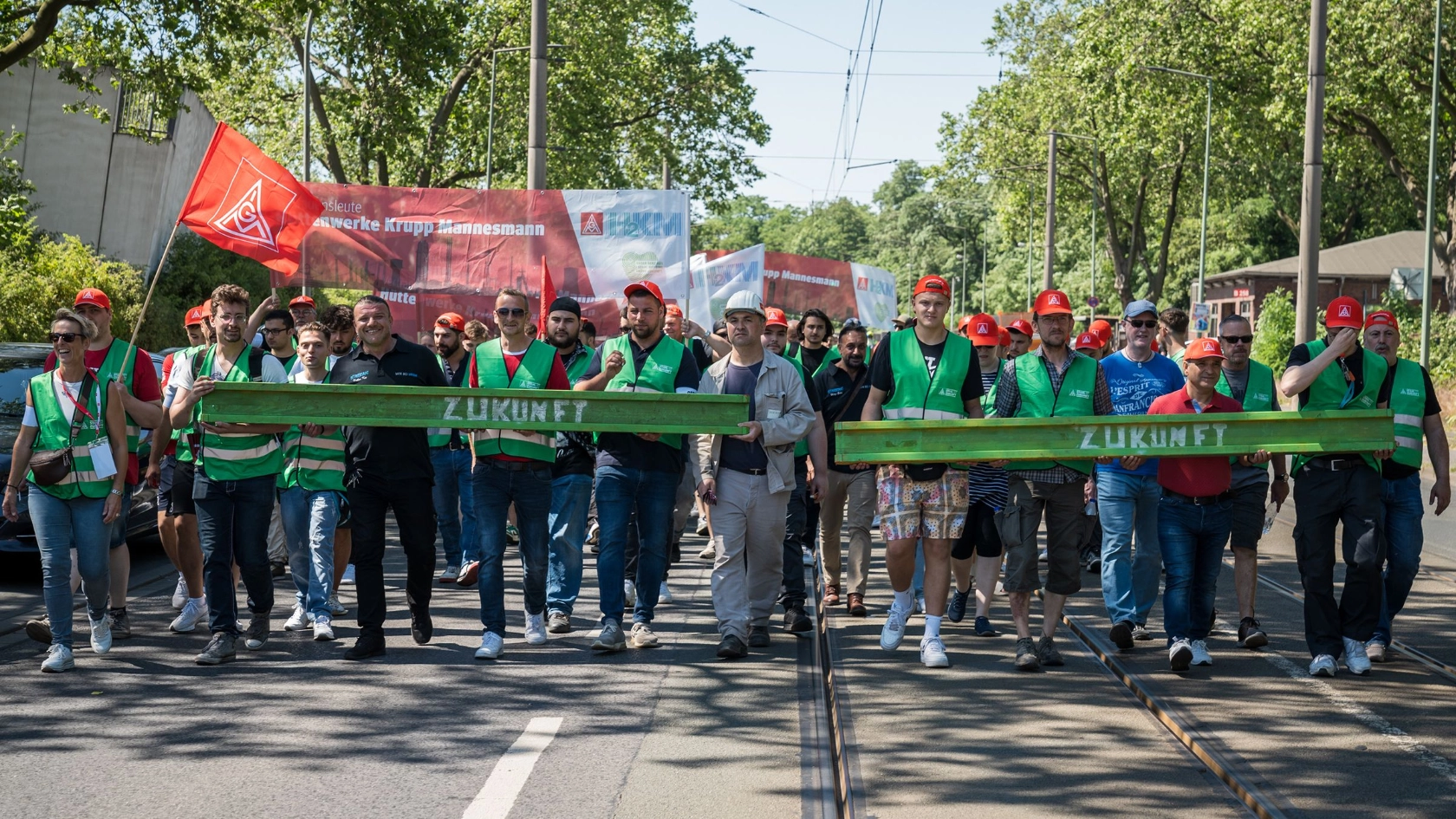
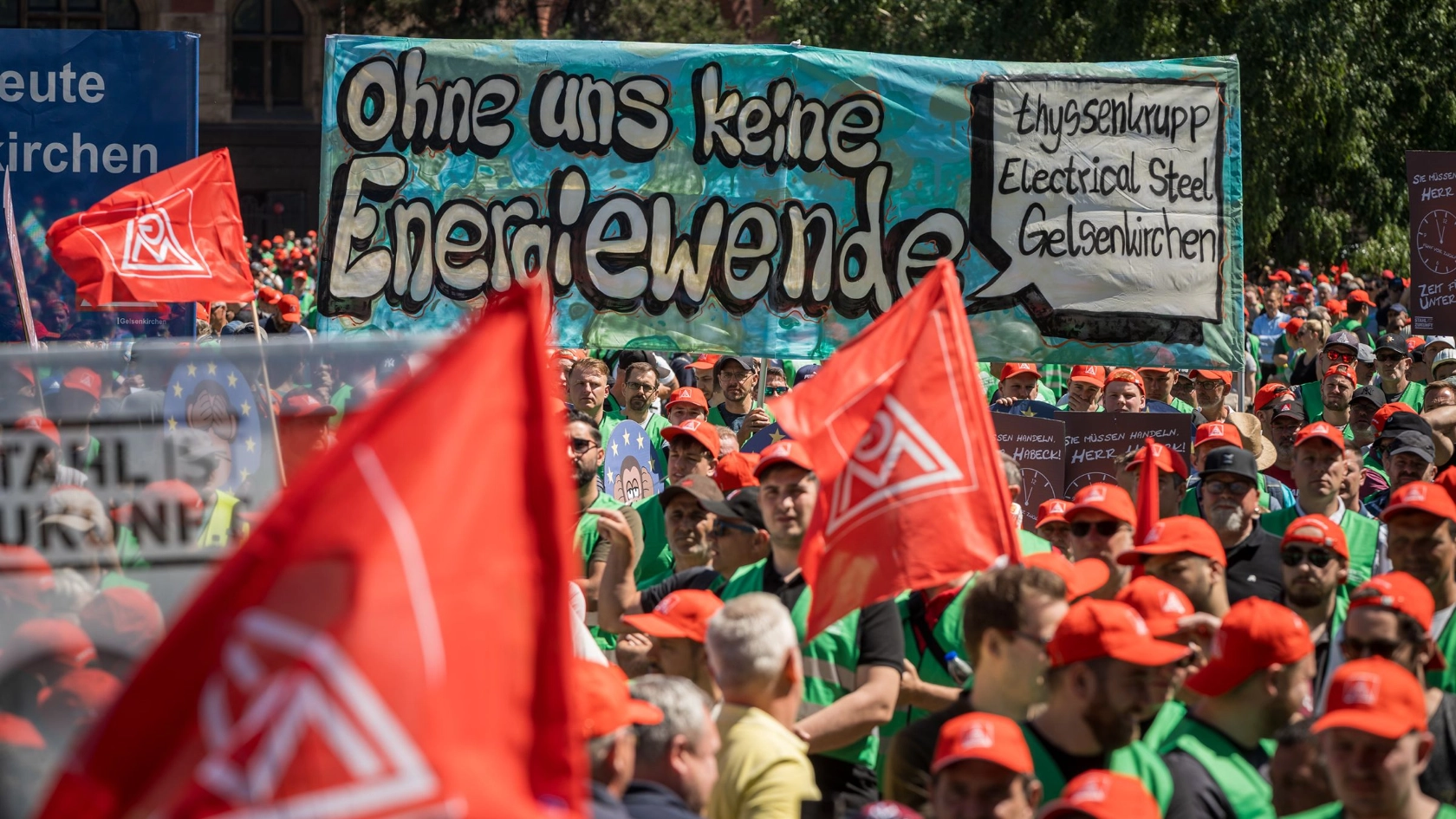
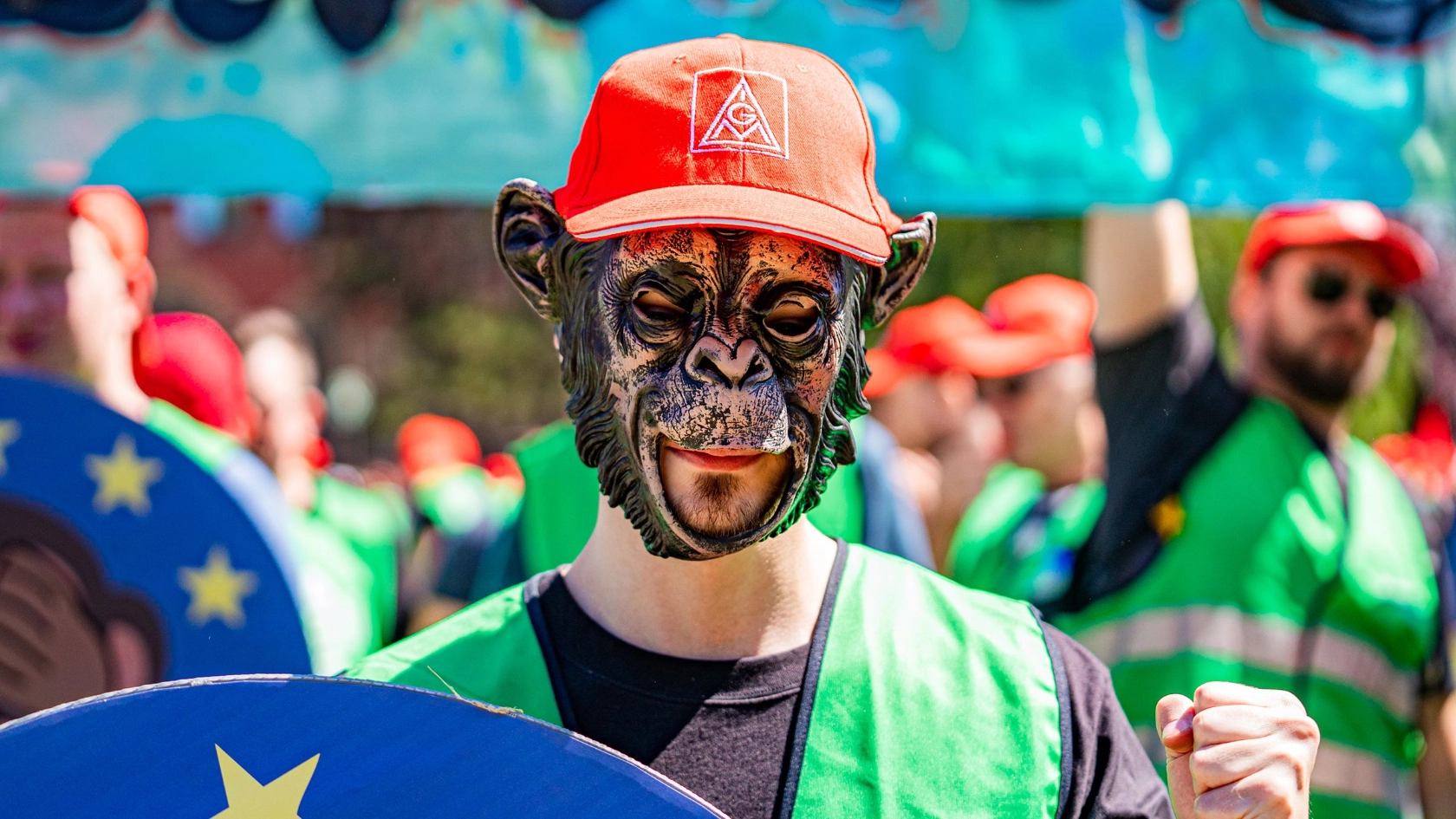
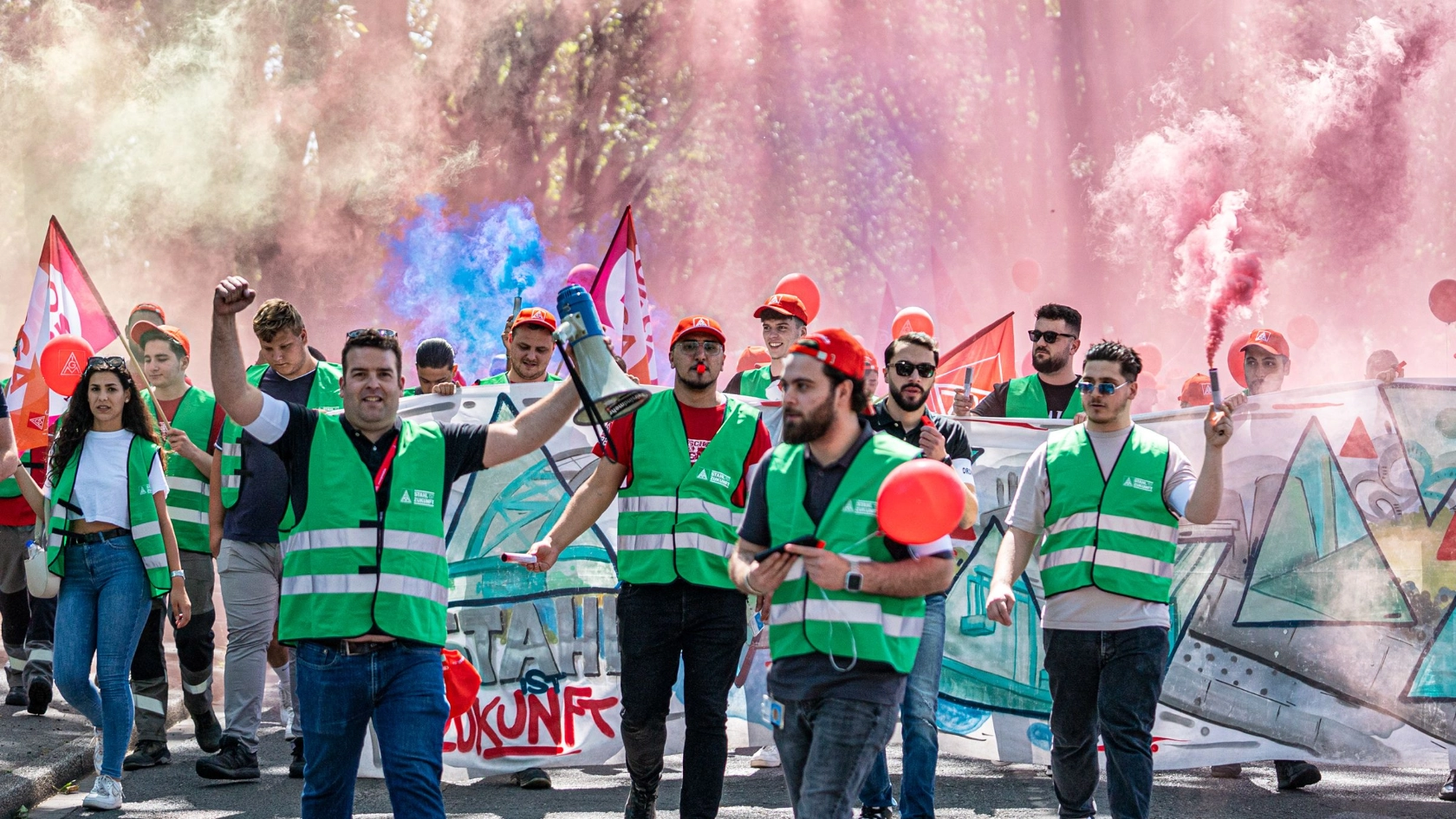
After Economy Minister Habeck was only able to reaffirm his promise regarding subsidies at the Steel Summit, he made a new one to steel industry workers: “I want the entire steel industry in Germany to be transformed.” 12,000 metalworkers were there to witness it, and Tekin Nasikkol emphasizes: “We take you at your word, Mr. Habeck!”