Automatic translation
This article has been translated automatically using computer technology. While we strive for accuracy, some wording or details may differ from those in the original article.
This translation was not manually reviewed. For important facts, quotations or legally sensitive information, please consult the German original. Individual selections, images, embedded media or technical terms may have been translated differently or incompletely.

Working at a Screen at Home Equipment and Ergonomics in the Home Office

You can also communicate while working on the go using a smartphone or tablet. However, writing longer texts, responding to emails in detail, or tackling complex work tasks quickly becomes tedious on such devices. We’ll show you which ergonomic standards apply when working from home.

Mann arbeitet von zu Hause aus am Laptop

2 December 2020 2 December 2020


As a rule, employers provide employees with the necessary IT equipment for working from home. The German Social Accident Insurance (DGUV) offers important recommendations for setting up a mobile computer workstation in its informational brochure“Working from Home—Not Just During the SARS-CoV-2 Pandemic”(PDF).

According to this guide, simply using a laptop with a keyboard and touchpad can already improve the ergonomic conditions in a home office. Using a separate keyboard and mouse further improves ergonomic work with a laptop. Ideally, employees should have a separate keyboard, mouse, and monitor. With a suitable desk, an office chair, and an ergonomic arrangement of work equipment on the desk surface, a good workstation setup can be created in the home office.


Designing the Workstation in a Home Office

When it comes to designing and setting up a mobile computer workstation in a home office, the DGUV follows the guidelines outlined in the information brochure “Mobile Work in Hotels.” According to these guidelines, workstations are classified into three categories—“Minimal,” “Functional,” and “Optimal”—depending on the nature of the task and the duration of the activity; these categories differ, among other things, based on the size of the desk’s work surface and the type of office chair used.

The guidelines described there can also be applied when setting up mobile workstations in a private or home environment. Any combination of the various ergonomic recommendations is possible. For example, an office chair placed in front of a “Minimal” tabletop is certainly more ergonomically favorable than just a dining chair or visitor’s chair. And even the large tabletop of an “Optimal” desk is more ergonomically favorable than a tabletop in the “Functional” category, even if the desk is not height-adjustable.


The categories for mobile workstations in detail:


“Minimal” Category

For sporadic work—or, in rare cases, daily work—the DGUV recommends a minimum set of furniture corresponding to the “Minimal” category:

  • Desk work surface: 800 x 600 mm, not height-adjustable, height 740 ± 20 mm
  • Legroom width: at least 600 mm
  • Legroom depth: 600 mm
  • Office chair: Conference chair
  • Clear movement space at the workstation: 800 x 800 mm

“Functional” Category

Minimum furniture configuration in the “Functional” category is also suitable for work lasting several days:

  • Desk work surface: 1200 x 800, not height-adjustable, height 740 ± 20 mm
  • Legroom width: at least 850 mm
  • Legroom depth: 800 mm
  • Work chair: Conference chair
  • Clear space at the workstation: 1200 x 800 mm

“Optimal” Category

Workstations equipped according to the “Optimal” category are recognized as well-designed computer workstations and, according to the DGUV, can therefore be used without restriction as telework stations.

  • Desk work surface: 1600 x 800 mm, height-adjustable
  • Legroom width: at least 850 mm, recommended 1200 mm
  • Legroom depth: 800 mm
  • Work chair: Swivel office chair with appropriate casters
  • Clear space at the workstation: 1,600 x 1,000


Minimum equipment requirements depend on the work task:


Smartphone or Tablet

Smartphones or tablets are suitable for short tasks such as:

  • Reading and briefly replying to emails
  • Searching the Internet
  • Using messaging services
  • Using apps optimized for the device (editing customized input forms)
  • Participation in video conferences is possible (limited by screen size, reading along with text, following presentations)

Laptop

Laptop (without an additional keyboard, mouse, monitor, or furniture):

Suitable for working for a few hours at a time, e.g., after field work or to complete work assignments after leaving the office, for activities such as the following:

  • Providing detailed responses to emails
  • Preparing reports after field work
  • Completing work that has already been started, e.g., to meet a deadline

The following applies to both of the aforementioned setups: Working occasionally on the sofa or a garden chair is perfectly fine—however, it is recommended to use a sturdy table (such as a dining table) and a suitable chair (visitor’s chair or dining chair).

A laptop with a sufficiently large display (at least 15 inches diagonally), depending on the task, an external keyboard and mouse, and, if possible, an additional monitor to further improve ergonomics for tasks such as the following:

  • Prolonged work is possible
  • Extensive text editing
  • Preparing reports and presentations
  • Participating in video conferences lasting several hours

     

    A minimum set of furniture corresponding to the “Minimal” category is suitable for sporadic or occasional work from home, including work on weekdays.

    A minimum set of furniture corresponding to the “Functional” category is also suitable for working over several days. When using only one computer monitor, with minimal use of paper and the availability of an office swivel chair, this setup also constitutes a suitable workspace for telework (minimum requirement for a teleworking station, whereby a free movement area of at least 1.5 square meters must be provided at the workspace).

    A minimum set of furniture corresponding to the “Optimal” category constitutes a well-equipped computer workstation and is therefore fully suitable for use as a teleworking workstation.


    Work Environment in the Home Office

    Adequate natural light and a clear view to the outside should also be provided when working from home. Artificial lighting in the home office should be appropriate for the domestic nature of the room.

    Computer monitors should be positioned so that their surfaces are free of distracting reflections and glare. The workspace should be sufficiently well-lit (500 lux). This can be achieved, for example, by supplementing the home’s existing lighting with a floor lamp or a table lamp.

    To counteract a lack of physical activity, it is important to regularly take breaks from screen work by changing your posture or engaging in other activities. Phone calls, for example, can be made while standing. This applies to both office work and working from home.

    Work-from-Home Regulation: Here Are the New Rules
    Questions and Answers: Remote Work—What Do I Need to Know?
    Working from Home: How to Stay Safe and Healthy
    Tips for Good Lighting Conditions at the Workplace

    Guide

    New on igmetall.de
    Aktionstag bei Mercedes Benz, Daimler, in Sindelfingen gegen die Angriffe auf Beschäftigten in der Automobilindustrie.
    Resistance to Attempts at Drastic Cuts Auto industry workers issue a warning
    Sie wollen doch nur dein Bestes
    Redistribution Making Germany more equitable: We need this tax reform now
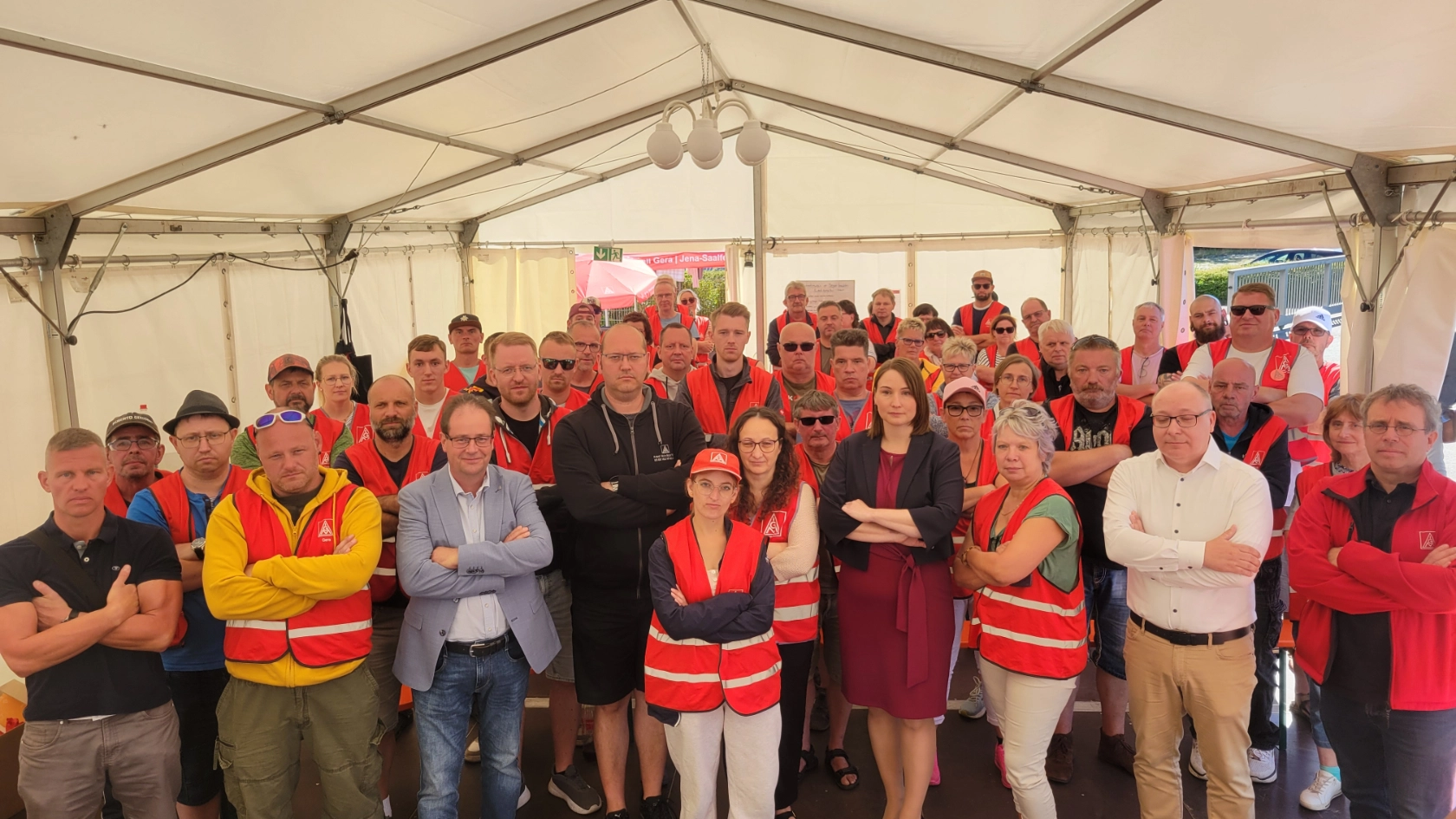
    Der Streik bei Kelvion in Nobitz-Wilchwitz begann am 4. August 2026. Die Geschäftsleitung will nach Sarstedt/Niedersachsen verlagern - obwohl die Produktion in Wilchwitz profitabel und bis ins nächste Jahr ausgelastet ist.
    "It’s worth fighting for!" Kelvion workers strike for a social collective bargaining agreement
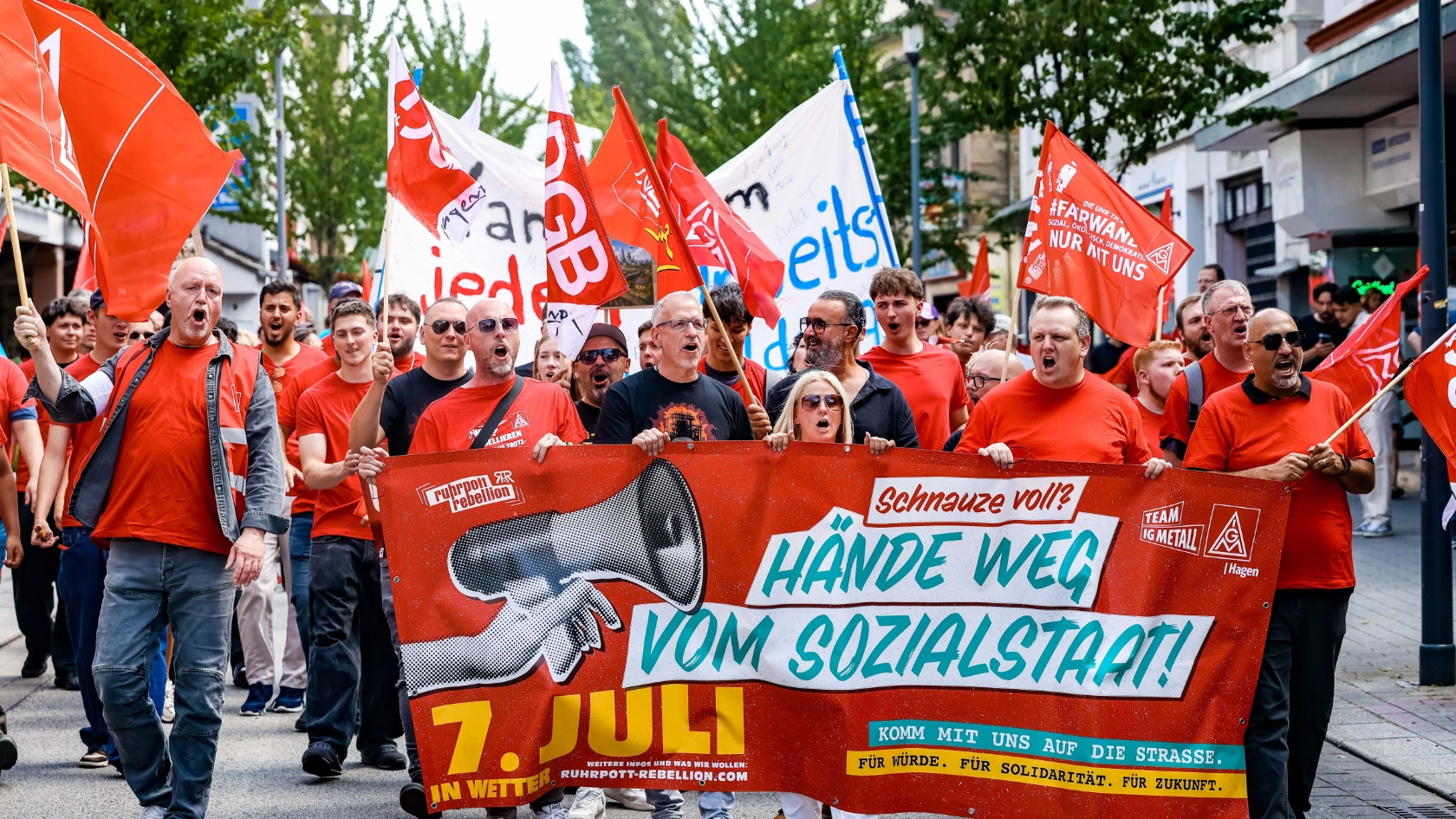
    Ruhrpott Rebellion am 07.07.2026
    Welfare State September 26: Nationwide Day of Action for Social Policy
    Beschäftigter arbeitet an einem Getriebe in einer Fabrik
    Working Hours Why working longer doesn’t help—and actually does more harm than good
    Ein männlicher Land- & Baumaschinenmechatroniker prüft einen Traktor mit einem Tablet
    2026 Collective Bargaining Agreement for the Metalworking and Agricultural Engineering Sectors Greater Flexibility in the Metalworking and Agricultural Engineering Sectors in Lower Saxony and Bremen
    Elektronikerin prüft die Spannung an einem Schaltschrank.
    2026 Collective Bargaining Round for the Electrical Trades Wage Increase in the Electrical Trades in Berlin-Brandenburg
    Benjamin Heine ist Mitarbeiter der BMA in Braunschweig
    2026 Collective Bargaining Round for Metal Fabrication and Precision Engineering Higher Wages in the Metal Fabrication and Precision Engineering Sectors in Southwest Germany
    Metall-Arbeiter beim Schleifen
    2026 Collective Bargaining Round for the Metalworking Trade Employees in the Berlin-Brandenburg metalworking sector will receive higher pay
    Beschäftigte von Thyssenkrupp demonstrieren in Essen am 23. Mai 2024 gegen das Vorgehen der Geschäftsführung beim geplanten Teilverkauf des Unternehmens.
    Defend the welfare state All dates for nationwide actions against cuts to social services
    IGM Aktion VW Wolfsburg
    On September 21, things will get loud Nationwide Day of Action: Auto Industry Workers Fight Back Against Mass Layoffs
    Auszubildender in einer Schreinerei
    Apprenticeship Wages Questions and Answers About Apprenticeship Wages

    Subscribe to the newsletter