They have their hands full at Premium Aerotec in Varel, Friesland, because the aviation industry is booming. The Airbus subsidiary manufactures machined parts for aircraft construction from steel, aluminum, and titanium. It currently employs 1,450 people, including over 180 temporary workers.
Advocacy for Temporary Workers
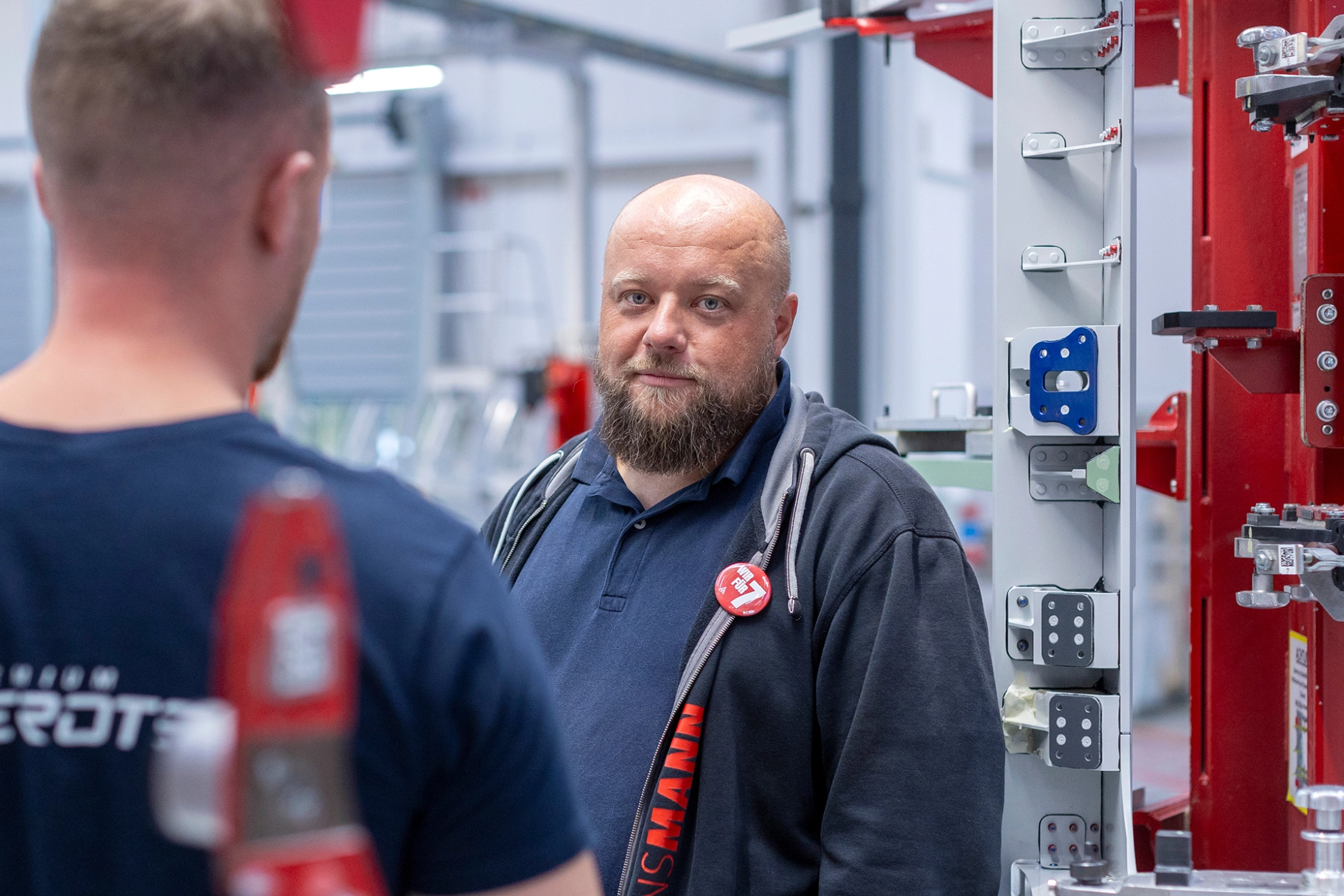
Airbus and the Varel plant have long been committed to supporting their temporary agency workers. And one thing is clear to everyone: Temporary agency workers are part of the workforce from the very beginning and are treated as such as much as possible. “In terms of how we interact and our workplace culture, there’s no difference between someone on a temporary contract and a permanent employee. And there are very few other differences as well,” says Marcus Baitis (pictured above), works council member and head of the IG Metall shop stewards at the plant.
Pay for temporary workers is also brought in line with that of permanent employees quickly, thanks to a company-wide collective bargaining agreement. Among other things, this agreement stipulates that IG Metall members receive equal pay after two months, while non-members receive it starting in the sixth month. It also sets a maximum assignment duration and a temporary staffing quota—that is, a maximum percentage of temporary workers in the total workforce.
136 Hires in 12 Months
At the Varel plant, too, IG Metall works council members and shop stewards are fully committed to supporting their temporary colleagues. As a result, they have secured 136 permanent hires over the past twelve months. A few years ago, they would never have imagined this would be possible. After all, jobs were at stake in the wake of the COVID-19 crisis, and the sale of the site was planned.
But together with IG Metall, the employees were able to secure the plant’s continued presence within the corporate group, as well as jobs and investments, through a collective bargaining agreement. To do so, they had to accept a restructuring that included a potential reduction in the workforce—but on socially responsible terms.
The boom currently underway at the same time makes the situation paradoxical, according to Marcus Baitis: “We’re currently undergoing restructuring while simultaneously ramping up production—essentially trying to square the circle.” That’s because they’re desperately searching for skilled workers. The workforce is growing, and this is happening under the terms of the restructuring agreed upon in the collective bargaining agreement and in light of the enormous increase in production.
How the Hiring of Temporary Workers Is Succeeding
Marcus and the other IG Metall works council members are taking advantage of the current situation and regularly succeed in securing permanent employment for temporary workers. “The employer avoids taking on temporary workers to ensure flexibility,” says Marcus Baitis, “but we stand up for our colleagues.”
This means the employer is under pressure to handle the upcoming workload. This gives the metalworkers leverage that they know how to use. When the employer wants something over which the works council has co-determination rights—such as external hires or overtime—they secure the permanent hiring of temporary workers in return. Since November 2023, they have brought a total of 136 colleagues into permanent positions in several waves.
They have also agreed to a deviation from the quota rule: 15 percent this year, but only 11 percent in 2025. And for every temporary worker by whom the quota is exceeded, two temporary workers must be permanently hired.
They are therefore well-positioned to continue advocating for temporary workers and their colleagues in the future.
The Fight for Temporary Workers Continues
Not only at Premium Aerotec in Varel, but also at many other companies, IG Metall works councils are standing up for temporary agency workers. And through the collective bargaining agreements secured jointly with the DGB unions, they have also been able to improve working conditions for temporary agency workers. The achievements of the past twelve years in the temporary staffing sector are impressive. IG Metall is the union for temporary workers—not just on October 7, the Day Against Precarious Employment.